





 The Prodigy
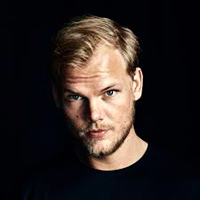
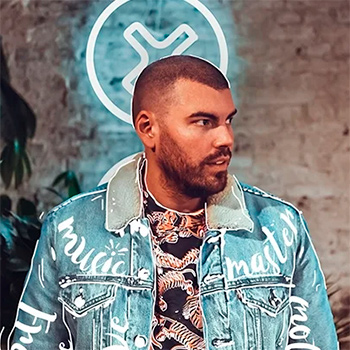
Avicii (real name Tim Bergling; 8 September 1989, Stockholm — 20 April 2018, Muscat, Oman) was a Swedish DJ, composer, music producer and songwriter, and one of the artists who helped define the development of electronic dance music during the first half of the 2010s. His recordings combined melodic progressive house and EDM with pop, soul, folk, country, rock and acoustic songwriting. Levels, Wake Me Up, Hey Brother, I Could Be the One, The Nights, Waiting for Love, Without You and other Avicii tracks reached far beyond the club scene and became international pop hits.
During his lifetime, Bergling released two full-length studio albums — True and Stories — as well as the EP AVĪCI (01). His third album, TIM, was completed after his death by his closest collaborators using the demos, notes and working correspondence he had left behind. Avicii received two Grammy nominations, ranked third in the DJ Mag Top 100 DJs for two consecutive years, and became one of the defining artists of a generation that saw European electronic music become a major part of global pop culture.
Childhood and family
Tim Bergling was born on 8 September 1989 in Stockholm. He grew up in the Östermalm district. His mother, Anki Lidén, is a Swedish actress, while his father, Klas Bergling, worked in business. Music entered Tim’s life long before his professional career began, but his path differed from that of musicians who received a classical instrumental education: Bergling’s principal instrument became the computer.
As a teenager, he spent a great deal of time at his computer and gradually became interested in producing electronic music. At around the age of 16, Tim began taking production seriously. One of his key tools was FL Studio, the software in which he taught himself how to construct arrangements and work with synthesizers, basslines, drums and harmony. Bergling later repeatedly emphasized that much of his musical education was practical: he learned directly through the process of making tracks.
Among his early influences were Daft Punk, Eric Prydz, Laidback Luke and the Swedish house scene that would soon produce Swedish House Mafia and an entire international wave of Scandinavian producers. Yet even Bergling’s earliest work already displayed the quality that would later become central to the Avicii sound: rather than focusing on rhythmic complexity, he placed the greatest emphasis on melody, chord progressions and emotionally memorable musical motifs.
Internet forums and early recordings
Bergling’s professional career largely took shape online. He posted his own tracks and remixes on music platforms and forums, including a community associated with Dutch DJ Laidback Luke. For a young producer, these spaces functioned as an open school: users discussed arrangement, mixing and track structure, while established musicians could discover emerging talent. In 2007, Bergling signed his first record deal with the label Dejfitts Plays.
During the early stage of his discography, he used several names. In addition to Avicii, he released music as Tim Berg — a shortened version of his real name — and Tom Hangs. Individual club releases appeared under these aliases, including Bromance as Tim Berg and Blessed with Shermanology as Tom Hangs. At the same time, Bergling was already releasing music under the Avicii name.
It was during this period that his working method began to take shape: create a large volume of material, discard the weaker versions and continue refining the strongest melodic ideas. According to people who worked with him early in his career, Bergling could spend most of the day producing music. His initial reputation was built not primarily through his status as a club DJ, but through the fact that other producers and music-industry professionals were beginning to notice his tracks.
The origin of the name Avicii
The stage name Avicii is connected to the Buddhist term Avīci. Bergling said that he first heard the word from an acquaintance and decided to use it as an alias. When he attempted to register the name on MySpace, Avici was already taken, so he added a second i, creating the spelling Avicii.
Over time, the name completely replaced his earlier aliases and developed into an international brand in its own right, although Bergling continued to use his real name in songwriting credits.
Meeting Ash Pournouri
Arash «Ash» Pournouri played an important role in the beginning of Tim’s professional career. The young Swedish promoter and entrepreneur discovered Bergling’s music online and proposed working together. At the time, Tim was primarily a studio producer and had very little experience performing for large audiences. Pournouri took responsibility for management, artist positioning and live bookings, while Bergling concentrated on the music.
The partnership proved highly effective. By the end of the 2000s, Bergling was rapidly expanding his catalogue, and his tracks were increasingly appearing in the sets of established DJs. The next step was his first major European hit.
Bromance and Seek Bromance
In 2010, Bergling released the instrumental track Bromance under the name Tim Berg. Its expressive piano melody and the gradual build characteristic of progressive house already contained many of the qualities that would later define the Avicii sound.
The vocal version was titled Seek Bromance. It took Bergling beyond the club circuit and into the European charts, reaching the UK Top 20. Tim was not yet a global pop star, but his name had already become widely recognizable among fans of house music.
The same period also produced My Feelings for You, created with French producer Sebastien Drums. Bergling’s early recordings documented his movement away from more traditional club house toward exceptionally clear, melodic compositions capable of working both in a DJ set and beyond the dancefloor.
Levels — the global breakthrough
The real turning point came in 2011 with the release of Levels. The track was built around a striking synthesizer progression and a vocal sample from Etta James’s recording Something’s Got a Hold on Me. For its time, it represented an almost ideal formula for melodic festival house: an instantly recognizable theme, an extended dynamic build, a powerful emotional climax and a vocal fragment that functioned like a complete chorus without requiring a conventional pop-song structure.
Levels transformed Avicii from a promising European producer into an international star. The single reached the upper positions of charts in numerous countries and became one of the defining tracks of the early mainstream EDM era. In the DJ Mag Top 100 DJs, Bergling climbed from No. 39 in 2010 to No. 6 in 2011, before reaching third place in 2012.
Levels also earned Avicii a Grammy nomination for Best Dance Recording. The previous year, his collaboration with David Guetta, Sunshine, had been nominated in the same category. Bergling therefore received Grammy nominations in two consecutive years, at the 54th and 55th Grammy Awards.
Fade Into Darkness and the dispute over Collide
In 2011, Avicii released Fade Into Darkness, which developed from the instrumental track Penguin. The composition incorporates elements of Perpetuum Mobile by the British ensemble Penguin Cafe Orchestra; its composer Simon Jeffes is credited as one of the writers of Fade Into Darkness. That same year, the musical foundation became the subject of a dispute surrounding Leona Lewis’s single Collide. Bergling’s team argued that the song reproduced the version developed by Avicii without obtaining his prior approval.
The dispute was resolved before reaching court: Collide was ultimately released as a joint recording credited to Leona Lewis / Avicii, and Bergling received the appropriate songwriting and artist credit.
The global EDM boom and an intense touring schedule
Avicii’s rise coincided with a period in which electronic dance music was rapidly moving from club subculture into the American and global mainstream. Ultra Music Festival, Electric Daisy Carnival, Tomorrowland and other major festivals turned DJs into performers capable of attracting audiences comparable in size to those of the world’s biggest rock and pop artists.
Avicii found himself at the very centre of this transformation. Between 2011 and 2013, his touring schedule became extraordinarily demanding. Industry coverage from the period cited figures of up to 250 performances a year. Festival appearances, club residencies, intercontinental flights and constant work on new music were taking place almost simultaneously.
Yet Bergling remained, above all, a studio songwriter and producer. The public role of the DJ and the requirement to remain constantly onstage were considerably more difficult for him than making music. Archival interviews and later documentary material reveal a substantial divide between Tim Bergling — a private person who preferred the studio — and Avicii, one of the biggest live figures in EDM.
House for Hunger and charity work
Bergling also used his commercial success to support charitable initiatives. In January 2012, he launched the American House for Hunger tour, performing 26 shows in 27 days. Tim Bergling and his manager Ash Pournouri donated $1 million of their own earnings from the tour to Feeding America, an organization working to combat hunger in the United States.
Bergling later supported other humanitarian initiatives as well. Today, the Tim Bergling Foundation specifically highlights his charitable work alongside his musical legacy.
I Could Be the One
At the end of 2012, Avicii released a collaboration with Dutch producer Nicky Romero titled I Could Be the One. In February 2013, the track became Avicii’s first single to reach No. 1 on the official UK chart.
The project was often referred to as Nicktim, combining the names Nick and Tim. For Bergling, it marked another step in the transition from festival EDM producer to full-scale pop artist with a regular presence on national charts.
Avicii X You
In January 2013, Avicii and Ericsson launched the experimental project Avicii X You. Users were invited to submit their own melodies, basslines, rhythms, transitions, effects and vocal ideas, which would later be assembled into a single composition.
The result was the single X You. During the project, Avicii received almost 13,000 musical submissions from more than 4,000 participants across 140 countries. Users contributed melodies, basslines, rhythms, effects and vocals, while Bergling selected the material and assembled the final track in his studio. Avicii X You became one of the most ambitious examples of crowdsourcing in electronic music during the early 2010s.
Ultra Music Festival 2013: the risk that changed his career
In March 2013, Avicii performed on the main stage of Ultra Music Festival in Miami. The audience expected a set of familiar festival house in the style of Levels. Instead, during the second half of the performance, live musicians, acoustic instruments and vocalists appeared onstage as Bergling began presenting material from his forthcoming album True.
The reaction was sharply divided. Part of the audience responded to the new material with confusion and boos. At an EDM festival of that era, the combination of acoustic guitar, country and bluegrass influences with electronic climaxes seemed like a radical departure from the dominant formula. Among the tracks presented that night was the future hit Wake Me Up.
Within a matter of months, what some listeners at Ultra had regarded almost as a violation of genre rules became one of the most successful formulas in global pop music.
Wake Me Up
Wake Me Up was created by Bergling together with American musician Mike Einziger of Incubus and singer Aloe Blacc. Einziger’s acoustic guitar and Blacc’s vocals formed the song’s core, over which Avicii constructed the electronic production.
The result was a track that could not be neatly classified as conventional EDM, folk or country. It began as acoustic pop-folk before opening into a large electronic chorus, without abandoning the live guitar or vocal-song structure. This approach would subsequently become one of the most widely imitated models of EDM/pop crossover.
Following its official release in the summer of 2013, Wake Me Up became the biggest commercial hit of Avicii’s career. In the United Kingdom, the single debuted at No. 1 and sold around 267,000 copies in its first week, making it the fastest-selling single of 2013 at that point. It remained at the top of the UK chart for three consecutive weeks. In the United States, the track reached No. 4 on the Billboard Hot 100.
The album True
In September 2013, Avicii released his debut studio album True. Its title reflected Bergling’s intention to make music according to his own interests rather than simply meeting the expectations of the EDM audience.
True combined electronic dance music with country, bluegrass, soul, folk, disco and pop rock. In addition to Aloe Blacc and Mike Einziger, the album featured Nile Rodgers, Adam Lambert, Dan Tyminski, Audra Mae, Salem Al Fakir and other musicians.
Wake Me Up was followed by a series of major singles. You Make Me, featuring vocals by Salem Al Fakir, retained a more conventional house structure. On Hey Brother, the voice of American bluegrass singer Dan Tyminski was paired with electronic production. Addicted to You was built around Audra Mae’s vocals and a strong soul influence. Lay Me Down featured Adam Lambert and Nile Rodgers.
True demonstrated that the initial reaction at Ultra had not reflected the potential of Bergling’s new direction. The album reached the Top 10 in numerous countries and peaked at No. 5 on the US Billboard 200. Wake Me Up became an international benchmark for pop-EDM crossover.
In 2014, Bergling released True: Avicii by Avicii — a separate version of the album in which he reworked his own compositions. It was not a conventional collection of remixes by outside producers: Avicii personally reimagined the arrangements of the True material, presenting alternative versions of the same musical ideas.
Worldwide recognition
The period surrounding Levels and True marked the peak of Avicii’s commercial rise. In the DJ Mag Top 100 DJs, he ranked No. 6 in 2011 and No. 3 in both 2012 and 2013.
In 2013, Bergling won the American Music Award for Favorite Electronic Dance Music Artist and the MTV Europe Music Award for Best Electronic. He never won a Grammy, however: his official record stands at two nominations, for Sunshine and Levels.
His UK chart statistics illustrate particularly clearly the scale of his transition from club music into pop culture. During his career, Avicii achieved two UK No. 1 singles — I Could Be the One and Wake Me Up — and a total of ten entries in the UK Top 10.
Working with Coldplay, Madonna and artists beyond EDM
The success of True made Bergling a sought-after collaborator far beyond the electronic music scene. In 2014, he contributed to the creation and production of A Sky Full of Stars by Coldplay. Avicii’s electronic production was combined with the band’s songwriting aesthetic, and the track became one of the biggest pop hits of Coldplay’s career during that period.
Around the same time, Bergling worked with Madonna on material for the album Rebel Heart. His interest in rock, pop and soul musicians was not simply a matter of inviting famous names for marketing purposes. When creating his own records, he consistently worked with songwriters and performers from genres well outside traditional house music.
The Days and The Nights
In 2014, two thematically connected tracks appeared and were later brought together in the project The Days / Nights.
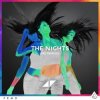
The Days was recorded with vocals by Robbie Williams. The more enduring hit proved to be The Nights, whose vocal was performed by American songwriter Nicholas Furlong. Furlong’s original idea was conceived as a song about advice from a father and the importance of living a life that would leave behind memories. Avicii transformed the acoustic demo into a powerful electronic recording while retaining the songwriter’s original vocal.
Over time, The Nights became one of Avicii’s most recognizable works and one of the clearest examples of his ability to turn a traditional singer-songwriter structure into a large-scale festival record without losing its original emotional tone.
Health problems
Behind Bergling’s rapid career development was an exceptionally demanding pace of work. As early as 2012, he was hospitalized with acute pancreatitis. Interviews and later published accounts of his life described problems involving excessive alcohol use, anxiety and stress during the most intensive period of his touring career.
In March 2014, Bergling’s health again required medical treatment. While in Miami, he was hospitalized and subsequently underwent surgery to remove his appendix and gallbladder. The operation forced Avicii to cancel his appearance at Ultra Music Festival. In September of the same year, he cancelled the remainder of his 2014 performances in order to continue recovering.
The official biography of Tim, written by journalist Måns Mosesson with the cooperation of Bergling’s family and access to his personal records, later revealed a more complex picture. In addition to alcohol, prescription painkillers given to him following medical complications became a serious problem. Physical illness, dependence, anxiety, intense perfectionism and an extreme touring schedule did not exist separately, but compounded one another.
Bergling’s health problems cannot be reduced to a single cause. Material released by his family and later examinations of his life describe a combination of physical illness, anxiety, problems with alcohol and prescription painkillers, constant travel, an intense performance schedule and the exceptionally high standards the musician demanded of his own work.
Stories
Despite his health problems, Bergling continued working intensively in the studio. On 2 October 2015, Avicii released his second studio album, Stories. The standard edition contained 14 tracks.
If True had represented an overt break with the genre expectations of EDM, Stories developed the same approach without any longer needing to prove its legitimacy to the club audience. The album blended dance-pop, house, reggae, rock, soul, folk and other styles. Its collaborators included Chris Martin, Zac Brown, Wyclef Jean, Matisyahu, Alex Ebert, Sandro Cavazza and other songwriters and vocalists.
The first major single was Waiting for Love, created with the involvement of Martin Garrix and featuring vocals by Simon Aldred of Cherry Ghost. The track returned the characteristic Avicii combination of piano harmony, a large vocal melody and a festival-house climax to the centre of his sound. It reached No. 6 on the UK chart.
For a Better Day features Alex Ebert, while Broken Arrows features Zac Brown. Pure Grinding reveals a harder, more rhythmically driven side of his production. Chris Martin contributed to True Believer. Can’t Catch Me brought together Wyclef Jean and Matisyahu. Stories therefore did not simply repeat the successful formula of Wake Me Up; instead, it expanded the principle of genre openness established on True.
The decision to stop touring
By 2016, the gap between Bergling’s studio work and his touring life had become critical. On 29 March 2016, Avicii published an open letter announcing that the year’s shows would constitute his final tour.
The decision is sometimes incorrectly described as his «retirement from music». Bergling was ending regular live performances, not his musical career. He explicitly stated that he intended to continue making music and devote more time to the studio.
After years of almost continuous travel, ending his touring schedule offered him an opportunity to separate Avicii as a stage figure from Tim Bergling as a composer. He had no intention of abandoning music.
Avicii’s final performance
Avicii’s final live performance took place on 28 August 2016 at Ushuaïa Ibiza. Ibiza had been one of the key locations throughout his touring career: the island appeared regularly on Bergling’s schedule and was closely connected to the European club culture in which his success had developed.
The performance marked the end of Avicii’s career as a touring artist. Years later, a professional recording of the concert was released as the standalone film Avicii — My Last Show.
At the end of 2016, Bergling’s long-standing partnership with manager Ash Pournouri also came to an end. Tim subsequently continued working without the previous management structure and focused on studio material.
Return to the studio and AVĪCI (01)
Bergling’s creative activity did not stop after he left touring behind. On 10 August 2017, he released the six-track EP AVĪCI (01), his first major release after stepping away from the stage.
The EP included Friend of Mine with Vargas & Lagola, Lonely Together with Rita Ora, You Be Love with Billy Raffoul, Without You with Sandro Cavazza and other recordings. The material continued his movement away from classical progressive house toward songwriter-driven electronic pop, in which the vocal song and electronic production carried equal weight.
Lonely Together with Rita Ora was particularly successful, reaching No. 4 on the UK chart. Without You with Sandro Cavazza also became one of Bergling’s most important later recordings.
The EP was intended as the beginning of a new period. Having stepped away from the touring industry, Bergling could once again concentrate on what his career had essentially begun with — making music at a computer.
Avicii: True Stories
In 2017, director Levan Tsikurishvili released the documentary Avicii: True Stories. Cameras had followed Bergling throughout the period of his rapid rise, intense touring, deteriorating health and eventual decision to stop performing.
After his death, the film took on additional significance because it documented not only the scale of his live success but also the physical and psychological cost of constant work. The story of Avicii subsequently became one of the most widely discussed cases in conversations about artist health within the modern music industry.
The final period of his life
After ending his touring career, Bergling travelled, spent time with friends and continued writing music. People who worked with him during his final months recalled that he still had a large number of ideas and a substantial amount of material intended for future releases.
Work on new music was active. By the time Tim died in 2018, several tracks intended for a future album were already at an advanced stage of production. Those sessions would later become the foundation of TIM.
The death of Tim Bergling
Tim Bergling died in Muscat, Oman, on 20 April 2018. He was 28 years old. The initial statement from his representative confirmed the place and date of his death without giving a cause. Omani police reported that there was no suspicion of criminal activity.
His family later made the circumstances clearer, and the Tim Bergling Foundation, established by his parents, explicitly identifies suicide prevention as one of its central areas of work. Official and family materials describe Tim’s death as suicide.
The final years of Bergling’s life are best considered without attempting to identify a single party to blame and without romanticizing the tragedy. His father, Klas Bergling, later advocated for more open discussion of mental health problems, earlier access to support and greater responsibility within the music industry for the conditions under which young artists work. This approach became central to the family foundation’s activities.
TIM — the posthumous album
After Tim’s death, his family and closest musical collaborators were faced with an extensive archive of unfinished music. Many tracks existed not merely as early sketches, but as nearly completed projects. Bergling had left demos, working versions, comments, messages and correspondence with collaborators that made it possible to understand his intentions regarding arrangements and vocals.
With the family’s approval, Carl Falk, Albin Nedler, Kristoffer Fogelmark, Vincent Pontare, Salem Al Fakir and other musicians who had worked directly with Tim completed the material. The objective was not to create a new album «in the style of Avicii», but to bring to release the works Bergling himself had been developing.
On 6 June 2019, the album TIM was released, containing 12 tracks with a total running time of approximately 38 minutes.
The first single was SOS with Aloe Blacc. The album also included Tough Love with Agnes and Vargas & Lagola, Heaven featuring vocals by Chris Martin, Heart Upon My Sleeve with Imagine Dragons, Freak, Bad Reputation, Hold the Line, Fades Away and other tracks.
Avicii’s proceeds from the album were directed to the Tim Bergling Foundation. In this way, his final studio project became both a continuation of his musical work and part of the family’s efforts to support mental health initiatives.
Tim Bergling Foundation
In 2019, Tim’s parents, Klas Bergling and Anki Lidén, established the Tim Bergling Foundation. Its principal areas of work include mental health support for children and young people, suicide prevention, reducing the stigma surrounding mental health difficulties and supporting projects that help young people receive assistance before a crisis becomes critical.
This also continued another side of Bergling’s work. During his lifetime, he had already donated substantial sums to hunger relief and other charitable programmes. His family therefore conceived the foundation not simply as a memorial organization, but as a continuation of his desire to use his resources and public profile to help others.
Avicii Tribute Concert
On 5 December 2019, Stockholm hosted the major Avicii Tribute Concert for Mental Health Awareness. Tim’s music was performed by his collaborators, vocalists, DJs and a large live ensemble.
The performers included artists directly connected to his musical history, among them Aloe Blacc, Rita Ora, Adam Lambert, Dan Tyminski, Sandro Cavazza and others. The DJ section featured David Guetta, Kygo, Nicky Romero, Laidback Luke and representatives of the generation of electronic music alongside which Avicii’s career developed. The concert served simultaneously as a musical memorial and as an event supporting the work of the Tim Bergling Foundation.
Avicii Arena
On 19 May 2021, Stockholm’s famous Globen arena was renamed Avicii Arena. The change was connected not only with Bergling’s memory. The venue became part of an initiative intended to raise awareness of mental health among young people.
For an artist whose career had unfolded in front of tens of thousands of people at some of the world’s biggest arenas and festivals, the name Avicii became connected with a concert venue in his native Stockholm in an entirely different context — as a symbol of open discussion about psychological well-being.
The official biography Tim
In 2021, Swedish journalist Måns Mosesson published Tim — The Official Biography of Avicii. For the book, Tim’s family gave Mosesson access to his personal notes, messages and other material; the journalist also interviewed relatives, friends, colleagues and people who had worked with Bergling.
The book became one of the most detailed sources on the person behind the name Avicii. It distinguishes between the public story of an international EDM star and the private story of a young composer who was far more comfortable creating music than constantly being at the centre of attention.
Avicii Experience
In February 2022, the interactive exhibition Avicii Experience opened in Stockholm. Located at Sergels Torg, it is dedicated to the life, musical work and studio process of Tim Bergling.
The exhibition includes personal belongings, reconstructions of working spaces, archival material, music and interactive elements that allow visitors to explore how some Avicii tracks were created. Some of the material had never previously been shown to the public. The exhibition also examines the distinction between Tim’s private life and the public figure of Avicii.
Avicii — I'm Tim and My Last Show
On 31 December 2024, Netflix released two projects: the feature-length documentary Avicii — I'm Tim and the concert film Avicii — My Last Show.
I'm Tim, directed by Henrik Burman, draws on a large collection of home videos, private archival material and interviews. One of the film’s defining features is that much of the story is narrated by Tim himself through archival recordings of his voice.
My Last Show documents Avicii’s performance at Ushuaïa Ibiza on 28 August 2016 — the final show of his career. Together, the two films present two sides of the same biography: the person who created the music and the artist seen by audiences of tens of thousands.
Forever Yours and new archival projects
On 14 February 2025, Forever Yours (Tim's 2016 Ibiza Version), featuring vocals by Sandro Cavazza, received an official release. Bergling had worked on the song in 2016 and performed this version during his final period of touring, including his last show at Ushuaïa Ibiza. Following the appearance of the recording in Netflix documentary projects, listener interest in Tim’s version grew again, leading to its standalone official release.
On 16 May 2025, the compilation Avicii Forever was released. It contains 19 tracks from Avicii’s catalogue along with the previously unreleased song Let’s Ride Away, featuring vocals by Elle King.
At the end of 2025, work with Bergling’s archive continued through Stories on Stories, a documentary miniseries devoted to the creation of the album Stories and based in part on previously unreleased material from the studio sessions. The Stories Megamix, originally associated with the album’s 2015 promotional campaign, was also officially republished.
How Avicii created music
At the centre of Avicii’s music was almost always melody. Unlike much of the festival EDM of the early 2010s, where the defining moment of a track was often the heaviest possible drop, Bergling built his compositions around chord progressions and memorable motifs. The electronic climax was a continuation of the song rather than a separate effect.
That is why many of his works function so naturally outside their electronic arrangements. Wake Me Up, Hey Brother, The Nights, Without You and Waiting for Love can be performed on acoustic instruments without losing their essential musical identity. The rhythmic production strengthens the composition, but does not replace it.
A second defining feature was his approach to vocalists as part of the songwriting process. Bergling did not simply invite a famous singer to perform over an already completed instrumental. Vocal melody, lyrics, instrumental harmony and electronic production were often developed in parallel. This explains the unusually wide range of collaborators in his catalogue — from Aloe Blacc and Dan Tyminski to Chris Martin, Nile Rodgers, Adam Lambert, Wyclef Jean, Rita Ora and Sandro Cavazza.
A third characteristic was the absence of rigid genre boundaries. After Levels, Avicii could easily have followed with a series of nearly identical progressive-house hits. Instead, he used his popularity to bring acoustic guitar, bluegrass vocals, Nile Rodgers’s disco guitar, rock songwriters, soul singers and elements of reggae into EDM.
FL Studio and his studio approach
Avicii belonged to a generation of producers for whom the computer workstation had become a complete musical instrument in its own right. A significant proportion of both his early and mature material was created in FL Studio.
His strength was not showy technical complexity in programming. Bergling had an exceptional ability to find chord progressions, melodies and the emotional centre of a composition quickly, after which he would repeatedly rebuild the arrangement until the idea functioned as a complete piece of music.
This ability helps explain why Avicii’s musical identity remains recognizable even across recordings featuring completely different vocalists and genres. The common element is not a particular synthesizer or drum preset, but the way the melody and harmonic movement are organized.
Avicii and the transformation of 2010s pop music
Avicii’s historical significance extends beyond the popularity of individual hits. Levels became one of the defining symbols of the moment when melodic progressive house and festival EDM entered global mass culture. His longer-term influence, however, is more closely connected with True and above all Wake Me Up.
By 2013, commercial EDM was already working extensively with pop vocalists. Bergling went further: he demonstrated that an electronic record could retain the complete identity of a country, folk, bluegrass or soul song while still functioning on an enormous festival stage. After the success of Wake Me Up, such genre combinations ceased to feel exceptional within global pop music.
Avicii’s influence is also evident among the generation of producers who emerged after the first major EDM boom. A melodic approach, emotionally driven vocal songwriting and the desire to combine dance production with acoustic genres became a normal part of the language of electronic pop music.
Why Avicii’s music survived beyond the EDM boom
Many festival tracks from the early 2010s were closely tied to a particular production technology and quickly began to sound dated as that technology changed. Avicii’s catalogue proved considerably more durable.
The reason lies in the strength of the underlying compositions. Levels contains a complete melodic theme of its own. Wake Me Up already works as a song before the electronic drop arrives. Hey Brother is carried by Dan Tyminski’s vocal melody. The Nights existed as an acoustic singer-songwriter demo before Avicii produced it. Without You can be separated from its festival production without destroying its musical structure.
As a result, Bergling’s recordings continue to exist simultaneously as club music, pop hits, acoustic covers and source material for new interpretations.
Main discography
Studio albums
- True — 2013, debut studio album
- Stories — 2015, second and final studio album released during Avicii’s lifetime
- TIM — 2019, posthumous studio album completed by collaborators and producers using material Tim Bergling had been working on before his death
Remix albums
- True: Avicii by Avicii — 2014, Avicii’s own reworking of the material from True, featuring newly created versions of his own compositions
EPs
- The Days / Nights — 2014, an EP combining The Days and The Nights with additional versions of the tracks
- AVĪCI (01) — 2017, six-track EP and Avicii’s final major release issued during his lifetime
Compilations
- Avicii Forever — 2025, a posthumous compilation of key recordings from Avicii’s catalogue, supplemented by the previously unreleased track Let’s Ride Away featuring Elle King
Legacy
Tim Bergling lived for 28 years, and the period of his global career was shorter still. Only about six years passed between the European success of Seek Bromance and his final performance in Ibiza. During that time, he went from being a teenager posting music online to becoming the creator of works that changed perceptions of where the boundaries of electronic pop music could lie.
His legacy now exists in several forms. There are the recordings that continue to reach new generations of listeners; studio methods that became part of the language of modern dance-pop; the Tim Bergling Foundation and its mental health initiatives; Avicii Arena in Stockholm; Avicii Experience; documentary films and archival projects through which the history of Bergling is gradually being separated from the mythology that developed around his early death.
The official Tim Bergling Foundation website notes that six of Tim’s tracks have now surpassed one billion streams on Spotify. But Avicii’s influence cannot be measured by numbers alone. His music became one of the most recognizable sounds of its generation — from the opening seconds of the synthesizer theme in Levels to the acoustic guitar of Wake Me Up, the piano of Waiting for Love and the melody of Without You.
Avicii entered music history not because he was the first person to combine electronic music with pop or acoustic instruments. His achievement was different: he did it on a scale at which the distinction between a club track and a song effectively ceased to matter. The world’s biggest festivals were playing compositions constructed with the same attention to melody and harmony traditionally associated with songwriting.
Behind the name Avicii, however, there was always Tim Bergling — a person who felt closer to the process of making music than to the industry that grew around his success. Understanding that distinction has become an especially important part of his legacy since 2018.
From the editors of Minatrix.FM
For the Minatrix.FM editorial team, Avicii is a special artist. We value him not only for Levels, Wake Me Up, The Nights, Hey Brother or the dozens of other tracks that became part of electronic music history. We value Tim Bergling for a rare musical gift — the ability to write a melody that needs only a few seconds to bring back, years later, a moment in your life connected with it.
His music accompanied an entire generation of listeners, DJs and producers, and it remains contemporary years after his passing. He proved that electronic music could be enormous and festival-ready while still being personal, melodic and rooted in genuine songwriting. Many artists leave behind successful releases. Tim left behind a musical language that continues to live independently of time and fashion.
In the Minatrix.FM DJ ranking, Avicii will forever remain No. 1. For us, this is not a position that can be lost when a new chart is published. It is a place held in memory of a musician whose work had an enormous impact on electronic music — and on us personally.
Thank you for the music, Tim.
Avicii — No. 1. Forever.