 Artbat
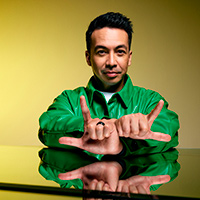
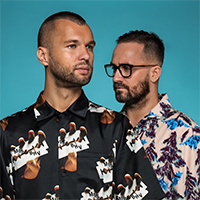
Laidback Luke (real name Lucas Cornelis van Scheppingen; born October 22, 1976, in Manila, Philippines) is a Dutch DJ, music producer and remixer of Filipino descent. His career spans several distinct eras of electronic music: from techno and hard-edged house in the 1990s to electro house, Dutch house and festival EDM, followed later by a renewed turn toward underground club music.
Laidback Luke belongs to the generation of Dutch producers who helped lay the groundwork for the international rise of the Netherlands’ dance scene in the 2000s. He is known not only for his own recordings and performances, but also for collaborations with Steve Angello, Axwell, Sebastian Ingrosso, Steve Aoki, Example, Martin Solveig and other artists, his work with young producers, and the label he founded, Mixmash Records.
Among his best-known works are Show Me Love, Be, Get Dumb, Leave the World Behind, Turbulence, Natural Disaster, Rocking with the Best and Blow. His story, however, reaches far beyond the mainstream EDM era: Laidback Luke’s first internationally noticed recordings appeared roughly a decade before the biggest commercial rise of his career.
Manila, the Netherlands and His First Musical Experiments
Lucas van Scheppingen was born in Manila to a Dutch father and a Filipino mother. His family moved to the Netherlands during his childhood, and the future musician grew up in Hoofddorp, near Amsterdam.
Before beginning a professional music career, one of his major interests was graffiti. He became interested in electronic music as a teenager and began experimenting with his own compositions in the early 1990s. Luke’s early sound was particularly influenced by American house and European techno — styles that were far harder and more minimal than the music through which mainstream audiences would later discover him.
Dutch producer Gaston Steenkist, known as Dobre and later as a member of Chocolate Puma, played an important role in the early stages of Luke’s career. He listened to Luke’s early demos, offered professional advice and helped introduce him to the circle of Dutch club producers.
The Green Velvet Remix and His First International Breakthrough
A turning point came with his work on The Stalker by American techno producer Green Velvet. Laidback Luke’s remix appeared in the mid-1990s and received support from influential DJs, including Carl Cox. Luke himself later described this release as his first genuine international breakthrough.
As interest in his club productions grew, Laidback Luke began performing outside the Netherlands and gradually built a reputation as a producer capable of combining techno’s rhythmic intensity with the groove of house.
In 1999, he released Psyched-Up (The Early Works '96-'98), a collection of material recorded between 1996 and 1998. It is therefore better understood as a summary of the first stage of Laidback Luke’s career rather than its starting point.
Electronic Satisfaction and the Shift Toward a New Sound
The next notable stage came with the album Electronic Satisfaction, released in 2002. It included Rocking with the Best, Popmusic and other tracks that showed the producer gradually moving away from a purely underground club aesthetic toward a broader understanding of electronic dance music.
In 2003, Laidback Luke produced an official remix of Crescendolls by Daft Punk. It appeared on Daft Club, the remix project built around material from the album Discovery.
Steve Angello, Axwell and Sebastian Ingrosso
His collaborations with Swedish producers Steve Angello, Axwell and Sebastian Ingrosso, who later united as Swedish House Mafia, became especially important during the next phase of his career.
Luke recorded Be with Steve Angello, and in 2007 released Get Dumb together with Angello, Axwell and Ingrosso. These tracks arrived during a period when European progressive house and electro house were gradually developing the large-scale festival sound that would become one of the foundations of the international EDM boom a few years later.
Another important track was Leave the World Behind with Axwell, Sebastian Ingrosso and Steve Angello, featuring vocalist Deborah Cox. The track became one of the defining recordings of the transitional period between the European club scene of the 2000s and the festival era that followed.
Show Me Love — His Biggest Commercial Success
Laidback Luke reached an especially broad audience with a new version of Show Me Love, the classic house song by Robin S., created together with Steve Angello. In the United Kingdom, the recording became a major mainstream hit: in 2009, it reached No. 11 on the UK Singles Chart and topped the official UK Dance Chart.
The success came as international interest in Dutch and Swedish house producers was rapidly expanding. During this period, Laidback Luke completed his transition from a respected club musician to one of the most in-demand DJs on the large-scale electronic circuit.
His growing live popularity was also reflected in the DJ Mag Top 100 DJs ranking: he placed No. 27 in 2009 and climbed to No. 17 in 2010, the highest position of his career.
Turbulence and the Festival EDM Era
In the early 2010s, Laidback Luke found himself directly at the centre of the global EDM boom. One of the most recognizable tracks from this period was Turbulence, released in 2011 and created with Steve Aoki featuring Lil Jon. Its aggressive rhythm, abrupt transitions and distinctive vocal part made it one of the memorable festival tracks of the era.
The same period also produced Natural Disaster with British artist Example, followed later by Blow with Martin Solveig and other collaborations. Luke’s music became more focused on large venues, yet he continued to move regularly between styles in his DJ sets, incorporating house, electro, techno, hip-hop and heavier forms of dance music.
DJ technique has always been one of Laidback Luke’s defining qualities. Unlike performances built mainly around a pre-planned sequence of tracks, Luke made improvisation, rapid mixing, the use of multiple sound sources and abrupt genre shifts an important part of his stage identity.
Mixmash Records
In 2004, Laidback Luke founded Mixmash Records. The label initially served as a platform for his own music, but gradually developed into an independent part of the Dutch house scene and began releasing music by other producers.
Mixmash became especially active in supporting young musicians, while the imprints Ones To Watch and Mixmash Deep later grew around the label. Across different periods, its catalogue featured releases by Afrojack, Avicii, Blasterjaxx, D.O.D, A-Trak, Steve Aoki and many other artists.
In September 2025, the Mixmash Records master catalogue was acquired by BEAT Music Fund, the investment division of Armada Music Group. The deal covered more than twenty years of the label’s recorded history, including some of Laidback Luke’s best-known releases.
Avicii and His Work with Young Producers
Laidback Luke’s support for emerging musicians holds a special place in his reputation. Long before modern online education platforms became widespread, he maintained his own internet community for producers, where members submitted music, discussed technical issues and received feedback.
One of the young artists Luke encountered through this environment was Avicii, then still beginning his career as Tim Bergling. Luke listened to his early productions, offered advice on music production and supported his development. Luke himself has spoken about this story many times in later interviews.
Other producers who would later become well known were also connected with the same community at different stages, which means Laidback Luke’s influence on a new generation of electronic artists extended far beyond the usual role of a label owner.
Focus
In 2015, Laidback Luke released Focus, his first major artist album in many years. The 17-track project presented a broader range of contemporary dance music than his individual festival singles.
By that point, Luke had already moved from the club techno of the 1990s through electro house and Dutch house into the commercial EDM era. Focus can therefore be viewed as a snapshot of his musical language in the mid-2010s, when he was maintaining a festival audience while continuing to resist being confined to a single format.
Dark Chanell — Returning to Techno
His connection with early club music later resurfaced through a separate project, Dark Chanell. Under this name, Laidback Luke returned to a harder and more minimal form of techno, deliberately separating it from music aimed at the main Laidback Luke audience.
The project mattered as more than simply another alias. It served as a reminder that Luke began his career long before the EDM era and was originally shaped by a very different electronic environment — the club house and techno scene of the 1990s.
CODE/RED and Another Turn Toward His Club Roots
In the mid-2020s, Laidback Luke once again reconsidered his sound. Rather than trying to recreate the festival EDM formula of the previous decade, he turned toward the energy of bloghouse, fidget house and late-2000s electro — styles whose development he had once helped shape.
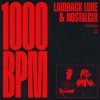
This new phase was linked to his work with Steve Aoki’s label Dim Mak. Releases from the period included 1000 BPM, created with Nostalgix, followed in 2025 by the six-track EP CODE/RED.
The shift highlighted a quality that has defined Luke’s entire career: rather than spending decades reproducing one commercially successful version of house music, he periodically returns to the club styles where he began and adapts them for a new audience.
Kung Fu and Life Away from the Stage
Alongside music, Laidback Luke has spent many years seriously studying Chinese martial arts, particularly Hung Sing Choy Li Fut. He became a qualified instructor, taught kung fu and tai chi, and competed internationally representing the Netherlands.
For Luke, martial arts are not a casual celebrity hobby but an independent discipline he has practised for many years. In interviews, he has repeatedly connected his training with physical fitness, concentration and psychological balance during the demands of intensive touring.
Laidback Luke Discography
Main Albums and Major Releases
- Psyched-Up (The Early Works '96-'98) — 1999
- Electronic Satisfaction — 2002
- Windmill Skill — 2003, DJ mix
- Cream Ibiza Super You & Me — 2011, mix release
- Focus — 2015
- CODE/RED — 2025, EP
Selected Tracks
- Rocking with the Best
- Be — with Steve Angello
- Get Dumb — with Axwell, Steve Angello and Sebastian Ingrosso
- Show Me Love — with Steve Angello featuring Robin S.
- Leave the World Behind — with Axwell, Sebastian Ingrosso and Steve Angello featuring Deborah Cox
- Turbulence — with Steve Aoki featuring Lil Jon
- Natural Disaster — with Example
- Blow — with Martin Solveig
- 1000 BPM — with Nostalgix
Laidback Luke’s Place in Electronic Music
Laidback Luke’s career is remarkable above all for its longevity and for the way it connects several generations of the electronic scene. He began as an underground house and techno producer, gained international recognition in the 1990s, contributed to the development of electro house in the 2000s, became one of the notable artists of the global EDM boom and at the same time helped emerging musicians learn the craft.
His influence cannot be reduced to a single style or hit. The Stalker, Show Me Love, Leave the World Behind and Turbulence belong to entirely different periods of dance music, yet all exist within the same career. It is this ability to move between the underground, mainstream festival culture, the craft of DJing and work with a new generation of producers that defines Laidback Luke’s place in the history of modern electronic music.