




 Dean Lewis
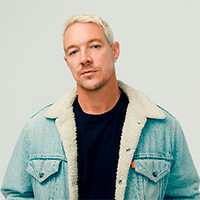
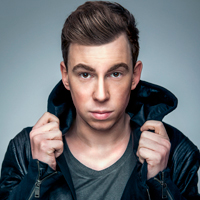
Diplo (real name — Thomas Wesley Pentz; born November 10, 1978, in Tupelo, Mississippi, USA) is an American DJ, music producer, songwriter and founder of the labels Mad Decent and Higher Ground. Throughout his career, he has worked across hip-hop, house, dancehall, baile funk, trap, pop, country and ambient, repeatedly changing musical direction while simultaneously developing several independent projects.
Diplo is the central figure of Major Lazer, formed Jack Ü with Skrillex, is a member of LSD with Sia and Labrinth, and works with Mark Ronson under the name Silk City. Alongside his own releases, he has built one of the most prominent production careers in contemporary popular music.
Mississippi, Florida and the beginning of his musical path
Thomas Wesley Pentz was born in Tupelo, Mississippi, and spent a significant part of his youth in South Florida. The local musical culture had a noticeable influence on his later tastes: Miami bass, Southern hip-hop and club-oriented electronic music would repeatedly appear in different forms throughout his work.
The stage name Diplo is connected with the dinosaur Diplodocus, which fascinated Pentz as a child. Early in his career, he also used the longer version of the name — Diplodocus.
Philadelphia became an important city in his professional development after Pentz moved there while studying at Temple University. He began working actively as a DJ in an environment where hip-hop, electronic music, Baltimore club, pop and other styles could freely coexist within the same set.
Hollertronix and Never Scared
In the early 2000s, Diplo met Philadelphia DJ Low Budget. Together they organised the Hollertronix parties, which became one of the first significant stages of Pentz’s career.
Rather than operating within a single genre, Hollertronix was built around abrupt transitions between Southern rap, Miami bass, Baltimore club, electronic music, pop and rock. In the early 2000s, this kind of approach was still far less common than it would later become in open-format club DJing.
The Never Scared mixtape, released in 2003, became particularly important. Hollertronix helped establish one of the central principles of Diplo’s later work: avoiding attachment to one specific scene and instead searching for connections between different musical cultures and genres.
Florida
Diplo’s debut studio album Florida was released in 2004 through Big Dada, an imprint of Ninja Tune. It differs considerably from the festival-oriented electronic music with which Diplo’s name would later become associated.
Florida is closer to instrumental hip-hop, trip-hop and experimental electronic music. Slow breakbeats, samples and atmospheric arrangements create a more introspective sound than the club-focused work of Hollertronix.
The album remains an important starting point in Diplo’s discography: even here, his interest is less in one particular genre than in the combination of rhythm, found sounds and material drawn from different musical sources.
M.I.A. and Piracy Funds Terrorism
One of the key events in Diplo’s early career was his collaboration with M.I.A.
In 2004, they created the mixtape Piracy Funds Terrorism Vol. 1, combining M.I.A.’s vocal material with hip-hop, dancehall, pop and baile funk. The recording circulated primarily as promotional material, but attracted major attention from the music press and helped introduce both artists to new audiences.
Diplo continued working with M.I.A. and later contributed to material for her album Kala. One of the most important recordings from this collaboration was Paper Planes, produced by Diplo together with Switch. The song’s international success significantly strengthened Pentz’s reputation not only as a club DJ, but also as a studio producer.
Baile funk and Brazil
In the early 2000s, Diplo became interested in Brazilian funk carioca, or baile funk. After discovering the music, he travelled to Rio de Janeiro, where he attended parties and met local producers and performers.
The mixes Favela on Blast and Favela Strikes Back are associated with this period. For part of the English-speaking and European club audience, they became one of the routes through which listeners discovered baile funk, although the scene itself had existed in Brazil long before international music media began taking interest in it.
Diplo later worked with director Leandro HBL on the documentary Favela on Blast, focused on the music and club culture of Rio’s favelas. His interest in the Brazilian scene therefore extended far beyond isolated samples or club tracks and became one of the important directions of his early career.
Mad Decent
In the mid-2000s, Diplo founded his own label, Mad Decent. It was created as a platform for music that did not always fit easily within the established framework of the American electronic music market.
Over the years, Mad Decent released music by Major Lazer, Dillon Francis, Baauer, Bonde do Rolê and many other artists. The label’s catalogue covered dancehall, baile funk, moombahton, trap, bass music, hip-hop and a variety of hybrid forms of club music.
One of Mad Decent’s best-known releases was Baauer’s Harlem Shake, which became an international internet phenomenon in the early 2010s.
The label also gave rise to the Mad Decent Block Party event series. Beginning as a relatively small event in Philadelphia, it gradually developed into a touring festival project.
Major Lazer
In the late 2000s, Diplo and British producer Switch created Major Lazer, a project that would become one of the central parts of his career.
The debut album Guns Don't Kill People... Lazers Do was released in 2009. It combined dancehall and reggae with electronic club music. One of its best-known early tracks was Pon de Floor with Vybz Kartel.
Major Lazer’s line-up changed over time, but Diplo remained the project’s constant figure. In 2013, the group released Free the Universe, followed two years later by Peace Is the Mission.
Lean On and Major Lazer’s international success
Major Lazer’s biggest commercial breakthrough was Lean On, recorded with DJ Snake and singer MØ.
The song appeared on Peace Is the Mission and, for a period in 2015, became the most-streamed song in Spotify history. Instead of the massive drop typical of festival EDM, the track was built around a vocal melody, compact arrangement and rhythmic ideas connected with dancehall and global bass.
Other major tracks from the same period included Light It Up, Powerful and another international hit, Cold Water, featuring Justin Bieber and MØ.
In 2020, Major Lazer released their fourth studio album, Music Is the Weapon. The project later continued collaborating with musicians from different regional scenes: in 2023, the album Piano Republik, created with South African duo Major League DJz, explored amapiano, while in 2025 Major Lazer returned to contemporary dancehall with GYALGEBRA.
Solo music and Revolution
Alongside Major Lazer, Diplo continued releasing his own club-oriented music. In 2013, he issued the Revolution EP, featuring Biggie Bounce, Revolution, Crown and other tracks.
This side of his work was much closer to festival EDM, trap and the American bass scene than the early Florida. In 2014, some of the material from this period was collected on Random White Dude Be Everywhere.
Jack Ü with Skrillex
In 2013, Diplo and Skrillex launched the collaborative project Jack Ü. In February 2015, they released the album Skrillex and Diplo Present Jack Ü, which became one of the most prominent electronic records of the middle of the decade.
Its biggest hit was Where Are Ü Now with Justin Bieber. The producers processed the vocals in an unusual way and built the arrangement around short timbral fragments rather than the standard large festival drop that dominated much of EDM at the time.
At the 2016 Grammy Awards, Where Are Ü Now won Best Dance Recording, while Skrillex and Diplo Present Jack Ü won Best Dance/Electronic Album. These were the first two Grammy wins of Diplo’s career.
After the project’s highly active period in the mid-2010s, Jack Ü ceased operating as a constant ongoing project, while Diplo and Skrillex focused on their own musical directions.
California, LSD and Silk City
In 2018, Diplo released the California EP. Instead of festival electronic music, he turned toward hip-hop and alternative pop, working with Lil Yachty, Santigold, DRAM, Trippie Redd, MØ, GoldLink and Lil Xan.
The same year saw the launch of LSD, bringing together Diplo, Sia and Labrinth. The singles Genius, Audio and Thunderclouds preceded the album LABRINTH, SIA & DIPLO PRESENT... LSD, released in 2019. Within the project, Diplo’s electronic production became part of the strongly psychedelic pop sound associated with Sia and Labrinth.
Another collaborative project from this period was Silk City with producer Mark Ronson, focused on house and disco. Its biggest hit became Electricity featuring Dua Lipa.
In 2019, Electricity won the Grammy for Best Dance Recording, giving Diplo his third Grammy victory.
Higher Ground and house
A separate branch of Diplo’s career is connected with house. In 2019, he launched the specialist label Higher Ground, focused on contemporary club music.
The name was connected with the previously released Higher Ground EP. These recordings marked a shift away from the festival EDM characteristic of the first half of the 2010s toward more direct four-on-the-floor rhythms and club house.
Higher Ground gradually became an independent part of Diplo’s musical activity alongside Mad Decent and Major Lazer.
Thomas Wesley and country
Pentz developed another musical direction under the name Thomas Wesley, derived from the first two parts of his full name. In these releases, electronic music intersects with contemporary American country.
In 2020, he released Diplo Presents Thomas Wesley: Chapter 1 — Snake Oil. The album featured Morgan Wallen, Jonas Brothers, Thomas Rhett, Orville Peck, Cam, Young Thug and other performers.
One of the project’s most successful tracks was Heartless with Morgan Wallen.
In 2023, the series continued with Diplo Presents Thomas Wesley: Chapter 2 — Swamp Savant, once again combining country with pop, hip-hop and electronic production aesthetics.
MMXX
In September 2020, Diplo released MMXX, an ambient album that differs sharply from most of his catalogue.
The conventional dynamics of club music are almost entirely absent. Instead, the record centres on extended synthesizer layers, slow harmonic changes and fragmented vocals. MMXX demonstrated that Diplo’s studio interests extend beyond music designed for the dancefloor.
Diplo and the return to house
In March 2022, Diplo released the self-titled album Diplo through Higher Ground. In contrast with the ambient experiment of MMXX, the record was focused primarily on house and contemporary club music.
The album featured Miguel, Paul Woolford, Kareen Lomax, Elderbrook, TSHA, Leon Bridges and other singers and producers.
One of the main singles was Don't Forget My Love with Miguel. The song received a Grammy nomination for Best Dance/Electronic Recording, while the album itself was nominated for Best Dance/Electronic Music Album.
d00mscrvll
In January 2026, Diplo and the project d00mscrvll released the collaborative 17-track album d00mscrvll.
The record explores phonk, Memphis rap and heavy contemporary bass music. It once again reflects Pentz’s longstanding interest in regional forms of American hip-hop — the same musical environment that had already influenced his DJ sets during the Hollertronix era.
The album differs significantly from both the house releases of Higher Ground and the country projects of Thomas Wesley, underlining Diplo’s characteristic habit of pursuing several musical directions at the same time.
Production work with other artists
Diplo’s own projects represent only part of his career. Following the success of his collaboration with M.I.A., he became a highly sought-after producer in pop, hip-hop and electronic music.
Over the years, Pentz has worked with Beyoncé, Madonna, Britney Spears, Gwen Stefani, Snoop Dogg, Shakira, Justin Bieber, Ariana Grande and many other performers.
This part of his career is particularly important for understanding Diplo as a musician. He works not only as an artist with a recognisable name of his own, but also as a producer capable of adapting to another performer’s material.
Diplo's Revolution and Records on Records
Since 2018, SiriusXM has operated the Diplo's Revolution channel, dedicated to electronic and club music, curated selections and DJ sets.
One of its main programmes is Records on Records. In the weekly show, Diplo presents new dance releases, his own edits and music he uses in his DJ sets.
Records on Records also airs on Minatrix.FM on Sundays at 17:00.
Grammy Awards
Diplo has won three Grammy Awards and received 13 nominations.
All three victories are connected with collaborative projects:
- 2016 — Best Dance Recording — Where Are Ü Now, Jack Ü feat. Justin Bieber
- 2016 — Best Dance/Electronic Album — Skrillex and Diplo Present Jack Ü
- 2019 — Best Dance Recording — Electricity, Silk City feat. Dua Lipa.
He has also received nominations as a producer and was represented in the Album of the Year category for his contributions to Beyoncé’s Lemonade and Justin Bieber’s Purpose.
Diplo discography
Main solo and collaborative albums
- 2004 — Florida
- 2020 — Diplo Presents Thomas Wesley: Chapter 1 — Snake Oil
- 2020 — MMXX
- 2022 — Diplo
- 2023 — Diplo Presents Thomas Wesley: Chapter 2 — Swamp Savant
- 2026 — d00mscrvll — with d00mscrvll.
Selected EPs and compilations
- 2013 — Revolution EP
- 2014 — Random White Dude Be Everywhere
- 2018 — California EP
- 2019 — Higher Ground EP.
Major Lazer
- 2009 — Guns Don't Kill People... Lazers Do
- 2013 — Free the Universe
- 2015 — Peace Is the Mission
- 2020 — Music Is the Weapon
- 2023 — Piano Republik — with Major League DJz
- 2025 — GYALGEBRA.
Other projects
- 2015 — Skrillex and Diplo Present Jack Ü — Jack Ü
- 2019 — LABRINTH, SIA & DIPLO PRESENT... LSD — LSD.
Selected key tracks
- Paper Planes — M.I.A.; produced by Diplo and Switch
- Revolution — Diplo feat. Faustix, ImanoS & Kai
- Lean On — Major Lazer & DJ Snake feat. MØ
- Where Are Ü Now — Jack Ü feat. Justin Bieber
- Cold Water — Major Lazer feat. Justin Bieber & MØ
- Electricity — Silk City feat. Dua Lipa
- Thunderclouds — LSD
- Heartless — Diplo feat. Morgan Wallen
- On My Mind — Diplo & SIDEPIECE
- Don't Forget My Love — Diplo & Miguel
- Heartbroken — Diplo, Jessie Murph & Polo G.
Diplo’s musical style
Diplo’s work cannot be accurately described through a single genre. Florida grew out of instrumental hip-hop and experimental electronic music; Hollertronix came from open-format DJ culture; Major Lazer is closely connected with dancehall and Caribbean music; Jack Ü with the American bass scene; Silk City and Higher Ground with house; and Thomas Wesley with contemporary country.
Despite these constant stylistic changes, his working method is remarkably consistent. Diplo takes an interest in local music scenes, rhythms and production methods and then connects them with other cultural and commercial contexts. As a result, baile funk, dancehall, moombahton, amapiano, Memphis rap, country and various forms of house do not appear in his discography as strictly sequential phases, but often exist simultaneously.
For this reason, Diplo is more accurately understood not as a representative of one specific EDM genre, but as a producer and DJ working at the intersection of different musical scenes.
Diplo’s significance
Diplo’s career spans several distinct periods in the development of popular electronic music. Hollertronix shaped him as a DJ and selector, Florida demonstrated Pentz’s abilities as an independent studio artist, while his work with M.I.A. opened the path toward an international production career.
Mad Decent transformed his interest in emerging club styles into an independent label platform. Major Lazer made engagement with dancehall and other regional scenes a central part of a major international electronic project, while Jack Ü, LSD and Silk City demonstrated how differently Diplo could operate within contemporary popular music.
The house releases of Higher Ground, the country projects under Thomas Wesley, the ambient album MMXX and the turn toward phonk and Memphis rap on d00mscrvll belong to very different musical territories. This ability to continually change context without restricting himself to a single genre or project remains one of Diplo’s defining characteristics as a producer.