







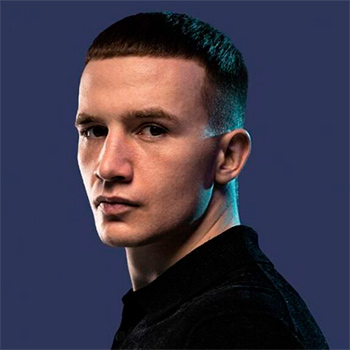
 ICEGERGERT

Justin Bieber (full name — Justin Drew Bieber) is a Canadian singer, songwriter and musician, and one of the most commercially successful pop artists of his generation. He was born on 1 March 1994 in London, Ontario, Canada, and grew up in Stratford. His music has developed at the intersection of pop, R&B, electronic dance music, soul and, during certain periods, gospel.
Bieber’s career occupies a special place in the history of digital-era pop music. He became one of the first global pop artists whose professional career grew directly out of user-uploaded videos on YouTube. Home recordings by the future singer led to connections with Scooter Braun, Usher and the major record industry, while the online audience that formed even before his debut album became an important part of his promotional model.
Over the following years, Bieber evolved from teenage teen-pop into R&B, EDM, dance-pop and more experimental contemporary soul. His discography has included global hits such as Baby, Sorry, Love Yourself, What Do You Mean?, Where Are Ü Now, Peaches, Stay, Daisies and many other songs. As of 2026, the Recording Academy credits Bieber with two Grammy wins and 27 nominations.
Childhood and first steps in music
Justin Drew Bieber was born on 1 March 1994 in London, Ontario, and spent his childhood in Stratford, approximately 40 kilometres away.
His parents, Pattie Mallette and Jeremy Bieber, were very young and began living separately soon after their son’s birth. Justin was raised primarily by his mother, with help from her parents. Despite this, Bieber maintained a relationship with his father.
He did not receive a formal academic music education. During childhood and adolescence, he taught himself to play drums, guitar, piano and trumpet, while also playing sports and performing at small local events.
In 2007, twelve-year-old Bieber took part in a local singing competition in Stratford and, among other songs, performed Ne-Yo’s So Sick. His mother uploaded a recording of the performance to YouTube so relatives and friends could watch it. More covers of R&B and pop songs were then uploaded to the channel.
Those amateur videos would later completely change his life.
YouTube and Scooter Braun
In 2008, one of Bieber’s videos was discovered by American music manager Scott “Scooter” Braun, who had previously worked in the marketing division of So So Def.
Braun tracked down the young performer and contacted his family. After discussions, Bieber and his mother travelled to Atlanta, where he recorded demo material and met Usher.
Raymond Braun Media Group — RBMG, a joint venture between Braun and Usher, was created around the young artist. Bieber later auditioned for Island Def Jam executive L.A. Reid and signed with Island Records in 2008.
Justin Timberlake’s team also showed genuine interest in Bieber, but his career ultimately developed under the guidance of Braun and Usher.
The story became one of the best-known early examples of an internet platform first building an artist’s audience and only then leading to a major-label contract.
One Time and My World
Bieber’s debut single One Time was released in 2009 and reached No. 17 on the Billboard Hot 100. In November, it was followed by the seven-track EP My World, which peaked at No. 5 on the Billboard 200.
The release included:
- One Time
- Favorite Girl
- Down to Earth
- Bigger
- One Less Lonely Girl
- First Dance
- Love Me
All seven tracks eventually appeared on the Billboard Hot 100 — an unusual achievement for the debut release of a new artist. Billboard documented all seven tracks entering the chart by November 2009.
The My World period created the early “Biebermania” phenomenon: an enormous teenage fanbase, social media, YouTube, constant direct contact with audiences and an extremely rapid transition from internet performer to global celebrity.
My World 2.0 and Baby
On 23 March 2010, Bieber released his first full-length studio album, My World 2.0.
The album debuted at No. 1 on the Billboard 200. Bieber became the youngest solo male artist to top the US albums chart since Stevie Wonder in 1963.
The lead single was Baby featuring Ludacris. The song reached No. 5 on the Billboard Hot 100 and eventually became one of the most recognisable pop hits of the early 2010s.
The RIAA later awarded Baby an exceptionally high multi-platinum certification; as early as 2013, the organisation described it as its highest-certified song at that time.
Musically, early Bieber combined teen-pop with contemporary R&B: relatively light pop arrangements were built around vocal melodies already clearly influenced by the American R&B tradition.
Never Say Never and the concert phenomenon
In February 2011, the documentary concert film Justin Bieber: Never Say Never was released, combining the story of the singer’s early career with footage from his touring.
In the United States, the film grossed approximately $73 million and at the time set a domestic box-office record for a concert film, surpassing Michael Jackson's This Is It. Much later, that record was beaten by Taylor Swift: The Eras Tour.
The film captured the scale of the early Bieber phenomenon particularly well: at the time of its release, he was only sixteen years old, yet his tour was already filling major arenas.
Under the Mistletoe
On 1 November 2011, Bieber released his second studio album — the Christmas record Under the Mistletoe.
It debuted at No. 1 on the Billboard 200 and became the first Christmas album by a male artist to debut at No. 1 in the history of the chart. Therefore, describing it as “the first Christmas album ever to debut at No. 1” would be inaccurate.
Mariah Carey, Usher, Boyz II Men, Busta Rhymes and The Band Perry appeared on the album.
The main original single was Mistletoe.
Believe and the transition beyond teen stardom
In 2012, Bieber released his third studio album, Believe.
The record represented the first obvious transition from teenage teen-pop toward more mature pop/R&B and electronic dance music.
Key singles included:
- Boyfriend
- As Long as You Love Me
- Beauty and a Beat
- All Around the World
Boyfriend reached No. 2 on the Billboard Hot 100, while Believe itself debuted at No. 1 on the Billboard 200.
The role of electronic production, hip-hop and R&B increased noticeably on the album, while Bieber’s vocal image also changed.
The worldwide Believe Tour continued his transition into the category of fully established arena artists.
Music Mondays and Journals
In autumn 2013, Bieber launched the Music Mondays project: for ten consecutive weeks, he released one new song every Monday.
They included:
- Heartbreaker
- All That Matters
- Hold Tight
- Recovery
- Bad Day
- All Bad
- PYD
- Roller Coaster
- Change Me
- Confident
In December, these songs were combined with additional material in Journals.
An important discographical clarification is necessary here: Journals was originally released as a digital compilation of the Music Mondays project, rather than as a conventional next studio album. Billboard characterised it in precisely this way.
Musically, Journals became one of the most important turning points in Bieber’s career. The production became noticeably more minimalist and R&B-oriented, with influences from contemporary and alternative R&B.
Years later, the project’s reputation changed: the material developed a lasting audience, and in April 2026 Journals entered the Billboard 200 for the first time — more than twelve years after its original release, following renewed interest surrounding Coachella.
The 2013–2014 period
Alongside his musical maturation, Bieber went through one of the most unstable periods of his public life.
In 2013–2014, conflicts and legal incidents regularly surrounded him. For a music encyclopedia, there is no need to list every episode in detail; their impact on his later career is more important.
After several years of almost uninterrupted teenage fame, Bieber began releasing solo material much less frequently, and his next full studio album did not appear until autumn 2015.
Where Are Ü Now and the changing sound of electronic pop
One of the key turning-point releases was Where Are Ü Now, recorded by Jack Ü — Skrillex and Diplo — with vocals by Justin Bieber.
The song was radically different from his earlier teen-pop. Unusual vocal processing, minimalist electronic percussion and future-bass production became part of a new wave of interaction between EDM and mainstream pop music.
It was for Where Are Ü Now that Bieber won his first Grammy — Best Dance Recording at the 2016 ceremony.
It is more accurate to say not that Bieber “created tropical house” or opened the door for Kygo and other producers, but that the success of Where Are Ü Now and the subsequent Purpose helped establish more minimalist electronic production, future bass, dancehall and tropical-house elements within the global pop mainstream.
Purpose
On 13 November 2015, Bieber released his fourth studio album, Purpose, one of the most important releases of his entire career.
It debuted at No. 1 on the Billboard 200, becoming his sixth No. 1 release in the United States.
Three main singles became global hits:
- What Do You Mean?
- Sorry
- Love Yourself
What Do You Mean? became Bieber’s first single to debut directly at No. 1 on the Billboard Hot 100. He was 21 years old at the time, earning him a separate Guinness record as the youngest solo male artist to debut a song at No. 1 on the US chart.
His success in the United Kingdom was particularly impressive. In January 2016, Love Yourself, Sorry and What Do You Mean? simultaneously occupied the top three positions of the UK Singles Chart. Bieber became the first artist in the history of the British chart to occupy the entire Top 3 with his own songs.
Sorry later became the first song to exceed 100 million streams in the history of the UK Official Chart.
Purpose as a musical turning point
Purpose changed the way Bieber was perceived within the music industry.
While his early albums were primarily positioned around his teen-idol image, contemporary R&B, dance-pop, future bass and more restrained electronic production became central here.
Skrillex, Diplo, BloodPop, Poo Bear, Benny Blanco and other writers and producers contributed to the record.
The album received a Grammy nomination for Album of the Year, while Love Yourself was nominated for Song of the Year.
Despacito and global collaborations
After Purpose, Bieber slowed the pace of solo album releases for several years but remained highly visible through collaborations.
In 2016–2017, the following tracks were released:
- Cold Water — Major Lazer featuring Justin Bieber and MØ
- Let Me Love You — DJ Snake featuring Justin Bieber
- I'm the One — DJ Khaled featuring Bieber, Quavo, Chance the Rapper and Lil Wayne
- Despacito Remix — Luis Fonsi, Daddy Yankee and Justin Bieber
The Despacito remix became one of the biggest international hits of the decade and helped the Spanish-language song reach an even broader English-speaking audience. The recording received Grammy nominations for Record of the Year, Song of the Year and Best Pop Duo/Group Performance.
Marriage to Hailey Baldwin
In 2018, Bieber married American model Hailey Baldwin, later known as Hailey Bieber.
The couple legally married in September 2018 and held a larger wedding ceremony in 2019. Their relationship later became one of the central themes in Bieber’s songs during the Changes, Justice and SWAG periods.
10,000 Hours and a second Grammy
In 2019, Bieber recorded the song 10,000 Hours with country duo Dan + Shay.
The track became another example of the singer’s stylistic mobility and won the Grammy for Best Country Duo/Group Performance in 2021. This was Bieber’s second Grammy victory after Where Are Ü Now.
Thus, as of 2026, he has two Grammy Awards:
- Best Dance Recording — Where Are Ü Now, 2016
- Best Country Duo/Group Performance — 10,000 Hours, 2021.
Changes
On 14 February 2020, Bieber released his fifth studio album, Changes.
The record was much more strongly oriented toward contemporary R&B than Purpose. Its central themes included relationships, marriage, intimacy and the transition toward a calmer personal life.
Key tracks included:
- Yummy
- Intentions
- Forever
- Come Around Me
- Available
- Changes
The album received a Grammy nomination for Best Pop Vocal Album, while Yummy was nominated for Best Pop Solo Performance.
Health and touring pauses
In January 2020, Bieber revealed that he had previously been diagnosed with Lyme disease, as well as a serious case of mononucleosis.
In June 2022, the singer publicly disclosed that he had Ramsay Hunt syndrome, which caused partial paralysis on one side of his face. The condition forced him to postpone part of the Justice World Tour.
After briefly returning to the stage, Bieber again paused touring, explaining that he needed to focus on his health. The remaining Justice World Tour dates were ultimately cancelled.
For an encyclopedia, these confirmed facts are sufficient; additional speculation about the artist’s health should not be included without his own statements.
Justice
On 19 March 2021, Bieber released his sixth studio album, Justice.
It debuted at No. 1 on the Billboard 200 and became Bieber’s eighth release to top the US albums chart.
Its main songs included:
- Holy
- Lonely
- Anyone
- Hold On
- Peaches
- Ghost
Peaches, featuring Daniel Caesar and Giveon, became a particularly major success.
The song debuted at No. 1 on the Billboard Hot 100 at the same time that Justice debuted at No. 1 on the Billboard 200. Bieber became the first solo male artist to debut simultaneously at the top of both major US charts in the same week.
The expanded version of Justice received eight Grammy nominations in 2022, including Album of the Year, while Peaches was nominated for Record and Song of the Year.
Freedom
In April 2021, shortly after Justice, Bieber unexpectedly released the EP Freedom.
The six-track project was directly connected to the performer’s Christian faith and musically combined gospel, R&B and contemporary pop.
Unlike Bieber’s main studio albums, Freedom was a more intimate project and was not accompanied by a traditional large-scale promotional campaign.
Stay
In summer 2021, Bieber joined The Kid LAROI on the single Stay.
The song spent seven weeks at No. 1 on the Billboard Hot 100 and became one of the biggest pop hits of 2021.
The release once again demonstrated Bieber’s ability to exist across multiple generations of pop music: by that point, his own global fame had already lasted for more than a decade, while The Kid LAROI represented a new generation of performers raised in the streaming era.
Sale of his music catalogue
In January 2023, Bieber completed one of the largest catalogue deals among artists of his generation.
Hipgnosis Songs Capital acquired his share of publishing rights, as well as rights to certain income from master recordings and neighbouring rights. Billboard estimated the deal at approximately $203 million.
The transaction covered a significant portion of the catalogue created through the end of 2021.
The rights sale did not mean that Bieber was ending his own musical activity, but it became an important business event in his career.
End of his long-term work with Scooter Braun
Scooter Braun had remained a central figure in Bieber’s career since discovering him on YouTube in 2008.
By the mid-2020s, their professional relationship had ended. Braun announced his retirement from artist management in June 2024 and later confirmed himself that Bieber had begun an independent stage of his career.
This became especially apparent during the creation of the next album: SWAG was Bieber’s first full-length release made without Braun’s former management structure.
Birth of his son
In May 2024, Justin and Hailey Bieber announced that they were expecting their first child.
Their son Jack Blues Bieber was born on 23 August 2024.
Fatherhood became an important part of the context surrounding Bieber’s next creative period and was directly reflected in the themes of SWAG.
Return to the studio
After the cancellation of the Justice World Tour, Bieber went several years without releasing a new solo studio album.
In 2024, confirmations emerged that he had returned to active studio work, including sessions with Mk.gee.
The new material moved in a different direction from the polished pop production of Justice: more live instrumentation, looser R&B structures, lo-fi aesthetics and less formalised vocal performances.
SWAG
On 11 July 2025, without a lengthy advance campaign, Bieber released his seventh studio album, SWAG — his first full-length release since Justice four years earlier.
The album included:
- All I Can Take
- Daisies
- Yukon
- Go Baby
- Things You Do
- Butterflies
- Way It Is
- First Place
- Soulful
- Walking Away
- Devotion
- 405
- Swag
- and other tracks
Dijon, Mk.gee, Carter Lang, Eddie Benjamin, Gunna, Sexyy Red, Cash Cobain and other musicians contributed to the project. Official credits show Bieber himself playing a significant role in writing and producing the material.
Musically, SWAG is much more strongly oriented toward contemporary R&B, neo-soul and minimalist pop than Justice. The album deliberately avoids trying to recreate the electronic mega-hits of the Purpose era.
SWAG debuted at No. 2 on the Billboard 200, while Daisies also debuted at No. 2 on the Billboard Hot 100. Sixteen tracks from the album entered the Hot 100 simultaneously.
SWAG II
Only two months later, on 5 September 2025, Bieber unexpectedly released SWAG II.
The project contained another 23 new tracks and continued the creative cycle of SWAG, while making the pop component more prominent.
SWAG II reached No. 4 on the Billboard 200.
The rapid release of two large projects made 2025 the first period in many years in which Bieber presented a substantial amount of completely new solo material.
Grammy 2026
SWAG received four Grammy nominations in 2026:
- Album of the Year
- Best Pop Vocal Album
- Best Pop Solo Performance — Daisies
- Best R&B Solo Performance — Yukon.
None of the four nominations resulted in another win, so Bieber’s total number of Grammy victories remained at two.
On 1 February 2026, he returned to the Grammy stage and performed Yukon in a minimalist solo format with electric guitar and loops. It was his first televised musical performance in several years.
Coachella 2026
The next major stage of his comeback was Coachella 2026, where Justin Bieber performed as a full festival headliner for the first time.
Before Coachella, he played small shows at The Roxy and Troubadour in Los Angeles — his first full solo concerts in approximately four years.
On 11 and 18 April, Bieber headlined Coachella. Much of the sets was built around material from SWAG and SWAG II, although references to his earlier discography were also incorporated into the programme.
The performances triggered renewed interest in his older catalogue: after the first weekend, several previous albums and singles returned to the charts, while Journals entered the Billboard 200 for the first time.
In June 2026, concert material was released as SWAG Live From Coachella, continuing the release cycle of this new period.
Musical evolution
Justin Bieber’s career illustrates the transformation of mainstream pop music from the late 2000s to the mid-2020s particularly well.
2009–2011: teen-pop and contemporary R&B
My World and My World 2.0 were built around teenage pop music with a strong influence from American R&B.
Vocal melody, romantic lyrics and relatively traditional pop arrangements remained at the centre.
2012: electronic pop
On Believe, EDM, synth-pop and dance production became more prominent.
Beauty and a Beat and As Long as You Love Me reflected the period when American and European EDM was rapidly entering mainstream pop.
2013: R&B and Journals
Journals became Bieber’s clearest early turn toward R&B.
The production became darker and more minimalist, while song structures became less oriented toward teenage radio pop.
2015: Purpose
Where Are Ü Now and Purpose connected Bieber with a new wave of electronic producers.
Future bass, dancehall, tropical-house and EDM elements became part of the artist’s global pop sound.
2020: Changes
On Changes, R&B once again became the main stylistic reference point.
2021: Justice
Justice combined pop, R&B, gospel, electronic and synth-pop, returning the artist to a broader radio format.
2025–2026: SWAG
On SWAG and SWAG II, Bieber moved toward looser contemporary R&B, neo-soul, lo-fi pop and more organic production.
During this period, there was far less emphasis on creating the classic “perfect” pop single and greater attention to atmosphere, improvisational vocal delivery and the overall continuity of the album.
Vocals
Early Bieber was primarily a high teenage tenor.
After his voice changed with age, his delivery gradually evolved: the lower register became more noticeable, while melisma, falsetto and contemporary R&B phrasing became more prominent in his music.
His ability to adapt his voice to different production models — from Baby to Where Are Ü Now, Peaches and Yukon — became one of the factors behind the longevity of his career.
The role of YouTube and social media
Bieber’s most fundamental influence is connected not with inventing a specific music genre, but with the model of how an artist can emerge.
He appeared at a time when YouTube was only beginning to transform from a user-video website into one of the most important channels for music discovery.
His audience began to form before the traditional album campaign and became an active factor for the record industry. Scooter Braun later explicitly described the use of YouTube as part of the strategy for developing the young artist.
This model later became common: online covers, self-produced demos, short videos and an already existing digital audience increasingly preceded a major-label contract.
For this reason, Bieber is more accurately described as one of the earliest and largest examples of an internet-driven pop career, rather than literally “the first internet artist in history”.
The influence of electronic music
Interaction with the electronic scene occupies a special place in Bieber’s career.
He has worked with:
- Skrillex
- Diplo
- Major Lazer
- DJ Snake
- BloodPop
- David Guetta
- Benny Blanco
- and other electronic producers
The 2015–2017 period was particularly important.
Where Are Ü Now, Sorry, Cold Water and Let Me Love You demonstrated how naturally electronic club production could function inside mainstream vocal pop.
At the same time, it would be incorrect to credit Bieber with creating future bass or tropical house: these styles existed independently of him. His role was rather in scaling this kind of sound within the global pop market.
Awards and chart achievements
Among Justin Bieber’s key achievements:
- 2 Grammy Awards and 27 nominations as of 2026
- Grammy for Where Are Ü Now
- Grammy for 10,000 Hours
- eight album projects that had reached No. 1 on the Billboard 200 by the Justice period
- the first solo male artist to debut simultaneously at No. 1 on the Billboard Hot 100 and Billboard 200 with Peaches and Justice
- the first artist to occupy all three top positions of the UK Singles Chart simultaneously
- Baby — one of the most highly certified songs of the digital era in the United States
- seven UK No. 1 singles according to Official Charts
- numerous Guinness records connected to charts, streaming and social-media audiences.
Main discography
Studio albums
- My World 2.0 — 2010
- Under the Mistletoe — 2011
- Believe — 2012
- Purpose — 2015
- Changes — 2020
- Justice — 2021
- SWAG — 2025
- SWAG II — 2025
EPs
- My World — 2009
- Freedom — 2021
Other projects and compilations
- Never Say Never: The Remixes — 2011
- Believe Acoustic — 2013
- Journals — 2013
- SWAG Live From Coachella — 2026
Selected songs
Early period
- One Time
- One Less Lonely Girl
- Baby
- Somebody to Love
- U Smile
- Never Say Never
Believe and Journals
- Boyfriend
- As Long as You Love Me
- Beauty and a Beat
- Heartbreaker
- All That Matters
- Confident
Purpose
- Where Are Ü Now
- What Do You Mean?
- Sorry
- Love Yourself
- Company
Collaborations
- Cold Water
- Let Me Love You
- I'm the One
- Despacito Remix
- 10,000 Hours
- Stay
Changes and Justice
- Yummy
- Intentions
- Lonely
- Holy
- Anyone
- Peaches
- Ghost
SWAG and SWAG II
- Daisies
- Yukon
- Go Baby
- First Place
- Walking Away
- Devotion
- Speed Demon
Justin Bieber holds an important place in the history of pop music not only because of the number of hits he has released.
His early story became one of the clearest examples of the music industry’s transition toward a digital model of discovering new artists: user-uploaded videos on YouTube built an audience before the traditional record-industry campaign had even begun.
What followed was a level of longevity that is extremely rare for a teenage pop star. Bieber managed to survive the transformation of his own voice, changes in his audience, the transition from teen-pop to R&B, the EDM era, long breaks, health problems and changes within his professional team.
Journals expanded his R&B identity, Purpose became one of the defining pop releases of the mid-2010s, Justice delivered another major commercial peak, while SWAG and SWAG II opened a third adult phase of his career, one far less dependent on the earlier teen-pop and EDM formula.
His return to the Grammy stage and headlining performances at Coachella in 2026 demonstrated that almost two decades after his first homemade YouTube videos, Bieber remains an active artist capable of working with his own history while continuing to change musical direction.