


 Duran Duran

DJ Snake (real name — William Sami Étienne Grigahcine; born 13 June 1986, Paris, France) is a French DJ and music producer of Algerian descent, and one of the most successful figures of his generation on the global electronic music scene. His music sits at the intersection of EDM, trap, dubstep, hip-hop, reggaeton and other areas of club and popular music. He gained international recognition through tracks including Turn Down for What, Lean On, You Know You Like It, Middle, Let Me Love You, Taki Taki, Loco Contigo, Magenta Riddim and Disco Maghreb.
DJ Snake’s career is distinguished by a rare ability to work across several musical environments at once. He began within Parisian hip-hop culture, received his first serious studio commissions as a producer for other artists, became one of the central figures of festival EDM in the mid-2010s, and later increasingly combined electronic music with Latin American, African, Arab and Asian traditions. This approach reached its fullest expression on his third album, Nomad.
Ermont, graffiti and his first DJ experiences
William was born in Paris and grew up in Ermont, a suburb of the French capital. His family has roots in Algeria, and his North African background later became an important part of his own musical identity. DJ Snake himself has consistently emphasised both the French and Algerian sides of his culture.
Before music, one of his main teenage interests was graffiti. The alias Snake originated in that environment. According to the musician, the nickname stuck because of his ability to escape from the police after illegally painting graffiti. When William began performing as a DJ, he simply added DJ to the name Snake that was already familiar within his circle.
He began DJing at around the age of 14. French hip-hop culture made a strong impression on him, particularly the famous scene featuring Cut Killer in Mathieu Kassovitz’s film La Haine. DJ Snake has also named KRS-One and Cypress Hill among his early musical influences. By the age of fifteen, he had left school and spent some time working in a record shop, before later beginning to play regularly in Paris clubs.
This background is important for understanding his later style. DJ Snake did not enter electronic music through the classic European house or techno schools: his original professional environment was closely connected to hip-hop, rhythm-driven music, club DJing and the culture of the Paris suburbs.
Behind-the-scenes work and Lady Gaga
During his early years, DJ Snake worked far more often as a producer than as a solo artist. One of the major turning points came during the creation of Lady Gaga — Born This Way. Material he created became the basis for the track Government Hooker, which he worked on together with DJ White Shadow and other members of the album’s production team. In official Recording Academy data, DJ Snake is listed among the producers of Born This Way.
When Born This Way was nominated for a Grammy in the Album of the Year category, DJ Snake also received a nomination as one of the album’s producers. This happened before his own international breakthrough as an artist. He later continued working with Lady Gaga and contributed material to the album ARTPOP.
This period revealed an important side of his profession: long before becoming a major festival DJ, Snake already understood the structure of contemporary pop production and knew how to combine electronic production with an artist’s voice. That ability to work at the boundary between club music, hip-hop and pop would later become the foundation of his biggest hits.
Turn Down for What: his own international breakthrough
The breakthrough came in 2013 with the release of Turn Down for What, recorded with American rapper Lil Jon. The track combined heavy electronic bass, trap and the distinctive energy of crunk, sounding markedly different from much of the commercial dance music of the period.
Turn Down for What reached No. 4 on the Billboard Hot 100, transforming DJ Snake from a producer known within the industry into an international artist. The music video, directed by the duo Daniels, played an equally important role: its absurd and deliberately exaggerated visual concept turned the video into a cultural phenomenon in its own right.
The video won the MTV Video Music Award for Best Direction and was nominated for a Grammy in the Best Music Video category. As a result, by the middle of the decade DJ Snake had already received two Recording Academy nominations — for Born This Way and Turn Down for What.
His next major club release was Get Low with Dillon Francis. It reinforced Snake’s reputation as one of the leading producers in festival trap and bass music, although he almost immediately began demonstrating that he had no intention of limiting himself to that sound.
You Know You Like It and Lean On
One of the most revealing works from his early period was DJ Snake’s remix of AlunaGeorge — You Know You Like It. The new version transformed a more restrained British electronic song into a heavy bass-driven track and later achieved international success in its own right. The official single was released in 2014.
An even bigger moment came with Lean On — a collaboration between Major Lazer and DJ Snake featuring Danish singer MØ, released in 2015. The track became one of the defining songs of the transitional period between festival EDM and a more rhythmically diverse form of global pop music.
In November 2015, Spotify announced that Lean On had become the most-streamed track in the history of the service at that time. It was also the most-streamed song on Spotify across the whole of 2015.
It is especially significant that Snake’s first two enormous hits were completely different from one another. Turn Down for What was built around the aggressive energy of trap and crunk, while Lean On relied on minimalist rhythm, a distinctive vocal melody and elements that could not be reduced to the familiar American EDM formula. Even at that stage, it was clear that stylistic mobility would become one of the defining features of his career.
Encore and Let Me Love You
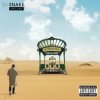
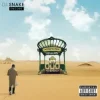
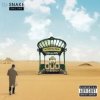
DJ Snake’s first studio album, Encore, was released on 5 August 2016. The record contained 14 tracks and brought together artists from different areas of the music industry, including Skrillex, Travis Scott, Young Thug, Migos, Jeremih, Swizz Beatz, George Maple and others.
One of its central singles was Middle featuring Bipolar Sunshine. In contrast with the heavier material from his earlier period, Snake focused here on a softer electronic rhythm, a memorable melody and a fully developed pop song structure.
The biggest commercial hit from Encore was Let Me Love You featuring Justin Bieber. The track firmly established DJ Snake within the global pop industry, but the album itself deliberately avoided following a single direction: trap, house, hip-hop, bass music and much calmer vocal tracks all existed alongside one another.
Pardon My French and Premiere Classe
Alongside his solo career, DJ Snake maintained close ties with the French electronic scene. Together with Tchami, Malaa and Mercer, he formed the core of the Pardon My French project. It operated as a creative collective, a series of joint performances and later as an independent live brand.
In 2018, Snake launched his own label, Premiere Classe. Its first release was Whistle by 4B and Teez. From the outset, the idea behind the label was not simply to release music by its founder: Snake wanted to use the influence he had already gained to promote emerging producers and records that did not always fit the expectations of major companies.
Arc de Triomphe and A Different Way
DJ Snake’s connection with Paris gradually became a distinct part of his public image. In September 2017, he premiered A Different Way featuring Lauv during a special performance at the Arc de Triomphe. The song was co-written by Ed Sheeran, while the unusual presentation highlighted the scale his career had already reached by that point.
In the years that followed, the idea of large-scale Paris concerts developed further: from arenas to football stadiums and eventually to the Stade de France.
Taki Taki and the album Carte Blanche
In autumn 2018, DJ Snake released Taki Taki, recorded with Ozuna, Cardi B and Selena Gomez. The track marked another major shift in Snake’s catalogue, towards closer engagement with reggaeton and Spanish-language pop music.
His second studio album, Carte Blanche, arrived in 2019 and contained 17 tracks. Alongside Taki Taki, it included Magenta Riddim, Loco Contigo, Enzo, Fuego, Butterfly Effect, Recognize and other works.
Magenta Riddim particularly reflected Snake’s interest in music outside the Western club tradition. Both the track and its visual presentation drew on an Indian cultural setting, while Loco Contigo with J Balvin and Tyga continued his movement towards reggaeton and Latin American music.
Carte Blanche therefore consolidated a model that would be explored even more fully several years later on Nomad: DJ Snake builds an album not around one genre, but around his own role as a producer capable of connecting otherwise separate musical scenes.
Paris La Défense Arena and Parc des Princes
In February 2020, DJ Snake staged a large-scale solo concert at Paris La Défense Arena. Around 40,000 people watched a production with enormous stage design, centred around a replica of the Arc de Triomphe. Official venue materials describe him as the first electronic music artist to perform a concert of that scale there.
The next step was Parc des Princes, the home stadium of Paris Saint-Germain. DJ Snake performed there on 11 June 2022, when the venue began hosting major music events again for the first time in more than a decade.
These performances matter not only as indicators of popularity. Paris and its suburbs continually reappear throughout Snake’s music and visual language: from the early hip-hop environment of Ermont to the stadium concerts of his international career.
Disco Maghreb and his Algerian roots
In 2022, DJ Snake released one of his most personal works — Disco Maghreb. The title referred to the famous Algerian music shop and label in Oran associated with the history of raï. The music video was also filmed in Algeria.
DJ Snake described the track as a musical bridge between generations and cultures across North Africa, the Arab world and a wider international audience. Unlike many of his earlier works, where ethnic elements were used primarily as part of a global club palette, Disco Maghreb was directly connected with his own heritage.
He later said that he was equally proud of the French and Algerian sides of his background, and that Algerian music, culture and food had been present in his life since childhood.
The Outlaw — DJ Snake’s heavier side
In 2024, DJ Snake introduced a separate stage project called The Outlaw. It debuted at the American festival Lost Lands. Under the new name, the artist focused on heavier bass music, dubstep and experimental club material, deliberately separating this side of his work from the more widely known DJ Snake repertoire.
The musician himself stressed that The Outlaw does not replace DJ Snake. It is an additional space for more aggressive material that is less oriented towards a mass-market format. This separation allowed him to retain creative freedom without turning his main project exclusively into heavy bass music.
Stade de France and The Final Show
On 10 May 2025, DJ Snake staged one of the largest solo performances of his career — The Final Show at the Stade de France. Around 80,000 tickets sold out within minutes. After the main concert, an additional party was held that same evening at Paris’s Accor Arena for around 20,000 people.
The title The Final Show could have been interpreted as an announcement of retirement, but in reality the concert marked the end of a particular phase rather than DJ Snake’s departure from music. Festival performances, the development of The Outlaw and work on a new album all continued afterwards.
It was at the Stade de France that the artist officially revealed the title of his next album — Nomad.
Nomad — the third studio album
DJ Snake’s third studio album, Nomad, was released on 7 November 2025 — six years after Carte Blanche. It contains 17 tracks and was released by DJ Snake Music Productions in partnership with Interscope Records.
The title proved to be an accurate description of Snake’s entire creative model. The album is structured as a journey through different musical cultures and includes material connected with Latin America, Africa, the Middle East, the United States, Europe and South Korea. Contributors include J Balvin, Stray Kids, Future, Travis Scott, Don Toliver, Peso Pluma, Damian Marley, Bipolar Sunshine, Amadou & Mariam and other artists.
On Noventa, Snake once again works with J Balvin; In the Dark connects his music with Stray Kids; and Patience uses material by the Malian duo Amadou & Mariam. On Cairo Express, the producer turns towards contemporary Egyptian music and the aesthetics of mahraganat.
At the opposite end of the spectrum is Final Fantasy, where The Outlaw is officially credited alongside DJ Snake. In this way, the album brings together both the heavier bass side of his work and his international pop catalogue within a single project.
Snake himself explained the concept of Nomad through the image of a passport: each track represents a separate musical “stamp” and does not need to stylistically continue the previous one. The record’s diversity is therefore not a flaw in the concept, but its very foundation.
After Nomad
The release of the third album did not bring this line of development to an end. DJ Snake continued collaborating with artists from different scenes while also returning to Pardon My French and heavier material. Subsequent releases included TONTO with J Balvin and Ryan Castro and WORSHIP with Asake.
As a result, Nomad proved not to be an isolated experiment, but the most complete expression of an approach that had been visible in Snake’s career since Lean On, Magenta Riddim, Taki Taki and Disco Maghreb.
DJ Snake’s musical style
It is difficult to describe DJ Snake as a representative of a single genre. His early international success was closely associated with trap and bass music, but even his first major singles revealed a much wider range. His catalogue includes hip-hop, EDM, house, dubstep, reggaeton, dancehall, hard dance and various regional musical traditions. In its description of Nomad, DJ Mag also highlights the transitions between trap, EDM, dubstep and reggaeton.
What primarily connects these directions is Snake’s production approach. He places strong emphasis on drums, low frequencies and the contrast between relatively sparse verses and highly expressive climaxes. When working with vocalists, he generally leaves enough space for the voice, which is why songs such as Middle or Let Me Love You feel quite different from his instrumental club tracks.
A second characteristic is his use of music from different countries not as a single fixed “signature” device, but as constantly changing material. Indian aesthetics, reggaeton, raï, mahraganat, African vocal traditions and K-pop all appear at different points in his catalogue without turning the project into one fixed genre.
DJ Snake studio albums
- Encore — 2016
- Carte Blanche — 2019
- Nomad — 2025
The debut Encore contains 14 tracks, Carte Blanche has 17, and after the six-year gap between albums, Nomad was also released in a 17-track format.
Major tracks
- Turn Down for What — with Lil Jon, 2013
- Get Low — with Dillon Francis, 2014
- You Know You Like It — with AlunaGeorge, 2014
- Lean On — Major Lazer & DJ Snake feat. MØ, 2015
- Middle — feat. Bipolar Sunshine, 2015
- Let Me Love You — feat. Justin Bieber, 2016
- A Different Way — feat. Lauv, 2017
- Magenta Riddim — 2018
- Taki Taki — feat. Selena Gomez, Ozuna & Cardi B, 2018
- Enzo — with Sheck Wes, Offset, 21 Savage and Gucci Mane, 2019
- Loco Contigo — with J Balvin and Tyga, 2019
- Fuego — with Sean Paul, Anitta and Tainy, 2019
- Trust Nobody — 2020
- Selfish Love — with Selena Gomez, 2021
- SG — with Ozuna, Megan Thee Stallion and Lisa, 2021
- Disco Maghreb — 2022
- Teka — with Peso Pluma, 2024
- Noventa — with J Balvin, 2025
- In the Dark — with Stray Kids, 2025
This sequence clearly illustrates the evolution of DJ Snake’s catalogue: from festival trap and American hip-hop to vocal pop-electronic music, reggaeton, North African music and global collaborations.
Awards and achievements
DJ Snake has received two Grammy nominations: as part of the production team behind Born This Way in the Album of the Year category, and for Turn Down for What in the Best Music Video category.
Turn Down for What reached No. 4 on the Billboard Hot 100, while its music video won the MTV Video Music Award for direction. In 2015, Lean On was for a period the most-streamed track in Spotify history.
His live achievements include the performance at the Arc de Triomphe, a concert for around 40,000 people at Paris La Défense Arena, the return of major music shows to Parc des Princes and an 80,000-capacity Stade de France performance. Materials from the Stade de France itself also describe DJ Snake as a French artist with tens of billions of streams worldwide.
DJ Snake’s place in contemporary electronic music
DJ Snake emerged at the intersection of several developments that transformed popular electronic music during the 2010s and 2020s. He took part in the global rise of trap and festival bass music, worked with leading pop and hip-hop artists, and later became one of the first artists of his scale to consistently build a catalogue around collaboration between different national music scenes.
At the same time, his biography remains closely connected with Paris. The journey from graffiti and small hip-hop clubs to the Arc de Triomphe, Paris La Défense Arena, Parc des Princes and the Stade de France forms one line of his career; Lean On, Taki Taki, Disco Maghreb and Nomad form another, musical one.
It is the combination of these two sides that best defines DJ Snake: he is not an artist tied to a single genre period, nor simply the creator of several multi-billion-stream hits, but a producer who consistently uses his international reach to move between hip-hop, electronic music, pop and regional scenes while preserving the recognisable rhythmic and bass-driven foundation of his sound.