





 The Prodigy
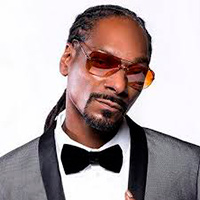
Snoop Dogg (real name — Calvin Cordozar Broadus Jr.; born October 20, 1971, Long Beach, California, USA) is an American rapper, songwriter, producer, actor, television host and entrepreneur, and one of the most recognizable figures in the history of hip-hop. His laid-back, drawn-out delivery became one of the defining voices of West Coast rap and G-funk, while his debut album Doggystyle established him as a major star in the early 1990s.
At the same time, Snoop Dogg's career became far broader than his original image as a gangsta rap artist. Over several decades, he moved through Death Row and No Limit Records, recorded reggae as Snoop Lion, experimented with funk and gospel, released collaborative projects, returned to the Death Row Records brand as its owner and continued his solo discography well into the 2020s. In parallel, Snoop became a television host, actor, sports mentor and one of the most recognizable American media personalities of his generation.
Long Beach, church and the origin of the Snoop nickname
Calvin Broadus grew up in Long Beach. His mother, Beverly Tate, played an important role in raising him; his biological father, Vernell Varnado, was absent for much of his childhood. The name Calvin Cordozar Broadus Jr. came from his stepfather, Calvin Broadus Sr.
The nickname Snoopy also originated at home: his mother called him that because of his love for the Peanuts character and his resemblance to him. The childhood nickname was later shortened to Snoop and became the basis of his stage name.
Snoop's musical biography did not begin with rap. As a child, he sang and played piano in a Baptist church. Broadus became seriously interested in rap while still at school and later recalled that his improvised performances in school hallways would draw crowds of students around him.
213, Nate Dogg and Warren G
One of the most important early stages was the group 213, whose name referred to the Long Beach telephone area code at the time. Its circle included Snoop, his relatives Nate Dogg and Lil' ½ Dead, and his friend Warren G. Home demo recordings made by this group ultimately changed Snoop's career.
Warren G was especially important — he was the stepbrother of Dr. Dre. Through him, a cassette containing a Snoop freestyle reached Dre. The producer was struck by the young rapper's distinctive voice and unusual delivery and invited him to audition.
That introduction shaped not only the first stage of Snoop Dogg's career, but a major part of his musical history for decades to come.
Deep Cover and The Chronic
The first major collaboration between Dr. Dre and Snoop Doggy Dogg was Deep Cover — the title track for the 1992 film. Almost immediately, Dre brought his new collaborator into the sessions for his debut solo album The Chronic.
Snoop appears on the record far more extensively than a typical guest rapper. His voice became one of the central elements of The Chronic, especially on Nuthin' but a 'G' Thang, Fuck wit Dre Day and other tracks. It was here that a broad American audience first heard his characteristically relaxed delivery over Dre's slow, synth-heavy G-funk production.
The success of The Chronic created enormous anticipation for Snoop's own album even before it was released.
Doggystyle — one of the biggest rap debuts of the 1990s
Doggystyle was released on November 23, 1993 through Death Row Records. Dr. Dre served as the main architect of the sound, and the album brought G-funk aesthetics into one of their most recognizable forms: slow basslines, high-pitched synth parts, funk samples and Snoop's deliberately relaxed delivery.
The album debuted at No. 1 on the Billboard 200 and sold around 806,000 copies in its first week. Billboard noted that at the time, it was a record-setting debut for a new artist regardless of genre.
Its main tracks included Who Am I (What's My Name)?, Gin and Juice, Doggy Dogg World and Murder Was the Case. The RIAA had already certified the album quadruple platinum by May 1994.
Doggystyle established several key elements of Snoop's image at once: conversational flow, distinctive West Coast vocabulary, humor, storytelling and an almost melodic placement of words around the beat. Unlike the sharper delivery of many gangsta rap artists of the era, Snoop often sounded as though he was not attacking the beat but gliding freely across it.
The court case and Murder Was the Case
The rapid rise of his career coincided with a serious legal period. In 1993, Snoop was charged in connection with a fatal shooting carried out by his bodyguard. The case continued through a significant part of the rapper's early fame; in 1996, Snoop Dogg was acquitted of murder. He later described that moment as one of the most important turning points of his life.
The themes of the trial and possible imprisonment had already been artistically reworked in the short film and song Murder Was the Case. The project and its soundtrack became an important part of the mythology of early Death Row, but the real legal case should be distinguished from the fictional story of the film.
Tha Doggfather and the end of the first Death Row era
The second solo album, Tha Doggfather, was released in 1996 under completely different circumstances. Dr. Dre had already left Death Row, Tupac Shakur had been killed shortly before the album's release, and relations inside the label were becoming increasingly tense. Despite Dre's absence, the album again reached No. 1 on the Billboard 200 and received double-platinum certification from the RIAA.
Snoop soon decided to leave Death Row. He later described the move not only as a business conflict, but also as an attempt to distance himself physically and psychologically from an environment he regarded as increasingly dangerous.
Master P and No Limit Records
In 1998, Snoop signed with No Limit Records — Master P's fast-growing Louisiana label. The move was critically important: it allowed the artist to continue his career outside Death Row while also introducing him to a different model of music business.
The first album of this period was Da Game Is to Be Sold, Not to Be Told (1998), which also topped the Billboard 200. It was followed by No Limit Top Dogg (1999) and Tha Last Meal (2000). The RIAA certified the first double platinum and the following two platinum.
No Limit Top Dogg also renewed Snoop's studio connection with Dr. Dre. Around the same time, Snoop appeared on Dre's album 2001, including Still D.R.E. and especially The Next Episode, which became one of the best-known collaborations between the two artists.
Tha Eastsidaz and preserving the West Coast sound
Around the turn of the millennium, Snoop simultaneously developed the project Tha Eastsidaz with Tray Deee and Goldie Loc. Their 2000 debut album Snoop Dogg Presents Tha Eastsidaz received platinum certification in the United States.
The project allowed Snoop to maintain a more direct connection to traditional West Coast gangsta rap at a time when his own solo albums were becoming increasingly stylistically diverse.
Paid tha Cost to Be da Bo$$ and Beautiful
In 2002, Snoop released Paid tha Cost to Be da Bo$$. His work with The Neptunes — the production duo of Pharrell Williams and Chad Hugo — became especially important. The single Beautiful with Pharrell and Charlie Wilson reached No. 6 on the Billboard Hot 100 and earned Snoop two Grammy nominations.
The collaboration with Pharrell became one of the most important of Snoop's career after Dr. Dre. It showed that his voice could work equally naturally within traditional G-funk and within the far more minimalist, dry and contemporary production style of The Neptunes.
Drop It Like It's Hot — his first solo No. 1 on the Hot 100
The culmination of that partnership was Drop It Like It's Hot with Pharrell from the 2004 album R&G (Rhythm & Gangsta): The Masterpiece. The track reached No. 1 on the Billboard Hot 100 and remained there for three weeks. It is Snoop Dogg's first and so far only US No. 1 as a lead artist.
The minimalist beat, tongue clicks instead of a conventional heavy drum foundation and Snoop's almost whispered delivery made the recording sharply different from his Doggystyle-era work. The album also included Signs with Justin Timberlake and Charlie Wilson, along with other more pop-oriented tracks.
Tha Blue Carpet Treatment and the return to the West Coast
After the more commercially oriented R&G, Snoop released Tha Blue Carpet Treatment in 2006. Here he moved noticeably closer again to West Coast hip-hop while working with Dr. Dre, Pharrell, Timbaland, R. Kelly, Akon, The Game and others. Dre produced several tracks, continuing his periodic creative partnership with Snoop.
The album became another example of Snoop refusing to treat his move into pop culture as a rejection of his rap identity. His catalogue increasingly allowed radio singles and much more traditional West Coast material to exist side by side.
Ego Trippin', Sexual Eruption and vocal experiments
Ego Trippin' from 2008 pushed this approach even further. On Sensual Seduction, known in its original version as Sexual Eruption, Snoop made extensive use of Auto-Tune and full singing. The recording received two Grammy nominations — for solo rap performance and rap song.
This period is important because Snoop stopped treating his own style as an unchanging formula. Rap, singing, funk and pop could increasingly coexist on the same release.
Young, Wild & Free and working with a new generation
In the early 2010s, Wiz Khalifa became an important collaborator. Their joint project Mac & Devin Go to High School was accompanied by the single Young, Wild & Free with Bruno Mars, which eventually earned multi-platinum certification and a Grammy nomination for Best Rap Song.
The collaboration reflected one of the main reasons for Snoop Dogg's unusual longevity: he rarely approached younger artists simply as a representative of the “old school” and consistently participated in the music of new generations as an active artist.
Snoop Lion and Reincarnated
One of the most radical genre shifts came during the Snoop Lion period. After a trip to Jamaica, the artist temporarily changed his stage name and recorded the reggae album Reincarnated, released in 2013.
On the album, rap largely gave way to singing and reggae/dancehall. Its best-known songs include No Guns Allowed, Ashtrays and Heartbreaks and Here Comes the King. Reincarnated received a Grammy nomination for Best Reggae Album.
The Snoop Lion name did not permanently replace Snoop Dogg. It represented a specific creative period, after which the artist returned to his main stage identity.
Snoopzilla and 7 Days of Funk
Almost at the same time, Snoop explored another side of his musical DNA — funk. Together with producer Dâm-Funk, he created the project 7 Days of Funk and used the name Snoopzilla, a reference to Bootsy Collins. The project showed particularly clearly how deeply the G-funk of his early career was connected to P-Funk and the older American funk tradition.
Bush and a full reunion with Pharrell
In 2015, Snoop released Bush, produced entirely by Pharrell Williams. Instead of gangsta rap, the album was built around funk, soul and a lighter dance-oriented aesthetic. Its main tracks included Peaches N Cream, So Many Pros and California Roll.
Bush became a logical continuation of the path that had begun with Beautiful and Drop It Like It's Hot: Snoop's voice was distinctive enough to preserve his identity even when the musical environment changed almost completely.
Coolaid, Neva Left and the return to his own history
Coolaid in 2016 and especially Neva Left in 2017 strengthened Snoop Dogg's classic rap side again. The artwork for Neva Left used a photograph of a young Snoop from the early 1990s and emphasized the connection between his modern career and the Long Beach period before The Chronic.
By this point, Snoop could move freely between nostalgic West Coast sounds and work with contemporary producers without presenting either direction as a permanent replacement for the other.
Bible of Love — a return to church roots
In 2018, Snoop released the extensive gospel album Snoop Dogg Presents Bible of Love. The two-hour project contained 32 tracks and featured numerous gospel and soul performers. For Snoop, this was not a completely random genre experiment: as a child he had sung and played in church, and his mother had been connected with a church choir for many years.
For that reason, the Snoop Lion reggae period and his gospel projects should not be seen simply as attempts to “try on another genre.” They are connected to broader themes in his personal biography — religion, age, family and the gradual transformation of his relationship with his own early reputation.
I Wanna Thank Me
In 2018, Snoop Dogg received a star on the Hollywood Walk of Fame. During the ceremony, his improvised speech repeatedly using the phrase “I wanna thank me” went viral and later gave its name to the 2019 album I Wanna Thank Me. His star was the 2,651st on the Walk of Fame and was awarded in the Recording category.
The album itself effectively served as a mid-career summary, bringing together different periods of West Coast rap with contemporary production while playing with Snoop's already established image as a long-lived cultural figure.
Def Jam and Algorithm
In 2021, Snoop joined Def Jam Recordings as an executive creative and strategic consultant. One result was Snoop Dogg Presents Algorithm. This release is sometimes incorrectly included in his numbered solo studio discography, but in essence it is a curated compilation created to showcase Def Jam artists and connections.
That same year, he released his own solo album From tha Streets 2 tha Suites, which is more accurately regarded as his eighteenth main studio album.
Return to Death Row Records
In February 2022, one of the most symbolic events in Snoop Dogg's entire biography took place: he acquired the Death Row Records brand, the label where his international career had begun three decades earlier. The original deal primarily concerned the brand itself; rights to different parts of the historical catalogue are much more complex, so it would be inaccurate to say that Snoop automatically became the owner of every classic Death Row recording.
Almost simultaneously, he released BODR — Bacc On Death Row, his nineteenth solo studio LP and his first album on Death Row since Tha Doggfather, more than a quarter of a century earlier.
Death Row was subsequently relaunched as an active music brand with new releases, merchandising and a partnership with gamma.
Super Bowl LVI
In February 2022, Snoop Dogg performed at the Super Bowl LVI Halftime Show alongside Dr. Dre, Eminem, Mary J. Blige and Kendrick Lamar; 50 Cent appeared as a special guest. For Snoop and Dre, the performance became a symbolic recognition of West Coast hip-hop on one of the largest television stages in the United States.
Mount Westmore
During the same period, Snoop joined Ice Cube, E-40 and Too $hort in the supergroup Mount Westmore. In 2022, the group released the album Snoop Cube 40 $hort. The project brought together four different branches of West Coast rap and once again emphasized Snoop's role not only as a solo artist, but also as part of the wider West Coast scene.
Missionary — Dr. Dre produces an entire Snoop Dogg album again
On December 13, 2024, Snoop released his twentieth solo studio album, Missionary. It was his first full-length project in three decades built entirely around the production direction of Dr. Dre. Snoop himself described it as a kind of relative or spiritual successor to Doggystyle, although musically the new album is not simply a copy of the 1993 record.
The album features Eminem, 50 Cent, Method Man, Jhené Aiko, Sting, Jelly Roll, BJ the Chicago Kid and other performers. Key tracks include Gorgeous, Another Part of Me, Gunz N Smoke, Last Dance with Mary Jane and Outta da Blue.
The main value of Missionary was not merely nostalgia for early G-funk. Comparing it with Doggystyle shows how much both artists had changed: in 1993, Dre was effectively shaping a young performer, while three decades later they were working as two fully established veterans with their own mature studio methods.
Iz It a Crime?
Snoop did not take a long break after Missionary. On May 15, 2025, he unexpectedly released Iz It a Crime? — his twenty-first solo studio album. Unlike the previous project, which had been almost entirely controlled by Dre, this album once again featured a broader circle of producers, including Battlecat, Nottz, Rick Rock, Soopafly and Pharrell Williams.
The album therefore returned Snoop to the model of an independent West Coast project, where contemporary music exists alongside relationships formed as far back as the 1990s and 2000s.
Altar Call and the memory of his mother
Between Missionary and Iz It a Crime?, another important project appeared — Altar Call, released by Death Row Records on April 27, 2025, the day his mother Beverly Tate would have turned 74. Snoop presented it as his second gospel project after Bible of Love.
Apple Music, however, lists the 21-track release as a Various Artists album, so in a strict solo numbering it is more accurate to treat it separately: the next solo LP after Missionary remains Iz It a Crime?.
10 Til' Midnight
The next studio album, 10 Til' Midnight, was released on April 10, 2026 through Death Row Records / gamma. Snoop Dogg's official website identifies it as his 22nd solo studio album. It contains 14 tracks with a total running time of around 35 minutes.
The album features Swizz Beatz, October London, Trinidad James and other guests, while Pharrell Williams, Erick Sermon, Nottz, Rick Rock, Soopafly and Snoop himself contributed to the production. The project was accompanied by a short film and continued the line of contemporary Death Row music, presenting the label not as an archive of the 1990s but as an active operation.
Why Snoop Dogg's voice is instantly recognizable
Snoop's musical individuality is not built around technical speed. His defining characteristic is his highly recognizable relationship with rhythm. He often places phrases slightly behind the main beat, stretches vowels, uses an almost conversational intonation and moves easily between rapping and melodic delivery.
This style fit Dr. Dre's G-funk perfectly, but proved far more versatile than its original context. That is why Snoop could sound equally convincing over minimalist Neptunes beats, reggae, Dâm-Funk's funk, gospel, pop singles and contemporary Death Row production.
Another important feature is that his voice hardly requires introduction. Even a brief guest appearance can feel like a complete artistic element because of his timbre, characteristic intonation and personal vocabulary.
Film and television
Snoop's acting and television career developed alongside his music. He appeared in Training Day, The Wash, Starsky & Hutch, Soul Plane and numerous other live-action and animated projects. Over time, his screen image became less dependent on his early-1990s rap persona.
One of his best-known television projects was Martha & Snoop's Potluck Dinner Party with Martha Stewart. The unexpected chemistry between the two hosts became a distinctive part of American pop culture and helped introduce Snoop to a broad audience as a comedic and television personality, not only as a musician.
In 2018, Netflix released the documentary series Coach Snoop about his work with youth teams. In 2024, he became a coach on the American edition of The Voice for the first time and returned to the coaching panel in 2025.
The Olympic Games and the transformation into a national media figure
2024 became especially notable when Snoop worked as a special correspondent for NBC and Peacock at the Summer Olympics in Paris. He also took part in the Olympic torch relay. His reports and appearances at sporting events unexpectedly became some of the most discussed entertainment elements of the American coverage of the Games.
His connection with sport continued: Snoop was named the first honorary coach of Team USA for the 2026 Winter Olympics and once again took part in NBC's Olympic media coverage.
Snoop Youth Football League
For Snoop Dogg, sport is not only a television activity. In 2005, he founded the Snoop Youth Football League, designed for children from urban communities in Southern California. The first season attracted more than 1,300 participants. The league focuses on American football and cheerleading and continues to operate more than two decades later.
His own experience with the program later became the basis for Coach Snoop and partly inspired the 2024 comedy film The Underdoggs, in which Snoop played the lead role and served as one of the producers.
Death Row as a business project
Snoop's main entrepreneurial achievement in the music industry is his return to Death Row Records as the owner of the brand. The 2022 deal closed an unusual career circle: an artist who had once tried to escape the conflict-ridden system of the old Death Row gained the opportunity decades later to determine the future of the label's name himself.
After the acquisition, Snoop worked on reorganizing the digital catalogue and entered into a partnership with gamma. Death Row began releasing new music, including Snoop's own projects and recordings by other artists.
For that reason, the phrase “Death Row Records 2.0” may be used informally, but the label's official name remains Death Row Records.
Personal life and family
Snoop Dogg married his high-school sweetheart Shante Taylor in 1997. The couple have three children together — Corde, Cordell and Cori. Snoop also has a son, Julian, from another relationship, meaning the musician has four children in total, not three.
His family also appears regularly in public projects. For example, Snoop, Shante, their children and grandchildren appeared together in a SKIMS holiday campaign in 2022.
Grammy: the famous record without a win
Snoop Dogg's Grammy history is unusual. According to the current Recording Academy database, he has 16 nominations and no wins. The nominations span more than two decades and several categories, including rap, pop and reggae.
Among the nominated works are Nuthin' but a 'G' Thang, Gin and Juice, Still D.R.E., The Next Episode, Beautiful, Drop It Like It's Hot, Sexual Eruption, Young, Wild & Free and the album Reincarnated. He was also listed among contributors to the nominated Katy Perry album Teenage Dream and Kendrick Lamar's To Pimp a Butterfly.
The absence of a Grammy statuette therefore does not mean a lack of recognition from the Recording Academy. On the contrary, Snoop remains one of the most frequently nominated rappers never to have won the award.
Snoop Dogg studio albums
- Doggystyle — 1993
- Tha Doggfather — 1996
- Da Game Is to Be Sold, Not to Be Told — 1998
- No Limit Top Dogg — 1999
- Tha Last Meal — 2000
- Paid tha Cost to Be da Bo$$ — 2002
- R&G (Rhythm & Gangsta): The Masterpiece — 2004
- Tha Blue Carpet Treatment — 2006
- Ego Trippin' — 2008
- Malice n Wonderland — 2009
- Doggumentary — 2011
- Reincarnated — 2013, as Snoop Lion
- Bush — 2015
- Coolaid — 2016
- Neva Left — 2017
- Bible of Love — 2018
- I Wanna Thank Me — 2019
- From tha Streets 2 tha Suites — 2021
- BODR — 2022
- Missionary — 2024
- Iz It a Crime? — 2025
- 10 Til' Midnight — 2026
Snoop Dogg's official website specifically identifies 10 Til' Midnight as his twenty-second solo studio album. Therefore, Algorithm, collaborative records, various compilations and Altar Call should not be mixed into the main numbered solo discography.
Other important projects
- Murder Was the Case — 1994, soundtrack project;
- Snoop Dogg Presents Tha Eastsidaz — 2000;
- Duces 'n Trayz: The Old Fashioned Way — 2001, Tha Eastsidaz;
- The Hard Way — 2004, 213;
- Mac & Devin Go to High School — 2011, with Wiz Khalifa;
- 7 Days of Funk — 2013, with Dâm-Funk as Snoopzilla;
- Snoop Dogg Presents Algorithm — 2021, curated Def Jam compilation;
- Snoop Cube 40 $hort — 2022, Mount Westmore;
- Snoop Dogg Presents Death Row Summer 2022 — 2022;
- Altar Call — 2025, Death Row gospel project.
This distinction better reflects the actual structure of Snoop Dogg's enormous catalogue and avoids turning collaborative, curated and label projects into fictional solo studio albums.
Main Snoop Dogg songs
Among the most significant recordings from different periods are Deep Cover, Nuthin' but a 'G' Thang, Who Am I (What's My Name)?, Gin and Juice, Doggy Dogg World, Murder Was the Case, 2 of Amerikaz Most Wanted, Still D.R.E., The Next Episode, Beautiful, Drop It Like It's Hot, Signs, Vato, That's That, Sensual Seduction, Young, Wild & Free, Peaches N Cream, Gorgeous and other works.
Guest appearances represent another major part of his mainstream recognition — for example, California Gurls by Katy Perry, I Wanna Love You by Akon, All I Do Is Win by DJ Khaled and numerous collaborations with Dr. Dre. Billboard counts three Hot 100 No. 1 appearances for Snoop when both his lead and guest recordings are included.
Why Snoop Dogg survived several generations of hip-hop
Many gangsta rap stars from the early 1990s remained firmly tied to their era. Snoop Dogg became an exception. He never rejected Doggystyle or his West Coast identity, but he also did not spend decades trying to reproduce the same album exactly.
His strategy was built on constant adaptation. At No Limit, he entered a different regional rap system; with Pharrell, he embraced minimalist mainstream hip-hop; as Snoop Lion, he recorded reggae; with Dâm-Funk, he made a full funk project; Bible of Love and Altar Call returned him to his church roots; acquiring Death Row transformed a former label artist into the person responsible for the future of the brand itself.
At the same time, the most recognizable elements barely changed: the low voice, unhurried flow, sense of rhythmic space and ability to make his presence noticeable even in a short guest verse.
Snoop Dogg's place in hip-hop history
Snoop Dogg did not create gangsta rap and was not the sole architect of G-funk. These styles developed through an entire scene and through the work of artists and producers who existed before his debut. His historical role lies elsewhere: he became one of the artists who turned the West Coast sound of the early 1990s into part of global mainstream culture.
The Chronic gave him an international platform, while Doggystyle proved that a distinctive rap voice and a local Californian aesthetic could sustain an album on an enormous commercial scale. Years later, Beautiful, Drop It Like It's Hot and Young, Wild & Free demonstrated that the same voice could exist naturally across completely different generations of production.
The modern stage of his biography is especially unusual. The 1990s rapper has also become the owner of Death Row Records, a mentor in a youth football league, a television host and an Olympic correspondent, yet music has not become merely an element of the past. Between Missionary, Iz It a Crime? and 10 Til' Midnight, Snoop released three solo albums in less than a year and a half.
This combination explains Snoop Dogg's longevity better than broad labels such as “cultural phenomenon.” His early image has long been part of the history of hip-hop, but the artist himself does not exist only inside nostalgia for Doggystyle: he continues to release music, work with several generations of performers and reinterpret his own legacy — including returning to Dr. Dre and Death Row, the two central elements of the story with which everything began.