



 Pitbull

Eminem is the American rapper, songwriter, music producer, and actor Marshall Bruce Mathers III, born on October 17, 1972, in St. Joseph, Missouri, USA. His musical career is inseparably connected with Detroit, where Mathers developed as a performer and came up through the city’s rap-battle scene. In addition to the name Eminem, he is known for his alter ego Slim Shady, a provocative character who played a central role in his breakthrough at the end of the 1990s. Eminem ranks among the most commercially successful and influential rappers in history: he has received 15 Grammy Awards, won an Academy Award for Lose Yourself, and was inducted into the Rock & Roll Hall of Fame in 2022.
His essential recordings span several generations of hip-hop: My Name Is, Guilty Conscience, The Real Slim Shady, Stan, The Way I Am, Without Me, Cleanin' Out My Closet, Lose Yourself, Mockingbird, When I'm Gone, Not Afraid, Love the Way You Lie, Rap God, The Monster, Godzilla, Houdini, and many others. Eminem’s solo studio discography comprises 12 albums, from the independent Infinite in 1996 to the conceptual The Death of Slim Shady (Coup de Grâce) in 2024. Beyond his solo career, he was a member of D12, recorded with Royce da 5'9" as the duo Bad Meets Evil, and co-founded Shady Records with his manager Paul Rosenberg.
Marshall Mathers’ childhood and move to Detroit
Marshall Mathers was born to Deborah Nelson and Marshall Bruce Mathers Jr. His father left the family when his son was very young, and the future rapper was raised by his mother. Marshall’s childhood was marked by frequent moves between Missouri and Michigan. The family struggled financially and rarely stayed in one place for long, until Mathers eventually settled in the Detroit area during his teenage years.
Before discovering hip-hop, Marshall was fascinated by comic books and even considered becoming an artist. His interest in rap developed largely through his uncle Ronnie Polkingharn, who introduced him to early recordings from the genre. At around fourteen, Mathers began rapping himself and used the name M&M with his school friend Mike Ruby, based on the initials Marshall Mathers. The pronunciation of those letters later evolved into the stage name Eminem.
His school years were difficult. Frequent moves, conflicts with classmates, and poor attendance led him to repeat the ninth grade several times, and he eventually dropped out at seventeen. Marshall then worked a series of low-paying jobs while devoting his free time to music. Detroit’s hip-hop scene became the main environment in which he developed professionally: he competed in freestyle contests and performed at open-mic nights, including the well-known Hip-Hop Shop on West 7 Mile Road.
It was in this environment that he earned a reputation as an exceptionally technical performer. For a white rapper entering the predominantly African American Detroit scene of the late 1980s and early 1990s, the path was far from easy, but Mathers gradually gained respect through his rhyme schemes, sense of rhythm, and ability to improvise in verbal battles. One of his closest friends became Proof, a future member of D12 and one of the most important figures in Eminem’s early story.
Infinite — the first album
Eminem’s first solo album, Infinite, was released in 1996 through the small Detroit label Web Entertainment. Most of the music was produced by Denaun Porter, later known as Mr. Porter and a member of D12; Eminem himself also contributed to the production, while brothers Jeff and Mark Bass served as executive producers. The recording took place within the Bass Brothers’ studio environment, which played an important role in Mathers’ early development.
Infinite was not commercially successful and remained primarily a regional release. Its failure proved crucial for Mathers: rather than giving up music, he decided to change his writing style and allow himself to create much more grotesque, aggressive, and satirical material. The result was the birth of Slim Shady.
The birth of Slim Shady
Slim Shady emerged as an artistic alter ego that allowed Mathers to push thoughts, fears, and fantasies to deliberately absurd extremes. Through the character, he could use black humor, exaggerated violence, self-mockery, and provocation while separating some of those statements from the more autobiographical voice of Marshall Mathers. The interaction between Marshall, Eminem, and Slim Shady would later become one of the central dramatic foundations of his work.
In 1997, he released the Slim Shady EP. Compared with Infinite, the new recording sounded considerably more confident and distinctive. Tracks such as Just Don't Give a Fuck, Murder, Murder, and the early version of '97 Bonnie & Clyde already contained nearly all the features that would define Eminem: multisyllabic internal rhymes, theatrical characters, Slim Shady’s sarcastic voice, and stories deliberately blurring the line between reality and fiction.
Rap Olympics and meeting Dr. Dre
In 1997, Eminem travelled to Los Angeles for the national Rap Olympics competition, where he finished second. A copy of the Slim Shady EP reached people at Interscope and eventually made its way to company head Jimmy Iovine, who passed the recording to Dr. Dre. For the founder of Aftermath Entertainment, discovering Eminem marked the beginning of one of the most important creative partnerships in American hip-hop.
Dr. Dre saw in the young Detroit rapper not merely an unusual voice, but an artist who already possessed a developed technique and a distinctive character. After Eminem signed with Aftermath Entertainment, they began work on his first major-label album. Dre served as executive producer and directly participated in the creation of several key tracks. Their collaboration combined Mathers’ sharp delivery with a larger, professionally crafted studio sound.
The Slim Shady LP and the worldwide breakthrough
The Slim Shady LP was released on February 23, 1999, becoming Eminem’s first major-label album. The record transformed a little-known Detroit battle rapper into an international star. Its lead single was My Name Is, built around the contrast between a deliberately lighthearted chorus, humor, and provocative verses. Other essential tracks included Guilty Conscience with Dr. Dre, Role Model, Brain Damage, Rock Bottom, and a new version of '97 Bonnie & Clyde.
The Slim Shady LP established the model that would define Eminem’s work over the next several years. Openly comic and grotesque tracks sat alongside deeply autobiographical material: Rock Bottom described the despair of someone living on the edge of poverty, while Brain Damage transformed memories of school bullying into an exaggerated revenge story. That contrast prevented Slim Shady from being understood solely as a character created for shock value.
At the 42nd Grammy Awards, Eminem received his first two trophies: Best Rap Album for The Slim Shady LP and Best Rap Solo Performance for My Name Is. Within a single year, he had become both one of the most popular and one of the most controversial new artists in American music.
The Marshall Mathers LP: Eminem at the center of global pop culture
The Marshall Mathers LP was released on May 23, 2000, firmly establishing Eminem as a global superstar. During its first full week in the United States, the album sold around 1.76 million copies, one of the largest opening weeks in American recording history.
If The Slim Shady LP was primarily about life before fame, The Marshall Mathers LP largely became a reaction to fame itself. On The Real Slim Shady, Eminem mocked celebrities and mass culture; on The Way I Am, he openly confronted the press, fans, and record-industry expectations; while Marshall Mathers examined his own sudden transformation into a celebrity. The album also contained one of his most serious works, Stan.
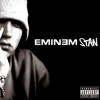
Stan tells the story of a fictional fan who gradually loses touch with reality after receiving no response from his idol. The track incorporates material from Thank You by British singer Dido. The song became so influential that the word stan eventually developed into an independent term for an excessively devoted fan: the Oxford English Dictionary added it in 2017, followed by Merriam-Webster in 2019.
At the same time, The Marshall Mathers LP became the center of controversy over violent, misogynistic, and homophobic imagery in some of its lyrics. Advocacy groups protested against Eminem, while the rapper argued that much of the material existed within the grotesque logic of Slim Shady and should not be taken literally. One of the most widely discussed moments of the period came when he performed Stan at the 2001 Grammys with openly gay singer Elton John.
D12 and the creation of Shady Records
After becoming a successful solo artist, Eminem returned to his friends from Detroit’s rap scene. The group D12, which included Proof, Bizarre, Mr. Porter, Kuniva, and Swift, released the album Devil's Night in 2001. The record debuted at number one on the Billboard 200. The group’s second album, D12 World, also topped the U.S. chart in 2004.
Another consequence of Eminem’s success was the creation of Shady Records. He founded the label with his longtime manager Paul Rosenberg after the release of The Slim Shady LP. Initially, the company provided a platform for D12, and later helped develop the careers of Obie Trice, 50 Cent, Slaughterhouse, Yelawolf, and other artists. Particularly important was the signing of 50 Cent together with Aftermath: Eminem and Dr. Dre played major roles in the preparation of his debut album Get Rich or Die Tryin'.
Shade 45
In 2004, Eminem’s musical infrastructure expanded with another project: the Shade 45 radio channel on the Sirius satellite platform, later SiriusXM. The station was developed with the involvement of Eminem, Shady Records, Interscope Records, and Sirius as a 24-hour home for hip-hop without the traditional limitations of commercial music radio.
Shade 45 became much more than a channel devoted to Eminem himself. Its programming included original shows, interviews, rap freestyles, premieres, and appearances by other artists. One of its best-known programs became Sway in the Morning. Over the following decades, the station remained part of the Shady Records ecosystem and a platform for premieres of Eminem’s material and music by artists connected with him.
The Eminem Show
The third album of Eminem’s period of global fame, The Eminem Show, was released in May 2002. Unlike The Slim Shady LP, where Dr. Dre played the leading production role, Eminem himself became significantly more active as a producer on this record. The sound grew heavier and at times moved toward rap rock, while the lyrics became more political and autobiographical.
Without Me continued the comic and satirical side of Slim Shady, while White America directly examined the role Eminem’s race played in his popularity in the United States. On Cleanin' Out My Closet, he returned to conflicts with his mother; Sing for the Moment addressed accusations that rap had a negative influence on teenagers; while Hailie's Song and My Dad's Gone Crazy reflected the importance of his daughter Hailie in his life.
The Eminem Show became the best-selling album of 2002 in the United States and earned Eminem another Grammy for Best Rap Album. The Slim Shady LP, The Marshall Mathers LP, and The Eminem Show therefore won the category consecutively, a rare achievement that underlined the rapper’s dominance around the turn of the millennium.
8 Mile and Lose Yourself
In 2002, Eminem starred in the film 8 Mile, directed by Curtis Hanson. The movie is not a literal autobiography, but its story of a working-class Detroit resident trying to break through in rap battles clearly drew on many elements of Mathers’ own experience. His character Jimmy “B-Rabbit” Smith became one of the rapper’s best-known screen roles.
The film’s central musical theme was Lose Yourself. The single topped the Billboard Hot 100 and became one of the most famous songs of Eminem’s entire career. At the 2003 Academy Awards, Lose Yourself won Best Original Song, becoming the first rap song to win the category. It later received two Grammys, for Best Rap Song and Best Rap Solo Performance.
The 8 Mile soundtrack also topped the Billboard 200. Alongside Eminem, it featured tracks by 50 Cent, Nas, Jay-Z, Rakim, Xzibit, D12, Gang Starr, and other artists. The project therefore strengthened his position as an artist while also serving as an important platform for the music community developing around Shady Records.
Encore and the beginning of a difficult period
The album Encore was released in November 2004. It included Just Lose It, Like Toy Soldiers, Mockingbird, Ass Like That, and other tracks. The record continued to combine political satire, family themes, and deliberately absurd humor, although its artistic quality was less consistent than on the preceding albums. Eminem later connected some of the problems of this period with his growing dependence on prescription drugs.
Mockingbird became one of the most personal songs in his catalog. Instead of his usual aggressive delivery, Eminem addresses his daughter Hailie and explains the family conflicts, his absence from home because of his career, and the difficulties the family endured. Alongside it, Like Toy Soldiers examined real conflicts between rappers and the danger of musical rivalries turning into actual violence.
Curtain Call, Proof’s death, and addiction
In December 2005, Eminem released his first greatest-hits collection, Curtain Call: The Hits. Alongside already familiar songs, it included new recordings such as When I'm Gone. At the time, some listeners genuinely interpreted the release as a possible farewell: Eminem’s touring activity had decreased, while his problems with addiction were becoming increasingly serious.
In 2006, Proof, one of Mathers’ closest friends and a member of D12, was killed. His death affected Eminem deeply and further intensified his addiction. That same year brought the Shady Records compilation Eminem Presents: The Re-Up, but the rapper himself increasingly withdrew from public life.
In December 2007, Eminem was hospitalized after a near-fatal methadone overdose. After an unsuccessful first attempt to stop using drugs, he finally became sober on April 20, 2008. In later years, the rapper repeatedly explained that recovery required him to practically relearn how to write and rap. By April 2026, he had celebrated 18 years of sobriety.
Relapse — returning after a five-year break
The first full studio album after Encore was Relapse, released in 2009. Addiction, treatment, and the return of Slim Shady became the record’s main themes. Dr. Dre once again took a central production role, while Eminem deliberately used unusual vocal inflections and accents, turning many songs into horror-influenced narratives. Key tracks included 3 a.m., We Made You, Beautiful, and Crack a Bottle.
Despite its commercial success and a Grammy for Best Rap Album, Eminem later spoke critically about Relapse, particularly his excessive use of accents. Nevertheless, the album occupies an important place in his biography: it was during its creation that he worked fully sober for the first time in years and gradually restored his technical form.
Recovery and a second commercial rise
Only a year later came Recovery, which sharply changed direction. Instead of the horror imagery of Relapse, the album focused on overcoming addiction, responsibility, and rebuilding his career. Not Afraid became a direct statement about a new stage of his life, while Love the Way You Lie, recorded with Rihanna, became one of Eminem’s biggest worldwide hits.
Recovery debuted at number one on the Billboard 200 with 741,000 copies sold in its first week and became the best-selling album of 2010 in the United States. It was also the first album to exceed one million digital sales in the U.S. market. The record earned Eminem another Grammy for Best Rap Album.
Bad Meets Evil and the reunion with Royce da 5'9"
After Recovery, Eminem resumed full collaboration with his longtime friend Royce da 5'9". The two had originally recorded under the name Bad Meets Evil in the late 1990s, and in 2011 they released the joint EP Hell: The Sequel. The project topped the Billboard 200, while its biggest international hit became Lighters with Bruno Mars.
For Eminem, the project carried significant musical importance: Bad Meets Evil once again placed the focus on the competitive technique of the two rappers — complex rhyme schemes, changes in meter, rapid accelerations, and lines that continue or answer one another. This approach would become even more prominent on Eminem’s solo albums of the 2010s.
The Marshall Mathers LP 2 and Rap God
In 2013, Eminem returned to the title of his most famous album with The Marshall Mathers LP 2. It was not simply an attempt to repeat the 2000 record. Instead, the project was structured as an older Mathers looking back at his past and the consequences of his earlier songs. Bad Guy is particularly revealing, continuing the story of Stan from the perspective of his younger brother.
Other central tracks included Berzerk, Survival, Rap God, Headlights, and The Monster with Rihanna. On Rap God, Eminem made rap technique itself the subject of the song: internal rhymes, sudden shifts in speed, and intricate rhythmic patterns. Headlights, by contrast, represented an attempt to reconsider his long-running public conflict with his mother and included an apology for some of his earlier statements.
The Marshall Mathers LP 2 won the Grammy for Best Rap Album, while The Monster received the award for Best Rap/Sung Collaboration. By the mid-2010s, Eminem was no longer the same kind of cultural provocateur he had been in 2000, but he remained one of the genre’s most discussed technical performers.
Shady XV and Southpaw
In 2014, Shady Records celebrated its fifteenth anniversary with the compilation Shady XV. The double release combined new tracks by Eminem and label artists with material from earlier years. Among the new recordings, Guts Over Fear and Detroit vs. Everybody, which brought together several representatives of Detroit rap, stood out in particular.
The following year, Eminem contributed to the soundtrack for the sports drama Southpaw. Phenomenal and Kings Never Die were recorded for the film. Mathers had originally also been considered as a possible lead actor, but ultimately focused on the music, while Jake Gyllenhaal played boxer Billy Hope.
Revival
After a four-year gap between solo albums, Eminem released Revival in December 2017. The record deliberately expanded the number of pop and rock collaborations: Walk on Water was recorded with Beyoncé, River with Ed Sheeran, while other guests included Alicia Keys, P!nk, Skylar Grey, Kehlani, and X Ambassadors.
Revival devoted much more attention to politics, aging, doubts about his own relevance, and past mistakes. Particularly important is the closing sequence of Castle and Arose, in which Eminem returns to the period of his addiction and imagines an alternative version of events in which he dies from an overdose. The album topped the Billboard 200, but its musical direction received a much more divided response than its predecessor.
Kamikaze
Eminem’s response to the criticism was Kamikaze, released without advance announcement in August 2018. He largely abandoned the explanatory tone of Revival and built the album around aggressive rap technique, arguments with critics, and commentary on a new generation of hip-hop. Among the most notable tracks were The Ringer, Greatest, Lucky You with Joyner Lucas, and Fall. In the broader history of the release, Venom, written for the film of the same name, also occupies an important place.
Kamikaze once again topped the U.S. albums chart. The record demonstrated the direction of later-period Eminem: rather than trying to conform to current rap trends, he increasingly emphasized the technical side of his own school — rhyme density, wordplay, frequent changes in flow, and direct competition with other rappers.
Music to Be Murdered By
In January 2020, Eminem once again released an album without prior announcement: Music to Be Murdered By. Its title and artwork referenced Alfred Hitchcock’s 1958 album, while the record combined a dark concept with a large and varied guest list including Royce da 5'9", Black Thought, Q-Tip, Anderson .Paak, Ed Sheeran, Young M.A, Don Toliver, Juice WRLD, and others.
The biggest hit was Godzilla with Juice WRLD. In the track’s final section, Eminem delivered one of the fastest verses of his discography, further reinforcing his image as an artist for whom technical difficulty had become an artistic goal in itself. Godzilla debuted at number three on the Billboard Hot 100.
Music to Be Murdered By became Eminem’s tenth album to top the Billboard 200. In December 2020, he unexpectedly expanded the project with Side B, featuring new material. Side B is an extension of Music to Be Murdered By rather than a separate studio album, and therefore is not counted independently in his main album chronology.
Super Bowl and the Rock & Roll Hall of Fame
In February 2022, Eminem performed during the Super Bowl LVI halftime show alongside Dr. Dre, Snoop Dogg, Mary J. Blige, and Kendrick Lamar, with 50 Cent appearing as a special guest. Eminem performed Lose Yourself. The television production won three Emmy Awards, including Outstanding Variety Special (Live).
That same year, Eminem was inducted into the Rock & Roll Hall of Fame in his first year of eligibility. Dr. Dre introduced him at the ceremony, while the performance segment included My Name Is, Rap God, Sing for the Moment, Stan, Forever, and Not Afraid. His induction marked a transition from contemporary superstar to an artist whose influence is now considered within the historical context of American popular music.
The Death of Slim Shady (Coup de Grâce)
In 2024, Eminem returned to his most famous alter ego on his twelfth studio album, The Death of Slim Shady (Coup de Grâce). The concept was presented as an investigation into the “death” of Slim Shady, although the story inside the album is considerably more complex: Marshall Mathers and his old character enter into a kind of conflict, allowing the artist both to recreate the provocative aesthetics of his early albums and criticize them from the perspective of an older man.
The first single was Houdini, deliberately constructed as a return to the aesthetics of Without Me and Eminem’s early comic videos. The song debuted at number two on the Billboard Hot 100. It was followed by Tobey with Detroit rappers Big Sean and BabyTron. The album itself was released on July 12, 2024, and debuted at number one on the Billboard 200, becoming Eminem’s eleventh U.S. number-one album.
Family themes played a particularly important role in the album’s final section. Temporary with Skylar Grey is addressed to his daughter Hailie as a message for the future, while Somebody Save Me with Jelly Roll imagines an alternative life in which Eminem failed to overcome addiction and missed the most important moments in his children’s lives. The Death of Slim Shady therefore became more than a simple return to an old character: it was another reconsideration of the relationship between Marshall Mathers’ stage persona and real biography.
STANS and the later stage of his career
In 2025, the story of Stan received a separate continuation in the documentary film STANS, produced by Eminem. Director Steven Leckart built the film around the relationship between the artist and his most devoted fans, using archival material, staged sequences, interviews with fans, and a new interview with Mathers himself. Following its premiere at SXSW London, the film received a limited worldwide theatrical release in August 2025.
An official STANS: The Official Soundtrack was released alongside it, bringing together songs from different periods of Eminem’s career connected by themes of fame, addiction, audience relationships, and self-examination. The project illustrates Eminem’s position in the later phase of his career particularly well: his catalog now exists not only as a sequence of hits, but as a history that the artist himself repeatedly revisits and reinterprets.
Personal life and family
One of the central figures in Eminem’s personal life has been Kimberly Anne Scott, whom he first met as a teenager. Their relationship remained unstable for many years and repeatedly became material for his songs. They married in 1999, divorced in 2001, remarried in 2006, and separated again soon afterwards.
Marshall and Kim have a daughter, Hailie Jade, born in 1995. Eminem also raised Alaina, the daughter of Kim’s sister, and Stevie, Kim’s child from another relationship. Fatherhood runs through his entire discography, from Hailie's Song and Mockingbird to Castle, Arose, Temporary, and Somebody Save Me. Despite the intense publicity surrounding his early family conflicts, Mathers became considerably more guarded about discussing his private life over time.
Eminem’s musical style
Eminem’s defining technical characteristic remains his approach to rhyme. He makes extensive use of internal and multisyllabic rhymes, places sound correspondences inside words and phrases, shifts stress patterns, and can repeatedly reconstruct the rhythmic design of a verse as it unfolds. Yet technical complexity rarely exists separately from character: his voice, intonation, and speed change depending on whether a particular song is being delivered by Marshall Mathers, Eminem, or Slim Shady.
The narrative side of his music is equally important. Stan, '97 Bonnie & Clyde, Guilty Conscience, Kim, Brain Damage, Darkness, and many other songs are structured as self-contained stories with characters, developing action, and final twists. Eminem frequently uses sound as part of the drama, changing voices, staging dialogues, imitating phone conversations, and placing the listener inside the scene.
Another recurring technique is the erasure of the boundary between fact and fiction. Real people, family conflicts, political events, and elements of his own biography may coexist with deliberately impossible or caricatured scenes. This is why a strictly literal reading of Slim Shady lyrics often fails to explain their artistic construction: exaggeration and intentionally unacceptable statements function as part of the satire, even though they have repeatedly and justifiably attracted criticism.
Influence and place in hip-hop history
The scale of Eminem’s influence cannot be measured by sales alone. His success greatly expanded hip-hop’s commercial audience in the late 1990s and early 2000s, while recognition within the genre rested primarily on his technique and battle-rap background. The Recording Academy describes him as one of the artists who changed the development of rap, while the Rock & Roll Hall of Fame emphasizes his combination of mass success, unusually complex lyrical technique, and willingness to engage with taboo subjects.
Slim Shady himself left a distinct cultural legacy. At the end of the 1990s, the character helped Eminem stand apart from other performers, later became a source of constant conflict with society and the press, and a quarter of a century later became the subject of Eminem’s own analysis on The Death of Slim Shady. An even rarer example of influence is Stan: the title of a single song gradually entered everyday English and became a universal term in internet culture.
Eminem has also played a significant role as a producer and label executive. Through Shady Records, he helped bring 50 Cent and other artists to a major audience, contributed to the creation of other performers’ albums, and produced a substantial part of his own music throughout his career. His place in hip-hop history therefore extends beyond the image of a famous rapper: he is simultaneously a writer, storyteller, technical experimenter, and one of the artists who helped move rap into the center of global popular culture.
Complete discography of Eminem studio albums
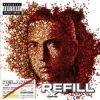
Eminem’s main solo discography comprises 12 studio albums. Expanded reissues such as Relapse: Refill, Music to Be Murdered By – Side B, and The Death of Slim Shady: Expanded Mourner's Edition are not considered separate studio albums.
- Infinite — 1996;
- The Slim Shady LP — 1999;
- The Marshall Mathers LP — 2000;
- The Eminem Show — 2002;
- Encore — 2004;
- Relapse — 2009;
- Recovery — 2010;
- The Marshall Mathers LP 2 — 2013;
- Revival — 2017;
- Kamikaze — 2018;
- Music to Be Murdered By — 2020;
- The Death of Slim Shady (Coup de Grâce) — 2024.
Main compilations and other album projects
- Slim Shady EP — 1997, EP;
- 8 Mile: Music from and Inspired by the Motion Picture — 2002, soundtrack featuring Eminem and other artists;
- Curtain Call: The Hits — 2005, greatest-hits compilation;
- Eminem Presents: The Re-Up — 2006, Shady Records compilation overseen by Eminem;
- Relapse: Refill — 2009, expanded reissue of Relapse;
- Hell: The Sequel — 2011, Bad Meets Evil EP with Royce da 5'9";
- Shady XV — 2014, Shady Records anniversary compilation;
- Southpaw: Music from and Inspired by the Motion Picture — 2015, soundtrack executive-produced by Eminem;
- Music to Be Murdered By – Side B — 2020, expanded edition of Music to Be Murdered By;
- Curtain Call 2 — 2022, second greatest-hits compilation;
- The Death of Slim Shady (Coup de Grâce): Expanded Mourner's Edition — 2024, expanded edition of the album;
- STANS: The Official Soundtrack — 2025, soundtrack to the documentary STANS.
A separate part of Eminem’s discography consists of the two full-length D12 albums featuring him: Devil's Night (2001) and D12 World (2004). Both projects topped the Billboard 200 but are not part of his solo studio discography.
Across a career spanning several decades, Eminem has progressed from an obscure participant in Detroit rap battles to an artist whose recordings became part of both hip-hop history and global popular culture. His work has gone through several dramatic turns: the birth of Slim Shady, unprecedented success in the early 2000s, addiction and near-total disappearance from the public stage, the comeback with Recovery, and the later re-examination of his own legacy. Yet the foundation of his music remains what it was at the beginning in Detroit: attention to words, rhyme, rhythm, and the ability to turn rap into a fully dramatized story.