



 Chris Brown

Jay-Z (real name — Shawn Corey Carter; born December 4, 1969, Brooklyn, New York, USA) is an American rapper, songwriter, music producer and entrepreneur, one of the most influential figures in the history of hip-hop. In official materials from recent years, his stage name has also been stylized as JAŸ-Z.
Carter’s career spans more than three decades — from the independent debut Reasonable Doubt and the founding of Roc-A-Fella Records to the albums The Blueprint, The Black Album, The Blueprint 3, Watch the Throne and 4:44, his executive role at Def Jam and the creation of an international entertainment infrastructure around Roc Nation.
Jay-Z became the first rapper inducted into the Songwriters Hall of Fame, and in 2021 he entered the Rock & Roll Hall of Fame as a performer. The Recording Academy credits him with 25 Grammy wins and 89 nominations. The album The Blueprint is included in the National Recording Registry of the Library of Congress, while Reasonable Doubt was inducted into the Grammy Hall of Fame in 2025.
Childhood in Brooklyn
Shawn Carter grew up in the Marcy Houses housing complex in Brooklyn’s Bedford-Stuyvesant neighborhood. He was raised for much of his childhood by his mother, Gloria Carter.
The environment in which the future rapper grew up later became one of the main sources of his lyrics. Brooklyn, poverty, street-level drug dealing, the pursuit of financial independence, fear of prison, betrayal and social mobility repeatedly appear in his music — from Reasonable Doubt to the much later 4:44.
Carter has repeatedly spoken about his own involvement in drug dealing when he was young. At the same time, Jay-Z’s best early work does not simply romanticize criminal life: money and status are constantly accompanied by paranoia, distrust and an awareness of the possible consequences.
Jaz-O and the first recordings
One of the important figures in Jay-Z’s early period was rapper Jaz-O, who served as a mentor to the young Carter.
Jay-Z appeared on his recordings from the late 1980s and early 1990s, including Hawaiian Sophie and The Originators. During this period, he gradually gained recognition within the New York hip-hop scene, long before the release of his own album.
The stage name Jay-Z is traditionally associated both with Jaz-O and with the nickname “Jazzy,” which Carter was called when he was younger.
Writing lyrics from memory
One of Jay-Z’s best-known characteristics as a songwriter is his habit of creating most of his rap lyrics without writing them down beforehand.
He constructs lines, rhymes and verse structures in his memory and then records the vocals. This method influenced his delivery: even technically complex constructions often sound like natural conversational speech.
His style is characterized by internal rhymes, double meanings, cultural and autobiographical references, but technical skill rarely becomes an end in itself. The main impression comes from his fluid flow, sense of rhythm and ability to tell a story without a noticeable break between conversational and rap intonation.
The creation of Roc-A-Fella Records
By the mid-1990s, Jay-Z had been unable to secure a major-label contract on terms he considered acceptable.
Together with Damon Dash and Kareem “Biggs” Burke, he created Roc-A-Fella Records in order to release his own music independently.
This decision became defining for Carter’s entire later biography. Instead of beginning his career solely as an artist within an existing company, he almost immediately became both a performer and co-owner of the structure controlling the release of his recordings.
Reasonable Doubt
The debut studio album Reasonable Doubt was released on June 25, 1996, through Roc-A-Fella Records with distribution by Priority Records.
The album was produced by DJ Premier, Ski, Clark Kent and others. Guest performers included Mary J. Blige, Foxy Brown and The Notorious B.I.G.
The album includes Can't Knock the Hustle, Politics as Usual, Brooklyn's Finest, Dead Presidents II, D'Evils, Can I Live, Feelin' It and Regrets.
Reasonable Doubt was not an immediate commercial phenomenon: the album reached No. 23 on the Billboard 200. Its reputation, however, continued to grow, and it later came to be regarded as one of the classic debut albums in American hip-hop.
The album’s defining feature is the contradiction between the protagonist’s outward confidence and his constant internal tension. Money and ambition exist alongside fear, suspicion and an awareness of the instability of criminal life.
In 2025, Reasonable Doubt was inducted into the Grammy Hall of Fame.
Brooklyn's Finest and The Notorious B.I.G.
One of the best-known songs from the debut was Brooklyn's Finest featuring The Notorious B.I.G.
At the time of recording, Biggie was already one of the central figures in New York rap, while Jay-Z was only preparing his first album.
The track became an early example of Carter’s ability to work alongside an artist who at the time had a much higher commercial status while preserving his own voice and distinctive delivery.
In My Lifetime, Vol. 1
The second studio album, In My Lifetime, Vol. 1, was released in 1997 and reached No. 3 on the Billboard 200.
After the death of The Notorious B.I.G., Jay-Z’s position within New York hip-hop changed noticeably. At the same time, his music became more commercially oriented.
The album combines hard-edged rap tracks with attempts to reach a broader pop audience. This balance between the status of a serious writer and commercial success would become one of the central questions of several following albums.
Vol. 2... Hard Knock Life
The major mainstream breakthrough came in 1998 with the album Vol. 2... Hard Knock Life.
The record became the first Jay-Z album to top the Billboard 200. Its major songs include Hard Knock Life (Ghetto Anthem), Can I Get A..., Money, Cash, Hoes and Nigga What, Nigga Who.
Hard Knock Life (Ghetto Anthem) uses material from It's the Hard Knock Life from the Broadway musical Annie. A children’s theatrical chorus was transformed into the foundation of a rap song about street life and social inequality.
The album earned Jay-Z his first Grammy, in the category Best Rap Album.
Vol. 3... Life and Times of S. Carter
In 1999, Vol. 3... Life and Times of S. Carter was released and again reached No. 1 on the Billboard 200.
Among its best-known songs is Big Pimpin', produced by Timbaland and recorded with UGK.
By the end of the 1990s, Jay-Z was moving freely between street rap, major radio singles and technically focused tracks that were not tied to pop formats.
The Dynasty: Roc La Familia
In 2000, The Dynasty: Roc La Familia appeared.
Formally, it is a Jay-Z studio album, but it also served as a showcase for the expanding Roc-A-Fella Records roster. Beanie Sigel, Memphis Bleek and other label artists participated extensively in the recording.
One of the central songs was I Just Wanna Love U (Give It 2 Me), created with The Neptunes.
During the same period, Jay-Z increasingly collaborated with Kanye West and Just Blaze, whose work would define the sound of the next album.
The Blueprint
The Blueprint was released on September 11, 2001, and topped the Billboard 200.
The album includes The Ruler's Back, Takeover, Izzo (H.O.V.A.), Girls, Girls, Girls, U Don't Know, Heart of the City (Ain't No Love), Never Change, Song Cry, Renegade and Blueprint (Momma Loves Me).
One of the defining features of the album was its extensive use of soul samples. Kanye West and Just Blaze worked with sped-up vocal fragments, warm harmonies and drums, helping to shape an aesthetic that strongly influenced American rap in the 2000s.
The Blueprint combined battle rap, autobiographical songs, commercially accessible tracks and demonstrations of the status of an already established star.
In 2019, the Library of Congress added the album to the National Recording Registry as a recording of cultural, historical and aesthetic significance.
The feud with Nas
The song Takeover became one of the central recordings in Jay-Z’s famous feud with Nas.
Nas responded with Ether, and the confrontation became one of the most famous rap battles of the early 2000s.
The dispute went far beyond two diss tracks and was widely perceived as a rivalry for leadership within New York hip-hop.
The artists later ended the feud and went on to perform and record together on multiple occasions.
Renegade with Eminem
Eminem appeared on Renegade and also produced the track.
The song became one of the best-known collaborations between the two rappers and has remained a subject of discussion for years because of the technically dense verses delivered by both artists.
The Blueprint²
In 2002, the double album The Blueprint²: The Gift & the Curse was released and also debuted at No. 1 on the Billboard 200.
Its major singles included '03 Bonnie & Clyde with Beyoncé and Excuse Me Miss with Pharrell Williams.
The collaboration between Jay-Z and Beyoncé continued in 2003 on her debut solo single Crazy in Love, which topped the Billboard Hot 100.
The Black Album
The Black Album was released on November 14, 2003, and was initially presented as Jay-Z’s final studio album before retiring from rap.
The album was produced by Just Blaze, Kanye West, Timbaland, The Neptunes, Rick Rubin, DJ Quik, 9th Wonder and Eminem.
Its key tracks include December 4th, What More Can I Say, Encore, Dirt Off Your Shoulder, 99 Problems, Public Service Announcement, Lucifer, Allure and My 1st Song.
99 Problems, produced by Rick Rubin, became one of the album’s most recognizable songs thanks to its minimalist foundation of drums and rock guitar.
The Black Album established itself among Jay-Z’s most highly regarded albums alongside Reasonable Doubt and The Blueprint.
“Retirement” from rap and Collision Course
After The Black Album, Jay-Z did indeed stop releasing solo albums regularly, but he did not leave music entirely.
In 2004, he recorded the EP Collision Course together with Linkin Park, combining material from both artists into hybrid compositions.
Numb/Encore became the project’s biggest hit and won a Grammy for Best Rap/Sung Collaboration.
In 2006, Jay-Z, Linkin Park and Paul McCartney performed a joint Grammy medley of Numb/Encore and Yesterday. It was Jay-Z’s first performance on the Grammy stage.
President of Def Jam
At the end of 2004, Jay-Z became president of Def Jam Recordings and held the position until the end of 2007.
This role permanently expanded his position within the music industry: Carter was now involved not only in his own career but also in the development of other artists.
During his leadership at Def Jam, artists including Rihanna and Ne-Yo achieved major international success.
Kingdom Come
In 2006, Jay-Z returned to his solo discography with the album Kingdom Come.
The album debuted at No. 1 on the Billboard 200 and introduced a new challenge in his songwriting biography: the early character trying to escape poverty no longer matched the real life of an extremely successful executive and entrepreneur.
For that reason, Jay-Z’s later music gradually shifts from the story of achieving success toward the question of how to live after success has already been achieved.
American Gangster
In 2007, American Gangster appeared, conceptually inspired by Ridley Scott’s film of the same name.
The album is not an official soundtrack. The film’s story allowed Jay-Z to return to the criminal environment of his youth, but now from the perspective of an adult narrator.
The album includes Pray, American Dreamin', Roc Boys (And the Winner Is)..., Blue Magic, Success and Fallin'.
American Gangster again topped the Billboard 200.
The creation of Roc Nation
In 2008, Jay-Z co-founded Roc Nation together with a group of longtime business partners.
The company became much broader than a traditional record label. Its activities include artist management, music publishing, touring, production, film and television, brand partnerships and sports management.
Jay-Z serves as chairman of Roc Nation.
If Roc-A-Fella was created as a tool for independently releasing his own music, Roc Nation became a full-scale international infrastructure for working with artists, songwriters, athletes and major entertainment projects.
The Blueprint 3
In 2009, The Blueprint 3 was released.
Its central songs include D.O.A. (Death of Auto-Tune), Run This Town, Empire State of Mind, On to the Next One and Young Forever.
The album again reached No. 1 on the Billboard 200.
Empire State of Mind
Empire State of Mind with Alicia Keys became Jay-Z’s biggest solo single on the U.S. chart.
The song spent five weeks at No. 1 on the Billboard Hot 100 and became his first No. 1 on the chart as a lead artist.
Jay-Z describes New York through specific locations, social classes and his own biography, while Alicia Keys’ vocal chorus transforms the song into a more universal anthem for the city.
At the Grammys, the song won Best Rap Song and Best Rap/Sung Collaboration.
Watch the Throne
In 2011, Jay-Z and Kanye West released the collaborative studio album Watch the Throne.
By this point, their relationship had changed significantly: Kanye had originally begun working with Jay-Z primarily as a producer, but by the early 2010s he had become one of the biggest artists of his generation himself.
The album includes No Church in the Wild, Lift Off, Otis, Niggas in Paris, Gotta Have It and Murder to Excellence.
The record topped the Billboard 200 and became one of the most prominent rap collaborations of the decade.
Magna Carta... Holy Grail
In 2013, Magna Carta... Holy Grail was released.
The album again topped the Billboard 200. Its major tracks include Holy Grail, Tom Ford, Picasso Baby, F.U.T.W. and Part II (On the Run).
Its distribution model attracted considerable attention: a deal with Samsung allowed one million users of compatible devices to receive the album through a special app before its conventional retail release.
The project continued Carter’s interest not only in creating music but also in new ways of distributing and commercializing it.
4:44
On June 30, 2017, Jay-Z released 4:44, his thirteenth solo studio album.
The principal producer was No I.D., who built much of the album around soul samples and relatively restrained arrangements.
The album includes Kill Jay Z, The Story of O.J., Smile, 4:44, Family Feud, Bam, Moonlight, Marcy Me and Legacy.
Thematically, 4:44 differs noticeably from many of his earlier works. Instead of displaying status, Jay-Z discusses his own mistakes, infidelity, marriage, fatherhood, relationship with his mother, ownership, financial legacy and responsibility toward his family.
The title track 4:44 is especially important, structured as an admission of personal wrongdoing and an apology to his wife.
The album became Jay-Z’s 14th release to top the Billboard 200 when collaborative projects are included, and it received eight Grammy nominations.
As of 2026, 4:44 remains Jay-Z’s most recent solo studio album.
The Story of O.J.
One of the central works on 4:44 was The Story of O.J..
The song examines racial identity, money, ownership and the economic position of Black Americans.
It also demonstrates Jay-Z’s changing attitude toward wealth. While money in his early lyrics often served as proof of victory over his former circumstances, 4:44 places much greater emphasis on assets, ownership and building capital that can be passed to future generations.
Beyoncé and The Carters
The musical collaboration between Jay-Z and Beyoncé began in the early 2000s.
After '03 Bonnie & Clyde, Jay-Z appeared on her Crazy in Love and later participated in Déjà Vu, Upgrade U, Drunk in Love and other songs.
They married in 2008.
In 2014, they launched the joint On the Run Tour, followed by the On the Run II Tour in 2018.
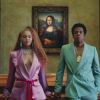
In June 2018, the couple unexpectedly released the collaborative studio album Everything Is Love under the name The Carters.
The album thematically continued the stories told on Beyoncé’s Lemonade and Jay-Z’s 4:44, but portrayed the relationship after the family crisis had already been openly addressed.
Everything Is Love won the Grammy for Best Urban Contemporary Album.
Recordings after 4:44
The absence of new solo albums after 2017 did not mean the end of Jay-Z’s musical activity.
In 2020, Jay-Z contributed extensively to Jay Electronica’s album A Written Testimony.
In 2021, he appeared on Kanye West’s Jail. As one of the songwriters, Carter received a Grammy for Best Rap Song.
In 2022, one of his most notable guest appearances was his extended verse on DJ Khaled’s GOD DID, also featuring Rick Ross, Lil Wayne, John Legend and Fridayy.
The track received several Grammy nominations, including Song of the Year and Best Rap Song.
Songwriters Hall of Fame
In 2017, Jay-Z became the first rapper inducted into the Songwriters Hall of Fame.
His importance as a songwriter is defined by more than the number of commercial hits. His catalog includes criminal storytelling, battle rap, autobiographical songs, satire, relationships, social observation and mature reflection on family life.
The same recognizable authorial voice appears in fundamentally different works — from D'Evils and Takeover to Song Cry, 99 Problems, The Story of O.J. and 4:44.
Rocawear and 40/40 Club
Jay-Z’s entrepreneurial activity began expanding far beyond recording as early as the late 1990s.
In 1999, he created the clothing brand Rocawear together with Damon Dash.
In 2003, the first 40/40 Club opened in New York, combining a sports bar with a nightclub format.
Carter later became involved in projects connected with fashion, alcohol brands, real estate, investments, technology and sports management.
TIDAL
In 2015, a company controlled by Jay-Z acquired the Swedish technology company Aspiro, owner of the music streaming service TIDAL.
After the deal, the platform was relaunched with an emphasis on artist ownership and high-quality audio.
In 2021, Square, later renamed Block, acquired a controlling stake in TIDAL. Jay-Z and other artist shareholders retained stakes, while Carter joined Square’s board of directors following the transaction.
The first billionaire in hip-hop
In 2019, Forbes named Jay-Z the first billionaire in hip-hop history.
The estimate took into account not only his music catalog but also stakes in companies, alcohol brands, real estate, investments and other assets.
Entrepreneurship is especially important to his biography because the idea of ownership runs through his entire musical career: from the necessity of independently releasing Reasonable Doubt to his reflections on capital and inheritance on 4:44.
Roc Nation and the Super Bowl
Over time, Roc Nation became one of the major international companies in the entertainment industry.
In 2019, the company began working with the NFL on music and entertainment projects, including production of the Super Bowl Halftime Show.
For Jay-Z, this became another example of his transition from performer to participant in building the infrastructure behind major cultural events.
25 Grammy Awards
As of 2026, the Recording Academy credits Jay-Z with:
- 25 Grammy wins
- 89 nominations
He received his first award in 1999 for the album Vol. 2... Hard Knock Life.
In later years, Grammy-winning works included Numb/Encore, Run This Town, Empire State of Mind, Otis, Niggas in Paris, Holy Grail, Drunk in Love, Savage and Jail.
His 25th win came through Jay-Z’s songwriting contribution to Beyoncé’s album Cowboy Carter, which won Album of the Year at the 2025 ceremony.
In 2024, the Recording Academy also presented him with the Dr. Dre Global Impact Award for his contribution to music and culture.
Personal life and family
Jay-Z has been married to Beyoncé Knowles-Carter since 2008. The couple married on April 4 in New York after several years of dating and working together. They have three children: daughter Blue Ivy Carter, born in 2012, and twins Rumi Carter and Sir Carter, born in 2017.
Despite the high public profile of both artists, the family has traditionally tried to limit the amount of private-life detail available in the press. At the same time, family relationships have repeatedly become part of Jay-Z’s music. On 4:44, he spoke openly about marriage, his own mistakes, fatherhood and responsibility toward loved ones, while the joint album with Beyoncé, Everything Is Love, continued the theme from the perspective of the couple.
Blue Ivy gradually began her own public activity: she participated in Beyoncé’s recordings and performances and won a Grammy for her work on Brown Skin Girl. Rumi has also appeared in her mother’s music, while Sir appears in public much less frequently.
Rock & Roll Hall of Fame
In 2021, Jay-Z was inducted into the Rock & Roll Hall of Fame in the Performer category.
The organization highlights his fluid conversational flow, storytelling ability and influence on the model of the hip-hop artist who simultaneously creates music, builds businesses and develops other performers.
Return to major concerts in 2026
In 2026, Jay-Z noticeably increased his solo concert activity after a long period of infrequent standalone performances.
On May 30, he and The Roots headlined the first day of Roots Picnic at Belmont Plateau in Philadelphia. It became his first solo headlining performance in more than five years.
The concert covered different periods of his catalog, while guest appearances included Jazmine Sullivan, Bilal, Meek Mill, Beanie Sigel, Freeway and other musicians.
30 years of Reasonable Doubt and 25 years of The Blueprint
The main concert events of summer 2026 were performances at Yankee Stadium in New York.
On July 10, the JAŸ-Z 30 show celebrated the thirtieth anniversary of Reasonable Doubt. Guests included Beyoncé, Nas, Alicia Keys, Jaz-O, Memphis Bleek and Blue Ivy Carter.
On July 11, the JAŸ-Z 25 program celebrated the twenty-fifth anniversary of The Blueprint. Eminem, Pharrell Williams and Slick Rick appeared on stage that evening.
Following strong demand, a third date was added for July 12. The Extra Innings concert covered a much broader portion of the catalog, with guests including Rihanna, Beyoncé, Usher, Pharrell Williams, Clipse, Jeezy, Teyana Taylor, The-Dream, Swizz Beatz, Fat Joe and Jadakiss.
The series was not designed to promote a new album, but rather as a major retrospective project built around an already historically established catalog.
JAŸ-Z 30
The thirtieth anniversary of Reasonable Doubt in 2026 was titled JAŸ-Z 30 and developed into a broader Roc Nation cultural project.
In addition to the Yankee Stadium concerts, the program included special projects in New York dedicated to the history of the debut album and the thirtieth anniversary of Jay-Z’s career.
A JAŸ-Z 30 concert is scheduled for September 10, 2026, at the Stade de France near Paris, followed by a performance on October 23 at SoFi Stadium in Los Angeles.
Jay-Z studio discography
- Reasonable Doubt — 1996;
- In My Lifetime, Vol. 1 — 1997;
- Vol. 2... Hard Knock Life — 1998;
- Vol. 3... Life and Times of S. Carter — 1999;
- The Dynasty: Roc La Familia — 2000;
- The Blueprint — 2001;
- The Blueprint²: The Gift & the Curse — 2002;
- The Black Album — 2003;
- Kingdom Come — 2006;
- American Gangster — 2007;
- The Blueprint 3 — 2009;
- Magna Carta... Holy Grail — 2013;
- 4:44 — 2017.
Main collaborative releases
- The Best of Both Worlds — 2002, with R. Kelly;
- Unfinished Business — 2004, with R. Kelly;
- Collision Course — 2004, with Linkin Park;
- Watch the Throne — 2011, with Kanye West;
- Everything Is Love — 2018, with Beyoncé under the name The Carters.
These collaborative projects explain why the number of Jay-Z releases that have topped the Billboard 200 exceeds the number of his solo studio albums.
Musical and songwriting style
Jay-Z belongs to the group of rappers whose technique is rarely built around displaying maximum speed or extremely complex rhyme schemes.
His main characteristics are conversational flow, sense of rhythm, internal rhyme, wordplay and the ability to combine autobiographical storytelling with aphoristic lines.
On the early albums, the central character is a young man from Marcy trying to gain money and control over his own life. During the period of The Blueprint and The Black Album, the narrator already exists within the music elite, while on 4:44 the focus shifts toward family, mistakes, aging and legacy.
The ability to allow his lyrical persona to change alongside the author’s real age became one of the reasons for the longevity of his catalog.
Influence on hip-hop
Jay-Z’s influence extends both to musical form and to ideas about what a rap artist can become.
The Rock & Roll Hall of Fame lists Kanye West, Drake, Kendrick Lamar, Meek Mill, Pusha T, Travis Scott and other artists from later generations among those influenced by him.
The artist-entrepreneur model proved no less significant. Roc-A-Fella, Rocawear, Roc Nation and other projects demonstrated the possibility of moving from being a rapper signed to a music company to owning part of the infrastructure surrounding one’s own career.
Jay-Z’s place in hip-hop history
Jay-Z occupies a distinctive place in hip-hop through the combination of a long songwriting career, commercial success, influence on the music industry and the ability to change the content of his music as he aged.
Reasonable Doubt established his autobiographical language, Vol. 2... Hard Knock Life brought him to the mainstream market, The Blueprint became one of the defining rap albums of the early 21st century, The Black Album cemented his status at the top of the genre, while 4:44 demonstrated that a mature hip-hop album could be built around responsibility and reassessment of one’s own life.
At the same time, Carter progressed from an artist who struggled to secure a suitable record deal to co-founder of Roc-A-Fella and Roc Nation, president of Def Jam and one of the most successful entrepreneurs to emerge from hip-hop culture.
Jay-Z’s historical importance is not defined by a single record, song or business project. His catalog represents a rare example of a decades-long autobiography in which the author’s social status, age and life circumstances change while his recognizable writing style and recurring theme of control over his own destiny remain intact. It is this combination of music, songwriting skill and influence on the structure of the industry itself that has made Jay-Z one of the central figures in hip-hop over the past three decades.