




 DJ Dark
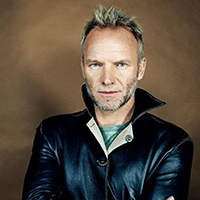
Sting (real name — Gordon Matthew Thomas Sumner; born October 2, 1951, Wallsend, England) is a British singer, composer, songwriter, bass guitarist and actor. He gained worldwide fame as the vocalist, bassist and principal songwriter of The Police, and since 1985 has pursued a solo career. His music combines rock, pop, jazz, reggae, new wave, soul, folk and elements of classical music.
Sting wrote most of The Police’s defining songs, including «Roxanne», «Message in a Bottle», «Walking on the Moon», «Don't Stand So Close to Me», «Every Little Thing She Does Is Magic» and «Every Breath You Take». His solo repertoire includes «If You Love Somebody Set Them Free», «Russians», «Englishman in New York», «Fragile», «If I Ever Lose My Faith in You», «Fields of Gold», «Shape of My Heart», «Desert Rose» and many other songs. Over the course of his career, Sting has won 17 Grammy Awards, while combined sales of his solo recordings and The Police albums have exceeded 100 million copies.
Childhood in Wallsend
Gordon Sumner was born in the working-class town of Wallsend in northeastern England, near Newcastle upon Tyne. The town’s main industrial enterprise was the Swan Hunter shipyard. The enormous ships built near his family home became one of the strongest images of his childhood and, decades later, formed the basis of the album and musical The Last Ship.
His father, Ernest Sumner, worked as a milkman and delivered milk, while his mother Audrey was a hairdresser. Gordon was the eldest of four children.
As a teenager, he became interested in guitar and later bass. The Beatles were among his important early influences, but jazz was no less significant. Sumner listened to jazz bassists, studied harmony and gradually began performing with local musicians.
Early bands and work as a teacher
After school, Sumner briefly attended university and later received teacher training at Northern Counties College of Education. Before making the professional transition into music, he worked as a schoolteacher.
At the same time, Gordon played in clubs across northeastern England in the evenings. Groups from this period included Newcastle Big Band, Phoenix Jazzmen, Earthrise and Last Exit. The latter operated at the intersection of jazz and rock, and Sumner was already writing original material for the band.
This scene gave him an important musical foundation. Unlike many British rock musicians of the punk generation, Sting entered the new wave era with experience in jazz improvisation, sight-reading and ensemble playing.
Origin of the name Sting
The name Sting appeared while he was still performing with Phoenix Jazzmen. One day, Gordon went onstage wearing a black-and-yellow striped sweater. One of the musicians remarked that it made him look like a bee and began calling him Sting.
The nickname stuck and soon completely replaced his real name in his stage life.
Move to London and formation of The Police
In the mid-1970s, Sting was noticed at one of Last Exit’s performances by drummer Stewart Copeland, who had previously played in the progressive rock band Curved Air. Copeland suggested that he move to London and form a new group.
In early 1977, Sting left teaching and moved to the capital. The original lineup of The Police consisted of Sting, Stewart Copeland and Corsican guitarist Henry Padovani.
The group emerged during the rise of British punk and played in the same clubs as the new punk bands. However, the musicians’ broader experience quickly took The Police beyond the boundaries of the genre.
Andy Summers soon joined the band. For a short period The Police performed as a quartet, after which Padovani departed. The classic lineup — Sting, Andy Summers and Stewart Copeland — remained together for all five of the band’s studio albums.
Roxanne and the first recordings
In 1977, The Police released their first single, «Fall Out», although the material from their early punk period still sounded very different from the style they would later develop.
«Roxanne» became the turning point. Sting wrote the song after spending time in Paris; its story centers on a man in love with a prostitute. The reggae rhythm, high-register vocal and spacious guitar texture already contained almost all the key elements of The Police’s future sound.
At first, British radio stations did not turn the song into a hit. The group travelled to the United States and toured small clubs largely on its own. American radio helped «Roxanne» reach a new audience, after which the reissued single entered the British charts.
Outlandos d'Amour
The debut album Outlandos d'Amour was released in 1978. Along with «Roxanne», it included «Can't Stand Losing You», «So Lonely», «Next to You» and other songs.
The trio’s sound was unusual for the late 1970s. The bass often functioned as a full melodic line, Andy Summers’ guitar left considerable open space, and Stewart Copeland’s drumming combined rock energy with reggae-based rhythms.
The Police quickly moved away from the punk scene while retaining its economy and nervous intensity, adding jazz freedom and Jamaican rhythmic elements.
Reggatta de Blanc
The second album, Reggatta de Blanc, appeared in 1979. This is the official spelling of the album title — with a double g.
«Message in a Bottle» became The Police’s first single to top the UK chart. It was followed by another number one, «Walking on the Moon».
By the end of the decade, the band was already touring around the world. International travel became an important part of its history: The Police performed not only in the major markets of Europe and North America, but also in countries rarely included in the itineraries of major Western rock bands.
Zenyatta Mondatta
Zenyatta Mondatta was released in 1980. The album was recorded under the pressure of an intense touring schedule, yet it brought the group several new major hits.
Among them were «Don't Stand So Close to Me», built around the story of a schoolteacher and a student, and «De Do Do Do, De Da Da Da».
By this point, The Police had fully transformed from a new wave band into an international pop-rock act.
Ghost in the Machine
On the 1981 album Ghost in the Machine, the sound became denser. Synthesizers and brass instruments appeared in the arrangements, and Sting himself recorded some saxophone parts.
The album included «Every Little Thing She Does Is Magic», «Invisible Sun», «Spirits in the Material World» and «Secret Journey».
At the same time, the lyrical themes became more complex. Political, philosophical and social subjects appeared increasingly often and would later become an important part of Sting’s solo work.
Synchronicity
The fifth and final studio album by The Police was Synchronicity, released in 1983.
Its biggest hit was «Every Breath You Take». Despite its gentle melody, it is not a conventional love ballad. The lyrics are written from the perspective of a person obsessively watching a former partner.
The song topped the charts in both the United States and the United Kingdom and eventually became The Police’s best-known work. Its longevity has been exceptional: for decades, it has remained one of the most frequently played songs on American radio.
Other key tracks from Synchronicity include «King of Pain», «Wrapped Around Your Finger» and «Synchronicity II».
The end of The Police’s first period
By the early 1980s, relations within the trio had become increasingly difficult. Sting’s creative control was growing, while the members had different ideas about the band’s future direction.
The Synchronicity tour ended in March 1984. No formal breakup announcement followed at the time, but the musicians moved on to their own projects.
In 1986, The Police briefly returned to the studio and re-recorded «Don't Stand So Close to Me», but work on a full new album never materialized.
The Dream of the Blue Turtles
Sting did not begin his solo career by trying to recreate The Police. For his first album, he assembled a group of young American jazz musicians: saxophonist Branford Marsalis, keyboardist Kenny Kirkland, bassist Darryl Jones and drummer Omar Hakim.
The Dream of the Blue Turtles was released in June 1985.
Its key songs included «If You Love Somebody Set Them Free», «Fortress Around Your Heart», «Love Is the Seventh Wave», «Children's Crusade» and «Russians».
«Russians» uses a theme from music by Sergei Prokofiev. The lyrics were written at the height of the Cold War and contrast political rhetoric with the simple human idea that people on both sides of the conflict share an interest in preserving life.
The work on Sting’s first solo tour was documented in the film Bring on the Night.
...Nothing Like the Sun
His second solo album, ...Nothing Like the Sun, was released in October 1987.
It featured «Englishman in New York», «Fragile», «We'll Be Together», «Be Still My Beating Heart» and «They Dance Alone».
The character in «Englishman in New York» was inspired by British writer and actor Quentin Crisp, who lived in New York. «Fragile» was dedicated to the memory of American engineer Ben Linder, who was killed in Nicaragua.
«They Dance Alone» addresses the story of women whose relatives disappeared during the military dictatorship of Augusto Pinochet in Chile.
In the late 1980s, Sting took part in Amnesty International’s global Human Rights Now! tour alongside Bruce Springsteen, Peter Gabriel, Tracy Chapman and other musicians.
The Soul Cages
After the deaths of his parents, Sting went through a prolonged creative crisis. Its result was the album The Soul Cages, released in 1991.
The record became one of the most personal in his discography. Its lyrics dealt with his father, the sea, ships, Catholic upbringing and memories of industrial Wallsend.
Among the central tracks were «All This Time», «Mad About You», «Why Should I Cry for You?» and the title track «The Soul Cages», which won the Grammy Award for Best Rock Song.
During this period, guitarist Dominic Miller began working with Sting. Their collaboration has continued for more than three decades and covers much of Sting’s subsequent solo discography.
Ten Summoner's Tales
In March 1993, Sting released Ten Summoner's Tales.
The album is noticeably lighter than its predecessor and includes several songs that became central to his concert repertoire: «If I Ever Lose My Faith in You», «Seven Days», «Fields of Gold» and «Shape of My Heart».
«Shape of My Heart» was written by Sting and Dominic Miller. The song, centered on a card player, later found new life in film, hip-hop and numerous cover versions.
During the same period, Sting recorded «All for Love» with Bryan Adams and Rod Stewart for the film The Three Musketeers. The single topped the Billboard Hot 100.
Mercury Falling
In 1996, Sting released Mercury Falling.
The stylistic range became even broader. «I'm So Happy I Can't Stop Crying» draws on country, «La Belle Dame Sans Regrets» on bossa nova, while «Let Your Soul Be Your Pilot» incorporates gospel and soul.
By this stage, Sting had definitively stopped tying his solo work to any single genre. Jazz harmony, rock, folk and pop could coexist within the same album.
Brand New Day and Desert Rose
In September 1999, Sting released Brand New Day, which became one of the biggest commercial successes of his solo career.
The main international hit was «Desert Rose», recorded with Algerian singer Cheb Mami. The song combines European pop music with the Algerian raï tradition.
The album also includes «Brand New Day», «A Thousand Years», «After the Rain Has Fallen» and «Perfect Love... Gone Wrong».
Brand New Day won the Grammy Award for Best Pop Vocal Album, while the title track earned Sting the award for Male Pop Vocal Performance.
Sacred Love
The album Sacred Love was released in 2003. Sting co-produced it with Kipper.
Among its most notable songs are «Send Your Love», «Stolen Car (Take Me Dancing)» and «Whenever I Say Your Name», recorded with Mary J. Blige.
The duet «Whenever I Say Your Name» won a Grammy Award.
Songs from the Labyrinth
In 2006, Sting released one of the most unusual projects in his discography — Songs from the Labyrinth.
The album is devoted to the English Renaissance composer John Dowland. Together with lutenist Edin Karamazov, Sting recorded songs and instrumental works from the 16th and 17th centuries.
The project demonstrated his long-standing interest in early European music and in the form of the authored song outside modern pop culture.
The Police reunion
In February 2007, Sting, Andy Summers and Stewart Copeland performed together for the first time in many years at the Grammy Awards and announced a world tour.
The Police Reunion Tour ran throughout 2007–2008 and covered North and South America, Europe, Asia and Australia. More than 2.5 million tickets were sold.
The tour ended in August 2008 with a concert in New York. The group did not record any new studio material.
If on a Winter's Night...
In 2009, Sting released If on a Winter's Night....
The album is devoted to winter, but it is not a conventional collection of Christmas songs. Sting used English folk material, old hymns, classical works and his own compositions.
The project once again connected his music with the traditions of northern England and historical forms of European song.
Symphonicities
The next experiment was Symphonicities in 2010. Sting re-recorded songs from The Police and his solo period in orchestral arrangements.
The material was also presented on the lengthy Symphonicity Tour, where his regular band performed together with symphony orchestras.
The Last Ship
In 2013, Sting returned to entirely new original material with the album The Last Ship.
The project is based on memories of his childhood in Wallsend and the shipbuilding community that surrounded him. The songs tell stories of working families, the disappearance of industrial culture, fathers and sons, attempts to leave and the inevitable return to one’s roots.
At the same time, a musical of the same name was being developed. After preview performances in Chicago, The Last Ship opened on Broadway in 2014.
The production was later reworked and received new stage versions in the United Kingdom, Ireland, Canada, the United States and other countries.
57th & 9th
After a long period of acoustic, classical and theatrical projects, Sting returned to a more direct rock sound.
57th & 9th was released in November 2016. The title refers to the intersection of 57th Street and Ninth Avenue in New York, which Sting passed on his way to the studio.
The album includes «I Can't Stop Thinking About You», «Petrol Head», «50,000», «One Fine Day» and «Heading South on the Great North Road».
44/876 with Shaggy
In 2018, Sting recorded a collaborative album with Jamaican musician Shaggy — 44/876.
The title combines the international telephone country codes of the United Kingdom and Jamaica. Reggae, which had been part of The Police’s music since the late 1970s, became the central focus of the entire project.
44/876 won the Grammy Award for Best Reggae Album.
My Songs
In 2019, Sting released My Songs, a collection of newly recorded studio versions of songs from The Police and his solo career.
Rather than simply remastering the old recordings, Sting re-performed «Brand New Day», «Desert Rose», «Fields of Gold», «Shape of My Heart», «Englishman in New York», «Roxanne», «Message in a Bottle», «Walking on the Moon» and other songs.
The project formed the basis for the long-running My Songs Tour and a concert residency at Caesars Palace in Las Vegas.
The Bridge
The Bridge was released on November 19, 2021. Much of the material was created during the COVID-19 pandemic.
The album includes «Rushing Water», «If It's Love», «The Book of Numbers», «For Her Love», «Harmony Road» and the title track «The Bridge».
Long-time collaborators including Dominic Miller, Branford Marsalis, Manu Katché and other musicians took part in the recording.
Sale of the songwriting catalog
In February 2022, Universal Music Publishing Group acquired Sting’s songwriting catalog.
The deal covered his solo songs and the material he wrote for The Police — from «Roxanne» and «Every Breath You Take» to «Fields of Gold», «Shape of My Heart», «Englishman in New York» and «Desert Rose».
STING 3.0
In 2024, Sting launched the concert project STING 3.0, returning to the stripped-down format of a rock trio.
He is joined onstage by long-time guitarist Dominic Miller and drummer Chris Maas. Sting once again plays bass guitar and performs material from The Police and his solo albums without keyboards, brass or orchestral sections.
In September 2024, he released the new song «I Wrote Your Name (Upon My Heart)», recorded in the same hard-edged trio format.
STING 3.0 LIVE
In April 2025, the live album STING 3.0 LIVE was released.
It includes new live versions of «Be Still My Beating Heart», «Fields of Gold», «Fragile», «Synchronicity II», «Every Breath You Take» and other songs.
The Last Ship in 2025–2026
At the end of 2025, an expanded version of The Last Ship with new material was released. At the same time, Sting prepared a revised stage production of the musical.
In 2026, the new version of The Last Ship was presented in Amsterdam, Paris, Brisbane and New York. Sting himself performs the role of shipyard foreman Jackie White.
In the autumn, the production returns to Amsterdam and then runs at London’s Theatre Royal Drury Lane. As a result, the story of his native Wallsend remains one of the central themes of Sting’s later career decades after his childhood there.
Musical style
Sting has never limited his music to a single genre. The Police combined new wave, rock and reggae with the members’ jazz experience. On his very first solo album, he placed jazz musicians at the forefront without abandoning the pop-song format.
...Nothing Like the Sun broadened the palette through world music, Mercury Falling through country, bossa nova and soul, Brand New Day incorporated elements of North African music, while Songs from the Labyrinth turned to the English Renaissance.
Despite this stylistic variety, a clear melody usually remains the foundation of his songs. Complex harmony or unusual rhythm rarely becomes an end in itself and instead works within an accessible song structure.
Sting as a bass guitarist
Sting’s contribution as a bassist is especially evident in The Police. His parts are rarely overloaded with notes, yet often perform both rhythmic and melodic functions at the same time.
In «Walking on the Moon», «Driven to Tears», «Spirits in the Material World» and other songs, the bass does more than support the harmony: it shapes the main pattern of the composition.
This approach also remained part of his solo work. Even after decades of performing with large ensembles and orchestras, Sting regularly returns to the bass guitar as his main concert instrument — something especially evident in the STING 3.0 program.
Lyrics
Sting writes about personal relationships, politics, war, religion, ecology, history and literature. Many of his songs use specific historical events or figures.
«Russians» emerged against the background of the Cold War. «They Dance Alone» is connected with those who disappeared under Pinochet’s regime. «We Work the Black Seam» addresses the British coal industry. «Fragile» speaks about human vulnerability in the face of violence.
In other cases, the lyrics begin with a private story and gradually acquire a broader meaning. «Every Breath You Take» is built around jealousy and control, «Fields of Gold» around memories of love, while «Shape of My Heart» uses card playing as a metaphor for the search for patterns and meaning.
Film and acting work
Sting began acting while still a member of The Police. One of his first notable roles was Ace Face in the 1979 film Quadrophenia.
He later appeared in a number of feature films:
- Brimstone and Treacle — 1982;
- Dune — 1984, as Feyd-Rautha Harkonnen;
- The Bride — 1985;
- Plenty — 1985;
- Stormy Monday — 1988;
- Lock, Stock and Two Smoking Barrels — 1998.
Film remained a secondary pursuit compared with music, although Sting regularly wrote songs for movies.
Music for film
Sting has been nominated four times for the Academy Award for Best Original Song.
- «My Funny Friend and Me» — The Emperor's New Groove;
- «Until...» — Kate & Leopold;
- «You Will Be My Ain True Love» — Cold Mountain;
- «The Empty Chair» — Jim: The James Foley Story, with J. Ralph.
«Until...» from the film Kate & Leopold earned Sting the Golden Globe Award for Best Original Song.
Public and humanitarian work
Sting has been involved in human rights and environmental projects for many years. In the 1980s, he performed at Amnesty International events and took part in the international Human Rights Now! tour.
In 1989, Sting and Trudie Styler founded the Rainforest Foundation. The organization works to protect rainforests and the rights of Indigenous peoples.
Environmental and humanitarian themes regularly intersect with his creative work, although Sting’s public activism has existed as a separate long-term area of activity.
Personal life
Sting’s first wife was actress Frances Tomelty. They married in 1976 and divorced in 1984. The marriage produced two children, Joe and Fuchsia.
In 1992, Sting married actress and producer Trudie Styler. The couple have four children — Mickey, Jake, Eliot and Giacomo. Sting has six children in total.
Several of them also work in creative professions. Joe Sumner became a musician and leader of Fiction Plane, while Eliot Sumner works in music and acting.
Awards and recognition
- 17 Grammy Awards;
- 45 Grammy nominations;
- Golden Globe for the song «Until...»;
- 4 Academy Award nominations;
- Rock & Roll Hall of Fame as a member of The Police — 2003;
- Commander of the Order of the British Empire (CBE);
- Kennedy Center Honors — 2014;
- Polar Music Prize — 2017;
- Fellowship of The Ivors Academy — 2023.
Fellowship of The Ivors Academy is the highest form of recognition awarded by the British professional organization for songwriters. Sting became the 23rd musician to receive the distinction.
Sting studio discography
- The Dream of the Blue Turtles — 1985
- ...Nothing Like the Sun — 1987
- The Soul Cages — 1991
- Ten Summoner's Tales — 1993
- Mercury Falling — 1996
- Brand New Day — 1999
- Sacred Love — 2003
- Songs from the Labyrinth — 2006
- If on a Winter's Night... — 2009
- Symphonicities — 2010
- The Last Ship — 2013
- 57th & 9th — 2016
- 44/876 — with Shaggy, 2018
- My Songs — 2019
- The Bridge — 2021
The Police studio albums
- Outlandos d'Amour — 1978
- Reggatta de Blanc — 1979
- Zenyatta Mondatta — 1980
- Ghost in the Machine — 1981
- Synchronicity — 1983
During their relatively short studio period, The Police recorded five albums, won six Grammy Awards and became one of the biggest bands of the new wave era. In 2003, Sting, Andy Summers and Stewart Copeland were inducted into the Rock & Roll Hall of Fame as members of The Police.
Sting today
By the mid-2020s, Sting was simultaneously working with several different parts of his own musical legacy. STING 3.0 returns material from The Police and his solo career to the stripped-down format of bass, guitar and drums, while The Last Ship develops a very different side of his work — theatrical, folk-based and closely connected to the history of Wallsend.
These directions reflect Sting’s entire career remarkably well. He began in the jazz clubs of Newcastle, became the frontman of one of the defining rock trios of the late 1970s, and later worked with jazz musicians, symphony orchestras, Renaissance music, North African performers, reggae artists and musical theatre. Through all these changes, the song itself remained the central element — melody, rhythm and lyrics capable of existing independently of any particular arrangement.