

 Валерия

Swedish House Mafia are a Swedish electronic trio consisting of Axwell, Steve Angello and Sebastian Ingrosso. The project played a key role in transforming late-2000s European progressive house into the soundtrack of the following decade’s biggest festivals and stadiums. One, Miami 2 Ibiza, Save the World, Greyhound and Don't You Worry Child became some of the most recognisable records of the global rise of EDM, while Swedish House Mafia’s stage format influenced the very idea of what a performance by electronic producers could look like in front of tens of thousands of people.
The group’s history is unusual because all three members were already established producers and DJs before Swedish House Mafia emerged. The project did not begin as a conventional band with clearly assigned roles, but grew out of years of collaboration between three figures from the same musical environment. After their international breakthrough, Swedish House Mafia announced that they would stop performing together, completed the massive One Last Tour, and then unexpectedly reunited several years later. That return ultimately led to Paradise Again — the first full-length studio album in their history.
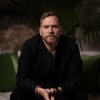
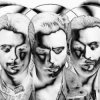
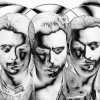
Axwell, Steve Angello and Sebastian Ingrosso
Swedish House Mafia brings together three Swedish producers, each of whom developed an independent musical career alongside the group.
Axwell is the stage name of Axel Hedfors. Even before Swedish House Mafia, he had gained international recognition as a house producer, remixer and founder of Axtone Records. His solo work and collaborations were notable for their attention to vocal melodies, harmony and carefully constructed climaxes.
Steve Angello developed a harder side of club-oriented electronic music and founded his own label, SIZE Records. In his early work, house intersected with electro house, minimalist rhythmic structures and a more aggressive club sound.
Sebastian Ingrosso had been connected with Steve Angello long before Swedish House Mafia: the two grew up in the same environment and worked together repeatedly. Ingrosso also founded Refune Music and gradually built his own catalogue of club releases.
The differences between the three producers later became one of Swedish House Mafia’s greatest strengths. Axwell leaned toward melody and clear song structures, Angello toward a heavier club sound, while Ingrosso occupied a space between those approaches. In their joint work, they did not abandon their individual methods but combined them.
How Swedish House Mafia emerged
Axwell, Steve Angello and Sebastian Ingrosso regularly crossed paths on the Swedish and European house scenes and gradually began performing together. The name Swedish House Mafia was initially more of an informal description for a circle of Swedish DJs than the name of a musical group in the conventional sense.
By the mid-2000s, their joint appearances had become more regular, and in 2007 the name became firmly associated with the trio. At the same time, it is important to distinguish the early history of Swedish House Mafia from their official discography.
In 2007, Axwell, Angello and Ingrosso joined Laidback Luke on Get Dumb. Two years later, the same four producers, together with vocalist Deborah Cox, created Leave the World Behind. Both recordings became important precursors to Swedish House Mafia, but they were released under the individual names of the producers involved rather than as standalone Swedish House Mafia singles.
Leave the World Behind in particular captured the direction that would soon become central to Swedish House Mafia’s early sound: a tense gradual build, emotional vocals and a large-scale climax designed to work equally well in clubs and at festivals.
One: the first major Swedish House Mafia release
The true beginning of Swedish House Mafia’s discography as an independent project came in 2010 with the release of One.
The original instrumental version was built around an extremely economical set of elements: a repeating synthesizer motif, a hard rhythmic foundation and a gradual increase in tension. That simplicity allowed the track to work particularly effectively in large venues.
A vocal version, One (Your Name), featuring Pharrell Williams, followed later. It pushed the track far beyond the club audience and became Swedish House Mafia’s first major international hit.
One also helped define the group’s visual and stage identity. Three producers behind one massive DJ console, minimalist three-dot symbolism, powerful lighting and tightly synchronised interaction with a huge audience gradually became recognised features of Swedish House Mafia.
Miami 2 Ibiza and Until One
Later in 2010 came Miami 2 Ibiza, recorded with British rapper Tinie Tempah. The track combined European festival house with British rap and showed that Swedish House Mafia were prepared to move beyond the largely instrumental club scene.
The project’s first major album-length release was the compilation Until One (2010). It is sometimes incorrectly described as Swedish House Mafia’s debut studio album, but structurally it is a mix compilation: the trio’s own tracks appear alongside music by other producers and material connected with their DJ sets.
That format reflected the nature of Swedish House Mafia at the time. They were not only creators of individual records, but also DJs whose own music existed within a broader club context.
Save the World
The next major stage came with the single Save the World, released in 2011. Vocals were provided by Swedish singer John Martin, whose name would later become associated with several other key progressive house releases of the era.
On Save the World, Swedish House Mafia’s festival electronics took on an almost anthem-like song structure. Rather than building the entire track around a drop, the producers made the vocal melody and emotional chord progression the central elements.
This balance between club energy and pop songwriting became one of the defining characteristics of Swedish House Mafia’s most successful period.
Save the World received a Grammy nomination in the Best Dance Recording category and strengthened the trio’s international status.
Antidote and Greyhound
At the same time, Swedish House Mafia were not limited to melodic progressive house. Antidote, a collaboration with Knife Party released in late 2011, revealed a much more aggressive side of the project. House collided with electro, heavy synthesizers and an almost mechanical rhythmic structure.
In 2012, the instrumental Greyhound was released. Unlike the vocal-driven Save the World and the later Don't You Worry Child, the track was built primarily around the gradual development of a synthesizer theme and tension within the arrangement.
These recordings are important for understanding Swedish House Mafia: their classic sound cannot be reduced to emotional vocal anthems alone. At its core, the project always reflected the club-focused thinking of three producers.
Don't You Worry Child
The culmination of Swedish House Mafia’s first era came with Don't You Worry Child, featuring vocals by John Martin.
The track appeared in 2012, after the trio had already announced their intention to stop performing together. As a result, the song was almost immediately perceived as Swedish House Mafia’s farewell to their audience.
Musically, Don't You Worry Child brought the formula of melodic festival progressive house into its clearest possible form: a piano introduction, emotional vocals, a gradual build and a massive synthesizer climax.
The single became the group’s biggest commercial success and reached number one on the UK Singles Chart. It also earned Swedish House Mafia their second Grammy nomination in the Best Dance Recording category.
Over time, Don't You Worry Child became not only the trio’s best-known hit, but one of the songs most closely associated with the global festival culture of the early 2010s.
Why Swedish House Mafia decided to stop
In June 2012, the group announced that their upcoming run of shows would be their last. The decision came as a surprise: Swedish House Mafia were not leaving after a decline in popularity, but almost at the peak of their international success.
There was no single conflict behind the decision. The members later described the period in different ways, but the underlying factors included exhaustion from constant pressure, differing views on future direction and a desire to return to individual projects.
The end of the first chapter became an event in its own right. The tour was called One Last Tour and included major venues across Europe, North America and other regions.
In 2012, Swedish House Mafia also released Until Now, another compilation combining their own recordings with material used in their live DJ sets. Like Until One, it is not a traditional studio album.
One Last Tour and the final show in Miami
One Last Tour ran across 2012 and 2013. Its farewell character made it one of the most discussed events on the electronic music scene of the time.
The final performance of Swedish House Mafia’s first era took place on March 24, 2013 at Ultra Music Festival in Miami. After the last show, Axwell, Steve Angello and Sebastian Ingrosso returned their focus to separate projects.
The story of the farewell tour was later documented in the film Leave the World Behind, released in 2014. The film showed not only the scale of the concerts, but also the internal tension between the three members during the final months of the first version of Swedish House Mafia.
After the split: Axwell Λ Ingrosso and Steve Angello’s solo career
The Swedish House Mafia hiatus did not mean the end of collaboration between all of its members.
Axwell and Sebastian Ingrosso formed the separate project Axwell Λ Ingrosso. The duo continued the melodic side of Swedish progressive house and released tracks including Sun Is Shining, Something New, Dreamer and More Than You Know.
Steve Angello focused on his solo career and the development of SIZE Records. His albums Wild Youth and HUMAN allowed him to work with more personal and experimental material without being limited by the Swedish House Mafia format.
Despite their separate careers, interest in a possible reunion never disappeared.
The unexpected reunion at Ultra Music Festival
The five-year break ended in the same place where the first chapter of Swedish House Mafia had concluded.
On March 25, 2018, Axwell, Steve Angello and Sebastian Ingrosso unexpectedly appeared together on stage at Ultra Music Festival in Miami. The performance had not been announced in advance as a regular Swedish House Mafia show and became one of the festival’s biggest surprises.
The return was primarily symbolic: the group played classic tracks and confirmed that they once again existed as a unified project.
More shows followed. In 2019, Swedish House Mafia performed in Stockholm and returned to international festival stages. However, audiences would have to wait several more years for fully developed new studio material.
It Gets Better: the real return to the studio
A new discographic chapter began in 2021 with the single It Gets Better.
For listeners expecting a direct continuation of Don't You Worry Child or Save the World, the track may have come as a surprise. Swedish House Mafia made the sound drier, darker and less obviously melodic. At its centre were a heavy rhythm, a processed vocal fragment and an almost industrial sense of repetition.
The choice was deliberate. The trio did not attempt simply to recreate the sound of 2012, but began searching for a form that belonged to a different period of electronic music.
The next single, Lifetime, featuring Ty Dolla $ign and 070 Shake, continued the move away from their earlier festival formula by combining electronics with a slower rhythm and contemporary R&B.
Moth to a Flame with The Weeknd
In October 2021, Swedish House Mafia released Moth to a Flame with The Weeknd.
The track became one of the most successful releases of the post-reunion era. The Weeknd’s voice fit naturally into the darker aesthetic of the new Swedish House Mafia, while the record itself occupied a space between house, synth-pop and contemporary pop music.
Moth to a Flame demonstrated that the new version of the project could work with major vocal material without directly returning to the structure of their early-2010s hits.
Paradise Again: the first studio album
On April 15, 2022, Swedish House Mafia released Paradise Again — the first full-length studio album in the group’s history.
This distinction is important: Until One and Until Now were compilations, making Paradise Again Swedish House Mafia’s true debut studio LP.
The album showed a much broader range than the group’s classic singles. House, techno, festival electronics, pop and more experimental electronic forms coexist throughout the record. Swedish House Mafia deliberately rejected the idea of building the entire album around a sequence of potential new versions of Don't You Worry Child.
Alongside It Gets Better, Lifetime and Moth to a Flame, the album included Heaven Takes You Home with Connie Constance, Redlight with Sting, Frankenstein with A$AP Rocky, Mafia, Can U Feel It, Calling On and the title track Paradise Again.
Redlight is particularly notable for using recognisable Sting vocal material associated with The Police classic Roxanne. Rather than treating it nostalgically, Swedish House Mafia placed the voice inside a heavy club framework.
Paradise Again reached number one on the US Billboard Top Dance/Electronic Albums chart and became the central work of the group’s second era.
Coachella and the Paradise Again World Tour
The album’s release was accompanied by Swedish House Mafia’s return to major global performances. In 2022, the group appeared at Coachella in a joint programme with The Weeknd before launching the Paradise Again World Tour.
The new live concept differed noticeably from the trio’s early-2010s image. While classic Swedish House Mafia had been associated with bright festival climaxes, the Paradise Again era was visually darker and harder, with new material performed alongside reworked versions of older hits.
In 2023, the results of that tour were collected on Paradise Again: The Live Album. The live release featured material recorded in different cities and showed how Swedish House Mafia had reinterpreted their own catalogue after returning.
Turn On the Lights again.. and a connection with a new generation
After reuniting, Swedish House Mafia began working more frequently with artists representing a different generation of electronic music.
One of the clearest examples was Turn On the Lights again.., released in 2022 in collaboration with Fred again.. and using vocal material from Future.
The connection was symbolic. Swedish House Mafia had been among the central figures of festival EDM in the early 2010s, while Fred again.. became one of the artists who helped redefine the perception of club music a decade later. Their collaboration showed that the trio did not intend to exist solely within its own nostalgia.
See the Light, Ray of Solar and Lioness
After completing the main album cycle, Swedish House Mafia continued releasing standalone singles.
In 2023 came See the Light with Fridayy and Ray of Solar. The latter brought melodic development and an emotional climax back into the trio’s music particularly clearly, though in a more modern and restrained form.
In 2024, Swedish House Mafia released Lioness with Swedish project Niki & The Dove. The track continued their combination of club rhythms with expressive vocal material.
Finally with Alicia Keys
Another notable release was Finally with Alicia Keys, officially released in 2024 after a long period in which different versions of the track had been presented live.
The recording is based on material from the house classic of the same name by Kings of Tomorrow and Julie McKnight, but Swedish House Mafia did not limit themselves to a conventional remix. Alicia Keys’ new vocal and an updated arrangement transformed the track into a standalone interpretation of one of house music’s landmark compositions.
SUPERHUMAN MUSIC and a new independent era
The next major change came with the launch of SUPERHUMAN, Swedish House Mafia’s own creative platform combining a music label with a broader space for projects in music and visual culture.
For Axwell, Steve Angello and Sebastian Ingrosso, this structure became their first full-scale shared creative platform of this kind. Each member had previously operated individual labels, but Swedish House Mafia as a group had worked with major record companies.
One of the first key releases of this new chapter was Wait So Long (Why Do I Have To), released in 2025. The track again revealed the emotional side of Swedish House Mafia: a repeating vocal motif gradually unfolds inside a long club arrangement designed not only for streaming, but also for a full DJ set.
Happiness Is So Sad with Lykke Li
This direction continued with Happiness Is So Sad, recorded by Swedish House Mafia with Swedish singer Lykke Li.
The track was first played during the trio’s performances in Ibiza, while the official release followed in 2026. Max Martin and Oscar Holter also worked on the recording alongside Swedish House Mafia.
The track brings together two sides long associated with the project: large-scale dance dynamics and a melancholic vocal melody. In that sense, Happiness Is So Sad continues a principle already present in Swedish House Mafia’s music during the era of Save the World and Don't You Worry Child, but without attempting to reproduce their sound literally.
Swedish House Mafia’s musical style
Swedish House Mafia are often associated with progressive house, electro house and festival EDM. All of these descriptions are valid for particular phases of their career, but none fully describes the project.
Classic recordings such as One, Save the World, Greyhound and Don't You Worry Child were built around gradual increases in tension, clear harmonic progressions and large-scale climaxes. This model had a significant influence on festival electronic music in the early 2010s.
At the same time, Swedish House Mafia should not automatically be grouped with everything that later came to be called big room house. Many of the trio’s most important tracks appeared before the standard big-room formula had fully taken shape and differ from it through more complex harmony, longer development and greater attention to song structure.
After the reunion, the group’s range broadened. Paradise Again added techno, hip-hop, contemporary pop and more minimalist forms of club-oriented electronic music. Later releases moved Swedish House Mafia closer again to melodic house, but without being rigidly tied to the sound of their first era.
Swedish House Mafia and festival culture
Swedish House Mafia’s influence is not limited to specific recordings. The trio were among the artists who changed the scale of the electronic scene in the late 2000s and early 2010s.
Before then, a DJ could certainly be an international star, but Swedish House Mafia helped establish a model in which an electronic project could be perceived almost like a stadium-level rock band. Large stage constructions, a unified visual concept, dramatically structured DJ sets and the transformation of individual tracks into collective concert anthems became integral parts of their performances.
This is why Swedish House Mafia’s importance cannot be judged only by the number of albums they released. During their first era, the group did not have a traditional studio LP at all, yet already had a global audience and independently mounted tours in some of the world’s largest venues.
Grammy and international success
Swedish House Mafia received two Grammy Awards nominations in the Best Dance Recording category:
- 2012 — Save the World
- 2013 — Don't You Worry Child
The group did not win either nomination, but both tracks belong to the most successful period of their international career.
Don't You Worry Child became Swedish House Mafia’s first single to top the main UK Singles Chart and has remained the trio’s most recognisable track.
Swedish House Mafia discography
Studio albums
- 2022 — Paradise Again
Compilations
- 2010 — Until One
- 2012 — Until Now
Main live releases
- 2014 — One Last Tour: A Live Soundtrack
- 2023 — Paradise Again: The Live Album
Key singles
- 2010 — One / One (Your Name) feat. Pharrell Williams
- 2010 — Miami 2 Ibiza with Tinie Tempah
- 2011 — Save the World feat. John Martin
- 2011 — Antidote with Knife Party
- 2012 — Greyhound
- 2012 — Don't You Worry Child feat. John Martin
- 2021 — It Gets Better
- 2021 — Lifetime feat. Ty Dolla $ign & 070 Shake
- 2021 — Moth to a Flame with The Weeknd
- 2022 — Redlight with Sting
- 2022 — Heaven Takes You Home feat. Connie Constance
- 2022 — Turn On the Lights again.. with Fred again.. feat. Future
- 2023 — See the Light feat. Fridayy
- 2023 — Ray of Solar
- 2024 — Lioness with Niki & The Dove
- 2024 — Finally with Alicia Keys
- 2025 — Wait So Long (Why Do I Have To)
- 2026 — Happiness Is So Sad with Lykke Li
The significance of Swedish House Mafia
Swedish House Mafia occupy a special place in electronic music history not because of the size of their discography, but because of how quickly three independent house producers transformed collaborative DJ sets into a project of global scale.
Their classic recordings combined club technique, memorable melodies and an ability to create music for huge audiences. One demonstrated the power of a minimalist festival structure, Save the World combined house with a complete vocal song, Greyhound preserved the instrumental side of the project, while Don't You Worry Child became the culmination of Swedish House Mafia’s melodic direction.
Equally important was the decision not to turn the group’s return into a simple recreation of the past. Paradise Again differs significantly from the music of their first era, while later releases show Axwell, Steve Angello and Sebastian Ingrosso continuing to change the balance between house, techno, pop music and festival-oriented sound.
Swedish House Mafia’s history therefore does not consist of one uninterrupted career, but of several distinct chapters: their formation on the Swedish house scene, global breakthrough, farewell One Last Tour, unexpected reunion, first studio album and continued work through their own creative platform. It is this ability to return to making music together under new circumstances that has allowed the trio to preserve their place on the international electronic scene far beyond the original EDM boom.