
 Felix Jaehn
Daft Punk were a French electronic duo active from 1993 to 2021, consisting of Thomas Bangalter and Guy-Manuel de Homem-Christo. One of the most influential projects in the history of electronic dance music, Daft Punk played a key role in the international success of French house, combining club music with disco, funk, techno, synth-pop, rock, hip-hop and, later, live studio performance. Their best-known works include Da Funk, Around the World, One More Time, Digital Love, Harder, Better, Faster, Stronger, Robot Rock, Technologic, Get Lucky and Instant Crush.
Daft Punk released four studio albums — Homework, Discovery, Human After All and Random Access Memories — composed the music for the film TRON: Legacy, turned the Alive 2007 concert project into an important milestone in the development of the modern electronic live show, and won six Grammy Awards from twelve nominations. Their influence, however, cannot be reduced to commercial figures: Bangalter and de Homem-Christo changed perceptions of how an electronic artist could work with sampling, visual identity, anonymity, album concepts and live performance.
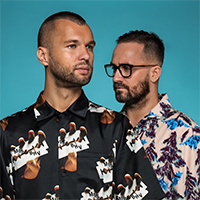
Thomas Bangalter and Guy-Manuel de Homem-Christo
Thomas Bangalter was born on 3 January 1975 in Paris. His father, Daniel Vangarde, is a composer, songwriter and music producer. Thomas studied music from childhood, including piano, and later became interested in synthesizers, drum machines and studio production techniques.
Guy-Manuel de Homem-Christo was born on 8 February 1974 in Neuilly-sur-Seine, a suburb of Paris. His full name is Guillaume Emmanuel de Homem-Christo. In his youth he played guitar and, like Bangalter, was simultaneously interested in rock music, pop culture, cinema and the developing electronic scene.
The future members of Daft Punk met in 1987 while studying at Lycée Carnot in Paris. They shared an interest in music from the 1960s and 1970s, The Beach Boys, The Velvet Underground, psychedelic and independent rock, and later in house and techno.
Darlin’ — the band before Daft Punk
Before turning to electronic music, Bangalter and de Homem-Christo played rock. Together with Laurent Brancowitz, who would later become the guitarist of Phoenix, they formed the trio Darlin’. The name came from a song by The Beach Boys.
Darlin’ existed only briefly and released a small amount of material. The band never became a notable commercial project, but it was directly connected to the origin of the name Daft Punk.
British journalist Dave Jennings, reviewing Darlin’ for Melody Maker, described their music with a phrase that could be interpreted as “daft punky thrash”. The original wording contained the words daft punky. Bangalter and de Homem-Christo took the unflattering description with humour and later turned it into the name of their new project — Daft Punk.
After Darlin’ broke up, Brancowitz continued in rock music, while Bangalter and de Homem-Christo became increasingly interested in the electronic dance scene.
From guitars to house
In the early 1990s, Paris was still developing its own club culture. Through raves, imported records and DJ sets, French musicians were discovering Chicago house, Detroit techno, acid house, disco and American garage.
For Bangalter and de Homem-Christo, the move from a rock band to an electronic duo was fundamental. Instead of a conventional line-up with a drummer and guitarists, they gained the ability to control almost every aspect of a track themselves — rhythm, harmony, sound, structure and editing.
One of the most important events was their meeting with Stuart Macmillan of the Scottish duo Slam and the label Soma Quality Recordings. The musicians gave him a demo, after which Soma released their first material.
The New Wave — Daft Punk’s first release
In 1994, Daft Punk released their debut single The New Wave on Soma. Its sound was considerably harder and more primitive than their later work: drum-machine percussion, acid synth lines and minimalist development placed the recording closer to underground house and techno.
Part of the material from The New Wave was later developed further in the track Alive, which appeared on the debut album.
Da Funk — the first club classic
In 1995, Da Funk appeared. It became Daft Punk’s first major international breakthrough.
The track combined a direct electronic rhythm, a distorted synth riff, influences from American funk and a hip-hop sense of groove. The initial pressing was relatively small, but DJs began playing the record extensively, including The Chemical Brothers. Major record companies gradually began taking interest in the French duo.
Daft Punk signed with Virgin Records while retaining an unusually high degree of control over their music and visual identity. This independence would become one of the defining characteristics of their entire career.
Homework
On 20 January 1997, Daft Punk released their debut album Homework in Europe. The US release followed on 25 March. The album contained 16 tracks, including Da Funk, Around the World, Revolution 909, Rollin’ & Scratchin’, Burnin’, Alive and Teachers.
The title Homework reflected the way the material had been created. Much of the music was produced independently using a relatively compact set of studio equipment, without attempting to reproduce the standards of an expensive commercial studio.
The album’s sound was built around drum machines, synthesizers, filtering, compression, repetition of short fragments and gradual changes in their timbre. Daft Punk could take a few bars, or even a single sonic gesture, and turn it into the foundation of an entire track.
Around the World
Around the World became one of the most recognisable works from Daft Punk’s first period. The composition is built around an extremely simple vocal phrase repeated over constantly changing bass, drums, synth parts and filtered textures.
The video directed by Michel Gondry played a crucial role. Different groups of dancers visually represent individual musical parts of the track: bass, drums, vocals, synthesizers and other elements. As a result, the video functions almost like a visual score of the electronic arrangement.
Around the World and Da Funk took Daft Punk far beyond the French club scene, while Homework became one of the albums through which international audiences began associating France with a new electronic sound.
Daft Punk and French Touch
Daft Punk are often called the creators of French Touch, or French house, but historically that description is too simplistic.
The French electronic scene of the 1990s developed around a large number of musicians and labels. Cassius, Motorbass, Étienne de Crécy, DJ Falcon, Alan Braxe, Stardust and other producers were all developing their own approaches to house, disco and filtered production.
Daft Punk did not invent the scene single-handedly. Their special role was in helping move French house from a specialised club environment to a global level, demonstrating that this music could exist simultaneously in underground DJ sets, music videos, album form and international pop culture.
Teachers and respect for the roots
The track Teachers from Homework is particularly revealing. Rather than presenting their music as though it had emerged from nowhere, Daft Punk literally listed the artists they regarded as their teachers.
Their musical foundation always contained a deep knowledge of American dance culture — Chicago house, Detroit techno, disco, funk and garage. Daft Punk’s French origins therefore never meant ignoring the musical traditions on which their style was built.
Sampling as a compositional method
One of Daft Punk’s central tools was sampling. However, the duo rarely used a sample simply as a recognisable quotation.
A fragment of an older recording could be reduced to only a few seconds, chopped, rhythmically reorganised, filtered and transformed into material that felt completely different inside the new composition.
This approach would become especially prominent on Discovery, but its foundations were already present on Homework. Daft Punk treated the studio not only as a place to record music, but as a compositional instrument in itself.
The members’ own labels
Alongside Daft Punk, both musicians developed independent projects.
Thomas Bangalter founded the label Roulé. It released his solo work as well as music by other French producers. One of Bangalter’s best-known projects outside Daft Punk was Stardust — a trio with Alan Braxe and vocalist Benjamin Diamond that released Music Sounds Better with You in 1998.
Guy-Manuel de Homem-Christo, together with Eric Chedeville, developed the label Crydamoure and the project Le Knight Club. This parallel activity helped shape the broader context of French filter house in the late 1990s.
Discovery — a radical change of direction
On 12 March 2001, Daft Punk released their second studio album Discovery. Rather than repeating the rawer club sound of Homework, they created a considerably brighter, more melodic and emotional record.
It included One More Time, Aerodynamic, Digital Love, Harder, Better, Faster, Stronger, Something About Us, Voyager, Veridis Quo, Face to Face and other tracks.
If Homework was primarily a product of club culture, Discovery drew on childhood memories, synth-pop, disco, soft rock, late-1970s funk and early-1980s pop culture.
One More Time
The album’s opening track One More Time, featuring vocals from American house singer Romanthony, became one of the most famous electronic singles of its generation.
The treatment of the voice is particularly important. It is deliberately processed electronically and becomes part of the synthetic texture of the track. Instead of presenting “the living human” and the machine as opposites, Daft Punk demonstrate that a processed voice can still retain emotion.
This idea would become one of the central themes of the duo’s entire aesthetic.
Harder, Better, Faster, Stronger
Harder, Better, Faster, Stronger is built around reworked material from Cola Bottle Baby by American musician Edwin Birdsong. Over the funk fragment, Daft Punk constructed a robotic vocal composition in which the human voice effectively becomes a synthesizer.
Several years later, the song’s influence extended far beyond the electronic scene: in 2007, Kanye West used it as the basis of his hit Stronger. In 2008, Daft Punk performed with him at the Grammy Awards.
The connection was symbolic: music created within French house became part of one of the biggest American hip-hop releases of its time.
Digital Love and the emotional side of Daft Punk
Digital Love reveals another side of Discovery. The composition combines disco-pop, a romantic song structure, guitar-like synthesizer solos and processed vocals.
Tracks like this help explain why Daft Punk influenced music far beyond the club world. For the duo, electronic technology was a way of emphasising human emotion rather than necessarily replacing it with a cold machine aesthetic.
The robots
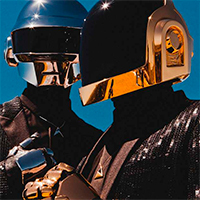
It was during the Discovery era that Daft Punk’s famous visual identity fully took shape. Thomas Bangalter and Guy-Manuel de Homem-Christo began appearing publicly in robot helmets that concealed their faces.
The musicians had already avoided the conventional cult of celebrity and used various masks before this period, but now the robots became independent characters in their own right.
The decision went far beyond simple stage costume. Daft Punk deliberately shifted attention away from the musicians’ private lives and toward the work itself. Audiences knew the real names of the members, but the celebrities were not so much Thomas and Guy-Manuel as the robots they had created.
Why the helmets became so important
The robotic image solved several artistic problems at once. It created an instantly recognisable visual symbol, protected the members’ private lives and extended one of the central themes of their music — the relationship between humanity and technology.
The paradox of Daft Punk was that they hid human faces behind machines while using that aesthetic to create extremely emotional music.
The robot therefore is not the opposite of the human in Daft Punk’s work. In Digital Love, Something About Us, Human After All and later Touch, the boundary between the human and the artificial repeatedly becomes part of the artistic idea itself.
Interstella 5555
The visual extension of Discovery was the animated film Interstella 5555: The 5tory of the 5ecret 5tar 5ystem, created with the involvement of legendary Japanese artist and manga creator Leiji Matsumoto.
The film tells the story of an alien band abducted and transformed into commercial pop stars. There is almost no dialogue: the entire Discovery album serves as the soundtrack. The project was conceived as a unified combination of music, science fiction and visual storytelling and was released in 2003.
Interstella 5555 definitively demonstrated that Daft Punk did not regard an album simply as a collection of separate tracks. Music, videos, characters and the broader aesthetic could exist as parts of one artistic world.
Human After All
On 14 March 2005, Daft Punk released their third studio album Human After All. It included Robot Rock, Technologic, The Prime Time of Your Life, Make Love, Television Rules the Nation and the title track.
After the rich and melodic Discovery, the new album was deliberately harsher, more repetitive and more minimalist. Repeating guitar and synthesizer figures, mechanical rhythms and short vocal formulas were used extensively.
The album initially received a significantly more mixed response than Discovery. For some listeners, its ideas seemed overly repetitive and unfinished.
Later developments, however, changed the perception of these tracks. Material from Human After All proved extremely effective inside Daft Punk’s live mashups.
Robot Rock and Technologic
Robot Rock pushes Daft Punk’s sample-based aesthetic almost to its limit: the main musical idea repeats with minimal variation, while the track’s power comes from sound, rhythm and the physical pressure of repetition.
Technologic is built around a mechanically spoken sequence of commands related to the use of technology. The lyrical minimalism emphasises the automation of modern life while simultaneously creating an instantly recognisable rhythmic pattern.
Daft Punk’s Electroma
In 2006, Daft Punk released the experimental film Daft Punk’s Electroma. Bangalter and de Homem-Christo directed the project themselves.
The film follows two robots attempting to become human. Unlike Interstella 5555, Daft Punk’s own music is not the main soundtrack, and the members of the duo do not personally portray the robots on screen.
Electroma explores one of the central themes of the group’s work outside the format of a music video: what it means to be human and where the boundary lies between identity, image and machine.
Coachella 2006 and the famous pyramid
One of the defining events in Daft Punk’s history was their performance at Coachella in 2006. The duo appeared inside a huge illuminated pyramid surrounded by a large-scale system of screens and lighting.
The main innovation was not merely the visual production. Daft Punk rebuilt their own catalogue into a continuous concert mashup: tracks from different albums were layered over one another, vocals moved from one composition into another, and familiar material received entirely new development.
This model had a major impact on the evolution of electronic live shows. From the mid-2000s onward, visual production was increasingly treated not as a background for a DJ performance, but as a full part of the artistic project.
Alive 2007
The concert concept was developed further during the Alive 2007 tour. Daft Punk effectively reconstructed their own discography.
Around the World was combined with Harder, Better, Faster, Stronger, One More Time with Aerodynamic, Television Rules the Nation with Crescendolls, while material from Human After All was integrated into compositions from earlier periods. The official live album contains precisely these hybrid versions.
This helped prompt a reassessment of the third studio album. Its repetitive and heavy fragments became connective material between the melodic tracks of Discovery and the rawer house of Homework within the concert structure.
First Grammy Awards
In 2009, Daft Punk won their first two Grammy Awards. Alive 2007 won in the electronic/dance album category, while the live version of Harder, Better, Faster, Stronger won in the dance recording category.
By that point, the duo had travelled from underground house records to one of the most influential live projects in electronic music.
TRON: Legacy
The next major phase was their music for Disney’s science-fiction film TRON: Legacy. The soundtrack was released in December 2010.
For the project, Daft Punk combined electronic production with symphonic orchestration on an unprecedented scale in their career. Rather than creating a conventional album of electronic songs, they composed a full film score: character themes, atmospheric passages, orchestral climaxes and electronic textures.
Among the best-known pieces are The Grid, The Son of Flynn, Derezzed, End of Line, Adagio for TRON and TRON Legacy (End Titles). Daft Punk’s official catalogue also contains an expanded version of the soundtrack with 31 tracks.
Working with an orchestra had a noticeable impact on the duo’s next studio album: afterward, Daft Punk explored even more seriously the possibility of combining electronic composition with real human performance.
Random Access Memories — a complete rejection of the familiar formula
In 2013, Daft Punk released their fourth and final studio album Random Access Memories.
It represented a fundamental change of direction. At a time when the global electronic scene was rapidly moving toward festival EDM, software synthesizers and fully digital production, Daft Punk created an album inspired by the studio culture of the 1970s and early 1980s.
Instead of building most tracks around ready-made samples, the duo recorded professional musicians, drummers, bassists, guitarists and keyboard players, then treated those performances as material for their own production. A significant portion of the sessions was recorded to analogue tape.
The musicians of Random Access Memories
Daft Punk assembled an unusual group of collaborators for the album. Nile Rodgers brought the guitar tradition of Chic and classic disco. Pharrell Williams became one of the primary vocalists. Giorgio Moroder told the story of his own path into electronic disco. Julian Casablancas performed Instant Crush, Paul Williams sang Touch, Todd Edwards appeared on Fragments of Time, and Panda Bear on Doin’ It Right.
These collaborations do not feel like a conventional collection of celebrity guests. Each participant represented a particular musical tradition that Daft Punk wanted to incorporate into the album’s larger narrative.
Giorgio by Moroder
One of the album’s central works is Giorgio by Moroder. At the beginning of the track, Giorgio Moroder talks about his youth and his transition from the traditional music industry toward synthesizers and electronic disco.
The interview gradually transforms into an instrumental composition that moves through disco, electronic music, jazz improvisation and an orchestral climax.
The track effectively articulates the central idea of Random Access Memories: modern electronic technology does not exist separately from the history of musicians, studios, instruments and people who created the language of electronic pop culture decades earlier.
Touch
Touch, featuring Paul Williams, is one of the most complex compositions in Daft Punk’s catalogue. It moves through cinematic orchestration, electronic experimentation, theatrical songwriting, choir and disco.
The theme of human touch is particularly symbolic for a group that had spent more than a decade hiding their faces behind robotic helmets.
A fragment of Touch was later used in the final video Epilogue, through which Daft Punk brought the story of the duo to an end. The official anniversary edition of Random Access Memories also contains Touch (2021 Epilogue).
Get Lucky
The album’s biggest commercial hit was Get Lucky, featuring vocals from Pharrell Williams and guitar from Nile Rodgers.
The track reached number two on the US Billboard Hot 100 and became Daft Punk’s first single to enter the chart’s Top 5. In the United Kingdom, it topped the national chart and became one of the biggest international hits of 2013.
The success of Get Lucky also ran almost completely against the dominant trends in festival EDM at the time. The song contains no enormous electronic drop. Its foundation is a live rhythm section, Rodgers’ guitar, a vocal melody and subtle studio processing.
Grammy 2014
Random Access Memories became Daft Punk’s biggest awards success.
At the 56th Grammy Awards, the duo won four prizes as lead artists: Album of the Year and the award for best electronic/dance album for Random Access Memories, while Get Lucky won Record of the Year and best pop performance by a duo or group.
Including the two awards from the Alive 2007 era, Daft Punk’s official Grammy statistics stand at 6 wins and 12 nominations.
Work with Kanye West
Daft Punk’s influence on hip-hop was not limited to the sample used in Stronger. In 2013, Bangalter and de Homem-Christo contributed to material for Kanye West’s album Yeezus.
The collaboration demonstrated how naturally their minimalist, mechanical musical language could exist within experimental hip-hop. The Recording Academy also notes Daft Punk’s production work on Yeezus.
Starboy and I Feel It Coming with The Weeknd
In 2016, Daft Punk appeared on The Weeknd’s album Starboy on two key tracks — the title track Starboy and the closing track I Feel It Coming.
Starboy reached number one on the Billboard Hot 100, becoming Daft Punk’s first No. 1 single on the main US chart. The softer I Feel It Coming combined Abel Tesfaye’s voice with a synth-pop and disco aesthetic closer to Daft Punk’s more melodic side.
At the 2017 Grammy Awards, The Weeknd and Daft Punk performed Starboy and I Feel It Coming together. It became one of the duo’s final major public performances.
Rare releases and the principle of scarcity
Daft Punk never built their career around constant presence in the media. Eight years passed between Human After All and Random Access Memories, and after 2013 no further studio album followed.
This rarity was part of their approach. At a time when artists were increasingly expected to maintain constant audience attention, Daft Punk could disappear for years and return only when they considered a project truly complete.
Their controlled anonymity worked according to the same principle: the lack of constant access to the people behind the helmets increased the significance of every appearance.
22 February 2021 — the end of Daft Punk
On 22 February 2021, Daft Punk released the eight-minute video Epilogue. It uses a scene from Electroma: one robot destroys itself, the other walks into the desert, after which the dates 1993–2021 appear on screen.
The group’s longtime representative Kathryn Frazier confirmed that Daft Punk had ended. No public explanation for the breakup was given at the time.
The history of the duo thus came to an end after approximately 28 years.
Daft Punk after the breakup
The end of the group did not mean the disappearance of its catalogue. In the following years, systematic work with archive material began.
In 2023, the tenth anniversary of Random Access Memories was marked by an expanded edition containing previously unreleased studio material. It included Infinity Repeating (2013 Demo) with Julian Casablancas and The Voidz, early versions of tracks, vocoder tests and material documenting the album’s creative process.
The same year also brought Random Access Memories (Drumless Edition) — a version of the entire album without drums or percussion. The experiment brought the harmony, orchestration, bass, guitar and vocal layers of the original recordings to the foreground.
This archival activity does not represent a revival of Daft Punk as an active duo: the official website continues to define the project’s lifespan as 1993–2021.
Thomas Bangalter after Daft Punk
Following the end of the duo, Thomas Bangalter increasingly distanced himself from his electronic stage persona. One of his largest solo projects was the orchestral work Mythologies, written for a ballet by Angelin Preljocaj and later released as a standalone album.
The project emphasised that Bangalter’s interest in composition had never been limited to house, synthesizers or dance music.
Guy-Manuel de Homem-Christo outside Daft Punk
Even while Daft Punk were active, Guy-Manuel de Homem-Christo regularly worked as a producer outside the duo. His own musical line is connected to Crydamoure and Le Knight Club, and later to work for Sébastien Tellier, Kavinsky, Charlotte Gainsbourg and other artists.
After Daft Punk ended, he maintained a lower public profile, continuing to appear primarily in songwriting and production credits.
How Daft Punk created music
The central characteristic of Daft Punk’s production method was their ability to turn repetition into development.
In many tracks, the harmonic or rhythmic material itself is extremely simple. Movement is created not through constant chord changes, but through changes in filtering, frequency range, drum density, sample length, placement of elements in the mix and the gradual introduction of new layers.
This principle is particularly characteristic of house: a listener may hear almost the same pattern for several minutes while subjectively experiencing the track as something that is constantly evolving.
Filtering and compression
The sound of early Daft Punk is closely connected to active filtering and dynamic processing. The frequency range could gradually open or close, creating a sense of acceleration without any need to change the main musical phrase.
Compression was used not merely as a technical mixing tool. It became part of the artistic character: drums, bass and samples began to feel like a single pulsating organism.
This approach became one of the most recognisable characteristics of French house and was later reproduced by a huge number of producers.
Vocoder and turning the voice into an instrument
Daft Punk’s robotic vocals are often mistakenly perceived as a simple effect. In reality, vocal processing became an independent compositional tool.
In Harder, Better, Faster, Stronger, Something About Us, Human After All, Get Lucky and other works, different forms of vocoder and electronic processing allow the voice to preserve human phrasing while simultaneously becoming part of the synthesizer texture.
This principle directly reflects the group’s visual identity: a human speaks through a machine, but the machine does not destroy the human content.
Why Discovery became so influential
Discovery was especially important because it challenged the idea that serious electronic music had to be cold, minimalist or underground.
Daft Punk openly embraced emotional melodies, disco, processed guitar solos, pop choruses, the aesthetics of childhood animation and romantic nostalgia.
The album influenced far more than house. Its legacy can be heard in later generations of electronic pop, the French Ed Banger scene, electroclash, indie dance and hip-hop. The Recording Academy has also specifically noted the influence of Discovery on the subsequent development of electronic music and Kanye West’s use of Harder, Better, Faster, Stronger.
Why Alive 2007 changed the idea of an electronic concert
Until the mid-2000s, one common question surrounding electronic music concerned what exactly the audience was supposed to watch on stage when most of the performer’s work was taking place through equipment.
Daft Punk offered an answer: an electronic concert did not need to imitate a rock-band performance. It could become an independent audiovisual form.
The pyramid, lights, screens and music were synchronised, while the material was not played as a conventional sequence of hits. Tracks were broken into elements and recombined within a new live context. The Alive 2007 tracklist directly documents this principle.
Large-scale stage structures, synchronised visuals and the idea of a distinct visual universe later became standard elements of the festival industry.
Daft Punk and pop music
Daft Punk began within the club underground but gradually also changed mainstream pop music.
One More Time demonstrated that heavily processed electronic vocals could sit at the centre of a major pop song. Harder, Better, Faster, Stronger entered the language of hip-hop through Kanye West. Get Lucky brought a live disco rhythm section and Nile Rodgers’ guitar back into global pop. Starboy demonstrated how naturally Daft Punk’s minimalist synthesizer language could function inside contemporary R&B.
One of the duo’s rare abilities was that commercial success almost never required them to fully adopt whatever trend was currently dominant. More often, the opposite happened: Daft Punk chose their own direction, and elements of that approach later became part of the mainstream musical language.
Visual culture
Daft Punk’s music videos also occupy a special place in the history of the project.
The duo worked with directors including Michel Gondry, Spike Jonze and Roman Coppola. Rather than simply showing the musicians performing in front of a camera, the videos often became self-contained short films.
After the introduction of the robots, the visual system became even more disciplined: helmets, gloves, costumes, photography, sets and lighting all followed a unified retrofuturist aesthetic.
Anonymity as an artistic tool
Daft Punk were never truly anonymous: the identities of Thomas Bangalter and Guy-Manuel de Homem-Christo were publicly known. It is therefore more accurate to describe their approach not as hiding their identity, but as a controlled refusal of the public face.
They deliberately limited interviews, avoided constant media presence and did not build their work around details of their private lives.
The robot became an intermediary between the human being and celebrity. This allowed Daft Punk to create a rare situation: the project was among the most recognisable in global pop culture even though the members’ faces were almost never used as a commercial image.
Main discography
Studio albums
- Homework — 1997
- Discovery — 2001
- Human After All — 2005
- Random Access Memories — 2013
Live albums
- Alive 1997 — 2001
- Alive 2007 — 2007
Soundtracks
- TRON: Legacy — 2010
Remix releases and compilations
- Daft Club — 2003
- Human After All: Remixes — 2006
- Musique Vol. 1 1993–2005 — 2006
- TRON: Legacy Reconfigured — 2011
- Random Access Memories 10th Anniversary Edition — 2023
- Random Access Memories (Drumless Edition) — 2023
Key tracks
- Da Funk
- Around the World
- Revolution 909
- Burnin’
- One More Time — with Romanthony
- Aerodynamic
- Digital Love
- Harder, Better, Faster, Stronger
- Something About Us
- Veridis Quo
- Face to Face — with Todd Edwards
- Human After All
- Robot Rock
- Technologic
- Derezzed
- Get Lucky — with Pharrell Williams and Nile Rodgers
- Lose Yourself to Dance — with Pharrell Williams
- Instant Crush — with Julian Casablancas
- Giorgio by Moroder — with Giorgio Moroder
- Touch — with Paul Williams
- Doin’ It Right — with Panda Bear
- Starboy — with The Weeknd
- I Feel It Coming — with The Weeknd
Grammy Awards
Over the course of their career, Daft Punk won 6 Grammy Awards from 12 nominations. Their first victories came in 2009 thanks to Alive 2007 and Harder, Better, Faster, Stronger. At the 2014 ceremony, Random Access Memories and Get Lucky brought the duo four more awards, including two of the main general-field categories — Album of the Year and Record of the Year.
The legacy of Daft Punk
Daft Punk’s significance cannot accurately be described with phrases such as “creators of electronic music” or even “creators of French house”. House, techno, disco, sampling, the vocoder and club DJing all existed long before the duo appeared.
Their achievement was their ability to assemble many existing musical languages into an entirely recognisable system of their own.
On Homework, Daft Punk demonstrated how powerful and immediate minimalist club music could be. On Discovery, they proved that house could become emotional and imaginative pop music without losing its club identity. Human After All pushed mechanical repetition toward almost conceptual minimalism, while Alive 2007 revealed the hidden potential of that material on stage.
TRON: Legacy demonstrated the duo’s ability to think in orchestral and cinematic terms. Finally, Random Access Memories did almost the opposite of what the electronic industry expected from Daft Punk: instead of creating even more advanced computer-based production, they turned toward studio musicians, analogue recording, live groove and the history of disco.
Another defining characteristic of Daft Punk is that every new stage of their career, to some extent, contradicted the previous one. They did not turn Da Funk into an endless series of similar tracks, did not simply repeat One More Time after the success of Discovery, and never attempted to make a Get Lucky 2 after the biggest commercial success of their career.
This willingness to abandon a formula they had already perfected became one of the reasons for the longevity of their catalogue.
Daft Punk also changed perceptions of the identity of the electronic artist. They demonstrated that global fame does not necessarily require a musician’s face to be constantly present in the media. The robots became some of the most recognisable images in modern music precisely because they left space for imagination behind them.
After the project officially ended in 2021, Daft Punk’s music did not become merely a nostalgic catalogue. Around the World, One More Time, Harder, Better, Faster, Stronger, Get Lucky and other recordings continue to exist simultaneously within club culture, pop, hip-hop, cinema, remixes and new generations of the electronic scene.
Daft Punk entered music history not as musicians who invented one genre, but as artists who repeatedly changed the idea of what electronic music could be — a club track, a pop song, a film, a robotic mythology, a massive live show or a carefully recorded studio album performed by real musicians.