
 ATB
ATB
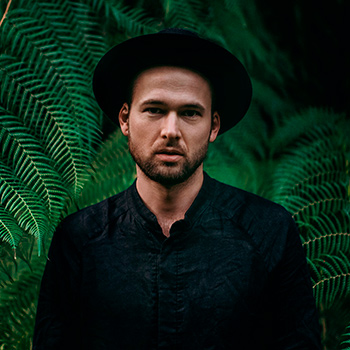
Monolink (real name — Steffen Linck; born in 1989, Germany) is a German singer, songwriter, multi-instrumentalist and electronic music producer who grew up near Hamburg and built his musical career in Berlin. His work combines the singer-songwriter tradition with electronic music: live vocals and guitar parts exist within house, electronica, ambient, progressive and melodic techno arrangements.
What makes Monolink distinctive is not so much the blending of genres as the very way the music is performed. He does not limit himself to a DJ set: he sings, plays guitar and keyboards, operates synthesizers, loops and Ableton Live, turning an electronic concert into a hybrid form somewhere between a band performance and a club live set.
Among Monolink’s key compositions are The End, Burning Sun, Sirens, Swallow, Father Ocean, Return to Oz, Black Day, Sinner, Otherside, The Prey, Under Dark, Turning Away, Black Hole, Point Of No Return, The Silence, Light Up My Dark, Mesmerized, Powerful Play, Avalanche, In My Place, Perfect World, Promised Land and Beacon. Over the course of his career, he has released three studio albums: Amniotic (2018), Under Darkening Skies (2021) and The Beauty Of It All (2025).
Guitar, indie rock and the first songs
Steffen Linck’s musical story began long before he became acquainted with club culture. He grew up near Hamburg and started learning guitar at around the age of fifteen. The immediate inspiration came from meeting a schoolmate who already played the instrument well and introduced him to British guitar music.
One of his first major musical passions was The Libertines. Linck played their songs in a teenage band and gradually began writing his own material. Later, his range of influences expanded to include Bob Dylan, Leonard Cohen, Neil Young, The Beatles, The Strokes, Pink Floyd, Radiohead and Oasis.
The singer-songwriter tradition had an especially strong impact on him — music in which a song is built around a story, lyrics and the personality of its author. Leonard Cohen and Bob Dylan fascinated Linck with their ability to turn just a few lines into an entire world, while the guitar remained his main instrument for a long time.
He never received a classical music education and later said that he values his largely self-taught path: having to understand harmony, recording and instruments through practice helped him develop an individual approach.
Moving to Berlin and architecture
In 2009, Steffen Linck moved from the Hamburg area to Berlin. Electronic music was not originally the reason: he intended to study architecture and spent some time pursuing that field.
Musically, during his first years in the German capital he remained primarily a writer of acoustic songs. Linck played in small venues, performed on the streets and took part in a folk project featuring double bass, guitar and drums.
It was Berlin that gradually changed his understanding of what music itself could be.
Club culture seemed to him like the complete opposite of the folk tradition he knew. In singer-songwriter music, stories were told through words. On the dancefloor, there were often no lyrics at all, yet repetitive rhythm, bass and the gradual development of an arrangement could create an equally powerful emotional state.
Linck described this as discovering another way of listening: not so much analyzing music with the mind as experiencing it physically through the body.
How Monolink emerged
Rather than choosing between guitar-based songwriting and the electronic scene, Linck decided to combine the two systems.
He began learning music software, synthesizers and electronic production, gradually placing previously written guitar songs inside dance-oriented structures.
This is where the central principle of Monolink emerged: a song should remain a song even when it becomes an electronic track.
For that reason, guitar and voice did not become decorative elements placed over a finished beat. They remain at the core of the composition, while the electronic side develops around the vocal melody, chords and lyrics.
Among the electronic musicians Linck himself has cited as influences on the development of this approach are Nicolas Jaar, Stimming, David August, Moderat, Acid Pauli, Lake People and other representatives of the European electronic scene.
Indigo — the first official recordings
Monolink began publishing his first recordings and DJ selections online in the early 2010s.
His first well-documented commercial release was Indigo, released on November 16, 2014 through By Ground Digital.
The release contained three compositions:
- Indigo
- Paralyzed
- Into the Darkness
Even here, his interest in extended club forms was already apparent: Paralyzed and Into the Darkness both run for more than seven minutes, clearly distinguishing early Monolink from a conventional pop songwriter.
However, the truly recognizable shape of the project emerged after he connected with one of the key figures in Germany’s alternative electronic scene.
The End and Acid Pauli
In 2015, Monolink collaborated with Acid Pauli — the electronic project of Martin Gretschmann, previously associated with The Notwist.
The result was the release The End. It included original compositions and remixes, while the collaboration helped Monolink move much deeper into the professional electronic music scene.
The End is especially important to what followed because the balance that would become Monolink’s signature is already clearly audible here: calm male vocals and an almost traditional song structure are immersed in a slowly developing electronic rhythm.
Instead of sounding like a singer-songwriter track with a drum machine added to it, the music gradually creates its own space somewhere between folk and club culture.
Burning Sun and Sirens
The next important step was Burning Sun, released in 2017. By this time, Monolink had fully developed into an independent live project.
The same period also brought Sirens — one of his most recognizable early compositions. It demonstrates Linck’s characteristic contrast particularly well: the vocal performance sounds almost intimate, while the low-frequency foundation and gradual accumulation of electronic layers are designed for a large space and a dancefloor.
This ability to create the feeling of a personal song and a club composition at the same time soon became the foundation of his first album.
Amniotic
The debut studio album Amniotic was released on April 20, 2018.
The main edition contains 11 tracks and runs for more than an hour. It includes Amniotic, Black Day, Sirens, Rearrange My Mind, Frozen, Father Ocean, Swallow, Take Me Home, Riverman, Return to Oz and other works from the period.
The title is connected with ideas of birth, nature and the original state of life. Monolink himself said that he wanted the album to have an almost physical connection with nature and living existence.
This helps explain the record’s structure. Despite its use of synthesizers and electronic rhythms, Amniotic rarely feels like cold technological music. The recording contains guitars, voice, breath, acoustic instruments and a great deal of space between individual sonic elements.
Sirens and Swallow became two of the album’s key works, while Father Ocean gradually developed into one of the best-known songs of Monolink’s entire career.
Father Ocean and Return to Oz
Father Ocean clearly demonstrates why Monolink’s catalog proved especially well suited to remix culture.
The original composition already contains two independent sides — a song-based one and an electronic one. This allows another producer to substantially change the rhythm and club dynamics without destroying the central vocal image.
The version Father Ocean (Ben Böhmer Remix) became particularly well known. The brighter melodic electronics of Ben Böhmer gave the song a new club life, and over time the remix became one of the most popular recordings associated with Monolink.
A similar story happened with Return to Oz. The original composition appeared on Amniotic, but in 2019 the ARTBAT Remix was released and became one of the most recognizable works in the modern melodic house & techno scene.
As a result, Monolink’s catalog evolved in two parallel forms at once: as the artist’s own music and as material reinterpreted by other electronic producers.
Burning Man and the transformation into an international live act
Performances at Burning Man became one of the most important factors in Monolink’s international growth.
A recording of his performance in the Black Rock Desert in 2018 became especially widespread. Visually, the setting was almost ideal for the project: guitar, voice, electronic devices, sunset and open space emphasized the image of a musician who existed simultaneously inside an electronic music festival and outside traditional DJ culture.
The live format became Monolink’s main competitive advantage.
He does not try to reproduce studio recordings literally. Ableton Live contains separate elements of the songs, loops and electronic layers that he can manipulate directly during a performance. Vocals and guitar are also performed live.
As a result, the duration, transition structure and individual elements can change depending on the venue and audience.
Black Hole with Ben Böhmer
In 2019, Monolink recorded Black Hole together with Ben Böhmer. The track appeared on Böhmer’s debut album Breathing and was released through Anjunadeep.
The collaboration felt especially natural. Ben Böhmer’s music is built around melodic progressive electronics, while Monolink’s vocal style gave it a fully developed song-like dramatic structure.
Black Hole became one of Linck’s best-known collaborations and later received new remixes, including versions by Konstantin Sibold.
During the same period, Monolink’s catalog continued to expand through his own songs, remixes and international performances.
Sinner, Otherside and the road to the second album
In 2020, the single Sinner appeared, followed by Otherside. These tracks signaled a transition toward the more contrasting material of the second album.
While Amniotic felt like a relatively cohesive natural and melancholic space, the new music was emotionally less stable.
The reasons were closely connected with Linck’s own life. The first part of the second album was created after a long period of touring, when he wanted to write more energetic music for large stages. Then came personal changes, the end of a relationship and the COVID-19 pandemic, which brought the live music industry to a halt.
As a result, the material began moving in a completely different direction.
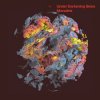
Under Darkening Skies
The second studio album Under Darkening Skies was released on June 11, 2021 through Embassy One.
It contains 12 compositions with a total running time of more than an hour.
Among the key tracks are Laura, The Prey, We Don't Sleep, Harlem River, Falling, Otherside, Under Dark, Reflections and Don't Hold Back.
The album’s internal diversity became one of its strengths. Club tracks sit alongside slow vocal compositions and almost intimate fragments.
Linck himself explained these differences through the circumstances in which the album was created. Part of the material was inspired by large performances and designed for high energy. Later, isolation and changes in his personal life shifted the work toward calmer and more intimate states.
For that reason, Under Darkening Skies feels less like a single emotion and more like a document of several sharply contrasting periods.
Don't Hold Back and Turning Away
One of the important songs of the second period was Don't Hold Back. It appears directly on Under Darkening Skies and belongs to 2021, not 2023, as is sometimes incorrectly stated in catalogs and biographies.
The same year also brought Turning Away, released through Cercle Records.
The track later received new versions, including a remix by Parra for Cuva, continuing the characteristic Monolink tradition in which songs develop an independent life inside the catalogs of other electronic artists.
Cercle and the Maldives concert
Monolink’s collaboration with Cercle occupies a special place among his live recordings.
The performance on Gaatafushi Island in the Maldives was presented not simply as a festival video, but as an independent audiovisual work: an electronic concert taking place almost directly inside a natural landscape.
In 2022, the recording was officially released on digital platforms as Cercle: Monolink at Gaatafushi Island, Maldives (Live).
Projects like this fit Monolink’s music particularly well because his compositions often depend on space just as much as on traditional song structure.
Point Of No Return and Adam Port
In 2023, Monolink collaborated with Adam Port, a member of the Berlin collective Keinemusik.
The joint single Point Of No Return was released on March 15, 2023 through Afterlife Recordings.
Unlike Monolink’s more folk-oriented work, the core of this composition is noticeably closer to techno and melodic house & techno. Linck’s voice becomes almost a hypnotic element inside the club structure.
Point Of No Return became one of the most prominent tracks in his digital catalog and once again demonstrated how naturally Monolink can exist inside another producer’s music without losing his own identity.
The Silence with Stephan Jolk
In May of the same year, The Silence was released, recorded together with Italian electronic producer Stephan Jolk.
Both musicians are credited not only as performers, but also as writers and producers of the composition.
Once again, the track uses a characteristic Monolink principle: a small number of vocal phrases does not explain the music literally, but instead establishes an emotional direction around which the electronic arrangement gradually develops.
Light Up My Dark
On July 26, 2024, Monolink released the single Light Up My Dark, followed in August by an extended version running for more than seven minutes.
The track became an important standalone release between the second and third albums, but it was not included on The Beauty Of It All.
For that reason, it is not entirely accurate to describe Light Up My Dark as the first single from the third album itself. It is better understood as a transitional work between two stages of his discography.
Mesmerized and the beginning of a new chapter
The true album cycle for The Beauty Of It All unfolded in 2025.
One of its first key songs was Mesmerized. The composition is noticeably darker than some of Monolink’s earlier work and is built around extended electronic development, vocals and analog-sounding rhythms.
It was followed by Powerful Play and then other tracks from the forthcoming album.
While creating the new record, Monolink consciously distanced himself from constant touring and completed part of the work in a studio in the German countryside. After several years of performing, he wanted to interact physically with instruments again — playing piano and guitar, improvising, and only then transforming those ideas into electronic recordings.
The musician himself described this method almost literally as turning folk songs into dancefloor songs.
The Beauty Of It All
The third studio album The Beauty Of It All was released on September 26, 2025 through Embassy One.
The album contains ten compositions:
- Call of the Void
- Perfect World
- Powerful Play
- Avalanche
- In My Place
- Mesmerized
- Promised Land
- Beacon
- Phoenix
- Once I Understood
The album runs for approximately 52 minutes.
At the center of The Beauty Of It All are themes of beauty, impermanence, human closeness and the perception of time. More important, however, is the way these ideas are reflected in the music itself.
Monolink does not try to make all ten compositions equally club-oriented.
Powerful Play is more closely connected with the dancefloor. Avalanche uses a more hypnotic progressive dynamic. Mesmerized unfolds slowly and darkly. Beacon places greater emphasis on piano and the singer-songwriter side of his work. The closing Once I Understood almost returns the listener to the intimacy of a conventional song.
In this way, the third album makes explicit what had existed in Monolink’s music from the beginning: the electronic composition and the singer-songwriter form are not two genres that periodically replace one another. They are two layers of the same system.
Perfect World
Perfect World became an especially interesting development.
Instead of Monolink’s more typical straight four-on-the-floor pulse, the composition uses rhythms associated with UK garage and breakbeat. At the same time, the voice, synthesizers and melancholic melodic language retain his recognizable style.
The lyrical idea came to Linck while observing people in a café in Hamburg. The song explores the modern feeling of disconnection — a situation in which a person is physically surrounded by people and information, yet emotional connection becomes increasingly difficult to perceive.
2026: remixes and the continuation of The Beauty Of It All
In 2026, Monolink continued developing material from the third album through a series of remixes.
New versions were created for Beacon, Mesmerized, Perfect World, Powerful Play and Promised Land. Guest producers included Colyn, Henrik Schwarz, Dirtwire, Curol, Yamagucci, Acid Pauli and Steve Bug.
In July 2026, the release Powerful Play / Promised Land (Acid Pauli & Steve Bug Remixes) appeared.
This cycle clearly demonstrates the continuity of Monolink’s entire story: Acid Pauli, who played an important role as early as The End in 2015, returned more than a decade later to work with Linck’s material after the release of his third studio album.
The Beauty Of It All Tour
The release of the third album was accompanied by the international The Beauty Of It All Tour.
The European leg began in 2025, while in 2026 the program continued across North America, Asia, South America and Europe.
In North America, Monolink performed in cities including Toronto, Brooklyn, Boston, Chicago, Dallas, Austin, Denver, Phoenix, Los Angeles, San Francisco, Portland, Seattle and Vancouver.
The tour was built around a full live show featuring vocals, guitar, keyboards, synthesizers and a new stage production. Alongside material from The Beauty Of It All, the program included Sirens, Father Ocean, Otherside, Point Of No Return and other works from earlier periods.
In 2026, Monolink also returned to Fusion Festival with a hybrid performance, maintaining his connection with the festival environment that had played an important role in shaping the project itself.
How Monolink’s live set works
The stage format is one of the main reasons why it is difficult to describe Monolink simply as a DJ.
The center of the performance remains voice and guitar. They run through Ableton Live, where they are combined with prepared electronic elements, effects and loops.
At the same time, the musician uses MIDI controllers, synthesizers and other devices that allow him to restructure a composition directly on stage.
As a result, a song can exist in several forms at once.
There is the studio version, where every detail is fixed.
There is an extended version for clubs.
There is an acoustic version that can exist almost without electronics.
And finally, there is the live version, which can change in length and dynamics during the performance itself.
This is what distinguishes Monolink from an artist who simply sings over pre-prepared electronic backing.
Guitar and the electronic studio
Despite the development of technology, the guitar remains one of Steffen Linck’s main working instruments.
At different times he has used a Gibson ES-335 and a Fender Stratocaster, while many compositions originally begin as a guitar or piano idea.
The creative process can start with a short melody, a line of lyrics or a recording on a phone. The fragment is then transferred into Ableton Live, where synthesizers, electronic drums and additional live instruments are gradually built around it.
In the studio, Monolink also uses analog synthesizers, including the Roland Juno-60 and Korg MS-20, although the musician himself emphasizes that the specific model of equipment matters far less to him than the melody and lyrics.
Monolink’s musical style
Catalogs place Monolink within electronica, house, dance, progressive house and melodic house & techno, but none of these definitions on its own fully describes the project.
From folk and the classic singer-songwriter tradition came:
- guitar;
- verse-and-chorus song structure;
- narrative lyrics;
- personal vocals;
- an interest in images of nature and inner emotional states.
From the electronic scene, Monolink adopted:
- repetitive club rhythm;
- synthesizers;
- deep bass;
- long, gradual development;
- the principle of a continuous live set;
- the possibility of radically reworking a composition through remixing.
For this reason, the most accurate description of Monolink is neither “a singer who started making techno” nor “a DJ with a guitar.”
He works at the point where the singer-songwriter tradition turns into electronic dance music without losing the song itself.
Lyrics and main themes
The importance of lyrics distinguishes Monolink from a significant part of the instrumental melodic techno scene.
He was strongly influenced by Leonard Cohen and Bob Dylan, for whom the meaning of a song cannot be separated from its melody.
Linck’s lyrics, however, rarely take the form of a linear narrative with a completely explained storyline. He is more interested in individual images and emotional states.
His songs regularly return to themes of nature, water, darkness, light, space, loneliness, movement, loss, human closeness and the attempt to find a connection between the individual and the surrounding world.
This is already visible in titles such as Father Ocean, Burning Sun, Under Darkening Skies, Avalanche, Beacon and Phoenix.
Natural imagery here is not used merely as decoration, but as a way to speak about emotional states without making the lyrics overly literal.
Monolink studio discography
Amniotic — 2018
The debut studio album that established the project’s central principle — the combination of live singer-songwriter music and electronic club music.
Key compositions: Sirens, Swallow, Father Ocean, Return to Oz, Black Day, Rearrange My Mind, Amniotic.
Under Darkening Skies — 2021
The second album, with a broader emotional range — from energetic electronic music to intimate vocal compositions.
Key compositions: The Prey, Otherside, Under Dark, Harlem River, Don't Hold Back, Reflections, We Don't Sleep.
The Beauty Of It All — 2025
The third studio album, dedicated to beauty, impermanence and human connection. Live instruments and electronic production move even closer together on the record.
Key compositions: Mesmerized, Powerful Play, Avalanche, In My Place, Perfect World, Promised Land, Beacon.
Main early and live releases
Indigo — 2014 — Monolink’s first well-documented commercial three-track release.
The End — 2015 — a collaboration with Acid Pauli and one of the key stages in the formation of his own style.
Burning Sun — 2017 — an early release from the period immediately preceding Amniotic.
Amniotic (Deluxe Version) — 2019 — an expanded version of the debut album.
Cercle: Monolink at Gaatafushi Island, Maldives (Live) — 2022 — an official live release.
Monolink’s main songs
The central works in his catalog include:
The End, Burning Sun, Sirens, Swallow, Father Ocean, Return to Oz, Black Day, Rearrange My Mind, Sinner, Otherside, The Prey, Under Dark, Don't Hold Back, Turning Away, Black Hole, Point Of No Return, The Silence, Light Up My Dark, Mesmerized, Powerful Play, Avalanche, In My Place, Perfect World, Promised Land, Beacon, Phoenix and Once I Understood.
Collaborations and notable remixes
A separate part of Monolink’s story is connected with other representatives of the contemporary electronic scene.
Acid Pauli helped shape one of the most important early releases — The End — and years later returned to Monolink’s music with a remix of Powerful Play.
Ben Böhmer reworked Father Ocean and recorded Black Hole with Linck.
ARTBAT transformed Return to Oz into one of the most recognizable melodic techno remixes in the catalog.
Adam Port became a co-creator of Point Of No Return.
Stephan Jolk created The Silence together with Monolink.
Linck’s music has also been reinterpreted by Tale Of Us, Innellea, Parra for Cuva, Colyn, Henrik Schwarz, Sam Shure, Mathame, Fideles, Steve Bug and other producers.
This openness to remixes became an important part of his position within electronic culture: the songs do not exist as closed works, but as material that can move from a singer-songwriter concert to a large techno dancefloor while retaining their emotional core.
Why Monolink occupies a distinctive place in electronic music
The combination of guitar and electronics is not new in itself. What makes Monolink distinctive is that he does not use live instruments merely as an impressive stage addition.
His musical system grew precisely out of the collision of two different ways of experiencing music.
From folk and rock, he inherited the idea of the song as a story.
From Berlin, he absorbed the idea of music as a physical collective experience built on rhythm, repetition and gradual immersion.
Rather than choosing one direction, Linck made the contradiction itself the foundation of his project.
That is why Monolink appears equally natural with a guitar in front of a small audience, behind electronic equipment at a festival, in the Burning Man desert or inside a large-scale audiovisual production.
His three studio albums demonstrate the gradual development of a single idea. Amniotic established the project’s language, Under Darkening Skies expanded its emotional boundaries, while The Beauty Of It All brought live instruments, songwriting and contemporary electronic production even closer together.
This is why Monolink has become a notable figure on the contemporary electronic scene: he does not try to force a traditional song to submit to club music or vice versa — he creates a space in which guitar, human voice, synthesizer and dance rhythm are perceived as parts of one musical language.