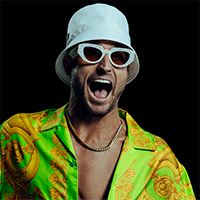
 Fisher
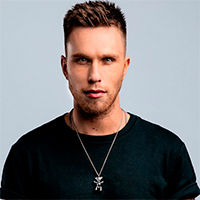
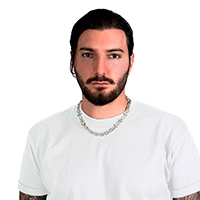
Nicky Romero (real name — Nick Rotteveel van Gotum; born 6 January 1989 in Amerongen, Utrecht, the Netherlands) is a Dutch DJ, music producer, remixer and founder of Protocol Recordings. He became one of the notable figures of the global EDM boom of the early 2010s thanks to Toulouse, his collaboration with Avicii on I Could Be The One, joint work with David Guetta, NERVO and Krewella, and his own progressive mainstage sound. Romero later expanded his musical range from electro and progressive house to tech house, dance-pop and deeper progressive house, for which he created the separate project Monocule.
Amerongen, drums and the first steps in production
Nick Rotteveel grew up in Amerongen, a small town in the central Netherlands. His interest in music began in childhood through drums: his father played the instrument, and Nick started with drums as well. His fascination with rhythm later developed into an interest in electronic music and home production. Romero has recalled spending much of this early period in his room, working on music every day and teaching himself how to use studio tools.
His path into the profession was not immediate. Before international festivals and major labels came local DJ sets, work with house and R&B, and a long period of learning electronic music production. His first releases appeared on the small Once Records label, including Privilege and Qwerty. This early catalogue marked the beginning of his transition from DJing to a fully fledged production career.
By the end of the 2000s, his material began appearing on larger dance platforms. In January 2009, Spinnin' Records released My Friend, and in December 2010 Nicky Romero’s remix of Flash by Green Velvet followed. The latter is a particularly clear example of the producer’s early style — a dense electro house groove, aggressive low-end work and a club structure designed for large sound systems.
Toulouse and the moment of international breakthrough
The true turning point in terms of recognition was Toulouse, created during a period when European electro house was gradually evolving into large-scale festival music.
The track first appeared in 2011 and gained international momentum around the turn of 2011–2012. Its massive bassline, mechanical synth hook and characteristic pause before the drop made Toulouse one of the most recognisable instrumental EDM records of its era. MusicRadar later directly linked Romero’s international breakthrough to the success of the track.
Toulouse arrived before big room house had fully crystallised into an independent festival formula and sits at the intersection of electro house, progressive house and the emerging mainstage EDM sound. That is one reason the track remained recognisable even after the initial festival wave had passed.
The success of Toulouse almost immediately opened the door for Romero to collaborate with first-tier electronic artists.
David Guetta, Metropolis and the beginning of the major festival era
One of the musicians who played an important role in Romero’s early international development was David Guetta. Protocol itself later referred to Guetta as a mentor to Romero at the beginning of his global career. Their collaborations included Wild One Two, Metropolis, production work on Bang My Head, and later Ring The Alarm and Shout.
Metropolis, released in 2012, was especially characteristic of the period. A cinematic progressive-house build-up collided with a heavier electro drop — a formula that was becoming central to major EDM festivals at the time.
During the same period Romero worked with Calvin Harris on Iron, while with Australian duo NERVO he released Like Home. The latter became one of his most melodic early works and an important example of the progressive house sound of the early 2010s, combining festival dynamics with full vocal songwriting.
However, the biggest commercial success of this period came from another Swedish-Dutch collaboration.
I Could Be The One with Avicii
The collaboration between Nicky Romero and Avicii was originally known among fans as Nicktim. After vocals were added, the track was released as I Could Be The One and became one of the most important EDM crossover records of the early 2010s.
In February 2013, the single reached No. 1 on the main UK Singles Chart. It spent 28 weeks in the UK Top 100 and became the first British No. 1 for both Avicii and Nicky Romero.
I Could Be The One illustrates the contrast between the two producers particularly well: Avicii’s melodic emotionality is combined with the denser festival architecture characteristic of Romero.
The commercial success of the track carried his name far beyond the specialist EDM audience. At the same time, Romero continued releasing considerably harder club records rather than moving completely into pop-dance.
Protocol Recordings: building his own label instead of relying on outside platforms
In 2012, Nicky Romero founded Protocol Recordings. The label was created both as a platform for Romero’s own music and for artists whose work matched his vision of the contemporary electronic scene.
Over the following years, Protocol released music from NERVO, Calvin Harris, Stadiumx, Deniz Koyu, Tommy Trash, W&W, Florian Picasso, Raiden, Timmo Hendriks and many other producers. The company’s strategy was never limited exclusively to progressive house: its catalogue gradually expanded into electro, tech house, bass house, dance-pop and more experimental directions.
For Romero, the label became especially important as a long-term career tool. Rather than depending on the changing strategies of major EDM companies, he gained his own platform for testing new directions and supporting younger artists.
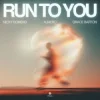
In January 2018, PRTCL became the 100th Protocol release; in May 2020 the label celebrated its 200th release; and in May 2026, Run To You by Nicky Romero and Almero with Grace Barton became the 500th release in the catalogue.
Protocol Radio
The radio show Protocol Radio launched on 18 August 2012. The first episode was released as Protocol Radio #001.
The show became an audio extension of the label: Romero uses it for his own premieres, new Protocol releases, promotional records from outside artists and music featured in his DJ sets.
By June 2016, the 200th episode had aired; the 250th followed in May 2017; and by March 2022 the total had surpassed 500 episodes. Protocol Radio therefore became one of the longest-running projects within Romero’s own musical infrastructure.
Symphonica, Legacy and the peak of early Nicky Romero
In 2013, following the success of I Could Be The One, two more important records appeared.
Symphonica was built around the contrast between an almost orchestral introduction and a heavy electro-house drop. It clearly reflected Romero’s characteristic preference for dramatic build-ups and sudden changes in dynamics.
The collaborative single Legacy with Krewella took another route: vocal progressive house with a large festival chorus placed the track closer to the song-oriented side of EDM. Protocol still cites Legacy, together with Like Home and I Could Be The One, among the releases that defined Romero’s early period.
During these years Romero also reached the upper tier of the DJ Mag Top 100 DJs. He debuted at No. 17 in 2012, and in 2013 rose to No. 7 — the highest position of his career in the ranking. In 2014, he placed eighth.
This coincided with the period of maximum international growth for festival progressive and electro house, a movement Romero became part of alongside Avicii, Hardwell, Alesso and other artists of his generation.
Beyond his own tracks: production work for other artists
A less obvious side of Nicky Romero’s career is his studio work for other artists.
Over the years, he has been involved in the production of major pop and dance releases, including Right Now by Rihanna and David Guetta, Bang My Head by David Guetta featuring Sia, and It Should Be Easy by Britney Spears.
This is important for understanding Romero as a musician. His professional reputation is built not only on festival sets, but also on the technical side of production: drum programming, dynamics, synthesizer work and the creation of a large stereo image.
Lighthouse, Harmony and keeping progressive house alive
After the most intense phase of the EDM boom in the mid-2010s, Romero continued developing the more melodic side of his catalogue.
In 2015, Lighthouse became the 50th release on Protocol Recordings. That same year he released Harmony with Stadiumx, a progressive house track featuring vocals by Georgia Ku.
This period demonstrated one of the most consistent aspects of Romero’s work. Even as the festival market began moving away from the classic progressive house of the early 2010s, he did not abandon emotional chord progressions and large melodic climaxes.
That later allowed him to return naturally to progressive house after experiments with pop, future bass, tech house and heavier club music.
Redefine and the return to a club-focused sound
In 2020, Romero released the Redefine EP. The project formed part of a larger concept that also included a tour and documentary series, but musically its most important feature was its deliberate return to the harder club side of his production.
The EP featured I See, Time and Replica. Instead of dance-pop, the focus shifted toward rhythm, darker atmosphere and festival/club production.
An even more significant change occurred that same year, when Romero officially separated two sides of his musical personality under different names for the first time.
Monocule — the darker side of Nicky Romero
In September 2020, Nicky Romero introduced the new alias Monocule and released Monocule Volume 1. Romero explained that the project gave him a way to work with deeper, more classic progressive house and music that was harder to release organically under the Nicky Romero name.
The first EP included Time to Save with Tim van Werd and Mosimann, Close To Me and Waiting For You. Monocule already sounded noticeably different from Romero’s mainstage side: muted bass, longer development, darker melodies and less dependence on the festival drop.
In 2021, Monocule Volume 2 followed with Find You, Silence and You Don't Know. The project’s catalogue was later expanded with Ways To Heaven, Awakening, Your Eyes, Stargazing and other records.
Over time, Monocule evolved beyond being only a studio alias. During ADE 2024 at Amsterdam Music Festival, the project received its first full standalone performance built exclusively around Monocule material. It later developed into separate festival and club sets.
Today, the distinction is relatively clear: Nicky Romero covers progressive house, mainstage, house and crossover dance, while Monocule focuses on a deeper, more atmospheric and darker progressive sound.
Perception and the expansion of his house palette
Following the pandemic period, Romero actively experimented with different house styles.
In February 2022, together with Low Blow, he released the two-track See You On The Dancefloor EP, where tech house was combined with disco and a funkier club groove.
In May came the Perception EP, featuring Lose My Mind, Pressure, Hear Me Now and Work My Body. The release was deliberately diverse stylistically, ranging from more club-oriented house to Romero’s characteristic festival progressive sound.
During the same period, So Much Love with Almero, Techtronic and Myriad also appeared. Romero used the latter two tracks to explore a more technological club sound positioned between tech house and mainstage music.
Rather than making a complete transition into one new genre, he began using several parallel directions and switching between them depending on the particular release.
Protocol Lab
The tenth anniversary of Protocol Recordings in 2022 was accompanied by the creation of a separate sublabel, Protocol Lab.
The Lab name had already been used within the Protocol ecosystem since 2017 — initially for sections of ADE compilations and stages at showcases. In 2022, the concept became a standalone imprint designed for new artists and more experimental forms of electronic music. Its first release was Stuck On You by Repiet and Andrew A.
Nightvision: the EP and solo show
In 2023, Romero introduced the Nightvision project.
First came Give In, followed by Mahoya and Desire with TELYKAST and Linney.
On 1 December 2023, the material was brought together on the six-track Nightvision EP, and the following day Romero staged his first major solo open-to-close show of the same name at AFAS Live in Amsterdam.
Rather than continually attempting to reproduce Toulouse or I Could Be The One, he uses a broader range of house and progressive house while preserving his recognisable festival dramaturgy.
All You Need Is Love and new progressive house releases
The track was released in 2023 as a collaboration between Nicky Romero, Jonas Blue and Nico Santos, not Afrojack. Romero later released a separate Festival Edit.
At the beginning of 2024, Tomorrow Comes with Deniz Koyu and Jaimes consciously returned to emotional progressive house. The solo track All Night Long followed.
These records clearly demonstrate that progressive house remains more than a nostalgic genre from the early 2010s for Romero: it continues to be an active part of his contemporary production.
Collaborations with David Guetta, Steve Aoki and a new mainstage wave
In Romero’s later catalogue, melodic progressive continued to alternate with more direct festival music.
In 2025, he reunited with David Guetta for Shout, based on the famous Tears for Fears song. Around the same period came Move It (Rapidin) with GIACOBBI and Fatboi, the progressive house single Fade Away with Barmuda, and the collaborative Higher Off The Ground EP with Steve Aoki.
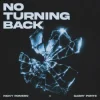
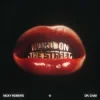
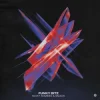
Further releases — Funky Bitz with SMACK, Word On The Street with Dr. Chaii, Run To You with Almero and Grace Barton, No Turning Back with Gabry Ponte and Freak — show that the mainstage direction continues alongside progressive house and Monocule.
This catalogue makes defining Nicky Romero by a single genre more difficult than it was at the beginning of his career. Progressive house remains the foundation of his identity, but electro, big room, tech house and more contemporary festival house exist alongside it.
Kickstart and Romero’s influence on music production
Romero’s work in music technology also deserves separate attention.
Together with Cableguys, his name is associated with the Nicky Romero Kickstart plugin — a tool for rhythmic volume automation and creating the characteristic pumping/sidechain effect. A significantly expanded version, Kickstart 2, was released later.
This represents an important part of his professional legacy in electronic music. Sidechain compression was already a central element of EDM production long before Kickstart appeared, but the plugin made creating that movement considerably faster and more accessible to beginner producers.
Romero himself remains a technically minded studio musician. In interviews with MusicRadar, he has discussed working with Logic, Serum, Sylenth, Massive, UAD and other tools in detail, while emphasising that skill and hours spent in the studio matter more than the price of equipment.
DJ Mag and the international festival career
Nicky Romero first entered the DJ Mag Top 100 DJs in 2012, debuting directly at No. 17, and one year later reached his career high of No. 7.
His positions changed after the early-2010s peak, but he maintained a presence in the ranking for many years. Romero placed No. 25 in 2024 and No. 29 in 2025. Since the ranking is based on an open public vote, these figures are best understood as an indicator of international recognition rather than an objective assessment of DJ skill.
Throughout his career, Romero has repeatedly performed at Tomorrowland, Ultra Music Festival, EDC and other major electronic music festivals. Protocol also runs its own label nights during Amsterdam Dance Event, Miami Music Week and at clubs in different countries.
Nicky Romero discography
Nicky Romero’s career has traditionally been built primarily around singles, collaborations and EPs rather than full-length studio albums.
Key EPs
- 2020 — Redefine EP — I See, Time, Replica
- 2022 — See You On The Dancefloor EP — with Low Blow
- 2022 — Perception EP — Lose My Mind, Pressure, Hear Me Now, Work My Body
- 2023 — Nightvision EP — six-track project connected with Romero’s first major solo show
- 2025 — Higher Off The Ground EP — with Steve Aoki.
Monocule
- 2020 — Monocule Volume 1
- 2021 — Monocule Volume 2
The project later continued with standalone singles and collaborations, including Awakening, Your Eyes, Stargazing, Sign, Waiting For Me, Be There and other releases.
Selected singles and collaborations
- 2009 — My Friend
- 2010 — Flash (Nicky Romero Remix) — Green Velvet
- 2011 — Toulouse
- 2012 — Metropolis — with David Guetta
- 2012 — Iron — with Calvin Harris
- 2012 — Like Home — with NERVO
- 2012/2013 — I Could Be The One — with Avicii
- 2013 — Symphonica
- 2013 — Legacy — with Krewella
- 2015 — Lighthouse
- 2015 — Harmony — with Stadiumx
- 2018 — Paradise — with Deniz Koyu and Walk Off The Earth
- 2019 — Ring The Alarm — with David Guetta
- 2019 — Love You Forever — with Stadiumx and Sam Martin
- 2020 — Destiny — with Deniz Koyu and Alexander Tidebrink
- 2022 — So Much Love — with Almero
- 2022 — Techtronic
- 2022 — Myriad
- 2023 — Turn Off The Lights
- 2023 — All You Need Is Love — with Jonas Blue and Nico Santos
- 2023 — Mahoya
- 2024 — Tomorrow Comes — with Deniz Koyu and Jaimes
- 2024 — All Night Long
- 2025 — Shout — with David Guetta
- 2025 — Move It (Rapidin) — with GIACOBBI and Fatboi
- 2025 — Fade Away — with Barmuda
- 2025 — Hold On — with Sick Individuals
- 2026 — Funky Bitz — with SMACK
- 2026 — Word On The Street — with Dr. Chaii
- 2026 — Run To You — with Almero and Grace Barton
- 2026 — No Turning Back — with Gabry Ponte
- 2026 — Freak
- 2026 — Follow You — with FORS.
How Nicky Romero’s style evolved
Early Nicky Romero emerged from the electro and Dutch house of the late 2000s. Flash, My Friend and his first productions reveal a rougher club aesthetic that later grew into a larger-scale sound on Toulouse and Metropolis.
The period of I Could Be The One, Like Home, Legacy and Harmony placed melodic progressive house at the centre of his work — large chords, emotional vocal performances and festival climaxes.
In later years Romero began working more freely with dance-pop, tech house and darker club music. Redefine, Perception and Nightvision reflect this evolution, while Monocule effectively separates deeper progressive house into its own project.
For that reason, defining Nicky Romero exclusively as a big room or future house DJ would be inaccurate. Progressive house remains the most consistent foundation of his work, but his catalogue is considerably broader.
Nicky Romero’s significance for EDM and progressive house
Nicky Romero belongs to the generation of Dutch producers that transformed European club music into a global festival industry during the early 2010s. However, his importance is not limited to a single period of the EDM boom.
Toulouse established his own recognisable club sound, I Could Be The One demonstrated his ability to work in a major international crossover format, and Protocol Recordings allowed him to build an independent musical infrastructure around that success. Later, Monocule gave Romero the opportunity to develop deeper progressive house without needing to change the musical character of his main project.
His role specifically as a producer also stands out: work on releases by other artists, studio-focused educational projects and Nicky Romero Kickstart made his name familiar not only to club audiences but also to people producing electronic music themselves.
As a result, Nicky Romero’s career connects several sides of the modern electronic music industry — international festival DJ, studio producer, independent label owner and developer of music-production tools. Progressive house remains the connecting thread between his early hits, the contemporary Protocol catalogue and the deeper sound of Monocule.