




 Бо4а
Бо4а
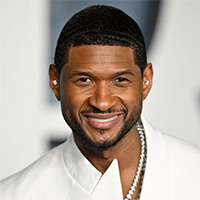
Usher is an American singer, songwriter, dancer, actor and entrepreneur whose full name is Usher Raymond IV. He was born on October 14, 1978, in Dallas, Texas, grew up primarily in Chattanooga and began his professional career in Atlanta. Usher became one of the defining figures of contemporary R&B, combining the tradition of soul vocals with hip-hop, pop, club music and sophisticated stage choreography. His official website lists more than 75 million records sold, while the Recording Academy credits him with 8 Grammy wins from 24 nominations.
Usher’s signature songs include You Make Me Wanna..., Nice & Slow, U Remind Me, U Got It Bad, U Don't Have to Call, Yeah!, Burn, Confessions Part II, My Boo, Love in This Club, OMG, DJ Got Us Fallin' in Love, Climax, Good Kisser, No Limit and Good Good. Billboard credits him with nine No. 1 singles and 18 Top 10 hits on the Billboard Hot 100.
His place in R&B history is defined by more than statistics. In the 1990s, Usher was among the artists who helped move teenage R&B into a more mature form; in the early 2000s, Confessions became a cultural phenomenon; around the turn of the 2010s, he successfully integrated electronic dance music into his catalogue; and three decades after his debut he once again returned to the biggest stages through Las Vegas residencies, the Super Bowl and a world tour.
Dallas, Chattanooga and the Church Choir
Usher Raymond IV was born to Jonnetta Patton and Usher Raymond III. His father left the family when the boy was about a year old, so much of his childhood was spent with his mother, stepfather and younger half-brother in Chattanooga, Tennessee.
At around nine years old, Usher began singing in a church youth choir directed by his mother. It was there that the family fully recognised the boy’s unusual vocal ability. Jonnetta later became her son’s manager and played an extremely important role in the early stages of his career.
Realising that Chattanooga offered limited opportunities for a professional R&B singer, the family moved to Atlanta. The decision proved decisive: by the early 1990s, the city was rapidly becoming one of the major centres of American R&B and hip-hop, home to LaFace Records, So So Def and an extensive network of producers, songwriters and managers.
Star Search and the LaFace Deal
As a teenager, Usher performed in the musical group NuBeginning, but his mother decided that he had greater potential as a solo artist. He later met A.J. Alexander, who helped the young singer secure appearances at local competitions and venues.
An important turning point came when Usher appeared on the television talent show Star Search. His performance caught the attention of Bryant Reid, who was connected with LaFace Records. Reid arranged an audition for his brother, LaFace co-founder L.A. Reid. After performing Boyz II Men’s End of the Road, the teenager received a recording contract.
Even before his first album, Usher recorded Call Me a Mack for the soundtrack to the 1993 film Poetic Justice. It became his first notable solo recording and effectively introduced him to LaFace’s young audience.
Usher: The Debut Album and the Difficult Transition to an Adult Voice
His first studio album, Usher, was released in 1994, when the singer was fifteen. A large team of R&B producers worked on the project, with Sean “Puff Daddy” Combs among the most prominent contributors. The album included Can U Get wit It, Think of You and The Many Ways.
The debut did not make Usher a star on the level of his later releases. More importantly, adolescence brought a difficult transition in his voice, forcing the singer to rebuild much of his vocal technique. Yet the limited success of the first album ultimately allowed the next project to be built around a more fully formed artistic identity rather than the image of another young R&B vocalist.
Jermaine Dupri and My Way
The real turning point in Usher’s career came after he began working with Jermaine Dupri. The Atlanta producer and founder of So So Def helped Usher find a more contemporary sound that combined romantic R&B, hip-hop rhythms and strong melodic hooks. Their partnership became one of the most important creative relationships of the singer’s entire career.
His second album, My Way, was released in 1997 and reached No. 4 on the Billboard 200. Its first major hit was You Make Me Wanna..., which peaked at No. 2 on the Billboard Hot 100. Then Nice & Slow gave Usher his first solo No. 1 on the main US singles chart, while the title track My Way also reached No. 2.
My Way fully established the image that would define his popularity in the late 1990s: a young romantic R&B crooner who could sing, dance and deliver sophisticated stage performances at the same time. Comparisons with Michael Jackson became increasingly common during this period, although musically Usher belonged much more directly to the contemporary American R&B of his own generation.
Dance as an Equal Part of the Career
Usher never treated choreography as a simple addition to singing. From Michael Jackson he inherited the idea of the singer-dancer as a unified stage performer, but gradually developed his own style: fast footwork, gliding movements, sharp stops, popping, elements of street dance and, later, the use of roller skates in large-scale concert numbers.
This dual specialisation became one of the reasons for his longevity. Even as musical trends moved from slow-jam R&B to crunk, EDM or trap, Usher remained recognisable as a live performer capable of building a show not only around songs, but around movement itself.
8701 and the Move into R&B’s Top Tier
His next studio album, 8701, arrived in 2001. By then, Usher no longer needed to prove that he could score one major hit; the challenge was to create a complete adult R&B album.
The main singles were U Remind Me, U Got It Bad and U Don't Have to Call. U Remind Me earned Usher his first Grammy, for Best Male R&B Vocal Performance. At the following ceremony, he won the same category again with U Don't Have to Call.
U Got It Bad became one of the defining slow-jam hits of the early 2000s and further established his ability to combine technically controlled vocals with the persona of an emotionally vulnerable narrator. Much of Confessions would later be built around this contrast between the confident dancer onstage and the romantic storyteller in ballads.
Confessions: The Album That Defined 2004
Confessions was released on March 23, 2004, and became the central work of Usher’s entire career. The album debuted at No. 1 on the Billboard 200 with approximately 1.1 million copies sold in its first week, one of the biggest openings of the physical-sales era. By the end of the year, Confessions had become Usher’s greatest commercial album success, and US sales later surpassed 10 million copies.
Its strength was not limited to several successful singles. Confessions was structured as a coherent emotional story of relationships, infidelity, separation and regret. Jermaine Dupri, Bryan-Michael Cox, Jimmy Jam & Terry Lewis, Lil Jon and other producers helped combine traditional R&B, slow jam, hip-hop and the emerging crunk&B sound.
Yeah!: When R&B Met Crunk
The album was initially developed without Yeah!, but the label wanted a more obvious lead single. As a result, Usher teamed up with Lil Jon and Ludacris, creating a track that combined his R&B vocals with a minimalist synthesizer pattern and the energy of Southern crunk.
The result was enormous: Yeah! spent 12 weeks at No. 1 on the Billboard Hot 100. It was followed at the top by Burn, which stayed at No. 1 for eight weeks. Then Confessions Part II reached the summit, followed in the autumn by the Alicia Keys duet My Boo. One album era therefore produced four US No. 1 singles.
An even rarer achievement occurred during the same year: Usher replaced himself at No. 1 on the Hot 100 twice. First Yeah! was succeeded by Burn, and later Burn gave way to Confessions Part II.
Burn, Confessions Part II and a New Model of Male R&B
If Yeah! represented the club-oriented side of Usher, Burn and Confessions Part II established another image — a man openly addressing the emotional consequences of relationships. This balance between sexual confidence and vulnerability became one of the most influential aspects of Confessions for later generations of R&B artists.
At the same time, the entire album should not be treated as a literal diary of the singer’s life. The Confessions narrative was created by a team of writers, and some stories were inspired by the lives of his collaborators, especially Jermaine Dupri. The sense of autobiography was part of the album’s artistic power, but not every storyline was a documentary account of Usher’s private life.
Grammy Awards During the Confessions Era
At the 2005 Grammys, Usher won several major awards. Confessions won Best Contemporary R&B Album, Yeah! won Best Rap/Sung Collaboration, and My Boo with Alicia Keys won Best R&B Performance by a Duo or Group with Vocals.
At the same ceremony, Usher performed with one of his own musical heroes, James Brown, combining Caught Up with Get Up (I Feel Like Being a) Sex Machine. For an artist whose stage style grew in large part from the Brown–Jackson tradition, the performance carried obvious symbolic significance.
Acting Career
Music always remained his main focus, but Usher began acting as early as the 1990s. He appeared in the television series Moesha, the horror film The Faculty, the teen comedy She's All That and the drama Light It Up. Later, he portrayed boxer Sugar Ray Leonard in the biographical film Hands of Stone.
In 2006, Usher also appeared on Broadway as Billy Flynn in the musical Chicago. Although his acting career never reached the scale of his music career, the theatre experience suited an artist already accustomed to combining vocals, dance and stage character.
Here I Stand: Growing Up After Confessions
After the phenomenal success of Confessions, matching its scale was almost impossible. In 2008, Usher released Here I Stand, shifting his lyrical focus from dramatic single life toward marriage, fatherhood and more adult relationships.
The album debuted at No. 1 on the Billboard 200 with 443,000 copies sold in its first week. Lead single Love in This Club featuring Young Jeezy made a dramatic jump from No. 51 to No. 1 on the Billboard Hot 100 and remained at the top for three weeks.
Musically, Here I Stand retained its R&B foundation while already reflecting changes in the late-2000s market, when electronic club production was becoming increasingly important in American mainstream pop.
Raymond v. Raymond: A Return After Personal Changes
In 2010, Usher released Raymond v. Raymond. The title clearly played on the artist’s surname and the themes of relationships after divorce, while musically the album balanced R&B with increasingly electronic club-oriented pop. It became Usher’s third consecutive album to top the Billboard 200.
Particularly important was OMG with will.i.am. In May 2010, the song became Usher’s ninth No. 1 on the Billboard Hot 100. The track conclusively proved that he could thrive beyond traditional contemporary R&B.
The same period produced There Goes My Baby, Hey Daddy (Daddy's Home) and More. The expanded project Versus added DJ Got Us Fallin' in Love with Pitbull, one of Usher’s most recognisable pop/dance tracks.
At the 2011 Grammys, Raymond v. Raymond won Best Contemporary R&B Album, while There Goes My Baby earned another award for male R&B vocal performance.
Usher and the EDM Era
Usher’s move toward electronic music is sometimes described as a departure from R&B, but it is more accurate to see it as an attempt to adapt his voice to a changing pop environment. OMG, DJ Got Us Fallin' in Love and later releases emerged at a time when house and EDM were becoming increasingly prominent on American radio charts.
The duet Without You with David Guetta was also important. It showed that Usher’s characteristic smooth tenor worked effectively over European electronic production and helped maintain his presence in international pop between major solo album cycles.
Climax: One of Usher’s Finest Vocal Performances
On the 2012 album Looking 4 Myself, Usher attempted to combine several directions at once — traditional R&B, electronic pop, dance and more experimental production. The album became his fourth No. 1 on the Billboard 200.
The defining work of this period was Climax, created with Diplo and other writers. Despite the title, the song is not built around a loud dance climax, but around restrained electronic minimalism and Usher’s falsetto. It topped Hot R&B/Hip-Hop Songs and won the Grammy for Best R&B Solo Performance.
The album also included Scream, Lemme See with Rick Ross, Numb and the title track Looking 4 Myself. As a result, it became one of the most stylistically diverse releases in his catalogue.
Good Kisser and the Search for Direction Between Albums
After Looking 4 Myself, Usher spent several years releasing music without immediately moving into a new full-length album cycle. In 2014, he released Good Kisser, which received two Grammy nominations, as well as She Came to Give It to You with Nicki Minaj and I Don't Mind with Juicy J.
This period illustrates a broader shift in the mid-2010s R&B industry: the classic model in which an artist spent several years within one major album era was gradually giving way to a steady sequence of individual digital releases.
Hard II Love
In September 2016, Usher released his eighth solo studio album, Hard II Love. It debuted at No. 5 on the Billboard 200. Key tracks included No Limit with Young Thug, Crash, Rivals with Future and Missin U.
Hard II Love was considerably smaller commercially than Confessions or Raymond v. Raymond, but it allowed Usher to adapt to a new generation of trap-R&B without simply trying to imitate younger artists.
A with Zaytoven
In 2018, Usher unexpectedly released the collaborative project A with Atlanta producer Zaytoven. It is not considered Usher’s ninth conventional solo studio album; Billboard later described Coming Home specifically as his ninth solo album and separately identified A as a collaborative project.
The record allowed him to reconnect with the contemporary sound of Atlanta through Zaytoven’s trap production. It was compact and far less focused on global pop radio than many of Usher’s previous albums.
Justin Bieber and Usher’s Role Beyond His Own Career
One of the best-known episodes of Usher’s work outside his own discography was his early support for Justin Bieber. In 2008, Usher and manager Scooter Braun signed the young Canadian artist through their joint venture Raymond Braun Media Group. The Recording Academy also highlights Usher’s involvement in the early launch of Bieber’s career.
Usher was more than a formal business partner: he was positioned as a mentor to the young singer, especially during Bieber’s first years of international success. The two later appeared together onstage on multiple occasions.
Las Vegas: Career Reinvention Through the Live Stage
One of the most important decisions of Usher’s mature career was his move into extended performances in Las Vegas. Rather than treating a residency as a quiet final stage for a veteran pop artist, he turned it into a showcase of his entire live-performance tradition: R&B, dance, theatricality, club aesthetics and roller skating all existed within the same show.
His early Vegas runs gradually developed into My Way: The Vegas Residency. According to Billboard, Usher’s various Las Vegas residencies together grossed more than $100 million. My Way alone brought in approximately $83.6 million from 71 shows in 2022–2023.
This became a crucial stage in his later return to the centre of mainstream pop culture: several years before the Super Bowl, Usher had already demonstrated how large the audience for his classic catalogue remained.
Rendez-Vous à Paris
In 2023, the residency concept was transferred to France during Paris Fashion Week and became the basis for the concert film Usher: Rendez-Vous in Paris. The film combines performances with backstage documentary elements and includes Yeah!, My Boo, Love in This Club and other songs from different stages of his career. It received a theatrical release in 2024 and later became available on streaming platforms.
Good Good and the Build-Up to Coming Home
Before his first major solo album in eight years, Usher released Good Good with Summer Walker and 21 Savage. The song marked a successful return to contemporary R&B radio and reached the Top 10 of Hot R&B/Hip-Hop Songs.
An important aspect of this period was the absence of any attempt to artificially make the artist appear younger. Usher returned to his own adult-R&B tradition while inviting artists from a generation that had grown up after the peak of Confessions.
Coming Home
Coming Home was released in February 2024 and became Usher’s ninth solo studio album and his first since Hard II Love in 2016. The expanded 20-track project featured Burna Boy, Summer Walker, 21 Savage, Latto, The-Dream, H.E.R. and other artists.
The album includes Coming Home, Good Good, A-Town Girl, Ruin, Risk It All, Kissing Strangers, I Am the Party and other tracks. It debuted at No. 2 on the Billboard 200 with 91,000 equivalent album units and simultaneously topped Billboard Top Album Sales.
Coming Home also received a 2025 Grammy nomination for Best R&B Album, bringing Usher’s career total to 24 nominations and eight wins.
Super Bowl LVIII
On February 11, 2024, Usher headlined the Apple Music Super Bowl LVIII Halftime Show at Allegiant Stadium in Las Vegas. He had previously appeared at the Super Bowl in 2011 as a guest of the Black Eyed Peas, but this was the first time he was given the entire show as the sole headliner.
Within the limited running time, Usher created a retrospective spanning three decades of his career. Guests included Alicia Keys, H.E.R., Jermaine Dupri, will.i.am, Lil Jon and Ludacris, while the set included sections of Caught Up, U Don't Have to Call, Superstar, Love in This Club, My Boo, OMG, Turn Down for What and Yeah!.
A roller-skating section, an element Usher had developed during his Vegas shows, became a distinct part of the performance. The Super Bowl therefore functioned not simply as a medley of old hits, but as a concentrated presentation of his entire stage history.
According to Nielsen, the show averaged 129.3 million viewers in the United States. In 2024, this was considered a Super Bowl Halftime Show record; the figure was later surpassed by Kendrick Lamar’s 2025 performance. Even after losing the record, Usher’s show remains one of the most-watched in the event’s history.
2024 as a New Peak in His Mature Career
Few artists experience several major career peaks at once three decades after their debut, but that is precisely what happened to Usher in 2024: a new album, the Super Bowl, a world tour and a series of major awards all arrived within essentially the same period.
At the 2024 NAACP Image Awards, he was named Entertainer of the Year and received the President's Award, partly in recognition of his community work through the New Look Foundation.
A few months later, BET presented him with the Lifetime Achievement Award. The ceremony’s tribute included performances by Childish Gambino, Keke Palmer, Summer Walker, Coco Jones, Chlöe, Tinashe, Teyana Taylor, Victoria Monét and Latto — effectively several generations of R&B and pop artists whose careers began during Usher’s own.
Past Present Future
After the Super Bowl, Usher launched the Past Present Future Tour, conceived as a large-scale retrospective of his entire career — from My Way and 8701 to Confessions, the dance-pop era and Coming Home.
Demand was so strong that the original number of concerts quickly expanded. Billboard ultimately named it Usher’s highest-grossing and best-attended solo tour, with approximately $183.9 million in revenue and 1.1 million tickets sold across roughly 80 tracked performances.
Past Present Future demonstrated that the Super Bowl success was not simply a short-lived burst of nostalgia. Usher’s catalogue was capable of supporting a full international arena tour more than three decades after his first album.
The R&B Tour with Chris Brown
In 2026, Usher continued his live momentum on a stadium scale alongside Chris Brown. The joint project was titled The R&B Tour. Live Nation initially announced 33 stadium concerts, beginning June 26 in Denver and concluding in December in Tampa.
Within the history of R&B, the pairing carries obvious symbolic significance. Chris Brown belongs to a generation of artists for whom the Usher model — the combination of vocals, complex choreography, pop crossover and large-scale concert production — became an important professional reference point.
The tour spans major stadiums across the United States and Canada and keeps Usher positioned as an active touring artist rather than a performer existing solely through his classic catalogue. Usher’s official website continues to highlight The R&B Tour as his central current touring project.
Personal Life
Usher’s first widely publicised marriage was to designer Tameka Foster. They married in 2007 and had two sons, Usher Raymond V and Naviyd Ely Raymond. The marriage later ended in divorce.
Usher was subsequently married to Grace Miguel. After that relationship ended, he began dating music executive Jennifer Goicoechea. The couple welcomed daughter Sovereign Bo in 2020 and son Sire Castrello in 2021.
Usher and Goicoechea officially married in Las Vegas in February 2024, immediately after his Super Bowl LVIII performance.
Usher's New Look
Back in 1999, the artist founded the charitable organisation Usher's New Look. Its work focuses on young people from underserved communities through programmes connected with education, leadership and professional skill development. The Recording Academy also highlights the creation of New Look as an important part of his biography.
The foundation’s long-term work was one of the reasons Usher received the President's Award at the 2024 NAACP Image Awards.
How Usher’s Musical Style Changed
The foundation of his music has always remained R&B, but each major period reflected changes within the genre itself. My Way belonged to the world of late-1990s R&B and hip-hop soul; 8701 was smoother and more mature; Confessions connected slow jams with crunk; Raymond v. Raymond and Looking 4 Myself engaged heavily with European electronic music; Hard II Love incorporated trap elements; and Coming Home once again placed adult R&B songwriting at the centre.
The most consistent source of recognition, however, is his voice. Usher can move from soft falsetto and almost conversational intimacy to a much more powerful singing style without losing rhythmic precision. This is especially clear when comparing Nice & Slow, U Got It Bad, Burn, Climax and Good Good.
Another constant element is the ability to build a song around movement. Even at studio level, many of Usher’s uptempo tracks have a clear rhythmic architecture designed for choreography: Yeah!, Caught Up, OMG, Scream and DJ Got Us Fallin' in Love are obvious examples.
Usher and the Tradition of Great R&B Showmen
Usher’s stage language grew from the legacy of James Brown, Michael Jackson and other artists for whom dance was an equal part of musical performance. By the late 1990s, however, he had adapted that model to the MTV-era hip-hop/R&B generation.
It was through Usher that this tradition passed into the next wave of artists. His combination of singing + dancing + romantic R&B is especially visible in the careers of performers who emerged in the mid- and late 2000s. His influence therefore concerns not only a specific sound, but the broader model of the modern R&B frontman.
Grammy Awards
According to the current Recording Academy profile, Usher has 8 Grammy wins from 24 nominations. His victories span the period from U Remind Me and U Don't Have to Call through Confessions, Yeah!, My Boo, Raymond v. Raymond, There Goes My Baby and Climax.
- U Remind Me — Grammy, Best Male R&B Vocal Performance
- U Don't Have to Call — Grammy, Best Male R&B Vocal Performance
- Yeah! — Grammy, Best Rap/Sung Collaboration
- My Boo — Grammy, Best R&B Performance by a Duo or Group with Vocals
- Confessions — Grammy, Best Contemporary R&B Album
- Raymond v. Raymond — Grammy, Best Contemporary R&B Album
- There Goes My Baby — Grammy, Best Male R&B Vocal Performance
- Climax — Grammy, Best R&B Solo Performance
Coming Home received another nomination in the Best R&B Album category at the 2025 Grammys, but Usher’s total number of wins remained eight.
Usher Studio Albums
- Usher — 1994
- My Way — 1997
- 8701 — 2001
- Confessions — 2004
- Here I Stand — 2008
- Raymond v. Raymond — 2010
- Looking 4 Myself — 2012
- Hard II Love — 2016
- Coming Home — 2024
These nine releases form his main solo studio discography. Billboard officially presented Coming Home as Usher’s ninth studio album.
Other Important Projects
- Live — 1999, live album
- Versus — 2010, expansion of the Raymond v. Raymond era
- A — 2018, collaborative project with Zaytoven
- Usher: Rendez-Vous in Paris — 2024, concert film
The project A is best treated separately because Billboard itself distinguishes it from Usher’s nine main solo studio albums.
Key Usher Songs
- You Make Me Wanna... — 1997
- Nice & Slow — 1997
- My Way — 1998
- U Remind Me — 2001
- U Got It Bad — 2001
- U Don't Have to Call — 2002
- Yeah! — 2004, with Lil Jon and Ludacris
- Burn — 2004
- Confessions Part II — 2004
- My Boo — 2004, with Alicia Keys
- Caught Up — 2004
- Love in This Club — 2008, with Young Jeezy
- There Goes My Baby — 2010
- OMG — 2010, with will.i.am
- DJ Got Us Fallin' in Love — 2010, with Pitbull
- More — 2010
- Without You — 2011, with David Guetta
- Climax — 2012
- Scream — 2012
- Good Kisser — 2014
- I Don't Mind — 2014, with Juicy J
- No Limit — 2016, with Young Thug
- Good Good — 2023, with Summer Walker and 21 Savage
- Ruin — 2024, with Pheelz
- Risk It All — 2024, with H.E.R.
Why Confessions Remains the Central Work
Usher’s career includes many successful periods, but Confessions remains the point at which voice, songwriting team, public interest, stage identity and the state of the R&B industry all aligned at once. Four Billboard Hot 100 No. 1 singles and more than 10 million US sales make the scale of the project objectively exceptional even without promotional labels such as “the greatest R&B album of all time.”
At the same time, Usher’s longevity is more interesting than any single Confessions record. If his career had ended in 2005, he would still have remained one of the defining R&B stars of his period. But Raymond v. Raymond gave him another No. 1 in the EDM era, Climax earned him a Grammy almost a decade after Yeah!, Las Vegas restored him as one of the major live performers of his generation, and Coming Home and the Super Bowl returned him to the centre of mainstream music culture thirty years after his debut.
Usher’s Place in R&B History
Usher occupies an unusual position between several generations. He began his career when American R&B was dominated by Boyz II Men, Jodeci, Babyface and new jack swing; became a superstar during the era of Beyoncé and Alicia Keys; successfully navigated the EDM turn of the early 2010s; and retained an audience into the era of streaming R&B.
His main contribution does not lie in inventing a separate genre. Usher brought into modern form a much older tradition of the R&B entertainer — the singer who must be equally convincing in the studio, on the dance floor, in a large-scale stage show and in maintaining an emotional connection with the audience.
It is precisely this combination of qualities that explains the rare length of his career. My Way transformed a LaFace teenager into a genuine R&B star, 8701 confirmed his vocal ability, Confessions delivered one of the biggest commercial peaks of 2000s music, and the decades that followed demonstrated his ability to adapt without abandoning his core identity.
From a church choir in Chattanooga to a Super Bowl audience of 129 million and a stadium tour more than thirty years after his debut, Usher’s story is above all a story of R&B longevity. He changed producers, rhythms and release strategies, but preserved the three elements that had defined him since the My Way era: voice, movement and the ability to turn a romantic R&B song into a large-scale pop show.