
 Reflex

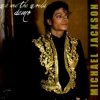
Michael Joseph Jackson was an American singer, songwriter, dancer, music producer and one of the most influential artists in the history of popular music. He was born on 29 August 1958 in Gary, Indiana, and died on 25 June 2009 in Los Angeles at the age of 50. Over four decades of professional activity, Jackson went from being the child lead singer of the family group Jackson 5 to an artist who changed the very idea of what a pop song, music video, dance performance and global concert tour could be. The Recording Academy describes him as one of the most celebrated and influential artists in recording history, while the Rock & Roll Hall of Fame highlights his role in redefining both the sound and visual language of pop music.
Michael became widely known as the “King of Pop”, although his music was never limited to pop alone. At different stages of his career, he combined pop, R&B, soul, funk, disco, rock and dance music. The albums Off the Wall, Thriller, Bad, Dangerous and HIStory represent several distinct stages in the development of mainstream music, while Billie Jean, Beat It, Thriller, Bad, Smooth Criminal, Man in the Mirror, Black or White, Remember the Time, Earth Song and They Don't Care About Us remain central works in his catalogue.
Childhood in Gary and the Jackson Family
Michael was the eighth of ten children born to Joseph and Katherine Jackson. One of the family's sons, Brandon — Marlon's twin brother — died shortly after birth. The family lived in a small house in industrial Gary. Joseph Jackson worked as a crane operator and had played guitar in a local R&B group in his youth, while Katherine was musical and played several instruments. The children therefore grew up in an environment where music was a constant part of family life long before a professional family act emerged.
The earliest versions of the family group were built around the older brothers Jackie, Tito and Jermaine. Marlon and Michael later joined them, and the act became The Jackson 5. Michael began performing publicly at around the age of six and quickly moved to the front because of his unusually mature voice, precise sense of rhythm and ability to sing and dance at the same time. The Recording Academy also identifies the age of six as the beginning of his professional performance career.
The family's story was not defined by early success alone. Michael and several of the other Jackson children later spoke about their father's extremely strict rehearsal methods and the intense pressure that accompanied their childhood careers. This side of his biography is important for understanding his later perfectionism and unusual relationship with childhood, although the musical achievements of the Jackson 5 cannot be reduced solely to family discipline.
The Jackson 5 and the Motown Phenomenon
In the late 1960s, the brothers were noticed by Bobby Taylor of Bobby Taylor & the Vancouvers, who helped introduce them to Motown. After an audition, the group secured a contract. The Motown Museum dates the beginning of the relationship to 1968 and the formal signing to 1969. The label built a carefully organised image around the brothers as a young family soul group, with Michael becoming its main vocal centre.
Success was almost immediate. The Jackson 5's first four major Motown singles — I Want You Back, ABC, The Love You Save and I'll Be There — all reached number one on the US Billboard Hot 100. The Jackson 5 became the first group whose first four appearances on the chart all ended at the top.
These recordings established the first recognisable version of Michael's musical language: sharp rhythmic phrasing, emotional exclamations, a soul-based vocal style and the rare ability of a child performer to remain the focal point within complex vocal arrangements. Motown reinforced this with professional choreography, colourful costumes and carefully selected repertoire.
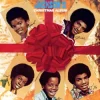
The debut album Diana Ross Presents The Jackson 5 arrived in December 1969, followed by ABC, Third Album, Maybe Tomorrow and other releases. Within a few years, the brothers had become international stars, while Michael was already one of the world's most recognisable child performers before reaching his teenage years.
The First Solo Career: Got to Be There and Ben
Motown quickly began developing Michael separately from the group. His solo single Got to Be There appeared in 1971, followed by the debut album of the same name in 1972. Next came Ben, whose title track became Michael Jackson's first solo number one on the Billboard Hot 100.
During the Motown period, he released four solo studio albums: Got to Be There and Ben in 1972, Music & Me in 1973 and Forever, Michael in 1975. These records did not yet give him the degree of creative control he would later achieve, but they demonstrated that Michael could succeed independently of the family group.
From Jackson 5 to The Jacksons
By the mid-1970s, the brothers had become dissatisfied with Motown's restrictions and wanted greater freedom in songwriting and production. After moving to Epic Records, the group had to change its name because Motown retained the rights to Jackson 5. The result was The Jacksons. Jermaine remained with Motown, while younger brother Randy joined the group in his place.
The new contract gradually gave Michael and his brothers greater creative control. The Destiny album of 1978 became especially important, with Michael taking a more active role in writing the material. Shake Your Body (Down to the Ground), written by Michael and Randy, became one of The Jacksons' biggest hits. The next album, Triumph, reinforced the transition from performers of other people's material to independent writers and producers.
The Wiz and Meeting Quincy Jones
A decisive event on the way to Michael's adult solo career was his role in the musical film The Wiz, in which he played the Scarecrow alongside Diana Ross. On the set, he met Quincy Jones, who served as the film's musical supervisor. Michael later asked Jones to produce his next solo album.
The partnership became one of the most productive in pop-music history. Jackson brought melodic ideas, vocal parts, rhythmic thinking and growing songwriting ambitions; Jones brought vast experience in jazz, R&B, orchestration and studio production. Together they created three consecutive albums — Off the Wall, Thriller and Bad.
Off the Wall: The Beginning of the Adult Superstar
Off the Wall was released in August 1979 and marked a decisive break from Michael's image as a former Motown child star. The music combined disco, funk, soul and pop, but its arrangements, harmonies and vocal work were considerably more sophisticated than those of a typical dance album of the period. The Rock & Roll Hall of Fame specifically highlights the combination of funk, disco and soul as the album's foundation.
The major hits were Don't Stop 'Til You Get Enough, Rock with You, Off the Wall and She's Out of My Life. All four reached the Billboard Hot 100 Top 10, making Michael the first solo artist to score four Top 10 singles from one album.
Don't Stop 'Til You Get Enough, written by Jackson himself, earned him his first solo Grammy, for Best R&B Vocal Performance, Male. The track already displays many features that would later become part of his vocal signature: short rhythmic breaths, falsetto, sharp exclamations and the use of the voice almost like a percussion instrument.
Off the Wall made Michael an independent star, but he believed he was capable of achieving something much bigger. His next album changed not only the scale of his own career, but the scale of the global music industry itself.
Thriller: The Defining Album of an Era
Thriller was released on 30 November 1982. Jackson once again worked with Quincy Jones, but this time aimed to make the album as broad as possible in musical range. Across nine tracks, pop, R&B, funk, rock and post-disco existed side by side. Paul McCartney appeared on The Girl Is Mine, Eddie Van Halen recorded the famous guitar solo for Beat It, and actor Vincent Price delivered the spoken section on Thriller.
Seven of the album's nine tracks were released as singles, and all seven reached the US Top 10: The Girl Is Mine, Billie Jean, Beat It, Wanna Be Startin' Somethin', Human Nature, P.Y.T. (Pretty Young Thing) and Thriller. No album had previously produced seven Billboard Hot 100 Top 10 singles.
Billie Jean and Beat It both reached number one on the Billboard Hot 100. Billie Jean became one of Jackson's signature recordings because of its bassline, minimalist rhythm and almost paranoid lyrical drama. Beat It, by contrast, combined pop-R&B with heavy rock guitar and helped erase the genre boundary between pop and rock audiences.
According to Guinness World Records, Thriller remains the best-selling album in history, with the organisation citing worldwide sales of more than 67 million copies. In the United States, the album has been certified 34× Platinum and remains the highest-certified album by a solo artist. Other sources have published much higher worldwide estimates, but for an encyclopedic account, the conservative figure verified by Guinness is more appropriate than promotional claims of 100 million copies.
Thriller spent 37 weeks at number one on the Billboard 200. Decades later, that remains one of the most remarkable runs in the history of the US album chart.
Billie Jean, Beat It and the Music-Video Revolution
The scale of Thriller cannot be explained by the recordings alone. During this period, Michael Jackson helped transform the music video from a promotional supplement to a single into a standalone form of mass entertainment. Billie Jean and Beat It received major television rotation, while Jackson's success contributed to breaking racial barriers at MTV, which in its early years had been heavily weighted toward white rock artists. The Recording Academy directly links Jackson to the increased presence of Black performers on the channel.
The most radical step was the nearly fourteen-minute Michael Jackson's Thriller, directed by John Landis. The video used a full narrative, cinematic make-up, dialogue, mass choreography and horror aesthetics. Calling Thriller “the first short film in music history” would be inaccurate — long narrative music films existed earlier — but the work of Jackson and Landis turned the format into a global pop-cultural phenomenon.
Motown 25 and the Moonwalk
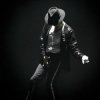
Another defining moment came during the television special Motown 25: Yesterday, Today, Forever. After performing with his brothers, Michael remained on stage alone and performed Billie Jean. During this number, audiences saw his famous backward glide, later inseparably associated with the name moonwalk.
Jackson did not invent the movement. Similar backslide variations had been used by American dancers long before him, and the technique existed at least as far back as the first half of the twentieth century. His achievement was to refine it into an exceptionally expressive stage movement and make it famous worldwide. Pulitzer has also noted that Jackson did not invent the moonwalk, but perfected and popularised it.
After Motown 25, the moonwalk became only one part of Jackson's much broader dance language. He combined popping, locking, robotic movement, spins, sharp stops, toe stands and elements of classic stage movement. His inspirations included James Brown, Fred Astaire, Jackie Wilson, street dancers and Hollywood musicals.
Eight Grammys in One Night
At the 1984 Grammy Awards, Michael Jackson won eight awards in a single night — an all-time record at the time. They included Album of the Year for Thriller, Record of the Year for Beat It, awards for Billie Jean, Thriller and Beat It, production honours and recognition for the children's recording E.T. the Extra-Terrestrial. Santana later matched the record of eight wins at one ceremony, but it has not been surpassed.
Pepsi, the Victory Tour and We Are the World
In 1984, Jackson reunited with his brothers for the Victory Tour. During the same period, an accident occurred while filming a Pepsi commercial: pyrotechnics set his hair on fire, causing burns to his scalp. The incident became one of the most widely known episodes of his mid-1980s biography.
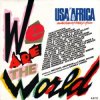
In 1985, Michael co-wrote the charity song We Are the World with Lionel Richie. The initiative to create an American response to Britain's Band Aid came from Harry Belafonte and manager Ken Kragen; Jackson and Richie were invited specifically as songwriters, while Quincy Jones produced the recording. It is therefore inaccurate to say that Michael single-handedly “initiated” the project.
Dozens of major American artists took part in the USA for Africa recording. The project raised more than 75 million dollars for famine relief in Africa, while We Are the World won Grammys for Song of the Year and Record of the Year.
Michael Jackson as a Music-Publishing Owner
One of the most underestimated sides of his career was his understanding of the music-publishing business. In 1985, Jackson purchased ATV Music Publishing for approximately 47.5 million dollars. The catalogue contained a large number of well-known compositions, including a significant portion of the Lennon–McCartney songs from The Beatles era.
In 1995, ATV merged with Sony's music-publishing division to form Sony/ATV Music Publishing. The official history of Sony Music Publishing confirms that the company was created as a joint venture between Sony and Michael Jackson. The deal turned music-publishing rights into one of the most valuable assets in his estate.
Bad: Proving Thriller Was No Accident
After the unprecedented success of Thriller, expectations for the next album were almost impossible to meet. Bad was released in August 1987 and became Michael's third and final full studio collaboration with Quincy Jones. The sound was harder and more digital, while Jackson took on a significantly larger share of the songwriting.
Five singles from Bad consecutively topped the Billboard Hot 100: I Just Can't Stop Loving You, Bad, The Way You Make Me Feel, Man in the Mirror and Dirty Diana. It was the first time one album produced five US number ones. The record did not remain unique forever: Katy Perry's Teenage Dream matched it in 2011. Therefore, the claim that the record “still has not been broken” requires clarification — it has been matched, but not surpassed.
Bad also included Smooth Criminal, Leave Me Alone, Another Part of Me and Speed Demon. The Smooth Criminal video developed Jackson's gangster aesthetic and featured his famous forward lean. For live performances of the move, Jackson and his co-inventors later received a US patent for a special shoe-and-stage anchoring system.
Bad World Tour
The Bad World Tour of 1987–1989 was Jackson's first solo world tour. Across 123 concerts, he performed for approximately 4.4 million people. Wembley Stadium in London alone hosted seven sold-out shows. The tour firmly established Michael's model of the concert as a carefully staged theatrical production combining choreography, lighting, video and dramatic structure.
Dangerous: Breaking with Quincy Jones and Entering a New Era
After three albums with Quincy Jones, Michael decided to change his creative system. Dangerous was released in November 1991, with producer Teddy Riley, one of the architects of new jack swing, becoming a key new collaborator. The result was a harder, more mechanical and rhythmically complex sound.
The first half of the album is particularly closely connected with new jack swing: Jam, Why You Wanna Trip on Me, In the Closet, She Drives Me Wild and Remember the Time. The second half broadens the musical palette, from the rock ballad Give In to Me to the humanitarian themes of Heal the World and Will You Be There.
The lead single Black or White spent seven weeks at number one on the Billboard Hot 100. Its music video used facial-morphing technology that was striking for its time and once again turned the premiere of a Michael Jackson video into an international television event.
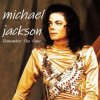
Remember the Time received an elaborate video set in a stylised Ancient Egypt, featuring Eddie Murphy, Iman and Magic Johnson. The Dangerous era demonstrated that even without Quincy Jones, Michael could fully control a major pop album and adapt to a new generation of R&B.
Dangerous World Tour and Humanitarian Themes
By the turn of the 1980s and 1990s, humanitarian and social themes had become increasingly prominent in Jackson's work. Man in the Mirror had already addressed personal responsibility, while later songs such as Heal the World, Earth Song and They Don't Care About Us explored war, poverty, racism and environmental destruction.
The Recording Academy specifically notes his support for charitable organisations including the Make-A-Wish Foundation and the Elizabeth Taylor AIDS Foundation, while We Are the World remains the best-known concrete example of his charitable work. It is therefore fair to describe Jackson as an active philanthropist, but widely repeated internet figures concerning the exact number of charities he supported or the total amount donated should only be used with clear attribution to a specific source and period of calculation.
The 1993 Allegations and the Change in Public Image
In 1993, Michael Jackson faced his first public allegations of sexual abuse of a minor. The artist categorically denied the accusations. In January 1994, the civil lawsuit was settled through a financial agreement that did not constitute an admission of guilt. The criminal investigation continued after the civil settlement, but no charges were filed at that time.
The episode significantly changed public perceptions of Jackson. Since the 1980s, tabloids had already devoted enormous attention to his appearance, private life and eccentric behaviour; after 1993, questions concerning his relationships with children became a central part of the media discussion surrounding him and continued to affect assessments of his legacy.
HIStory: Music as a Response to Pressure
In June 1995, Jackson released HIStory: Past, Present and Future, Book I. It was a double project: the first disc compiled major hits, while the second contained new material. Compared with Dangerous, the lyrics became considerably more confrontational and autobiographical. Themes included loneliness, injustice, the media, racism, environmental concerns and persecution.
The album opened with Scream, an aggressive electronic track recorded with his sister Janet Jackson. The video, directed by Mark Romanek, won the Grammy for Best Music Video. The album also included They Don't Care About Us, Stranger in Moscow, Earth Song and You Are Not Alone.
In September 1995, You Are Not Alone became the first song in Billboard Hot 100 history to debut directly at number one. It was another major chart record in Jackson's career.
Earth Song and the Social Side of Late-Period Jackson
Earth Song became one of the most ambitious works of his later career. The track combined gospel, pop and an almost symphonic dramatic structure, while its lyrics addressed environmental destruction, war and human suffering. Themes of social protest continued in They Don't Care About Us, for which Spike Lee directed two different music videos.
Blood on the Dance Floor
In 1997, Jackson released Blood on the Dance Floor: HIStory in the Mix. It is not a conventional studio album, but a hybrid of new material and remixes of songs from HIStory. Alongside the title track, it introduced new recordings including Morphine, Superfly Sister, Ghosts and Is It Scary. For this reason, Blood on the Dance Floor is best treated separately from Jackson's ten main solo studio albums.
The period also included the HIStory World Tour of 1996–1997, Michael's final full-scale solo world tour. He never again undertook a touring series of comparable size.
Personal Life and Children
In 1994, Michael Jackson married Lisa Marie Presley, daughter of Elvis Presley. The marriage ended in divorce in 1996. That same year, he married nurse Debbie Rowe. They had a son, Michael Joseph Jackson Jr., known as Prince, in 1997, and a daughter, Paris-Michael Katherine Jackson, in 1998. After divorcing Rowe in 1999, Jackson received custody of the children. In 2002, his third son, Prince Michael Jackson II, later known as Bigi, was born through a surrogate mother.
Invincible: The Final Studio Album Released During His Lifetime
After a six-year gap between full studio projects, Invincible was released in October 2001. The album reflected contemporary early-21st-century R&B and was created with a large production team that included Rodney Jerkins. Its tracks included You Rock My World, Butterflies, Cry, Break of Dawn, Whatever Happens and others.
Invincible topped the Billboard 200 and became the final studio album of new material released by Michael Jackson during his lifetime. Lead single You Rock My World reached the US Top 10 and received a Grammy nomination.
The release was accompanied by a conflict between Jackson and Sony Music involving the album's promotion, contractual relations and recording rights. Unlike Bad, Dangerous and HIStory, Invincible did not receive a large-scale world tour, and its commercial cycle proved much shorter than those of Jackson's previous albums.
The 2005 Trial
Following new allegations that emerged in the early 2000s, Jackson faced criminal charges in California. In 2005, the lengthy People v. Jackson trial took place, involving allegations of sexual abuse of a minor, providing alcohol and conspiracy. Michael pleaded not guilty.
On 13 June 2005, the jury acquitted Jackson on every criminal count brought against him. This is a fundamentally important legal fact: Michael Jackson was never convicted in court of sexually abusing children. At the same time, the acquittal did not end public debate surrounding earlier and later allegations.
After the artist's death, further civil claims emerged, including allegations by Wade Robson and James Safechuck that became widely known following the documentary Leaving Neverland. Representatives of Jackson's estate have consistently rejected the allegations. An encyclopedic account of his biography therefore needs to distinguish clearly between three different things: the allegations themselves, civil litigation and the established legal fact of his acquittal in the 2005 criminal trial.
Final Years and the Planned Return to the Stage
After the trial, Michael lived outside the United States for a time and appeared in public far less frequently. He did not release another full studio album, although he continued working on music and discussed returning to large-scale live performances.
In March 2009, Jackson announced a series of concerts titled This Is It at London's O2 Arena. Ten performances were initially planned, but overwhelming demand led to the total being expanded to 50. Around one million tickets were sold. The first show was scheduled for 13 July 2009.
A large-scale production was being prepared under the direction of Kenny Ortega. Jackson rehearsed songs from different periods of his career, new versions of choreography, video segments and complex stage numbers. The final rehearsals at Staples Center later formed the basis of the documentary film Michael Jackson's This Is It.
The Death of Michael Jackson
On 25 June 2009, Michael Jackson was found unconscious in a rented home in Los Angeles and was later pronounced dead at UCLA Medical Center. He was 50 years old. The medical examiner determined the cause of death to be acute propofol intoxication, with other sedative drugs contributing, and classified the death as a homicide — meaning death resulting from the actions of another person. In this medical-legal context, the term does not automatically imply intentional murder.
Jackson's personal physician, Conrad Murray, who had been administering propofol as a sleep aid in a home setting, was charged with involuntary manslaughter. In November 2011, Murray was found guilty of involuntary manslaughter.
The artist's death prompted a global reaction and a sharp increase in sales of his catalogue. The planned This Is It concerts never took place.
Michael Jackson's This Is It
In autumn 2009, rehearsal footage was assembled into the film Michael Jackson's This Is It, directed by Kenny Ortega. Rather than presenting a finished concert, the film showed the working process: rehearsals and Jackson's interaction with musicians, dancers and the production team. It earned more than 260 million dollars worldwide and for years held the box-office record for a concert film until its total was surpassed by Taylor Swift: The Eras Tour.
Posthumous Albums
After Jackson's death, archival material continued to be released under the management of his estate and Sony. In December 2010, the album Michael appeared with previously unreleased material including Hold My Hand with Akon and Hollywood Tonight.
In May 2014, Xscape was released. The project used archival recordings from different periods and reworked them with contemporary producers. Its eight tracks included Love Never Felt So Good, Chicago, A Place with No Name, Slave to the Rhythm and the title track Xscape.
The version of Love Never Felt So Good with Justin Timberlake reached number 9 on the Billboard Hot 100, demonstrating a rare ability for a posthumous catalogue release to compete with contemporary pop records.
In 2022, the expanded Thriller 40 edition was released to mark the album's fortieth anniversary, featuring additional archival material, while the Thriller and Beat It videos received modern 4K restorations.
Legacy on Stage and in Film
Jackson's story continued beyond recorded music. In 2022, the musical MJ opened on Broadway, built around preparations for the Dangerous World Tour and songs from different stages of his career. Myles Frost, who played Michael, won the Tony Award for Best Actor in a Musical, while the production also received awards for choreography, lighting and sound.
In 2026, the biographical feature film Michael, directed by Antoine Fuqua, was released, with Jackson's nephew Jaafar Jackson portraying the adult Michael. The film focused on the artist's early career and the period up to the end of the 1980s and became a major worldwide theatrical event.
Why Jackson's Music Videos Changed the Industry
Music videos had already been an important promotional tool before Jackson, but he significantly raised expectations for their budgets, staging and cultural importance. Billie Jean demonstrated the possibility of enormous success for a Black pop artist within an MTV environment that was still largely oriented toward white rock; Beat It combined narrative and large-scale choreography; Thriller brought the music video closer to short-form cinema; and Bad, Smooth Criminal, Remember the Time, Black or White and Scream continued this model. The Rock & Roll Hall of Fame directly connects Jackson's career with the transformation of the visual language of global pop music.
After Michael, the expensive narrative music video ceased to be an exception. For the biggest pop artists of the 1990s and subsequent decades, video choreography, directing and a carefully constructed visual identity became almost obligatory parts of an international career.
Vocals and Musical Thinking
Behind the scale of the videos and dancing, it is sometimes easy to overlook the fact that Jackson was first and foremost an exceptionally distinctive vocalist. His expressive range included a clear high tenor, soft falsetto, soul melisma, whispers, rhythmic exclamations, hiccups, breaths and short consonant sounds that functioned as additional percussion.
Michael often developed songs without writing traditional instrumental notation: he could reproduce drum, bass and other instrumental parts vocally and then translate the arrangement he imagined into studio form with musicians and producers. In his own catalogue, he wrote or co-wrote key works including Don't Stop 'Til You Get Enough, Working Day and Night, Billie Jean, Beat It, Wanna Be Startin' Somethin', Bad, Smooth Criminal, The Way You Make Me Feel, Dirty Diana, Black or White, Heal the World, They Don't Care About Us and Earth Song.
Dance as Part of the Musical Composition
Jackson did not treat dance as decorative accompaniment to a song. Choreography was part of the musical structure: stops, spins and footwork often corresponded to specific drum accents, bass notes or vocal interjections. This is why many of his dance routines remain recognisable even without sound.
He did not invent most of the individual movements he used, but he possessed an exceptional ability to combine elements from different traditions and transform them into a widely recognisable stage language. The moonwalk is the most famous example of that process.
Awards and Records
According to official Recording Academy data, Michael Jackson won 13 competitive Grammys from 38 nominations. In addition, he received the Grammy Legend Award in 1993 and a posthumous Lifetime Achievement Award in 2010.
He has been inducted into the Rock & Roll Hall of Fame twice: in 1997 as a member of The Jackson 5 and in 2001 as a solo artist.
Jackson's solo career includes 13 number-one singles on the Billboard Hot 100. His chart achievements include the first four Top 10 singles from one solo album, seven Top 10 singles from Thriller, the first five number-one singles from one album with Bad, and the first song to debut directly at number one on the Hot 100 with You Are Not Alone.
Even many years after his death, his catalogue continues to achieve unusual chart results. In November 2025, Thriller returned to the US Top 10, and Michael Jackson became the first artist in Billboard Hot 100 history to have solo Top 10 hits in six different decades — from the 1970s through the 2020s.
Michael Jackson Studio Albums
Michael Jackson's main solo studio discography consists of ten albums — four from the Motown period and six from his mature career. His official discography and Recording Academy data confirm this sequence.
- Got to Be There — 1972
- Ben — 1972
- Music & Me — 1973
- Forever, Michael — 1975
- Off the Wall — 1979
- Thriller — 1982
- Bad — 1987
- Dangerous — 1991
- HIStory: Past, Present and Future, Book I — 1995
- Invincible — 2001
Other Important Album Projects
- Blood on the Dance Floor: HIStory in the Mix — 1997, new tracks and remixes
- This Is It — 2009, posthumous film soundtrack
- Michael — 2010, posthumous archival album
- Immortal — 2011, music for the Cirque du Soleil project
- Xscape — 2014, posthumous archival album
- Scream — 2017, themed compilation
- Thriller 40 — 2022, expanded anniversary edition of Thriller
The official Michael Jackson Estate catalogue classifies these projects separately and does not mix them with the ten main studio albums released during his lifetime.
Selected Jackson 5 Albums
- Diana Ross Presents The Jackson 5 — 1969
- ABC — 1970
- Third Album — 1970
- Jackson 5 Christmas Album — 1970
- Maybe Tomorrow — 1971
- Lookin' Through the Windows — 1972
- Skywriter — 1973
- G.I.T.: Get It Together — 1973
- Dancing Machine — 1974
- Moving Violation — 1975
After leaving Motown, the group continued its career on Epic as The Jacksons, with Michael taking an increasingly active role in writing and producing the material.
Key Michael Jackson Songs
- Ben — 1972
- Don't Stop 'Til You Get Enough — 1979
- Rock with You — 1979
- Billie Jean — 1983
- Beat It — 1983
- Thriller — 1983
- Wanna Be Startin' Somethin' — 1983
- Bad — 1987
- The Way You Make Me Feel — 1987
- Man in the Mirror — 1988
- Dirty Diana — 1988
- Smooth Criminal — 1988
- Black or White — 1991
- Remember the Time — 1992
- Heal the World — 1992
- Will You Be There — 1993
- Scream — 1995, with Janet Jackson
- You Are Not Alone — 1995
- Earth Song — 1995
- They Don't Care About Us — 1996
- Stranger in Moscow — 1996
- Blood on the Dance Floor — 1997
- You Rock My World — 2001
- Love Never Felt So Good — posthumous release, 2014
Michael Jackson's Lasting Importance
Describing Michael Jackson simply as one of the most successful singers in history is not enough. His contribution exists at the intersection of several fields. As a performer, he combined the precision of a professional dancer with an exceptional vocal identity. As a songwriter, he created a body of songs that became standards of global pop music. As a producer and studio perfectionist, he helped shape the extraordinarily detailed sound of his biggest albums. As a visual artist, he helped transform the music video into a high-budget form of storytelling.
Equally important was Jackson's ability to exist simultaneously within several different audiences. Thriller could contain a duet with Paul McCartney, a heavy rock-guitar solo by Eddie Van Halen, R&B, funk and cinematic horror without breaking apart into stylistically disconnected pieces. This universality was one of the reasons his music crossed genre, racial and national boundaries.
His influence can be clearly traced through later generations of artists who built careers around the combination of vocals, choreography and visual spectacle. Among the performers cited by the Rock & Roll Hall of Fame as inheritors of this legacy are Beyoncé, The Weeknd, Bruno Mars, Justin Timberlake, Usher, BTS and others.
At the same time, a complete biography of Michael Jackson cannot consist only of records and achievements. His story also includes a difficult childhood, extraordinary fame, constant media intrusion into his private life, legal proceedings and allegations that have continued to generate public debate after his death. He was acquitted on every count in the 2005 criminal trial; later allegations remain the subject of civil litigation and wider discussion surrounding his legacy.
Jackson's musical importance is confirmed not only by historical assessments but also by the extraordinary longevity of the catalogue itself. Thriller remains the world's best-selling album, his recordings continue returning to the charts, and works created several decades ago function not simply as nostalgia but as an active part of contemporary popular culture.
From the child vocal on I Want You Back to the mature dramatic power of Billie Jean, Man in the Mirror, Black or White and Earth Song, Michael Jackson's career spanned several distinct eras of global music. He did not invent pop, the music video or street dance, but he brought them together into a form of global show business whose scale remained almost unreachable for years. That is why his place in history is defined not by a single Thriller sales record or one moonwalk movement, but by how deeply his approach to recording, dance, video and stage performance changed the very idea of what a modern pop star could be.