


 Lil Wayne
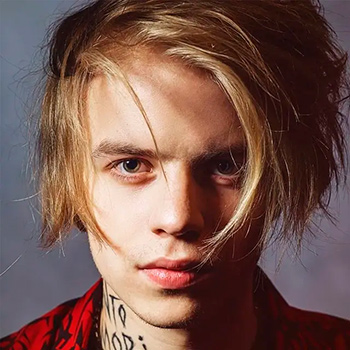
PHARAOH is a Russian rap artist, songwriter and founder of the creative collective Dead Dynasty. The musician’s real name is Gleb Gennadyevich Golubin. He was born in Moscow on January 30, 1996, and became one of the central figures of the generation of artists who brought cloud rap, trap and melodic hip-hop from the online underground into mainstream culture in the mid-2010s.
PHARAOH was not simply an artist behind several viral songs. He created a recognisable artistic universe that combined dark romanticism, youthful nihilism, aggressive bravado, aestheticised loneliness and a musical vocabulary borrowed from American rap. Thanks in part to him, many features of the new school — short tracks, melodic delivery, English-language slang, ad-libs, atmospheric beats and highly stylised visuals — became familiar elements of Russian-language pop music.
Childhood, football and early musical interests
Gleb Golubin grew up in Moscow in a family connected to professional football. From the age of six to thirteen, he trained seriously in the sport and spent time in the youth systems of Moscow clubs Lokomotiv, CSKA and Dynamo. The future artist’s childhood revolved around training sessions, matches and a strict routine. Golubin later said that he abandoned the idea of a football career after realising that he was unlikely to reach the world’s highest level.
At the same time, his musical preferences were beginning to take shape. One of his earliest powerful impressions was the band Rammstein, introduced to him by his cousin. He later became interested in Snoop Dogg, T.I. and other American rappers. Golubin was drawn not only to rhythm and production, but also to the image of the performer — the way artists spoke, their confidence, their voices and their ability to build an independent mythology around their music.
After leaving football behind, Gleb focused on his studies. He enrolled in the Faculty of Journalism at Moscow State University and graduated in 2017, by which time he was already one of the best-known young rappers in the country. Journalism did not become his primary profession, but his interest in language, mass culture and the workings of the media later became evident in the way he constructed his public image and communicated with the press.
First recordings and the emergence of PHARAOH
Golubin’s first musical experiments date back to the early 2010s. During the initial stage of his career, he used several pseudonyms and was briefly a member of the Grindhouse collective. The future PHARAOH made his first recording in 2013. As he was still underage, his cousin helped him pay for the instrumental.
His first notable works appeared in 2014: the mixtapes Wadjet and PHLORA. These releases did not yet possess the coherence of his later recordings, but they already contained the main elements of his future style: cold electronic instrumentals, drawn-out intonation, performative indifference and themes of death, alienation, drug-induced escapism and destructive relationships.
The Dead Dynasty collective gradually formed around PHARAOH. It became not only the rapper’s circle, but also an independent creative ecosystem that included performers, beatmakers, designers and directors. This approach reflected a new model for a musical movement: an artist no longer needed a major traditional label, because the sound, artwork, videos and promotion could all be created within a single internet-based team.
Dead Dynasty was also connected to the YungRussia movement, which brought together representatives of the new rap scene from different cities. The participants differed musically, but they were united by the digital distribution of their work, an orientation towards contemporary Western hip-hop and a desire to create their own youth culture.
Black Siemens and the breakthrough of the new school
A turning point in PHARAOH’s career came in 2015 with the release of the song and music video Black Siemens. The minimalist video featuring a Lincoln car, the artist’s deliberately detached delivery and the repeated “skr-skr-skr” ad-lib made the track go viral.
The video reportedly accumulated around 20 million views before being removed from YouTube, while the ad-lib itself became a meme and for a time was almost inseparable from the artist’s image. PHARAOH later had mixed feelings about the excessive popularity of this detail, as the mainstream audience often reduced his music to a single memorable vocal formula.
Black Siemens marked an important cultural shift. To the conservative part of the rap audience, PHARAOH’s music seemed derivative, deliberately meaningless or overly dependent on American influences. Younger listeners, by contrast, recognised in it a new language suited to the era of social media, short-form video and internet memes.
The artist did not attempt to prove his technical superiority through complex rhyme schemes. Timbre, intonation, emotional state and the overall visual and sonic image became more important. In this respect, PHARAOH helped change the criteria by which Russian-language rap was judged: a song could function not as a detailed narrative, but as an atmosphere, gesture, pose or collection of instantly recognisable phrases.
Boulevard Depo, YungRussia and the major hits of 2015–2016
PHARAOH’s collaboration with Boulevard Depo played a major role in his early career. Together, the musicians recorded the projects Paywall and Plaksheri, as well as several songs that became symbols of the new school.
The tracks Champagne Squirt and 5 Minutes Ago gained widespread recognition thanks to their combination of minimalist production, intentionally careless delivery, absurdist phrases and striking music videos. The success of PHARAOH, Boulevard Depo and other members of YungRussia convincingly demonstrated that internet rap could attract a large audience without the support of radio or television. According to The Flow, 5 Minutes Ago definitively turned both artists into stars of the new scene.
In 2016, PHARAOH also released the collaborative EP Confectionery with LSP, which included the song Porn Star. The contrast between PHARAOH’s cool, restrained delivery and LSP’s more dramatic and emotional style proved especially expressive.
That same year, the mixtape Phosphor was released and became one of the artist’s most important early works. Its songs were often shorter than traditional rap tracks and could consist almost entirely of a single verse or chorus. This structure gave the record a nervous and fragmented quality. Critics noted its combination of youthful rebellion, romanticism, images of death and influences from very different artists — from SpaceGhostPurrp and Marilyn Manson to The Chemodan Clan.
Pink Phloyd and the status of a defining artist of his generation
In 2017, PHARAOH released the mixtape Pink Phloyd, which became one of the defining records of his career. On it, the artist combined aggressive trap, melodic R&B, dark ballads and an almost rock-star-like confessional quality.
The biggest mainstream hit was Wild, for Example. Its success cemented PHARAOH’s status as an artist capable of creating tracks that could function simultaneously as internet memes, club songs and fully developed pop hits. Other important songs on the release included Lollipop, School, Requiem for the Ego, Without Me and Lonely Star.
The editors of The Flow named Pink Phloyd the musician’s best work at that point and described it as a “confession of a new-era rock star”. Critics emphasised that PHARAOH was no longer perceived exclusively as a figure of viral or meme-based rap. Beneath the provocative image, an artist increasingly capable of addressing fear of loneliness, love, ego, fame and inner emptiness was emerging.
It was during the Pink Phloyd era that a central contradiction in his work became fully apparent. PHARAOH’s lyrical persona simultaneously despises popularity and displays high status, pushes people away while longing for intimacy, projects emotional coldness and repeatedly returns to the theme of painful dependence on love.
PHUNERAL, Redrum and the transitional period
In 2018, PHARAOH released the mixtape PHUNERAL, whose title combined the artist’s stage name with the word funeral. The release continued PHARAOH’s characteristic aesthetic of death, luxury, internal collapse and romantic alienation.
During the same period, the experimental EP Redrum appeared, featuring stronger horror imagery and a heavier, more threatening atmosphere. The title referred to the word murder written backwards and was associated with Stephen King’s novel and Stanley Kubrick’s film The Shining.
At the same time, the artist continued to develop his melodic side. The singles Not on the Same Path and On the Moon demonstrated that his vocal approach could exist independently of aggressive cloud rap. In these songs, PHARAOH’s voice became less performative, while intonation, melancholy and emotional separation moved to the foreground. Both singles were released in 2018.
Rule: the first full-length studio album
On March 27, 2020, PHARAOH released Rule, generally regarded as his first official studio album. The record consisted of 13 tracks and marked a noticeable shift towards a more melodic and accessible sound.
On Rule, the artist sang more frequently, used synth-pop arrangements and built more traditional song structures. At the same time, his familiar themes — superiority over rivals, distrust of others, relationships, loneliness and emotional detachment — remained intact.
Among the most notable tracks were Without a Key, AMG, Ghost, Family Ties featuring Mnogoznaal and Toast featuring Young Plato. The album demonstrated that PHARAOH could move towards pop music without completely abandoning the image he had created.
Million Dollar Depression and the influence of alternative rock
The next album, Million Dollar Depression, was released on March 19, 2021. It contained 15 songs and became one of the artist’s darkest recordings.
While Rule leaned towards synth-pop and melodic hip-hop, Million Dollar Depression combined cloud rap and emotional delivery with heavy guitars and the influence of alternative rock. Nirvana, Korn, Deftones and XXXTENTACION were cited as reference points during the making of the album.
The title precisely reflected its central conflict: external signs of success do not free the protagonist from inner emptiness. Wealth, fame and status are not presented as victory. On the contrary, they intensify alienation. PHARAOH increasingly portrayed fame not as a goal, but as a psychologically burdensome condition.
PHILARMONIA and PHREQUENCY
The album PHILARMONIA, consisting of 13 tracks, was released on November 25, 2022.
Musically, the record can be viewed as a continuation of PHARAOH’s movement towards a broader and more melodic form. Rap existed alongside vocal passages, live instrumental textures and more restrained dramatic development. The title played simultaneously on the artist’s name, the concept of harmony and the vocabulary of classical music.
On August 18, 2023, the musician released PHREQUENCY, an 11-track project.
On PHREQUENCY, the artist once again emphasised dense rap production, cold electronics and performative confidence. However, the voice and lyrics no longer belonged to a teenager seeking to shock the public, but to an established performer who regarded his own influence as part of the genre’s history.
10:13 and a new stage
On April 25, 2025, PHARAOH released the album 10:13 — a 20-track work with a running time of approximately 49 minutes. It is the largest studio album in his main discography in terms of the number of tracks.
The title has been linked to the thirteenth verse of the tenth chapter of the First Epistle to the Corinthians, which concerns temptation, trials and a person’s ability to endure the difficulties placed before them. This interpretation corresponds to the increasingly prominent religious and moral themes in the artist’s work.
On 10:13, PHARAOH brought together several stages of his career: the minimalist trap of his early years, the melodic rap of the Rule period, the heavy emotionality of Million Dollar Depression and more mature reflections on faith, family, responsibility and the consequences of fame.
After the album, the artist released the collaborative track Do What You Can with Diana Arbenina and later appeared on Loc-Dog’s song Black Ravens (No Time for Abstractions II). These collaborations demonstrated PHARAOH’s willingness to move beyond the familiar circle of the new school and work with representatives of other generations of Russian-language music.
In March 2026, the two-track maxi-single Bentley + Full Clip was released. As of August 2026, it remains PHARAOH’s latest solo release on the major streaming platforms.
Musical style
The foundation of PHARAOH’s early sound was cloud rap — an atmospheric form of hip-hop characterised by blurred synthesizers, heavy bass, slowed-down delivery and a sense of detachment. However, limiting his work to a single genre would be inaccurate.
At different stages, his music has incorporated:
- trap and cloud rap;
- melodic hip-hop and contemporary R&B;
- synth-pop;
- alternative rock and nu metal;
- horrorcore imagery;
- acoustic and orchestral elements.
PHARAOH uses his voice primarily as a means of creating character. He can move from monotonous recitation to shouting, whispering, raspy singing or an almost romantic ballad style. Technical complexity in rhyme usually gives way to intonation, timbre and memorable phrases.
His early tracks were often constructed in opposition to the standard verse–chorus–verse structure. Songs could end abruptly, consist of a single emotional fragment or last less than two minutes. This approach, noted by critics as early as the release of Phosphor, later became widespread in internet rap and streaming-era music.
Themes and artistic persona
PHARAOH’s central themes include loneliness, death, youth, destructive love, distrust, fame, self-destruction and the conflict between a public image and the person behind it.
His early lyrics were dominated by nihilism, alcohol, drug imagery, sexual provocation and demonstrative contempt for social norms. Over time, the lyrics became more personal. Reflections on family, faith, responsibility, growing older and the price of success began to appear.
An important feature of the artist remains his ability to combine seemingly incompatible images. He can appear as an arrogant rap star and at the same time as the vulnerable protagonist of a love ballad; use symbols of luxury while describing emotional emptiness; and place Christian motifs alongside harsh slang and aggressive bravado.
Visual aesthetic
PHARAOH’s influence cannot be separated from his music videos, photography and stage image. Black clothing, long hair, cars, abandoned spaces, mansions, cemetery symbolism and cold colour grading became part of the visual language of Dead Dynasty.
The videos for Black Siemens, 5 Minutes Ago and Wild, for Example were not simply illustrations of the songs. They offered the audience a complete aesthetic model that could be reproduced through clothing, photography and social media.
Directors and designers from the Dead Dynasty circle played a major role in this process. As a result, the collective was perceived as a coherent artistic movement rather than simply a group of musicians.
Influence on Russian rap
PHARAOH is regarded as one of the leading representatives and popularisers of Russia’s new school of rap. In 2018, Afisha Daily noted that the sound which had seemed strange and alien in 2015 had, within a few years, become a canon and reference point for the next generation of performers.
His influence can be seen in several areas. PHARAOH helped establish atmosphere and intonation as a genuine alternative to the traditional text-centred nature of Russian rap. He demonstrated the commercial potential of music distributed through VK, YouTube and fan communities. In addition, Dead Dynasty became an example of an independent collective capable of producing music, visual content and fashion without relying on a major industrial structure.
The artist also contributed to bringing rap closer to youth pop culture. After his breakthrough, a rapper could simultaneously be an internet hero, a fashion figure, the author of dark ballads and a performer capable of filling major concert venues.
Controversies and catalogue changes
The provocative imagery of PHARAOH’s early work repeatedly caused public controversy. In 2026, his catalogue was affected by stricter Russian legislation regulating depictions and references to drugs in music. Some recordings temporarily disappeared from streaming platforms or were edited.
In March 2026, a court fined Golubin under an administrative statute concerning the promotion of drugs on the internet. Several of the artist’s songs were cited in the case. The episode became part of a broader process in which musicians and platforms began reviewing previously released catalogues.
For PHARAOH’s history, the situation is symbolic: a language that was perceived as a provocative youth code in the mid-2010s became the subject of official regulation a decade later.
Main PHARAOH discography
The classification of the early works may differ between platforms: some services describe them as albums, while others classify them as mixtapes or EPs.
Main solo and collaborative releases:
- Wadjet — 2014;
- PHLORA — 2014;
- Dolor — 2015;
- Paywall — with Boulevard Depo, 2015;
- Rage Mode (Rare Action) — with i61, 2015;
- Plaksheri — with Boulevard Depo, 2016;
- Confectionery — with LSP, 2016;
- Phosphor — 2016;
- Pink Phloyd — 2017;
- PHUNERAL — 2018;
- Redrum — 2018;
- Rule — 2020;
- Million Dollar Depression — 2021;
- PHILARMONIA — 2022;
- PHREQUENCY — 2023;
- 10:13 — 2025.
PHARAOH entered the history of Russian-language popular music as an artist of a transitional era. He emerged at a time when the influence of traditional rap labels and music television was weakening, while the internet was becoming the primary space in which new stars were created.
Many initially perceived his early songs as imitations of American cloud rap. Over time, however, the intonations, visual techniques and song structures developed by PHARAOH became an independent local standard. He did not invent cloud rap, trap or melodic delivery, but he successfully adapted them to the Russian language and to the experiences of a generation that grew up on social media.
From a teenage hero with a viral ad-lib, PHARAOH evolved into an artist with a large and stylistically diverse discography. His journey reflects the evolution of Russia’s entire new school — from home recordings and VK communities to major venues, ambitious albums and collaborations with representatives of different musical generations.