


 7Б
7Б
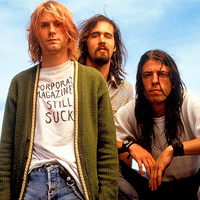
Nirvana was an American rock band active from 1987 to 1994, founded in Aberdeen, Washington, USA, by vocalist and guitarist Kurt Cobain and bassist Krist Novoselic. The classic line-up was completed in 1990 with the arrival of drummer Dave Grohl. Nirvana became one of the defining American alternative rock bands of the early 1990s and played a key role in transforming grunge from a regional Pacific Northwest scene into a global mass-cultural phenomenon. The group’s music combined punk rock, hardcore, heavy guitar distortion and strong pop melody, often built around dramatic transitions from quiet verses to explosive choruses.
During its lifetime, Nirvana released only three studio albums: Bleach (1989), Nevermind (1991) and In Utero (1993). The central commercial breakthrough was Nevermind, featuring «Smells Like Teen Spirit», «Come as You Are», «Lithium» and «In Bloom». In January 1992, the album reached No. 1 on the Billboard 200, replacing Michael Jackson’s Dangerous at the top, while «Smells Like Teen Spirit» peaked at No. 6 on the Billboard Hot 100.
Kurt Cobain and Krist Novoselic: the formation of Nirvana
Kurt Cobain and Krist Novoselic met in Aberdeen, a small industrial town roughly two hours from Seattle. Before Nirvana, Cobain recorded music with the band Fecal Matter, whose demo caught Novoselic’s attention. After several attempts to establish a permanent line-up, the musicians formed a band in 1987 that would eventually become known as Nirvana.
Before settling on that name, the group used several alternatives, including Skid Row, Pen Cap Chew, Bliss and Ted Ed Fred. According to Cobain, he wanted a name that sounded beautiful and peaceful rather than aggressive or typical of a punk band of the period.
The line-up remained unstable during the early years. Drummers at different points included Aaron Burckhard, Dale Crover, Dave Foster and others. The most significant drummer of the early era was Chad Channing, who played on most of the material recorded for the debut album.
Sub Pop and the album Bleach
In January 1988, Nirvana recorded demo material with Seattle producer Jack Endino at Reciprocal Recording. The recordings reached executives at the independent label Sub Pop, which at the time was building a roster of artists who would later become associated with the Seattle grunge scene.
Nirvana’s first Sub Pop single was a cover of «Love Buzz» by the Dutch band Shocking Blue. The musicians then returned to Reciprocal Recording to work on their debut album.
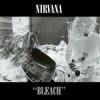
Bleach was released on June 15, 1989. It was recorded with producer Jack Endino over several studio sessions between late 1988 and early 1989. The album included «Blew», «About a Girl», «School», «Negative Creep», «Floyd the Barber» and other songs.
The sound of Bleach was considerably heavier than the later Nevermind. Its music reflected hardcore punk, metal riffs, noise rock and the influence of Pacific Northwest acts such as Melvins. At the same time, «About a Girl» already revealed one of Cobain’s most important strengths as a songwriter: his ability to place a simple, memorable pop melody inside deliberately rough guitar production.
Initial sales of Bleach were modest: Sub Pop later cited approximately 40,000 copies sold before the success of Nevermind brought the debut international attention. Nevertheless, the album established Nirvana’s reputation within the American independent scene and helped attract interest from major record companies.
Dave Grohl and the formation of the classic line-up
In 1990, the group’s relationship with Chad Channing came to an end. After a brief period with other drummers, Nirvana was joined by Dave Grohl, formerly of the Washington, D.C.-area hardcore band Scream.
With Grohl’s arrival, the line-up that recorded Nirvana’s best-known work was established:
- Kurt Cobain — vocals, guitar, principal songwriter;
- Krist Novoselic — bass guitar;
- Dave Grohl — drums, backing vocals.
Grohl’s powerful yet precise playing substantially changed the group’s rhythmic foundation. By this point, Nirvana was also preparing to leave Sub Pop. In 1991, the band signed with DGC Records, a division of Geffen Records, and began work on its second album.
Nevermind and the global breakthrough
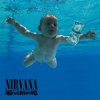
Nevermind was released on September 24, 1991. It was produced by Butch Vig, who had previously worked with Nirvana on demo recordings. Compared with Bleach, the new material was recorded with a cleaner, fuller sound, while retaining the band’s punk energy.
One of the central principles of Cobain’s songwriting was contrasting dynamics: a quiet or relatively restrained section could suddenly give way to distorted guitars and an emotionally explosive chorus. Cobain openly acknowledged the influence of Pixies, who used a similar «quiet — loud» approach.
The first single was «Smells Like Teen Spirit». The song and Samuel Bayer’s music video received massive rotation on MTV. What the label had not initially regarded as a guaranteed pop hit quickly became one of the defining musical events of 1991.
The album also included:
- «In Bloom»;
- «Come as You Are»;
- «Breed»;
- «Lithium»;
- «Polly»;
- «Drain You»;
- «Territorial Pissings»;
- «Something in the Way».
On January 11, 1992, Nevermind reached No. 1 on the Billboard 200. The album spent hundreds of weeks on the U.S. chart and eventually received Diamond certification in the United States. Worldwide sales exceeded 30 million copies.
Nevermind became far more significant than merely a successful rock release. Nirvana’s commercial breakthrough encouraged major labels and the mainstream audience to pay attention to alternative rock, which until then had largely developed through independent companies, college radio and local live scenes. Alongside Pearl Jam, Soundgarden, Alice in Chains and other Pacific Northwest bands, Nirvana found itself at the center of worldwide interest in the Seattle music scene.
Smells Like Teen Spirit and the image of a generation
«Smells Like Teen Spirit» quickly acquired a reputation as one of the defining rock songs of the early 1990s. Cobain himself, however, reacted with clear irritation to the media-imposed role of «voice of a generation».
Nirvana’s lyrics rarely functioned as straightforward narratives. Cobain used fragmented imagery, sarcasm, deliberate contradictions and personal observations. Themes of alienation, social pressure, relationships, the body and rejection of sexism or homophobia appeared regularly, yet the meaning was often intentionally left open to interpretation.
Equally important was Cobain’s melodic ability. Beneath the noise, fuzz and punk delivery of many Nirvana songs were relatively traditional verse-chorus structures. The combination of melodic accessibility and physically powerful guitar sound was one of the reasons the band’s music could move from the independent scene into mainstream culture.
Incesticide: rare recordings instead of a new album
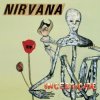
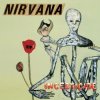
In December 1992, Incesticide was released. Contrary to a common misconception, it is not Nirvana’s fourth studio album or a full studio album at all, but a compilation of previously released and rare recordings, singles, radio sessions and cover versions.
It included «Dive», «Sliver», «Aneurysm», «Been a Son», as well as covers of songs by The Vaselines — «Molly's Lips» and «Son of a Gun». Incesticide offers a clear view of Nirvana’s less polished side and connects the Sub Pop period with the worldwide fame of the Nevermind era.
In Utero: a response to the success of Nevermind
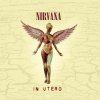
Nirvana’s third and final studio album, In Utero, was released in 1993. For the sessions, the band brought in engineer and producer Steve Albini, known for his direct approach to capturing the live sound of rock bands.
After the relatively polished and radio-friendly production of Nevermind, Nirvana wanted a harsher, more natural and less processed recording. The guitars became more abrasive, the vocals more vulnerable and aggressive, and the overall atmosphere considerably more unsettling.
At the same time, the idea that the album was released entirely without further intervention oversimplifies its recording history. After the initial sessions, some material was reworked; notably, Scott Litt prepared new mixes of several tracks, including «Heart-Shaped Box».
Key songs from In Utero include:
- «Serve the Servants»;
- «Heart-Shaped Box»;
- «Rape Me»;
- «Dumb»;
- «Pennyroyal Tea»;
- «All Apologies».
In Utero confirmed that the success of Nevermind had not been a one-off commercial event in the band’s history. The album achieved strong sales while preserving a much more abrasive sound. It received a Grammy nomination for Best Alternative Music Album.
Pat Smear and the touring line-up
During the tour supporting In Utero, Pat Smear, one of the founders of the Los Angeles punk band Germs, joined Nirvana as a second live guitarist. He was not part of the group’s core studio line-up, but became an important figure during its final touring period.
The additional guitar allowed Cobain greater freedom with his vocals and made the live sound denser. Smear would later reunite with Dave Grohl as a member of Foo Fighters.
MTV Unplugged in New York
On November 18, 1993, Nirvana recorded a performance for MTV Unplugged in New York. Rather than building the set around its biggest hits, the group focused on less obvious songs and cover versions.
The performance included «About a Girl», «Come as You Are», «Dumb», «Polly», «All Apologies» and «Something in the Way». Nirvana also performed David Bowie’s «The Man Who Sold the World», The Vaselines’ «Jesus Doesn't Want Me for a Sunbeam», and three Meat Puppets songs with the Kirkwood brothers. The set ended with an interpretation of the traditional song «Where Did You Sleep Last Night», most strongly associated with the repertoire of Lead Belly.
The concert was not completely acoustic in the literal sense: Cobain ran his acoustic guitar through an amplifier, while the stage line-up also included Pat Smear and cellist Lori Goldston. Nevertheless, the restrained dynamics presented Nirvana’s songs from a different perspective and emphasized the melodic nature of the material.
The album MTV Unplugged in New York was released after the band’s breakup, in November 1994. It debuted at No. 1 on the Billboard 200 and in 1996 earned Nirvana its only competitive Grammy — for Best Alternative Music Album.
Final concerts
In early 1994, Nirvana began the European leg of the In Utero tour. The band’s final full concert took place on March 1, 1994, in Munich.
A few days later, Cobain was hospitalized in Rome after combining medication and alcohol. The remaining concerts were canceled. At the end of March, he entered a rehabilitation facility in Los Angeles, which he soon left before returning to Seattle.
Kurt Cobain’s death and the end of Nirvana
Kurt Cobain died on April 5, 1994, at his home in Seattle at the age of 27. His body was discovered by an electrician on April 8. The medical examiner and police investigation ruled the death a suicide.
Following Cobain’s death, Nirvana ceased to exist. Krist Novoselic and Dave Grohl did not attempt to continue the group with another permanent frontman, as the band’s songs and creative identity were inseparably linked to Cobain.
His death became one of the most widely discussed events in 1990s rock music, but describing it as the immediate «end of grunge» would be inaccurate. Other leading bands from the scene continued recording and touring, although Cobain’s death did become a symbolic dividing line in one of the decade’s most important periods of alternative rock.
Posthumous releases
After 1994, the official Nirvana archive continued to expand through new releases. In addition to MTV Unplugged in New York, the live album From the Muddy Banks of the Wishkah was released in 1996, compiled from recordings of various concerts.
In 2002, the compilation Nirvana was released and included the previously unreleased studio track «You Know You're Right». It had been recorded in January 1994 and became the final known studio recording by the classic line-up.
In 2004, the extensive box set With the Lights Out was released, bringing together demos, live material, rare tracks and alternative versions. Later official releases included Live at Reading and Live and Loud, while anniversary editions of Nevermind and In Utero greatly expanded the group’s available archive.
Dave Grohl and Krist Novoselic after Nirvana
After Nirvana ended, Dave Grohl recorded material that became the debut Foo Fighters album in 1995. He performed almost all of the instrumental and vocal parts himself on the original studio recording before forming a full band. Foo Fighters later became one of the biggest American rock groups of its generation.
Krist Novoselic participated in projects including Sweet 75, Eyes Adrift and Giants in the Trees, while also becoming involved in civic and political activity.
Pat Smear later played in Foo Fighters and repeatedly joined Grohl and Novoselic during special performances dedicated to Nirvana’s music.
Rare reunions of surviving members
Nirvana has never re-formed as a permanently active band, although the surviving musicians have performed its songs together several times. In 2014, during Nirvana’s induction into the Rock and Roll Hall of Fame, Grohl, Novoselic and Smear performed with guest vocalists Joan Jett, Kim Gordon, St. Vincent and Lorde.
In January 2025, the musicians reunited again at the FireAid benefit concert in Los Angeles. Rather than attempting to replace Cobain with a single permanent singer, vocal duties were shared by St. Vincent, Kim Gordon, Joan Jett and Dave Grohl’s daughter Violet Grohl. Such appearances remain commemorative concert projects rather than a revival of Nirvana as an active band.
Nirvana’s musical style
Nirvana is usually classified as grunge and alternative rock, although the group’s musical foundation was considerably broader than either label suggests. Its sound combined American hardcore punk, post-punk, noise rock, heavy 1970s-style riffs and Cobain’s strong melodic sensitivity to pop music.
Among the group’s important influences were Pixies, Melvins, Sonic Youth, Black Flag, Beatles, Vaselines and other artists that were stylistically far apart. This is why Nirvana could sound equally convincing in the short hardcore attack of «Territorial Pissings», the melodic «About a Girl», the heavy «Scentless Apprentice» and the almost intimate «All Apologies».
For Cobain, loudness was never an end in itself. One of the defining qualities of his songwriting remained contrast: melody and noise, vulnerability and aggression, a simple chorus alongside intentionally ambiguous lyrics. This duality became a central part of Nirvana’s recognizable sound.
Nirvana studio discography
- Bleach — 1989
- Nevermind — 1991
- In Utero — 1993
Major compilations and live albums
- Incesticide — 1992, compilation of rare and previously released recordings
- MTV Unplugged in New York — 1994, live album
- From the Muddy Banks of the Wishkah — 1996, live album
- Nirvana — 2002, compilation
- With the Lights Out — 2004, archival box set
- Sliver: The Best of the Box — 2005, compilation of archival material
- Live at Reading — 2009, live album
- Live and Loud — 2019, live album
Awards and recognition
During the band’s lifetime, the Grammy Awards were not the main measure of Nirvana’s success: the group received several nominations, but its only competitive win came after Cobain’s death, for MTV Unplugged in New York. The Recording Academy lists Nirvana with one win from six nominations.
In 2014, Nirvana was inducted into the Rock and Roll Hall of Fame in its first year of eligibility. Kurt Cobain, Krist Novoselic and Dave Grohl were inducted as members of the group.
In 2017, «Smells Like Teen Spirit» was inducted into the Grammy Hall of Fame, followed by Nevermind a year later. These honors formally recognized the recordings as works of lasting historical significance.
The significance of Nirvana
Nirvana’s historical importance does not lie in having «invented grunge»: the style and the scene existed well before Nevermind. Mudhoney, Melvins, Soundgarden, Green River and other bands had already established a significant part of its aesthetic. Nirvana’s role was different — the group brought the principles of American independent and punk rock into the center of global popular culture without turning into a conventional stadium-rock act.
The success of Nevermind changed how major record companies viewed the commercial potential of alternative music. After 1991, bands that only a few years earlier had been regarded as part of the independent scene suddenly gained access to a much wider audience. The Rock & Roll Hall of Fame describes Nirvana, and Cobain in particular, as one of the forces that defined the alternative-rock boom of the early 1990s.
At the same time, Nirvana’s catalog is remarkably small for a band of such stature: only three studio albums, recorded in less than five years. That compact body of work only emphasizes the scale of the group’s influence. Bleach preserved its connection to the underground, Nevermind changed the position of alternative rock within mainstream culture, and In Utero demonstrated the band’s determination to maintain artistic independence after enormous commercial success.
Decades after its breakup, Nirvana remains one of the defining rock bands of the late 20th century. Its importance rests not only on «Smells Like Teen Spirit» or the image of Kurt Cobain, but above all on the rare combination of punk immediacy, heavy guitar sound and melodies capable of reaching far beyond the scene in which the music was originally created.