 Pitbull

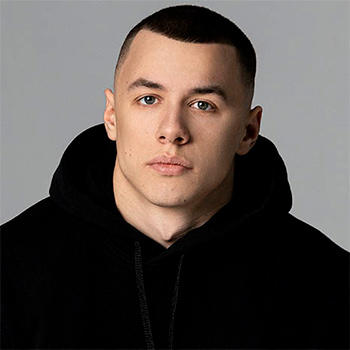
Vitya AK, also known as Vitya AK-47 (real name — Vitaly Viktorovich Gostyukhin; born August 30, 1987, Beryozovsky, Sverdlovsk Oblast, Russia), is a Russian rapper, songwriter, music producer and member of the Ural group AK-47. His career is associated with one of the most recognizable branches of Russian rap from the late 2000s and 2010s — provincial street hip-hop built around conversational language, everyday stories, humor and an emphatically direct rap delivery.
Vitya gained widespread recognition together with Maxi AK as part of AK-47 following the release of the albums Berezovskiy and MegaPolice. At the same time, he developed a solo career, releasing the albums Zhirny, Staraya shkola, Lakshery Andegraund and Vyros. Among the best-known recordings featuring him are Ale, eto Pakistan, Krugom tonirovan, Olya Lukina, Tem, kto s nami, RATATATATA, Apokalipsis and other tracks.
Beryozovsky and the first recordings
Vitaly Gostyukhin was born and raised in Beryozovsky, a town in Sverdlovsk Oblast near Yekaterinburg. His Ural origins later became an important part of AK-47’s musical identity: the name of their hometown appeared on the debut album, while local realities, neighborhoods, transport, cars and the everyday life of a small industrial town regularly became material for their songs.
Gostyukhin became interested in rap while still at school. Among the foreign artists that members of AK-47 later named as important influences on their musical outlook were Onyx and other representatives of American hip-hop from the 1990s.
The first recordings were made at home during a period when accessible computer software and relatively inexpensive studio equipment were beginning to transform regional Russian hip-hop. Vitya later recalled this period as a time when musicians first gained the ability to record demos independently, while the internet gradually became more important than the traditional channels of music promotion.
Formation of AK-47
In the mid-2000s, Vitya teamed up with Maksim Brylin, who performs as Maxi AK. This led to the creation of the duo AK-47, whose history is generally traced back to 2004.
The group’s name refers to the AK-47 Kalashnikov rifle and became part of the duo’s overall aesthetic — deliberately rough, provincial and built around the image of two ordinary guys from Beryozovsky.
During the early period, AK-47 distributed their recordings through the internet and social networks. Rather than trying to fit into the Moscow rap scene, Vitya and Maksim made their own environment the main subject of their music: courtyards, cars, parties, familiar characters, conversational slang and absurd everyday situations.
Berezovskiy
AK-47’s first official album, Berezovskiy, was released in 2009 through Gazgolder. The title directly referred to the members’ hometown.
The album included the songs AK AK, Vitya i Maksim, Ale, eto Pakistan, Bratts, A vot tak-to, Patrioticheskiy, Krugom tonirovan, Slysh, malysh and other tracks.
The group’s main characteristics were already fully established here: simple and easily recognizable rap delivery, a large number of conversational phrases, deliberately everyday subject matter, profanity, humor and an absence of any attempt to give provincial life an additional romantic or criminal scale.
Vitya AK became a particularly noticeable figure thanks to his distinctive voice, intonation and way of constructing verses from short observations and remarks.
Gazgolder and MegaPolice
The next major release was MegaPolice, issued in 2010 through Gazgolder.
The album significantly expanded AK-47’s circle of collaborators. The recording featured Noggano, Guf, QP, Ayk Dym, Vostochny Okrug and other representatives of Russian rap.
Among the best-known tracks are Olya Lukina, Ne stesnyaysya, Megapolis and Tem, kto s nami. The latter was recorded with Guf and Noggano and became one of the most recognizable songs in AK-47’s catalog.
After Berezovskiy and MegaPolice, the group definitively moved beyond the local Ural scene. At the same time, Beryozovsky itself did not disappear from their music: regional origins remained one of the central themes and distinguished AK-47 from many Moscow rap projects of that period.
Work with Tip and the beginning of a solo career
Alongside his work with AK-47, Vitya began releasing material separately from Maxi AK.
In the early 2010s, an important collaborator became Yekaterinburg rapper and beatmaker Tip. Together they worked on the projects Dva v odnom and 2V12, which gave Vitya more space for material outside the duo’s familiar format.
His first full-length solo album was Zhirny, released on June 1, 2012 through Gazgolder.
Zhirny
Zhirny contained 17 tracks. A significant portion of the music was created with the participation of Tip and Noggano, while guest performers included Maxi AK, Guf, Basta/Noggano, Pika, Triagrutrika and Rynochnye Otnosheniya.
Notable tracks include Apokalipsis, Edu v Leningrad, Ya i ty and Poka est o chyom skazat... with Guf.
The album did not mean the breakup of AK-47. From this point onward, Vitya’s solo recordings existed in parallel with the group’s work and allowed him to collaborate with a broader range of artists and producers.
Tretiy and the return of AK-47
In 2015, AK-47 released their third studio album, Tretiy. Noggano once again took part in the project, appearing on several tracks, including Russian Paradise and Poverkh bita.
The release showed that Vitya and Maksim were able to preserve their recognizable style even after several years during which much of their activity had been connected with separate projects.
Triagrutrika and TGK AK47
A special place in the history of AK-47 belongs to their long-running collaboration with the Chelyabinsk group Triagrutrika.
In 2016, the two groups released the joint album TGK AK47. The Ural geography shared by both teams made the collaboration feel natural: their music intersected in a similar conversational delivery, attention to provincial surroundings and an approach to rap primarily as a text-driven genre.
The collaboration continued in 2022 with the album AKTGK.
Novy
In October 2017, AK-47 released their fourth main album, Novy. It was the group’s first major work after ending their collaboration with Gazgolder.
On the album, the group attempted to update the production without abandoning its own style. The track list included Novy, Bratka, Prodat nam produkt, Bazaru 0, Selfi v ochkakh, Radi togo and other tracks.
After that, Vitya and Maksim entered a prolonged pause in terms of studio work, although AK-47’s concert activity did not stop.
RATATATATA and a new audience
At the beginning of 2020, Vitya AK appeared on Morgenshtern’s album Legendarnaya pyl on the track RATATATATA.
The track quickly climbed Russian streaming charts and introduced Vitya AK to an audience too young to have experienced the original success of Berezovskiy and MegaPolice.
The collaboration itself was built around a generational contrast: Morgenshtern represented the new internet wave of Russian rap, while Vitya by that time was perceived as a representative of the late-2000s scene. Rather than creating a stylistic conflict, this difference became the track’s main element.
Staraya shkola
In September 2020, Vitya AK released his second solo album, Staraya shkola — his first major solo release since Zhirny.
The title referred to the expectations of longtime listeners, but the album itself was not a literal return to the music of 2009.
The recording featured Maxi AK, Morgenshtern, Ves, Syava, Yamych, VibeTGK, CYGO and poet Sola Monova. The tracks included Popandopulo, Tonkaya stena, Kayfovat, Gandzha, Venera, Gryazny flow, Ne raz ubivalo and Budto by igra.
The album clearly reflects Vitya’s position in Russian rap during this period: he was already seen as an artist from a previous generation, yet he continued recording with musicians considerably younger than himself and did not attempt to completely recreate the old AK-47 sound.
Lakshery Andegraund
In 2022, Vitya released his third solo album, Lakshery Andegraund.
On it, he continued combining his familiar direct delivery with more contemporary beats. Guest performers included Murovei, Dzharakhov, Krip-a-Krip, FLESH and other artists.
The title accurately describes one of the characteristic features of his later music: although the artist had long existed within the larger music industry and had broad public recognition, he continued to consciously use the aesthetics of regional underground rap.
Style and attitude toward the contemporary rap scene
In 2024, Vitya released the single Stil, in which he directly returned to the subject of his own place in hip-hop and his Ural roots.
In interviews from this period, he emphasized that rap delivery itself remained fundamental for him. Vitya has been critical of the tendency to automatically classify almost any vocal music over a modern beat as rap, and considers rapping to be the foundation of the genre.
His own delivery has changed less over the years than the production surrounding it. Its characteristic features remain recognizable: a high vocal timbre, clipped rhythmic phrasing, regional slang, deliberate simplicity of expression and close attention to everyday details.
Pyaty
In October 2024, Vitya and Maxi AK released the album Pyaty — the first full-length AK-47 project in seven years recorded by the group’s two core members.
The album featured Noggano, Guf, Kravts, Murovei, VibeTGK, Krasnoe Derevo and other performers.
Vitya AK played a particularly large role in creating the album: according to him, the record was made in his studio, while he handled production, organized collaborative sessions and assembled the project as a whole.
Among the songs were Zdes nikto ne kurit, Mir nemnogo izmenilsya, Na Urale khorosho, Rep s regiona, Vkus ne propal and Etot gorod.
After its release, Pyaty reached No. 1 on the Russian Apple Music albums chart. For the group, this confirmed that its early catalog and distinctive style had found a new audience a decade and a half after Berezovskiy.
Vyros
On June 19, 2026, Vitya AK released his fourth main solo album, Vyros, consisting of 16 tracks.
Guest musicians included Maxi AK, Krip-a-Krip, Ves, V $ X V Prince, Andro and the American group Onyx.
The participation of Onyx is especially symbolic in Vitya’s biography: he listened to the group while still at school and, decades later, recorded collaborative material with its members.
In terms of subject matter, Vyros noticeably reflects the author’s age. Instead of trying to reproduce his earlier courtyard life without change, Vitya raps about the everyday reality of an adult — home, mortgage, old friends, cars, childhood memories and changing habits. At the same time, his manner of speech remains immediately recognizable.
Musical style
The foundation of Vitya AK’s work is Russian hip-hop with a strong connection to the regional Ural scene.
His lyrics are characterized by:
- conversational Russian and regional slang;
- short everyday observations instead of complex literary constructions;
- humor, self-irony and exaggeration;
- themes of cars, courtyards and local neighborhoods;
- stories about familiar people and everyday situations;
- representational rap and competition through rap delivery;
- constant references to the Urals, Yekaterinburg and Beryozovsky.
For this reason, defining Vitya exclusively as an “underground rapper” is not entirely accurate. AK-47 began in an independent regional environment, but by the end of the 2000s they were already working with Gazgolder and nationally prominent artists. Later, Vitya simultaneously preserved the aesthetics of old Ural rap and regularly collaborated with musicians from newer generations.
Collaborations
At different stages of his career, Vitya AK has recorded with Maxi AK, Noggano, Basta, Guf, Triagrutrika, Morgenshtern, Smoky Mo, VibeTGK, Jahmal TGK, Murovei, Krip-a-Krip, Dzharakhov, Nurminsky, Onyx and other performers.
These collaborations belong to different generations of Russian rap. Vitya worked with Noggano and Guf during the period of AK-47’s early albums, while RATATATATA with Morgenshtern and later recordings demonstrated his presence within the newer streaming era of hip-hop.
Vitya AK solo discography
- Zhirny — 2012;
- Staraya shkola — 2020;
- Lakshery Andegraund — 2022;
- Vyros — 2026.
Other important projects
- Dva v odnom — with Tip, 2010;
- 2V12 — with Tip, 2011.
Main AK-47 albums
- Berezovskiy — 2009;
- MegaPolice — 2010;
- Tretiy — 2015;
- Novy — 2017;
- Pyaty — 2024.
The joint albums by AK-47 and Triagrutrika, TGK AK47 (2016) and AKTGK (2022), occupy a separate place in the group’s discography.
Vitya AK’s place in Russian rap
Vitya AK entered Russian hip-hop during a period when regional artists gained the ability to distribute music online independently of Moscow radio and television. AK-47 used this opportunity without trying to hide their origins: Beryozovsky became part of the debut album’s title, while the Urals became a permanent geographical reference in their songs and stage image.
An important feature proved to be the durability of this style. The musical production around Vitya changed, new generations of performers appeared, and new methods of distributing music emerged, yet his rap delivery and approach to constructing lyrics remained recognizable.
This is why collaborations with younger artists did not require him to completely change his own language. His appearance on RATATATATA, AK-47’s return with Pyaty and the solo album Vyros demonstrated that the group’s early aesthetic could continue to exist beyond the context of the late 2000s.
In the history of Russian hip-hop, Vitya AK is primarily associated with the formation of a recognizable Ural street-rap style: music in which regional identity, conversational language, everyday humor and distinctive rap delivery became not a limitation, but the foundation of an individual style.