


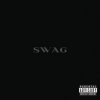
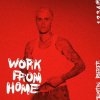



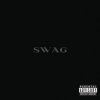

Justin Drew Bieber is a Canadian pop and R&B singer, songwriter, musician, and actor, and one of the defining figures of global pop culture in the 21st century. His career has become a symbol of the digital era: Bieber was the first truly planet-scale artist to rise directly from YouTube, without the traditional show-business “elevator.” Over the course of his career, he has sold more than 100 million records, repeatedly reinventing his musical image while remaining commercially and culturally relevant for more than a decade and a half.
Childhood and background (1994–2008)
Justin was born on March 1, 1994, in the city of London, Ontario, Canada, at St. Joseph’s Hospital. He spent his childhood in Stratford. His mother, Patricia “Pattie” Mallette, gave birth to him at the age of 18 and raised her son largely on her own. The family lived modestly; Pattie worked several jobs, while Justin’s grandparents — Bruce and Diane Mallette — helped care for him.
Justin’s father, Jeremy Bieber, maintained contact with his son but lived separately and later started a new family. Bieber also has German ancestry among his roots.
Music entered Justin’s life very early. He is a self-taught musician with no formal academic training, and as a teenager he learned to play several instruments at once: drums, piano, guitar, and trumpet. In addition to music, he was interested in hockey, soccer, and chess — a detail rarely mentioned in mainstream biographies.
In 2007, at the age of 12, Bieber took part in the local competition Stratford Idol, where he performed Ne-Yo’s So Sick and finished in second place. His mother uploaded a video of the performance to YouTube — initially intended only for friends and relatives. That step proved to be a turning point.
YouTube, Scooter Braun, and the record deal (2008–2010)
Justin’s home videos quickly began gaining views. They were accidentally discovered by Scooter Braun, an entrepreneur and the future founder of the media company SB Projects. He tracked Bieber down, contacted his mother, and after lengthy persuasion convinced her to allow her son to travel to Atlanta to record demo tracks.
There, a fateful meeting took place with Usher. Soon after, the label Raymond Braun Media Group (RBMG) was created — a joint venture between Usher and Braun — with Justin becoming its first artist. Later, L.A. Reid also signed him to Island Records.
An interesting fact: Justin Timberlake was genuinely interested in signing Bieber as well, but Justin consciously chose Usher — whom he saw as closer in style and as a mentor figure.
Early releases and “Bieber Fever” (2009–2011)
In 2009, the debut single “One Time” was released, reaching the top ten in Canada and signaling the arrival of a new pop star. In November of the same year, the EP My World was released.
A unique record: seven songs from a single debut release simultaneously entered the Billboard Hot 100 — something that had never happened before and has not happened since.
During this period, Bieber appeared extensively on television, performed at the VMAs, on The Today Show, Ellen, and Good Morning America, sang at the White House for Barack and Michelle Obama, and took part in the charity project We Are the World 25 for Haiti, performing Lionel Richie’s opening verse.
“My World 2.0,” “Baby,” and the film phenomenon (2010–2011)
In 2010, the album My World 2.0 was released, debuting at number one on the Billboard 200. The single “Baby” (feat. Ludacris) became a global hit.
Notable facts:
- the Baby music video was for a long time the most viewed video in YouTube history;
- at the same time, it held the record for the highest number of dislikes (before the platform’s changes);
- it was later overtaken by Gangnam Style, but remains a cultural marker of its era.
In 2011, the 3D documentary concert film “Justin Bieber: Never Say Never” was released, becoming the highest-grossing concert film in U.S. history at the time of its release.
The Christmas album and growing up (2011–2013)
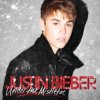
The album Under the Mistletoe (2011) became the first Christmas album in history to debut at number one on the Billboard 200. It featured Mariah Carey, Boyz II Men, and Usher.
In 2012, Believe was released — a transitional album. The sound shifted toward EDM and a more mature pop-R&B style. The Believe Tour spanned the globe, including Russia (Moscow and Saint Petersburg).
In 2013, Bieber launched the experiment Music Mondays — ten new tracks released over ten weeks. The result was the album Journals, which many critics consider his most honest and underrated work.
Crisis, hiatus, and reinvention (2014–2017)
The period of 2013–2014 was marked by high-profile scandals, legal troubles, and arrests. This stage became a point of internal collapse for Bieber.
His comeback came in 2015 with the album Purpose — a defining milestone in his career. Hits included:
- What Do You Mean?
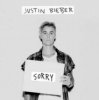
- Sorry
- Love Yourself
The album earned him a Grammy Award for Best Dance Recording (Where Are Ü Now with Jack Ü).
Marriage, faith, and health (2018–2024)
In 2018, Justin married Hailey Baldwin. Their union became a central theme of his subsequent work.
Albums:
- Changes (2020) — intimate R&B
- Justice (2021) — pop with social and spiritual themes
In 2020, Bieber publicly revealed that he had been diagnosed with Lyme disease and chronic mononucleosis.
In 2022, he was diagnosed with Ramsay Hunt syndrome type II, which caused partial facial paralysis and led to the cancellation of his tour.
In 2024, Justin and Hailey welcomed their son — Jack Blues Bieber.
Impact on the industry and modern pop-R&B
Justin Bieber became the “patient zero” of a new musical era. His influence extends far beyond his own songs:
- A shift in the model of success: Before Justin, the path to fame ran through castings and major labels. Bieber proved that a loyal social-media audience is an asset that forces labels to adapt to the artist, not the other way around. Today, everyone follows this model — from The Kid LAROI to Olivia Rodrigo.
- The democratization of R&B in pop music: In the early 2010s, Justin was among the first to successfully blend classic “white” pop with “Black” R&B so organically that it became the new radio standard.
- The popularization of Tropical House: His collaborations with Jack Ü (Where Are Ü Now) and the album Purpose pushed niche electronic sounds into the top charts, paving the way for the global success of artists such as Kygo and DJ Snake.
- A “voice of a generation” for young talent: Artists such as Shawn Mendes, Niall Horan, and Benson Boone openly acknowledge that it was Bieber’s example that inspired them to start recording covers and to believe in the possibility of global success from their own bedrooms.
Justin Bieber discography
Studio albums
My World 2.0 (2010)
The first full-length album and the culmination of the early “teen-pop” period.
Key hits:
- Baby (feat. Ludacris)
- Somebody to Love
- U Smile
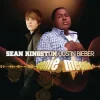
- Eenie Meenie (feat. Sean Kingston)
- That Should Be Me
Under the Mistletoe (2011) — Christmas album
One of the most commercially successful Christmas albums of the 2010s.
Key tracks:
- Mistletoe
- Santa Claus Is Coming to Town
- Fa La La (feat. Boyz II Men)
- Drummer Boy (feat. Busta Rhymes)
Believe (2012)
A transitional album: growing up, electronic pop, EDM, and R&B.
Key hits:
- Boyfriend
- As Long As You Love Me (feat. Big Sean)
- Beauty and a Beat (feat. Nicki Minaj)
- All Around the World
- Die in Your Arms
Journals (2013)
The most personal and R&B-oriented album; initially released as a digital project.
Key tracks:
- Heartbreaker
- Confident (feat. Chance the Rapper)
- All That Matters
- Recovery
- Hold Tight
Purpose (2015)
The major turning point of his career and a full-scale comeback.
Key hits:
- Sorry
- Love Yourself
- What Do You Mean?
- Where Are Ü Now (with Jack Ü)
- Company
Changes (2020)
An introspective R&B album focused on marriage and inner balance.
Key tracks:
- Yummy
- Intentions (feat. Quavo)
- Forever (feat. Post Malone)
- Changes
- Available
Justice (2021)
A socially and emotionally charged album that expanded Bieber’s sound.
Key hits:
- Peaches (feat. Daniel Caesar & Giveon)
- Holy (feat. Chance the Rapper)
- Anyone
- Ghost
- Hold On
Extended plays (EPs)
My World (2009)
The debut that launched global fame.
Key tracks:
- One Time
- One Less Lonely Girl
- Love Me
- Favorite Girl
Freedom (2021)
A gospel-oriented EP released without commercial pressure.
Key tracks:
- Freedom
- Where You Go I Follow
- We’re In This Together
Compilation and remix albums
Never Say Never: The Remixes (2011)
Key tracks:
- Never Say Never (feat. Jaden)
- That Should Be Me (feat. Miley Cyrus)
- Somebody to Love (feat. Usher)
Key non-album singles and collaborations
- Despacito (Remix) — Luis Fonsi & Daddy Yankee
- Stay — The Kid LAROI & Justin Bieber
- I’m the One — DJ Khaled
- Let Me Love You — DJ Snake
- Cold Water — Major Lazer
- 10,000 Hours — Dan + Shay
- Where Are Ü Now — Jack Ü
- Lonely — Justin Bieber & Benny Blanco
A brief evolution of his sound
- 2009–2010 — teen pop, youthful romance
- 2012 — EDM and mainstream pop
- 2013 — R&B and personal lyricism
- 2015 — electronic pop and a global comeback
- 2020–2021 — mature R&B, pop, and gospel elements
Significance and legacy
Justin Bieber is:
- the first truly global YouTube artist;
- one of the youngest leaders of the Billboard 200;
- an artist who survived teenage fame and managed to reframe himself as an adult musician.
His journey is a rare example of uninterrupted evolution — from viral videos to a stable and lasting place in the history of modern music.