




 Pitbull
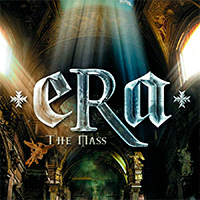
ERA is a French music project created in the mid-1990s by composer, producer and guitarist Eric Lévi. Its music combines choral singing, symphonic arrangements, rock guitar, electronic rhythms, new age, and elements of classical and medieval music, while a significant portion of the vocals is performed in an invented language designed to resemble Latin. The project’s international breakthrough came with Ameno, followed by Divano, Enae Volare, The Mass, Misere Mani, Looking for Something, Reborn, Kilimandjaro, Prayers, 7 Seconds, Agnus Deorem and other works.
ERA should not be considered a conventional band with a permanent lineup. It is primarily Eric Lévi’s artistic universe: he writes the music, creates the arrangements and defines the overall concept, inviting singers, choirs and instrumentalists for particular recordings. The debut album, for example, featured British vocalist and choirmaster Guy Protheroe, singer Harriet Jay, the English Chamber Choir and several prominent studio musicians. The performers changed over the following decades, while Lévi remained the central figure throughout.
This unusual model allowed ERA to exist simultaneously as a studio project, a musical mythology and an almost cinematic universe. For a long time, Lévi had little interest in becoming the public face of his own success: until the late 2010s, the project rarely gave conventional concerts and maintained a considerable degree of anonymity around its creator. By 2026, however, ERA had sold around 15 million albums, while its music had accumulated billions of streams and views.
Eric Lévi before ERA: from hard rock to film music
Eric Lévi was born in Paris in 1955 as Éric Jacques Levisalles. His musical story began far from choirs and pseudo-Latin. In the mid-1970s, he became one of the founders of the French hard rock band Shakin' Street, where he played guitar and wrote music. Universal Music describes the young Lévi as a musician fascinated by rock, punk and metal; he later cited Deep Purple and Led Zeppelin among his major influences.
Shakin' Street managed to move far beyond the French club scene. The band secured a contract in the United States and performed on American stages alongside major rock artists; Lévi’s biographies mention concerts connected with Black Sabbath, Blue Öyster Cult, AC/DC, Alice Cooper and other performers. In a 2026 interview, Lévi himself also remembered this hard rock period as one of the most important schools in his musical development.
After Shakin' Street broke up, he lived in New York for a time and then increasingly concentrated on composition and studio work. In the early 1990s, Lévi entered the film industry and wrote music for several French movies.
The decisive project was Les Visiteurs, directed by Jean-Marie Poiré and released in 1993. The film, starring Jean Reno and Christian Clavier, became a huge box-office success in France, while its score gave Lévi the opportunity to experiment with combining orchestral and choral music with modern studio production.
This is where the direct predecessors of ERA can be found.
Les Visiteurs and the birth of ERA’s future sound
While working on Les Visiteurs, Eric Lévi collaborated with British musician, singer and choral arranger Guy Protheroe. The soundtrack already contained music very close to the future ERA aesthetic, including Enae Volare. The composition later appeared on the project’s debut album.
The medieval theme of the film proved exceptionally well suited to Lévi’s musical imagination.
But he was not interested in reconstructing authentic medieval music. He wanted to create a modern fantasy about antiquity — music that could simultaneously resemble church chant, a film score, a rock composition and an electronic recording.
That was the basic idea from which ERA emerged.
After the film’s success, Lévi began developing this musical language independently of any particular movie. Universal Music connects the formation of ERA with his experience on Les Visiteurs and with the European rise of new age in the early 1990s, when projects such as Enigma and Deep Forest gained widespread popularity.
ERA, however, quickly developed its own system.
This is not Gregorian music
ERA is often described as a project built around “Gregorian choirs.” The label is convenient, but musically it is not entirely accurate.
Lévi does indeed use male and mixed choirs, long vowels, unison phrases and church-like harmonies that evoke the European liturgical tradition. But ERA’s compositions are not authentic medieval Gregorian chants.
At their core lies modern studio music: synthesizers, electronic rhythm sections, bass, electric guitars, orchestral parts and multilayered vocal recordings.
Lévi explained his approach simply: for him, the voice is a complete musical instrument. He does not always try to tell a story through words; the sound of the syllables themselves, their emotional color and their ability to merge with melody are more important.
That is why one of ERA’s most important inventions was its own language.
What language are Ameno and other ERA songs sung in?
The lyrics of Ameno are often mistaken for Latin.
In reality, much of ERA’s classic repertoire is performed in an invented language deliberately constructed to resemble Latin and other ancient European languages while having no precise literal translation. Lévi and Guy Protheroe used combinations of syllables that sounded “ancient” as part of the musical composition itself.
That is why the many online “translations” of Ameno, in which every line is assigned a complex religious or mystical meaning, are not genuine translations of the original text.
A phrase such as “Dori me, interimo adapare” works primarily on a phonetic level.
At the same time, not all of ERA’s catalog is written in an invented language. The project has also used English, actual Latin and Arabic, particularly on later works.
This system solved an important problem for international music: the song no longer belonged to one linguistic market. A French, German, Mexican or Eastern European listener could experience Ameno in almost the same way — through melody, choir and atmosphere rather than through literal understanding of the words.
Ameno
ERA’s defining song became Ameno.
It appeared on the project’s debut album, recorded in 1996 and widely released in different countries during 1996–1997. Differences between regional editions explain why catalogs sometimes give different years for the album and single. Spotify, for example, dates one of the main digital editions of the record to 1997, while other official catalogs place the original release in 1996.
Guy Protheroe and Harriet Jay participated in the recording, while the choral parts were performed by the English Chamber Choir. Eric Lévi served as composer, arranger and producer.
Ameno is built on a very simple but highly effective contrast.
On one side is a choir that seems to belong to an ancient monastery. On the other are a modern rhythm section, synthesizers and rock guitar. At the same time, the melody is clear enough to function almost like a conventional pop chorus.
The result sounded familiar while still being unlike a standard 1990s hit.
That contrast allowed the song to cross genre boundaries.
The first ERA album
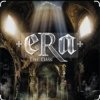
The debut album ERA became the foundation of the project’s entire later mythology.
Along with Ameno, it included Enae Volare, Mother, Avemano, Cathar Rhythm, Mirror, Sempire d'Amor, Impera and the title track Era. Different editions released in different countries and years varied slightly in track listings and remixes.
Musically, almost the entire core vocabulary of the project is already present here:
- massive choirs;
- pseudo-Latin;
- synthesizers;
- orchestral harmonies;
- electric guitar;
- slow electronic rhythms;
- medieval and religious imagery;
- the atmosphere of an imaginary historical film.
The album became a major international success. RFI reported that during its first five years, the debut sold around six million copies, while gold and platinum certifications were achieved in 18 countries. It was particularly successful not only in France, but also across Europe and Latin America.
For a largely instrumental and choral French project, this was an exceptional result.
The visual world of ERA
Another unusual feature of the project was Lévi’s near absence from its early public mythology.
In the videos, viewers did not see the composer standing behind a synthesizer, but rather monks, warriors, medieval castles, swords, ceremonies and characters existing somewhere between history and heroic fantasy.
This created the feeling that ERA was not a person and not even a music group, but an independent universe.
The approach was especially effective because it matched the music itself. If Ameno had been accompanied by an ordinary studio video showing the musicians, much of its mystery would have disappeared.
Instead, the imagery extended the music.
Later, this visual system would have to be translated into the language of a large-scale concert spectacle.
ERA 2 and Divano
After the enormous success of the debut, Lévi did not rush into a follow-up. The second album, ERA 2, was released in 2000.
The main single was Divano. Other tracks included Omen Sore, Misere Mani, Sentence, Don't U, Devore Amante, Hymne and more. RFI noted that the album was written and produced entirely by Lévi and recorded between London, Paris and other European locations.
The second album deliberately continued the formula already established.
Choirs singing in the invented language were again combined with electronics and cinematic synthesizers. Some critics accused Lévi of repeating the debut too literally, but commercially the strategy worked: ERA 2 reached high chart positions in several European countries.
Divano became the second most recognizable piece of ERA’s early period and proved that the project’s audience was interested in more than just Ameno.
The Mass
The third album, The Mass, was released in 2003.
It became a heavier and more dramatic continuation of ERA’s classic concept. Lévi himself said that he considered the second album too soft and wanted to restore density and tension to the music.
The title track The Mass uses a musical foundation connected with O Fortuna from Carl Orff’s cantata Carmina Burana, transforming the famous classical motif into a modern choral-rock composition. Other tracks include Looking for Something, Don't Go Away, Don't U, If You Shout, Avemano Orchestral, Sombre Day and more.
It is one of the clearest examples of how ERA works with the past.
Lévi is not trying to perform a classical work “correctly.” What interests him is a recognizable emotional gesture that can be transferred into his own system — adding drums, guitars, electronic layers and monumental choirs.
The Mass sold strongly far beyond France: RFI recorded number one positions in Italy and Mexico, number two in Switzerland and Estonia, and high chart placements in many other countries.
By this point, ERA had firmly established itself as one of the most successful French music exports of its generation.
Why ERA sounds like a soundtrack
Eric Lévi himself has described ERA as something like music for an imaginary film.
It is an extremely accurate description.
The songs often do not tell a specific story, yet they create clear visual associations: a monastery, a vast cathedral, an ancient battle, a journey, a funeral, a coronation or a mystical ceremony.
Lévi’s experience as a film composer allowed him to think in large emotional scenes.
He does not need to structure a song around a conventional story of “hero — conflict — resolution.” Creating a sense of space and time is enough.
That is why ERA often appeals to people who rarely listen to new age at all. The music works almost physically — through choir, dynamics and scale.
Reborn: a new version of the project
After The Mass, there was a long break between the main studio albums.
Reborn appeared in 2008 and became the most obvious departure from the classic trilogy.
AllMusic noted a stronger presence of Middle Eastern and Arabic influences. The choral foundation remained, but the electronic production became more contemporary, the rhythms more prominent, and the musical geography expanded far beyond the imaginary European Middle Ages.
Key pieces include Reborn, Prayers, Dark Voices, Sinfoni Deo, Come Into My World, Kilimandjaro, Last Song and others.
The release once again entered the Top 10 of the French albums chart.
The title proved fitting: this was not simply a fourth installment of the old formula, but an attempt to redefine ERA’s sonic space.
Classics: Bach, Vivaldi, Verdi and new music
The next direction was classical repertoire.
On the album Classics, released in the late 2000s, Lévi took themes by Vivaldi, Verdi, Bach, Handel, Mahler, Barber and other composers and reconstructed them in the ERA style.
The titles make the structure of the idea explicit:
Vivaldi + Sunset Drive + Spring / Four Seasons,
Verdi + Arising Force + Nabucco,
Bach + Ritus Pacis,
Haendel + Dark Wonders,
Barber + Adagio for Strings.
Importantly, Lévi does not conceal the sources.
This is not an attempt to present a classical melody as his own. On the contrary, the composer’s name becomes part of the title, and ERA’s task is to show how a familiar theme can exist inside a modern guitar-and-choir arrangement.
Classics II followed in 2010, continuing this direction.
In this way, the influence of classical music, which had always been present in ERA, became the central concept of an entire album cycle for the first time.
Arielle Dombasle by ERA
In 2013, the project made another unusual turn and recorded a full collaborative album with French-American singer and actress Arielle Dombasle.
Arielle Dombasle by ERA contains nine tracks and was released through Mercury Music Group.
For the first time, one specific vocalist occupies such a prominent place, while ERA’s familiar aesthetic is combined with a more conventional song-based and classical vocal style.
The project included, among other pieces, Ave Maria, for which an official music video was produced.
The album occupies a special place in the catalog: it is not simply another numbered ERA album, but neither does it feel like an unrelated production project by Lévi. It is a full meeting of two artistic worlds.
The 7th Sword
After another break, The 7th Sword was released in 2017.
The main edition contains nine tracks: Hurricane, 7 Seconds, Kilimandjaro (Brian Lévi Remix), Ameno – The City Remix, I Fall for You, Something Exciting, Agnus Deorem, Nomen Adore and I Believe.
The main single was 7 Seconds — a new interpretation of the famous song by Youssou N'Dour and Neneh Cherry. ERA’s version featured vocalists Mim Grey and Racha Rizk.
The album is interesting because it does not attempt to present itself as a complete new beginning.
New works stand alongside reinterpretations of the older catalog. Ameno and Kilimandjaro receive new versions, as if Lévi has begun treating ERA’s own history as material for further composition.
It was after The 7th Sword that an even more significant change took place: the project finally moved onto the concert stage.
Why ERA performed live so rarely for so long
ERA was originally created as entirely studio-based music.
On record, Lévi could simultaneously use a huge choir, orchestral instruments, multiple layers of vocals, electric guitars and electronic processing. In the 1990s, reproducing all of that on stage at the necessary artistic level was difficult and extremely expensive.
Lévi later admitted that for too long he approached the issue almost as a purist: if a concert could not be made as impressive as the imaginary world of the recordings, it was better not to do it at all.
As a result, millions of people knew Ameno for years without ever seeing a genuine live ERA performance.
There were individual special stage projects, including productions in Moscow in the early 2010s where ERA compositions were performed with orchestra and choir. Russian organizers in 2012 presented them as a world premiere of live performances of the material.
But the project’s full European concert life began much later.
The Live Experience
In 2019, Eric Lévi brought ERA to a major French stage for the first time in a format capable of conveying the scale of the studio recordings.
On April 18, the project performed at La Seine Musicale near Paris. Lévi was joined by dozens of performers — rock musicians, string players, soloists and a large choir. Organizers described the show as a journey into ERA’s medieval and heroic-fantasy universe.
The original concert sold out, followed by a French and European tour.
Ameno, Enae Volare, The Mass, Agnus Deorem and other works finally appeared on stage after decades of existing only as studio mythology.
Crucially, the concert was not structured as a conventional Eric Lévi performance with a backing band.
The goal was different: to materialize the world of ERA itself.
Costumes, choirs, lighting, medieval imagery and a rock orchestra created a musical spectacle in which the personality of the composer once again remained secondary to the overall atmosphere.
After the interruption caused by the pandemic, live activity resumed in 2022.
The Live Experience — the album
In 2022, the concert release The Live Experience appeared, documenting ERA’s new stage era.
In the digital discography, it is the project’s first full-length live album.
Ameno Metal is particularly revealing — a live version emphasizing something that had always existed inside Lévi’s music but was sometimes obscured by the “new age” label: his roots are in hard rock.
In live performance, electric guitar, drums and a powerful choir bring ERA much closer to symphonic rock and symphonic metal than the calmer studio versions of some compositions might suggest.
Ameno’s second life on the internet
By that time, Ameno had already experienced a completely unexpected second life.
In the late 2010s, the song became a major internet meme under the name Dorime, taken from the opening words of the vocal line.
Even earlier, from around 2014, Ameno was used in Twitch communities, where fragments of the song became a recurring joke. By 2019–2020, memes featuring Cheems, Hatsune Miku and images of pseudo-religious rituals had appeared, after which the sound spread massively across TikTok.
A rare situation emerged: a generation that had either not existed or had been very young during ERA’s original success rediscovered the song more than twenty years after its release.
In some countries, especially Nigeria, the expression Dorime acquired a cultural meaning of its own. Ameno began to be used in nightclubs during theatrical presentations of expensive drinks, followed by African and amapiano reinterpretations.
The best-known new interpretation, Ameno Amapiano by Goya Menor and Nektunez, transformed ERA’s original vocal motif into an entirely different African club context.
In this way, one song has lived at least three independent lives: a European hit of the 1990s, an internet meme, and the foundation of a new club phenomenon of the 2020s.
Why Ameno has endured for decades
The secret of its longevity lies precisely in the absence of literal lyrics.
An ordinary pop song is often strongly tied to its own era: its slang, story, fashion and language.
Ameno is almost completely free of that kind of attachment.
The listener does not need to understand French, English or Italian. Even someone who knows Latin gains no special advantage.
What remains is melody, rhythm and a sense of ceremony.
That is why the piece can move so easily from a mystical 1990s video to a sports arena, an internet joke or an amapiano remix.
ERA VIII — a return to the studio album
On May 29, 2026, ERA released ERA VIII — the first new numbered studio album in almost a decade.
Sony Music presents the record as a return to the project’s core aesthetic, combining symphonic metal, operatic voices, cinematic orchestration and modern electronics.
The album contains ten tracks:
- The Fallen King
- Everything's Gonna Be Alright
- Will You Call My Name
- Not You Again
- Not This Time
- Sempire Deo
- Will You Call My Name (Remix)
- Time for the Braves (Acoustic)
- Time for the Braves
- Freedom.
The album runs for around 37 minutes. It was released through Lévi’s own label ELVD, with distribution by Sony Music Entertainment France.
The Fallen King
The opening track The Fallen King gives a particularly clear picture of the direction of late-period ERA.
The guitars are heavier, the rhythm section is closer to modern symphonic metal, yet the familiar choirs and large-scale cinematic harmonies remain above it all.
Compared with the softer electronic environment of some early recordings, Lévi’s hard rock background is much more audible here.
This is not an accidental stylistic addition. Rather, the circle closes: a musician who began his career near the heavy metal scene of the 1970s, five decades later once again makes heavy guitar one of ERA’s central elements.
Everything's Gonna Be Alright
One of the central singles from the new album is Everything's Gonna Be Alright.
The official credits include Johann Sebastian Bach, while Eric Lévi is listed as arranger. The composition therefore continues ERA’s long-standing principle of using the classical legacy not in academic form, but as the basis of a modern recording.
The song was released as a standalone single in April 2026, shortly before the full album.
ERA VIII demonstrates that the modern version of the project no longer aims to exist only within the category of new age.
Rock, opera, symphonic metal, electronic music and the classical tradition now coexist almost on equal terms.
15 million albums sold
By the time ERA VIII was released, the official Sony Music Store reported approximately 15 million ERA albums sold worldwide.
According to the same source, the project’s catalog accumulated more than 2.3 billion streams in 2024 alone, while ERA ranked second among the best-selling French artists abroad during that period.
These figures are especially interesting considering the way the project is structured.
ERA was never built around the public personality of a lead singer. For decades, it had almost no conventional live infrastructure. A large part of the catalog is sung in a language that does not exist. Yet the music still proved capable of working across dozens of countries without the usual mechanisms of pop stardom.
It is a rare example of how a sonic concept itself can become a stronger brand than the person who created it.
The Ameno Tour
After three major cycles of live performances in 2019, 2022 and 2025, ERA announced its next large-scale program — The Ameno Tour, scheduled for 2028.
One of its central concerts is planned for the Accor Arena in Paris on March 4, 2028.
For the project, this is a symbolic stage.
Music that was barely performed live for its first twenty years is now developing specifically as a major concert spectacle.
Eric Lévi as the creator of ERA
Despite the many singers and musicians involved, ERA remains the deeply personal work of one composer.
Lévi writes most of the original material, plays guitar and keyboards, handles arrangements and production, and controls the visual concept.
But he has never turned the project into a conventional solo career under his own name.
That distinction is important.
Eric Lévi is the person. ERA is the musical world he created.
That is why a vocalist can disappear completely from one album to the next, or the choir can consist of entirely different people, without destroying the identity of the project.
In a conventional band, changing the lead singer often changes the entire sound.
In ERA, the main “voice” is the arrangement itself.
Main vocalists and musicians
Many performers have taken part in ERA recordings over the years.
Guy Protheroe is especially important. He had already worked with Lévi during Les Visiteurs, helped shape the early language of the project, and sang on Ameno and Enae Volare.
The debut period also featured Harriet Jay, Florence Dedam, Murielle Lefebvre, the English Chamber Choir and invited studio instrumentalists.
Later, ERA worked with other singers, including Racha Rizk, Mim Grey and Arielle Dombasle.
The transition to live performance changed the model even further: presenting the music on stage required dozens of people at once — choir, vocal soloists, string players and a full rock band.
For that reason, listing “ERA’s lineup” in the same way as the lineup of a conventional band is not entirely accurate.
ERA’s musical style
ERA is most commonly classified in catalogs as new age, but that definition explains only part of the music.
Several core elements can be identified in the classic period.
Choral music. It is the human voice that creates the sense of sacredness and antiquity.
Rock. Electric guitar constantly recalls Lévi’s past in Shakin' Street and becomes especially prominent on The Mass, the live versions and ERA VIII.
Electronics. Rhythms and synthesizers place the choir not inside a church, but in a modern studio environment.
Classical music. It is present as a harmonic source from the first album onward, and on Classics and Classics II it becomes direct source material.
Film music. Almost every composition is structured like an emotional scene.
World music. Especially after Reborn, Middle Eastern and other non-European elements become more noticeable in the arrangements.
By 2026, symphonic metal can confidently be added to the list. Sony explicitly uses the term when describing ERA VIII.
ERA discography
ERA — 1996/1997
The debut album and the project’s main commercial breakthrough.
Key works: Ameno, Enae Volare, Mother, Avemano, Cathar Rhythm, Impera.
Different international editions appeared between 1996 and 1998 with slightly different track listings. The album ultimately sold millions of copies.
ERA 2 — 2000
A continuation of the classic formula.
Key works: Divano, Misere Mani, Omen Sore, Sentence, Don't U, Devore Amante.
The Mass — 2003
A heavier and more expansive work.
Key songs: The Mass, Looking for Something, Don't Go Away, If You Shout, Avemano Orchestral. The title track works with material from Carl Orff’s O Fortuna.
Reborn — 2008
A sonic update with more noticeable Arabic and Middle Eastern influences.
Key tracks: Reborn, Prayers, Kilimandjaro, Dark Voices, Sinfoni Deo.
Classics — 2009
A reinterpretation of classical music in the ERA style.
The album uses works by Vivaldi, Verdi, Bach, Handel, Mahler, Barber and other composers.
Classics II — 2010
A continuation of the classical cycle.
Arielle Dombasle by ERA — 2013
A collaborative project with Arielle Dombasle.
The album contains nine tracks and combines the singer’s traditional vocal style with Lévi’s arrangements.
The 7th Sword — 2017
A return after a long studio break.
Key works: Hurricane, 7 Seconds, I Fall for You, Agnus Deorem, Nomen Adore, I Believe, along with new versions of Ameno and Kilimandjaro.
The Live Experience — 2022
The first official live album, documenting ERA’s stage version.
ERA VIII — 2026
The first new numbered studio album in almost a decade.
Key tracks: The Fallen King, Everything's Gonna Be Alright, Will You Call My Name, Sempire Deo, Time for the Braves, Freedom.
ERA’s main compositions
The central part of the catalog includes Ameno, Divano, Enae Volare, Mother, Avemano, Misere Mani, The Mass, Looking for Something, Don't U, Reborn, Prayers, Kilimandjaro, Agnus Deorem, 7 Seconds, I Believe, The Fallen King, Everything's Gonna Be Alright and Time for the Braves.
Historically, however, three works are especially important.
Ameno created the ERA phenomenon itself.
Divano proved the project could survive beyond its debut.
The Mass transformed the established musical language into the most monumental form of ERA’s classic period.
ERA, Enigma and Deep Forest
The project is often mentioned alongside Enigma, Gregorian and Deep Forest.
The similarities are real: all of them used modern studio technology to combine electronic music with voices perceived as ancient, ethnic or sacred.
ERA, however, is relatively easy to distinguish.
In Enigma, downtempo, sensual ambient and samples from actual church traditions play a major role.
Deep Forest works primarily with world music and ethnic vocal sources.
ERA relies much more heavily on rock guitar, symphonic drama, pseudo-Latin and heroic fantasy.
That is why mature ERA exists somewhere between new age, the score to a historical film and symphonic rock.
Religion and mysticism
Because of its choirs, crosses, monastic clothing and Latin-like language, ERA is often perceived as a religious project.
But its main idea is not connected with preaching any particular denomination.
Lévi uses sacred aesthetics primarily as a universal emotional language: choir automatically creates a sense of vast space, history, ritual and something greater than the individual.
This also explains the invented language.
If Ameno were an ordinary Catholic prayer, it would have a specific theological meaning. In its existing form, every listener can fill the music with their own associations.
That ambiguity became one of the main sources of its power.
The significance of ERA
ERA appeared at a very specific historical moment.
In the first half of the 1990s, European music discovered the enormous commercial potential of combining the ancient and the electronic. The CD format made it possible to create especially expansive studio spaces, new age moved from a niche style into the mass market, and Enigma and Deep Forest proved that music without a conventional pop star could sell millions of copies.
But Eric Lévi found his own version of that idea.
Instead of using an authentic ancient song, he invented a language.
Instead of pure electronics, he kept the rock guitar.
Instead of ethnographic authenticity, he created an imaginary Middle Ages.
Instead of a frontman, he placed the sound of ERA itself at the center.
The result was strong enough for the first album to sell millions of copies and for Ameno to outlive an entire musical era.
Its second life is especially revealing.
Most 1990s hits return because of nostalgia among people who heard them when they were young. Ameno became an exception: it was rediscovered by an audience for whom 1996 is not a personal memory at all. The internet turned a serious mystical composition into a meme, African club culture then gave it a new meaning, while the original ERA simultaneously began a large-scale live career.
As a result, by the mid-2020s the project exists in several cultural dimensions at once.
For one audience, ERA means Ameno and the mysterious music of the 1990s.
For another, it means The Mass and monumental symphonic aesthetics.
For the internet generation, it is the famous Dorime.
For today’s concert audience, it is a large spectacle with choirs, a rock band and orchestral musicians.
And ERA VIII shows that Eric Lévi has no intention of turning his own work into a retrospective only: three decades after the debut, he still uses the familiar elements — choir, guitar, orchestra and mystical atmosphere — as the foundation for new music.
That is why ERA is best understood neither as a one-hit project nor simply as a representative of 1990s new age. It is a long-term artistic project by Eric Lévi, built around the idea of imaginary ancient music that never actually existed, yet through modern studio production sounds as if it carries several centuries of history behind it.