 Ночные снайперы
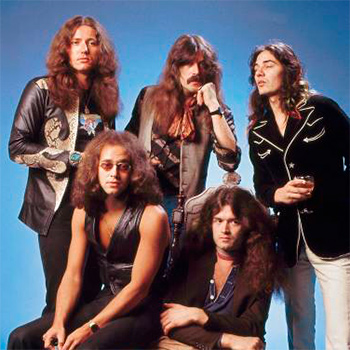
Deep Purple is a British rock band formed in 1968 in Hertford, England. The group played a key role in the development of hard rock and early heavy metal, combining Ritchie Blackmore’s heavy guitar riffs, Jon Lord’s Hammond organ, a powerful rhythm section and Ian Gillan’s vocals.
Deep Purple’s best-known songs include «Smoke on the Water», «Highway Star», «Child in Time», «Black Night», «Burn», «Perfect Strangers», «Hush», «Woman from Tokyo», «Soldier of Fortune» and «Lazy». The band’s history is commonly divided into several lineups designated as Mark I, Mark II, Mark III and so on. The only musician to have participated in every period of Deep Purple is drummer Ian Paice.
Formation of Deep Purple
The project from which Deep Purple emerged was originally called Roundabout. One of the initiators was former The Searchers drummer Chris Curtis, although the original idea soon evolved into an independent musical group.
By March 1968, the first stable lineup had formed:
- Ritchie Blackmore — guitar;
- Jon Lord — keyboards;
- Rod Evans — vocals;
- Nick Simper — bass guitar;
- Ian Paice — drums.
Before their first performances, the musicians changed the name to Deep Purple. It was taken from the song «Deep Purple», which was a favorite of Ritchie Blackmore’s grandmother.
The band played its first concerts in Scandinavia in the spring of 1968.
Mark I and the first albums
The debut album Shades of Deep Purple was released in 1968. Its biggest success was a cover of Joe South’s song «Hush», previously recorded by Billy Joe Royal. Deep Purple’s version reached the Top 5 of the Billboard Hot 100 in the United States.
Later that same year came The Book of Taliesyn, followed in 1969 by Deep Purple. The early material differed noticeably from the hard rock of later years, combining psychedelic rock, pop, progressive elements and numerous cover versions.
Gradually, Blackmore, Lord and Paice began moving toward a heavier sound. In 1969, Rod Evans and Nick Simper left the band.
Mark II: Ian Gillan and Roger Glover
In the summer of 1969, vocalist Ian Gillan and bassist Roger Glover, both formerly of Episode Six, joined Deep Purple. This created the Mark II lineup:
- Ian Gillan — vocals;
- Ritchie Blackmore — guitar;
- Roger Glover — bass guitar;
- Jon Lord — keyboards;
- Ian Paice — drums.
This lineup recorded most of the works with which Deep Purple are primarily associated from the early 1970s.
Concerto for Group and Orchestra
The first major work involving Gillan and Glover was Concerto for Group and Orchestra, composed by Jon Lord.
In September 1969, the work was performed at London’s Royal Albert Hall together with the Royal Philharmonic Orchestra conducted by Malcolm Arnold.
The project combined a rock band with a symphony orchestra and demonstrated Jon Lord’s interest in classical music, which later remained an important part of Deep Purple’s sound.
Deep Purple in Rock
The breakthrough came with Deep Purple in Rock, released in 1970. The band largely abandoned the psychedelic direction of its first records and concentrated on heavy rock.
Blackmore’s guitar parts became harder, Jon Lord’s Hammond organ was used almost like a second lead instrument, while Gillan’s range and vocal style allowed the songs to be built around sharp dynamic contrasts.
The album included «Child in Time», «Speed King», «Into the Fire», «Bloodsucker» and other tracks. «Black Night» was released separately as a single.
Fireball and Machine Head
In 1971, the album Fireball was released, with the band continuing to combine heavy rock with more experimental material.
The next album, Machine Head, was recorded in Switzerland and released in 1972. It included «Highway Star», «Smoke on the Water», «Lazy», «Space Truckin'» and other songs.
The story of Smoke on the Water
The story of «Smoke on the Water» is based on a real event. In December 1971, Deep Purple were in Montreux, where they planned to record a new album.
During a concert by Frank Zappa and The Mothers of Invention at the Montreux Casino, someone in the audience fired a flare gun, causing the building to catch fire. The members of Deep Purple watched the smoke rise over Lake Geneva.
The story was retold almost literally in the song’s lyrics. Ritchie Blackmore’s central four-note guitar riff later became one of the most recognizable musical themes in the band’s catalog.
Made in Japan
In August 1972, during a tour of Japan, Deep Purple’s concerts in Osaka and Tokyo were recorded. The best performances became the basis of the live album Made in Japan.
The record featured extended live versions of «Highway Star», «Child in Time», «Smoke on the Water», «The Mule», «Strange Kind of Woman», «Lazy» and «Space Truckin'».
Concert improvisation was an important part of Deep Purple’s music: the same song could change considerably from one performance to another through the interplay between Blackmore’s guitar, Lord’s organ and the rhythm section.
Who Do We Think We Are and the end of Mark II
In 1973, Who Do We Think We Are was released, featuring the song «Woman from Tokyo».
By that time, serious disagreements had built up within the band. Ian Gillan left Deep Purple, and Roger Glover followed soon afterward.
The first period of Mark II came to an end, although this lineup would later reunite several times.
Mark III: David Coverdale and Glenn Hughes
Gillan was replaced by the then little-known vocalist David Coverdale, while Glenn Hughes, previously of Trapeze, became bassist and second vocalist.
The Mark III lineup recorded two studio albums:
- Burn — 1974;
- Stormbringer — 1974.
Burn retained Deep Purple’s heavy foundation, but the combination of Coverdale and Hughes’ voices gave the music a new character. Key songs from this period include «Burn», «Mistreated», «Might Just Take Your Life» and «You Fool No One».
On Stormbringer, the influence of soul and funk became more noticeable, which did not satisfy Ritchie Blackmore.
Blackmore leaves and Mark IV
In 1975, Ritchie Blackmore left Deep Purple and formed Rainbow.
The new guitarist was American musician Tommy Bolin, who had previously played with Zephyr and James Gang and had worked with jazz drummer Billy Cobham.
With Bolin, Deep Purple recorded Come Taste the Band (1975). The music contained more funk and blues rock, while the new guitarist’s style differed noticeably from Blackmore’s approach.
Internal problems intensified after the tour supporting the album. In 1976, Deep Purple ceased to exist.
Tommy Bolin died on December 4, 1976, after the band had already broken up, at the age of 25.
Mark II reunion
In 1984, the classic Gillan — Blackmore — Glover — Lord — Paice lineup reunited.
The first album after the reunion was Perfect Strangers. The title track, «Knocking at Your Back Door» and the subsequent world tour showed that the band could continue working without simply attempting to reproduce its early-1970s recordings.
In 1987, The House of Blue Light was released.
Joe Lynn Turner and Gillan’s return
Relations between Ian Gillan and Ritchie Blackmore deteriorated again, and Gillan left the band in 1989.
The new vocalist was Joe Lynn Turner, previously associated with Rainbow. With him, Deep Purple recorded Slaves and Masters (1990).
This lineup proved short-lived. Gillan returned, and in 1993 the band released The Battle Rages On....
Ritchie Blackmore’s final departure
During the 1993 tour, conflict within the band intensified again. Ritchie Blackmore left Deep Purple for good.
After Blackmore’s departure, Joe Satriani became Deep Purple’s temporary guitarist. He first helped the band complete its scheduled Japanese tour in late 1993 and then continued performing with them in 1994. Satriani did not become a permanent member, and Steve Morse later took his place.
The Steve Morse era
In 1994, Steve Morse, known for his work with Dixie Dregs and Kansas, became the band’s new permanent guitarist.
The first studio album by the new lineup was Purpendicular (1996). Morse’s arrival changed the character of the guitar parts: while retaining Deep Purple’s heavy foundation, the band began making greater use of progressive rock, fusion and freer harmonic ideas.
It was followed by Abandon (1998), Bananas (2003) and Rapture of the Deep (2005).
Jon Lord leaves
Jon Lord gradually reduced his touring commitments and officially ended his work with Deep Purple in 2002.
He was replaced by Don Airey, who had extensive experience working with Rainbow, Ozzy Osbourne, Whitesnake, Gary Moore and other artists.
Jon Lord continued his solo and compositional work after leaving the band. He died on July 16, 2012.
Now What?!, inFinite and Whoosh!
After a long gap between studio releases, Deep Purple began working with producer Bob Ezrin.
In 2013, they released Now What?!, followed by inFinite (2017) and Whoosh! (2020).
These recordings retained the characteristic interaction between guitar and organ without attempting to reproduce the band’s 1970s sound literally.
Turning to Crime
In 2021, Deep Purple released Turning to Crime — the first studio album in the band’s history consisting entirely of cover versions.
The musicians turned to songs by artists who had influenced them, including Bob Dylan, Fleetwood Mac, Cream, Little Feat and Love.
Steve Morse leaves and Simon McBride joins
In 2022, Steve Morse first temporarily suspended touring in order to stay with his seriously ill wife Janine, and later permanently left Deep Purple after more than a quarter of a century with the band.
The new guitarist was Northern Irish musician Simon McBride, who had previously worked with Ian Gillan and Don Airey.
=1
Deep Purple’s first studio album with McBride was =1, released in July 2024.
Bob Ezrin once again served as producer. The album included «Portable Door», «Pictures of You», «Lazy Sod» and other songs.
SPLAT!
On July 3, 2026, Deep Purple released SPLAT! — the 24th studio album in their discography.
The record was once again produced by Bob Ezrin. Songs released ahead of the album included «Arrogant Boy», «Diablo» and «Guilt Trippin'».
SPLAT! became the band’s second studio album with Simon McBride and continued the active period of the Gillan — Glover — Paice — Airey — McBride lineup.
Blackmore returns for one song
In August 2026, a rare joint appearance involving musicians from the classic Mark II period took place: Ritchie Blackmore came on stage during a Deep Purple concert in the United States and performed «Smoke on the Water» with the band.
It was a guest appearance, not Blackmore’s return as a permanent member.
Deep Purple lineup
Current core lineup:
- Ian Gillan — vocals;
- Roger Glover — bass guitar;
- Ian Paice — drums;
- Don Airey — keyboards;
- Simon McBride — guitar.
Key former members:
- Ritchie Blackmore — guitar;
- Jon Lord — keyboards;
- Rod Evans — vocals;
- Nick Simper — bass guitar;
- David Coverdale — vocals;
- Glenn Hughes — bass guitar, vocals;
- Tommy Bolin — guitar;
- Joe Lynn Turner — vocals;
- Steve Morse — guitar.
Joe Satriani performed with Deep Purple in 1993–1994 as a guest touring guitarist after Ritchie Blackmore’s departure.
Musical style
Deep Purple began with psychedelic and progressive rock, but with the formation of Mark II they moved toward a much heavier sound that became one of the foundations for the development of hard rock and heavy metal.
A defining feature of classic Deep Purple is the equal importance of guitar and keyboards. Ritchie Blackmore built many songs around concise riffs, while Jon Lord ran his Hammond organ through Marshall amplifiers to achieve a dense, overdriven tone.
Unlike bands that built heavy music almost entirely around guitar, Deep Purple made active use of improvisation, blues, classical music and progressive rock elements.
Influence
Deep Purple are regularly named among the bands that defined the development of heavy British rock in the early 1970s. Their influence is particularly noticeable in hard rock and heavy metal.
The band’s connection with later generations of metal musicians was clearly reflected in Deep Purple’s induction into the Rock and Roll Hall of Fame in 2016: the group was presented at the ceremony by Metallica drummer Lars Ulrich, who has repeatedly named Deep Purple as one of the most important bands in his musical development.
The musicians inducted into the Hall of Fame were Ritchie Blackmore, David Coverdale, Rod Evans, Ian Gillan, Roger Glover, Glenn Hughes, Jon Lord and Ian Paice.
Key songs
- «Hush»;
- «Black Night»;
- «Child in Time»;
- «Highway Star»;
- «Smoke on the Water»;
- «Lazy»;
- «Space Truckin'»;
- «Woman from Tokyo»;
- «Burn»;
- «Mistreated»;
- «Soldier of Fortune»;
- «Perfect Strangers».
Studio discography
- Shades of Deep Purple — 1968;
- The Book of Taliesyn — 1968;
- Deep Purple — 1969;
- Deep Purple in Rock — 1970;
- Fireball — 1971;
- Machine Head — 1972;
- Who Do We Think We Are — 1973;
- Burn — 1974;
- Stormbringer — 1974;
- Come Taste the Band — 1975;
- Perfect Strangers — 1984;
- The House of Blue Light — 1987;
- Slaves and Masters — 1990;
- The Battle Rages On... — 1993;
- Purpendicular — 1996;
- Abandon — 1998;
- Bananas — 2003;
- Rapture of the Deep — 2005;
- Now What?! — 2013;
- inFinite — 2017;
- Whoosh! — 2020;
- Turning to Crime — 2021;
- =1 — 2024;
- SPLAT! — 2026.
Additional facts
At Deep Purple’s concert at London’s Rainbow Theatre on June 30, 1972, the sound level reached approximately 117 dB. The result was recorded by Guinness World Records, which at the time listed Deep Purple as the loudest band in the world.
Ian Paice is the only musician who has remained a member of Deep Purple in every lineup since the band was founded.
Deep Purple’s history includes several fundamentally different musical periods — from the psychedelic Mark I and the classic hard rock of Mark II to the blues- and funk-influenced material of the Coverdale and Hughes era and the later lineups with Steve Morse and Simon McBride. Despite numerous personnel changes, the core of the band’s sound remains the combination of heavy riffs, improvisation and the interaction between guitar and keyboards.