







 Бумбокс
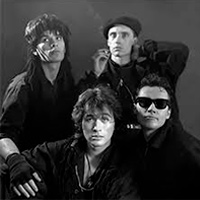
Kino («Кино») was a Soviet rock band formed in Leningrad around singer, songwriter and guitarist Viktor Tsoi. It became one of the defining acts of the Leningrad rock scene of the 1980s. Over the course of just a few years, Kino’s music evolved from relatively simple guitar-driven and acoustic songs into concise post-punk and new wave, shaped by Yuri Kasparyan’s distinctive guitar work, a tight rhythm section and Tsoi’s instantly recognizable voice.
The band’s best-known songs include «Группа крови» (Blood Type), «Перемен!» (Changes!), «Звезда по имени Солнце» (A Star Called the Sun), «Пачка сигарет» (A Pack of Cigarettes), «Спокойная ночь» (Good Night), «Последний герой» (The Last Hero), «Кукушка» (Cuckoo), «В наших глазах» (In Our Eyes) and «Попробуй спеть вместе со мной» (Try to Sing Along with Me). Much of this material was recorded in the second half of the 1980s, when Kino moved far beyond the Leningrad Rock Club and became one of the most popular rock bands in the Soviet Union.
«Гарин и гиперболоиды» and the emergence of Kino
The band’s story begins in 1981. Viktor Tsoi, Alexey Rybin and drummer Oleg Valinsky formed a group called «Гарин и гиперболоиды» (Garin and the Hyperboloids).
Valinsky was soon drafted into the army, and the group effectively became a duo of Viktor Tsoi and Alexey Rybin. In 1982, they changed the name to the short and easily remembered Kino.
Unlike many band names of the period, it described neither the group’s genre nor its ideology. Over time, its simplicity became as recognizable a part of Kino’s image as Tsoi’s surname on posters and record covers.
«45» and the Leningrad Rock Club
Kino’s first album, «45», was recorded in 1982 at Andrei Tropillo’s studio.
Boris Grebenshchikov played an important role in the sessions. Members of Aquarium also took part in the recording. The album’s title is generally associated with its approximate running time.
Early Kino sounds very different from the band heard on «Группа крови» or «Звезда по имени Солнце». Acoustic guitar occupies far more space, while songs such as «Бездельник» (Idler), «Восьмиклассница» (Eighth-Grader), «Электричка» (Electric Train) and others are closer to urban singer-songwriter music, rock and roll and early new wave.
Even at this stage, Viktor Tsoi’s lyrics already contain themes that would later become central to his writing: the city, the road, a sense of being separate from others, the expectation of change and the feeling of a person trapped inside an ordinary life.
A new line-up
In 1983, Alexey Rybin left Kino. A new line-up gradually formed around Viktor Tsoi.
Yuri Kasparyan became the band’s guitarist. Georgy Guryanov joined later. Alexander Titov played bass for a time before being replaced in the middle of the decade by Igor Tikhomirov.
The line-up of Viktor Tsoi — Yuri Kasparyan — Igor Tikhomirov — Georgy Guryanov became Kino’s classic formation of the second half of the 1980s.
«Начальник Камчатки», «Это не любовь» and «Ночь»
In 1984, Kino released «Начальник Камчатки» (The Chief of Kamchatka). Compared with the debut, the music became more electric, and the arrangements increasingly hinted at the band’s later style.
It was followed by «Это не любовь» (This Is Not Love) in 1985 and «Ночь» (Night) in 1986.
These recordings are where the sound now most strongly associated with Kino began to take shape. Yuri Kasparyan did not build songs around heavy riffs; instead, he used short melodic lines, transparent chords and atmospheric guitar passages.
Georgy Guryanov combined live drums with drum machines and electronic rhythms. The bass gradually became an independent part of the arrangement, while Viktor Tsoi’s voice remained restrained and direct, with little interest in showy vocal technique.
The lyrics changed as well. Everyday stories from the early period remained, but they were increasingly joined by themes of loneliness, choice, internal conflict, moving forward and resisting circumstances.
Tsoi wrote in short phrases and rarely explained a song’s story completely. As a result, the same composition could be heard as a personal story, a social statement or simply a sequence of powerful images.
«Группа крови»
The late 1980s proved decisive for Kino’s rise to nationwide fame.
In 1988, the album «Группа крови» (Blood Type) reached a wide audience. The title track, along with «Война» (War), «Спокойная ночь», «В наших глазах», «Попробуй спеть вместе со мной» and other songs, defined the band’s most recognizable period.
The music became stricter and more focused. Instead of dense instrumental detail, Kino relied on a precise rhythm, Kasparyan’s economical guitar work, electronic drums and Tsoi’s voice, which almost never tried to overpower the arrangement.
«Перемен!» and cinema
At the same time, Viktor Tsoi was appearing on screen more frequently.
The final scene of Sergei Solovyov’s film Assa became especially important, with Tsoi performing «Перемен!» (Changes!).
The film received a wide theatrical release during perestroika, and the song quickly stopped being perceived merely as part of a Leningrad rock band’s repertoire. For a huge audience, it became one of the musical formulas of its era.
At the same time, the lyrics contain no specific political program. «Перемен!» works primarily through the feeling of an internal need to change something — which is precisely why the song has been so easily applied to very different historical circumstances.
In 1988, Viktor Tsoi also played the leading role in Rashid Nugmanov’s film The Needle.
Nationwide popularity
By the end of the 1980s, Kino’s concerts were already attracting audiences of many thousands. The band toured throughout the Soviet Union and also performed abroad.
Yet its musical formula hardly became more complicated. Even in large venues, Kino retained its minimalism: rhythm section, Kasparyan’s guitar, electronic drums and Tsoi’s voice.
This set the band apart from many other acts that, as their popularity grew, moved toward heavier or more technically elaborate music.
«Звезда по имени Солнце»
In 1989, Kino released «Звезда по имени Солнце» (A Star Called the Sun), the band’s final studio album to be completed entirely during Viktor Tsoi’s lifetime.
The album included «Песня без слов» (Song Without Words), «Звезда по имени Солнце», «Место для шага вперёд» (A Place for a Step Forward), «Пачка сигарет», «Стук» (Knock), «Печаль» (Sadness), «Апрель» (April) and other songs.
The sound became more cohesive and studio-focused. Yuri Kasparyan’s guitar parts and the programmed drums are particularly noticeable, although the music remains extremely economical.
The lyrics contain fewer specific everyday details. Roads, time, death, struggle, waiting and a sense of inevitability move to the foreground.
«Пачка сигарет» is built around an almost ordinary everyday scene, yet a few simple lines grow into a song about alienation. «Звезда по имени Солнце» brings together images of war, life and death without directly explaining their meaning. By the end of the decade, this kind of ambiguity had become one of the defining qualities of Tsoi’s lyrics.
Death of Viktor Tsoi
On August 15, 1990, Viktor Tsoi died in a car accident in Latvia. He was 28 years old.
By that time, Kino was already working on material for its next album.
After Tsoi’s death, Yuri Kasparyan, Igor Tikhomirov and Georgy Guryanov completed the recording using the surviving vocal and guitar tracks.
The «Black Album»
The final album by the classic line-up was officially titled simply «Кино», but it almost immediately became known unofficially as the «Чёрный альбом» (Black Album) because of its cover design.
It included «Кончится лето» (Summer Will End), «Красно-жёлтые дни» (Red-Yellow Days), «Нам с тобой» (You and Me), «Муравейник» (Anthill), «Следи за собой» (Watch Yourself), «Кукушка» and other tracks.
The songs were inevitably heard with particular intensity because of the circumstances surrounding the release, although most of the material had been written while Viktor Tsoi was still alive and had not been conceived as a farewell album.
After the record was completed, the band ceased regular activity. The musicians chose not to continue Kino with a different vocalist.
«Атаман»
The first major studio reunion of Kino members many years later came with work on «Атаман» (Ataman).
In 2012, Yuri Kasparyan, Igor Tikhomirov and Georgy Guryanov recorded new instrumental parts around a surviving vocal performance by Viktor Tsoi.
This principle — Tsoi’s original voice combined with newly recorded parts by Kino musicians — later became the foundation of the project’s new phase.
Kino’s return to the stage
In the early 2020s, Kino returned to full-scale concert performances.
The new line-up includes Yuri Kasparyan, Alexander Titov and Igor Tikhomirov, while Viktor Tsoi’s voice is heard from restored original multitrack recordings.
The musicians did not attempt to find a new frontman or imitate the old line-up. The concerts are structured differently: archival vocals are combined with live performance and newly reconstructed arrangements.
This format allows Kino’s songs to be performed specifically with Viktor Tsoi’s voice without turning the show into a simple playback of old recordings.
«12_22»
In 2022, Kino released the album «12_22».
For the project, the musicians re-recorded and reinterpreted a number of Kino songs using Viktor Tsoi’s original vocals and modern instrumental parts.
In essence, it is not a collection of remasters but a set of new versions of older material recorded by members of the band decades later.
«Молнии Индры»
In 2025, Kino released «Молнии Индры» (Indra’s Lightning), another album built around archival Viktor Tsoi vocals and new arrangements.
This time, the musicians turned not only to obvious hits but also to less familiar material from different periods of the band’s history.
The album includes «Вопрос» (Question), «Разреши мне» (Let Me), «Братская любовь» (Brotherly Love), «Дождь для нас» (Rain for Us), «Транквилизатор» (Tranquilizer), «Камчатка» (Kamchatka), «Звезда» (Star) and other songs.
This selection makes it possible to hear early Kino material in a sonic environment closer to the band’s later work and its current concert line-up.
Kino’s musical style
Kino is generally associated with Russian rock, post-punk and new wave, although the band’s sound changed considerably over the course of a decade.
The early recordings were built largely around acoustic and conventional electric guitar. By the mid-1980s, drum machines, electronic rhythms and new wave aesthetics became increasingly prominent. On «Группа крови» and «Звезда по имени Солнце», the band’s most recognizable sound was fully established.
Yuri Kasparyan rarely overloaded songs with complicated guitar parts. Instead of extended solos, he more often used short melodic figures that can be recognized after only a few notes.
Georgy Guryanov created a hard, almost mechanical pulse, while Igor Tikhomirov’s bass did more than support the harmony — it actively pushed the songs forward.
Over this foundation came Viktor Tsoi’s low, restrained voice. That calm delivery often made the lyrics more powerful: Tsoi rarely raised his voice and almost never tried to explain the emotional meaning of his own words to the listener.
Viktor Tsoi’s lyrics
Kino’s songs often appear simple because of their short lines and straightforward vocabulary, but that simplicity is deceptive.
Viktor Tsoi rarely constructed detailed narratives. Instead, he used a few objects, actions or images: night, road, window, cigarettes, star, blood, rain, war, electric train.
Meaning emerges from the way these elements are combined. As a result, «Группа крови» can be heard both as a song about war and as a story of inner readiness to take a risk; «Пачка сигарет» as an everyday sketch and at the same time a song about loneliness; and «Перемен!» as both a personal and a social statement.
This openness of interpretation helps explain why Viktor Tsoi’s songs continued to acquire new meanings long after the collapse of the Soviet Union.
Classic Kino line-up
- Viktor Tsoi — vocals, guitar, songwriter.
- Yuri Kasparyan — guitar.
- Igor Tikhomirov — bass guitar.
- Georgy Guryanov — drums, electronic rhythms.
Other members
- Alexey Rybin — guitar, one of the founders of the early line-up.
- Oleg Valinsky — drums, member of the original «Гарин и гиперболоиды» line-up.
- Alexander Titov — bass guitar in the mid-1980s; later returned to the Kino concert project.
Major Kino albums
- 1982 — «45»
- 1984 — «Начальник Камчатки» (The Chief of Kamchatka)
- 1985 — «Это не любовь» (This Is Not Love)
- 1986 — «Ночь» (Night)
- 1988 — «Группа крови» (Blood Type)
- 1989 — «Звезда по имени Солнце» (A Star Called the Sun)
- 1990 — «Кино» («Чёрный альбом» / Black Album)
New studio projects
- 2022 — «12_22»
- 2025 — «Молнии Индры» (Indra’s Lightning)
Kino’s signature songs
«Бездельник» (Idler), «Восьмиклассница» (Eighth-Grader), «Электричка» (Electric Train), «Последний герой» (The Last Hero), «Камчатка» (Kamchatka), «Это не любовь» (This Is Not Love), «Ночь» (Night), «Перемен!» (Changes!), «Группа крови» (Blood Type), «Спокойная ночь» (Good Night), «В наших глазах» (In Our Eyes), «Попробуй спеть вместе со мной» (Try to Sing Along with Me), «Звезда по имени Солнце» (A Star Called the Sun), «Пачка сигарет» (A Pack of Cigarettes), «Стук» (Knock), «Печаль» (Sadness), «Апрель» (April), «Кончится лето» (Summer Will End), «Красно-жёлтые дни» (Red-Yellow Days), «Нам с тобой» (You and Me), «Муравейник» (Anthill), «Следи за собой» (Watch Yourself) and «Кукушка» (Cuckoo).
Kino in the history of Russian rock
Kino achieved mass popularity without turning toward heavy rock, complex arrangements or virtuoso instrumental technique. On the contrary, the band’s best-known recordings are built on musical economy: a simple rhythm, a handful of recognizable guitar lines and a voice that almost never overloads the song with emotion.
The same concision is characteristic of Viktor Tsoi’s lyrics. They are rarely tied to one specific event or offer a single unambiguous answer, which is why songs written in the 1980s continued to be interpreted in different ways under entirely different historical circumstances.
The modern concert project does not attempt to replace Viktor Tsoi with a new frontman. His archival vocals remain at the center of the songs, while the musicians rebuild the instrumental framework around them. As a result, the present-day Kino exists not as a new band using an old name, but as a continuation of the catalog created by the classic line-up.