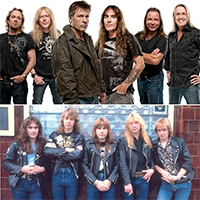
 Iron Maiden

Metallica is an American metal band formed on October 28, 1981, in Los Angeles, California, by drummer Lars Ulrich and vocalist and guitarist James Hetfield. The current lineup also includes lead guitarist Kirk Hammett, who joined in 1983, and bassist Robert Trujillo, who became a member in 2003. Over the years, Metallica has also included Dave Mustaine, Ron McGovney, Cliff Burton, and Jason Newsted.
Metallica became one of the bands that defined the development of thrash metal in the 1980s, alongside Slayer, Megadeth, and Anthrax, later collectively known unofficially as the “Big Four” of American thrash metal. At the same time, Metallica’s importance has long extended beyond a single genre. Kill 'Em All, Ride the Lightning, Master of Puppets, and ...And Justice for All established the foundations of the band’s early style; Metallica, widely known as The Black Album, turned the group into one of the biggest rock bands in the world; and later releases including Load, ReLoad, St. Anger, Death Magnetic, Hardwired... to Self-Destruct, and 72 Seasons revealed different sides of its sound. Metallica was inducted into the Rock & Roll Hall of Fame in 2009 and has won nine Grammy Awards.
The formation of Metallica
Metallica’s story began after Danish-born Lars Ulrich placed an advertisement in the Los Angeles newspaper The Recycler, hoping to find musicians with similar interests. One of those who responded was James Hetfield. October 28, 1981 is regarded as the band’s official founding date. Bassist Ron McGovney, a friend and neighbor of Hetfield, and lead guitarist Dave Mustaine soon joined them. The name Metallica was suggested by Ulrich’s acquaintance Ron Quintana, who had been considering possible names for his own music magazine.
Early Metallica drew its strongest musical inspiration from British heavy metal of the late 1970s and early 1980s. Particularly important influences included Diamond Head, Motörhead, Black Sabbath, Iron Maiden, and other representatives of the New Wave of British Heavy Metal. At the same time, the band’s music carried the energy of punk, making its songs faster and more aggressive than much of the traditional heavy metal of the period. The Rock & Roll Hall of Fame also identifies Black Sabbath, Led Zeppelin, Thin Lizzy, Rush, and several other rock bands among Metallica’s important predecessors.
One of Metallica’s first important recordings was the demo tape No Life 'Til Leather. It circulated widely through the underground tape-trading network and helped the band gain recognition far beyond Los Angeles even before its first album was released. Metallica was received especially well in San Francisco and the Bay Area, where a rapidly developing metal scene had emerged.
Cliff Burton and the move to the San Francisco Bay Area
A decisive change in Metallica’s early lineup came when the band discovered bassist Cliff Burton, then playing with Trauma. Hetfield and Ulrich were so impressed by his technique that they offered him a place in Metallica. Burton agreed on the condition that the band move from Los Angeles to the San Francisco Bay Area. Ron McGovney left the lineup, and Burton became the new bassist.
His role went far beyond that of a traditional bass player. Burton had a strong understanding of music theory, was interested in classical music and harmony, and helped Metallica develop a more complex musical side. His influence is particularly noticeable on Ride the Lightning and Master of Puppets, where fast thrash is combined with instrumental passages, unusual harmonies, and extended compositional forms. The band members later repeatedly emphasized how important he had been to their musical growth.
Dave Mustaine, Kirk Hammett, and Kill 'Em All
In 1983, Metallica received an offer from promoter and entrepreneur Jon Zazula, who helped the band sign with the independent label Megaforce Records. The musicians traveled across the country to New York, where they were due to record their debut album. In April, shortly before the studio sessions began, Dave Mustaine was dismissed from Metallica. His place was almost immediately taken by Kirk Hammett of Exodus.
Although Mustaine did not participate in the final recording lineup, some of the material he had written remained. His songwriting contributions appear on several compositions from Metallica’s first two albums. After leaving the group, he returned to California and later founded Megadeth, which became one of thrash metal’s biggest bands.
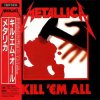
Metallica’s debut album Kill 'Em All was released on July 25, 1983. Its music stood out for its unusually high speed, sharp guitar riffs, and almost punk-like directness. Hit the Lights, The Four Horsemen, Motorbreath, Whiplash, Seek & Destroy, and the bass solo (Anesthesia) — Pulling Teeth became central pieces of the band’s early repertoire.
Kill 'Em All did not turn Metallica into mainstream stars overnight, but it became one of the key albums in the emerging thrash metal movement. What had previously existed mainly through demos, concerts, and tape trading now had a fully realized album form.
Ride the Lightning — a dramatic musical development
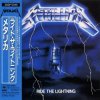
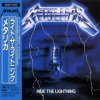
Only a year later, Metallica created a significantly more complex record. Ride the Lightning was released on July 27, 1984, and recorded with producer Flemming Rasmussen at Sweet Silence Studios in Copenhagen. Rather than simply increasing the speed, the band broadened its compositional range.
Fight Fire with Fire opened with acoustic guitar before erupting into one of the fastest tracks in the band’s catalog. For Whom the Bell Tolls was built around Cliff Burton’s powerful bass introduction. Fade to Black became Metallica’s first full-scale ballad and demonstrated that heavy music could coexist with melancholy and gradually intensifying drama. Creeping Death became one of the band’s defining live songs, while the instrumental The Call of Ktulu showed its growing interest in large-scale musical form.
It was after Ride the Lightning that major companies began paying serious attention to Metallica. By the end of 1984, the group had begun working with Q Prime management and moved to Elektra Records, while its touring geography expanded rapidly.
Master of Puppets
Master of Puppets, released on March 3, 1986, is regarded as one of the defining works not only of Metallica but of thrash metal as a whole. The album preserved the speed of the earlier recordings while taking the compositional complexity of the previous period to a much higher level. Flemming Rasmussen once again served as producer.
The central theme of many songs was the control of human beings by external forces. The title track Master of Puppets presents drug addiction as a relationship between master and servant; Disposable Heroes examines soldiers being reduced to expendable material; and Welcome Home (Sanitarium) addresses the loss of freedom within a psychiatric institution. Battery combines an acoustic introduction with extremely aggressive thrash, while the instrumental Orion became one of the clearest examples of Cliff Burton’s musical contribution.
Master of Puppets entered the U.S. Top 30 without relying on conventional hit music videos and significantly expanded Metallica’s audience. The band secured a place on Ozzy Osbourne’s tour and performed in front of a truly mainstream American audience for the first time.
The death of Cliff Burton
At the height of this rise came the defining tragedy of Metallica’s early history. On September 27, 1986, during a European tour, the band’s bus lost control and overturned near the Swedish town of Ljungby. Cliff Burton died at the age of 24.
For Hetfield, Ulrich, and Hammett, the death of their friend was devastating and raised the question of whether Metallica could continue at all. The musicians decided to carry on and auditioned more than forty candidates for the bassist position. By the end of 1986, Jason Newsted of Flotsam and Jetsam had joined the band.
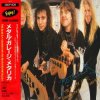
The first official release with Newsted was the 1987 EP The $5.98 E.P. — Garage Days Re-Revisited, recorded largely as a tribute to the band’s musical influences. It consisted of cover versions of songs by Diamond Head, Holocaust, Killing Joke, Budgie, and Misfits.
...And Justice for All and the song One
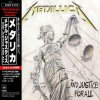
Metallica’s fourth studio album, ...And Justice for All, was released on September 7, 1988. It is one of the most structurally complex records in the band’s catalog: the songs became longer, time signatures and rhythmic patterns changed constantly, and the production took on a cold, almost mechanical character. The main themes included war, corruption, censorship, injustice, and the destruction of the individual by political and social systems.
The album is also known for the unusually low level of Jason Newsted’s bass guitar in the final mix, a production choice that later became one of the most discussed technical decisions in Metallica’s discography.
One, based on the image of a catastrophically wounded soldier, marked a historic turning point: Metallica made its first full-scale music video. Until then, the band had deliberately distanced itself from the conventional MTV promotion model. The video combined footage of the musicians with scenes from the film Johnny Got His Gun.
...And Justice for All reached number six on the U.S. albums chart. One earned Metallica its first Grammy, for Best Metal Performance.
The Black Album — becoming a global rock band
The next album completely changed the scale of Metallica’s career. For its fifth studio record, the band brought in producer Bob Rock, who encouraged the musicians to move away from some of the overly complex structures of ...And Justice for All and create a fuller sound with more concise and direct songs.
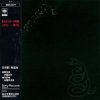
Metallica was released on August 12, 1991. Because of its almost entirely black cover, the record quickly acquired the unofficial name The Black Album. It topped charts in numerous countries and became the greatest commercial success of the band’s career.
Opening track Enter Sandman became one of the defining metal hits of the 1990s. Sad but True was built around a slow, heavy riff; The Unforgiven combined metal drama with a ballad structure; and Nothing Else Matters, originally written by Hetfield as a deeply personal song, dramatically expanded Metallica’s audience beyond heavy metal listeners. Other key songs included Wherever I May Roam and Through the Never.
The world tour supporting the album lasted around three years and included almost 300 performances. During this period, Metallica definitively evolved from a leading metal band into one of the biggest live acts in the world.
Load and ReLoad — moving beyond thrash metal
After the years-long Black Album marathon, the musicians deliberately chose not to make a direct sequel. Load was released on June 4, 1996, and became one of the most dramatic stylistic turns in Metallica’s history.
Mid-tempo riffs, hard rock, blues rock, elements of southern rock, and alternative rock moved to the foreground. Until It Sleeps, King Nothing, Hero of the Day, Bleeding Me, and The Outlaw Torn demonstrated looser structures and significantly more personal lyrics from Hetfield.
The band recorded so much material during the sessions that some songs were held back for the next album. ReLoad arrived on November 18, 1997, continuing the aesthetic of Load. Its key tracks included Fuel, The Memory Remains featuring Marianne Faithfull, The Unforgiven II, and Fixxxer.
For part of the band’s older audience, the move away from thrash metal was controversial, but the Load and ReLoad period also demonstrated that Metallica had no intention of becoming a group that endlessly reproduced its 1980s formula.
Garage Inc. and Metallica with a symphony orchestra
In 1998, the band returned to the music that had shaped its own taste. The double album Garage Inc. combined newly recorded covers with previously released material, including tracks from Garage Days. Metallica covered Diamond Head, Black Sabbath, Misfits, Thin Lizzy, Motörhead, Nick Cave and the Bad Seeds, Bob Seger, and other artists. One of the most successful tracks was the band’s version of the traditional song Whiskey in the Jar, based primarily on Thin Lizzy’s interpretation; it earned Metallica a Grammy.
The next experiment was even more ambitious. In April 1999, Metallica performed with the San Francisco Symphony under composer and conductor Michael Kamen. The result was the double live album S&M, released in November 1999. The orchestral parts were not merely background accompaniment for the rock band but an independent element of the arrangements, particularly noticeable in The Call of Ktulu, Master of Puppets, One, and Nothing Else Matters.
Metallica versus Napster
In 2000, Metallica became central to one of the first major conflicts between the music industry and digital file sharing. The immediate trigger was the leak of the unreleased song I Disappear, recorded for the film Mission: Impossible 2. The musicians discovered that the track, along with a large part of their catalog, was being distributed through the file-sharing service Napster without permission from the rights holders.
On April 13, 2000, Metallica filed a lawsuit against Napster, accusing the service of facilitating copyright infringement. Lars Ulrich became the main public representative of the band’s position and testified on digital copyright issues before the U.S. Senate. The dispute caused a strong negative reaction among some listeners, who regarded free MP3 sharing as a natural development of the internet, but it also became one of the defining episodes in the early history of digital music distribution.
Jason Newsted’s departure and Metallica’s crisis
In January 2001, Jason Newsted left Metallica after fourteen years with the band. The remaining three members began work on a new album, with producer Bob Rock temporarily playing bass. The crisis soon became much more serious when James Hetfield stopped working and entered treatment related in part to alcohol addiction.
Relations between the band members had become so tense that Metallica’s future was genuinely uncertain. Directors Joe Berlinger and Bruce Sinofsky documented the album-making process. What had initially been intended as conventional documentary footage about recording eventually developed into the film Metallica: Some Kind of Monster, which showed the conflicts, therapy sessions, Hetfield’s return, and the band’s attempt to learn an entirely different way of working together.
St. Anger and the arrival of Robert Trujillo
St. Anger was released on June 5, 2003. The album almost completely rejected Metallica’s familiar formula: traditional guitar solos were largely absent, the songs were given an intentionally raw sound, and Lars Ulrich’s unusually processed snare drum became one of the record’s most recognizable and controversial features.
St. Anger functioned more as a document of crisis than an attempt to create another collection of metal anthems. Its lyrics are directly connected with anger, addiction, isolation, and the psychological condition of the band members. The title track earned Metallica another Grammy for Best Metal Performance.
Shortly before touring, the band found a permanent bassist. Following auditions, the choice was Robert Trujillo, previously known for his work with Suicidal Tendencies, Infectious Grooves, and Ozzy Osbourne. He joined Metallica in 2003 and has remained a member ever since.
Death Magnetic — a return to long-form metal
For its next studio album, Metallica ended its long-running collaboration with Bob Rock and hired Rick Rubin. The producer encouraged the band to revisit the principles behind its 1980s albums: long compositions, fast riffs, and numerous changes within a single song.
Death Magnetic was released on September 12, 2008. That Was Just Your Life, The End of the Line, Broken, Beat & Scarred, The Day That Never Comes, All Nightmare Long, and My Apocalypse once again made complex guitar structures central to Metallica’s music. For the first time since ...And Justice for All, the band also recorded a major instrumental composition, Suicide & Redemption.
Death Magnetic topped charts in numerous countries, while My Apocalypse earned Metallica another Grammy for Best Metal Performance.
Rock & Roll Hall of Fame and the Big Four
In April 2009, Metallica was inducted into the Rock & Roll Hall of Fame. Alongside Hetfield, Ulrich, Hammett, and Trujillo, Cliff Burton and Jason Newsted were also inducted. Newsted performed with his former bandmates at the ceremony.
In 2010, historic joint concerts brought together Metallica, Slayer, Megadeth, and Anthrax. The first Big Four show took place on June 16 in Warsaw, while the Sofia performance was recorded and released as The Big Four: Live from Sofia, Bulgaria. For the thrash metal generation, the event carried particular symbolic weight: nearly three decades after the genre’s emergence, its four most important American bands were finally appearing together on one major concert program.
Lulu with Lou Reed
One of Metallica’s most unexpected experiments was the album Lulu, created with Lou Reed. The idea for the collaboration developed after the musicians performed together during the Rock & Roll Hall of Fame’s 25th-anniversary celebrations in 2009.
The project was based on the Lulu plays by German dramatist Frank Wedekind. Reed recited texts over Metallica’s heavy, often repetitive musical structures. Lulu was released in 2011 and received an extremely divided reaction, but it remains a distinct and important part of the band’s experimental history. It is a collaborative studio album by Lou Reed and Metallica and is therefore usually treated separately from Metallica’s main studio discography.
Blackened Recordings
At the end of 2012, the band founded its own label, Blackened Recordings. This allowed Metallica to control the release and reissue of its catalog independently. Blackened’s first project was the concert film Quebec Magnetic. In subsequent years, the company released new albums, live recordings, and extensive reissues of the classic catalog.
Antarctica and seven continents
In December 2013, Metallica played an unusual concert near Argentina’s Carlini Station in Antarctica. The musicians performed inside a specially constructed dome before a small audience of researchers and contest winners. The sound was transmitted to the audience through headphones, helping minimize the environmental impact.
With this performance, Metallica completed concerts on all seven continents within a single calendar year, another achievement highlighting the scale of the band’s touring history.
Hardwired... to Self-Destruct
After an eight-year gap between full studio albums, Metallica released Hardwired... to Self-Destruct on November 18, 2016. Greg Fidelman produced the album together with Hetfield and Ulrich.
Opening track Hardwired was a short and extremely fast return to the band’s thrash side. Atlas, Rise! drew on classic metal harmonies, Moth into Flame examined the destructive attraction of fame, and the lengthy Spit Out the Bone became one of the most aggressive compositions of Metallica’s later period.
Hardwired... to Self-Destruct reached number one in dozens of countries, while the subsequent WorldWired Tour brought the band back to the world’s largest stadiums. Metallica’s official history states that the album reached the top position in 57 countries.
All Within My Hands
In 2017, Metallica created the charitable foundation All Within My Hands. Its main areas of work include fighting hunger, providing disaster relief, and supporting workforce education. Philanthropy gradually became a permanent part of the band’s activities, while special Helping Hands concerts regularly raise money for the foundation’s programs.
S&M2 and James Hetfield’s new crisis
In September 2019, Metallica reunited with the San Francisco Symphony to mark the twentieth anniversary of the original S&M. The S&M2 concerts took place during the opening of the new Chase Center in San Francisco. Alongside classic arrangements from the 1999 program, later Metallica material also received orchestral versions. The live album and concert film were released in 2020.
Shortly after the performances, James Hetfield returned to treatment, forcing planned concerts in Australia and New Zealand to be postponed. Soon afterward, the COVID-19 pandemic brought touring activity almost entirely to a halt.
During the restrictions, the band launched the online series Metallica Mondays, releasing archival concerts every week while raising money for All Within My Hands. The musicians also recorded a remote version of Blackened and staged a special performance screened at drive-in theaters across North America.
Metallica’s 40th anniversary
In 2021, the band celebrated its fortieth anniversary. The Black Album also turned thirty that year. A major reissue of the album was prepared for the occasion, along with The Metallica Blacklist, a project in which 53 artists from different genres recorded their own versions of songs from the record.
The centerpiece of the anniversary year was a pair of concerts at San Francisco’s Chase Center, with setlists spanning Metallica’s entire history, from the earliest material to the modern catalog. Projects involving the musicians’ children also took part in the anniversary events, emphasizing the increasingly multigenerational nature of the band’s audience.
72 Seasons
On April 14, 2023, Metallica released 72 Seasons, its first album of new material since Hardwired... to Self-Destruct. It was recorded with producer Greg Fidelman, and the title refers to the first eighteen years of a person’s life: 72 seasons that, according to James Hetfield, play a major role in shaping the adult personality.
Themes of childhood experience, internal fears, and recurring behavioral patterns run through much of the album. Musically, 72 Seasons combines elements from different periods of Metallica’s history: the speed of early thrash, the heavy mid-tempo riffs of the Black Album, and the longer structures of the band’s later records.
The first single was Lux Æterna, a short, fast track with a clear New Wave of British Heavy Metal influence. It was followed by Screaming Suicide, If Darkness Had a Son, and the title track 72 Seasons. The eleven-minute closing song Inamorata became Metallica’s longest studio composition.
The title track 72 Seasons won the 2024 Grammy for Best Metal Performance. According to the Recording Academy’s current database, Metallica has won a total of nine Grammy Awards.
M72 World Tour
To support the album, Metallica launched the M72 World Tour. One of its defining features is the No Repeat Weekend format: in the same city, Metallica plays two concerts with completely different setlists, without repeating songs between the two nights. The tour uses a circular stage positioned in the center of the stadium, with the Snake Pit area built inside the structure.
The tour was originally planned for 2023–2024, but enormous demand extended it into 2025 and 2026. The fourth year of M72 included a new series of European stadium concerts, retaining the combination of two-night no-repeat programs and selected single-night shows. In 2026, Metallica continues to perform with the Hetfield — Ulrich — Hammett — Trujillo lineup, demonstrating an unusually high level of touring activity for a band with more than four decades of history.
Metallica’s musical style
Metallica’s early sound developed at the intersection of heavy metal, the New Wave of British Heavy Metal, and punk rock. Its defining elements included James Hetfield’s fast picking technique, synchronized rhythm-guitar and bass riffs, Lars Ulrich’s sharp drumming, and Kirk Hammett’s melodic lead guitar work.
By Ride the Lightning, one of the band’s defining strengths had become its ability to combine speed with dramatic structure. Metallica was among the first leading thrash bands to regularly use acoustic introductions, instrumental compositions, and slow ballad-like passages without treating them as something separate from heavy music. Fade to Black, Welcome Home (Sanitarium), One, and Nothing Else Matters come from different periods but all develop this same principle.
In the 1990s, Metallica significantly expanded its stylistic boundaries. The Black Album made arrangements shorter and heavier; Load and ReLoad moved closer to hard rock, blues rock, and alternative rock; and St. Anger deliberately dismantled many traditional elements of the band’s signature sound. Death Magnetic brought long thrash structures back to the foreground, while Hardwired... to Self-Destruct and 72 Seasons combined different eras of Metallica’s history.
Hetfield is regarded as one of the most recognizable rhythm guitarists in heavy music. His characteristic fast downpicking gives many classic Metallica riffs an exceptionally dense attack. Hammett, by contrast, is primarily responsible for the lead guitar line, making extensive use of melodic phrasing, blues-based ideas, and the wah-wah effect. Ulrich constructs his drum parts around the composition itself, while Trujillo brought a powerful fingerstyle bass technique into the modern lineup.
Lyrics
The subject matter of Metallica’s songs has also changed considerably. The early albums focused heavily on death, war, horror literature, and social catastrophe. Ride the Lightning tells the story of a prisoner awaiting execution in the electric chair; For Whom the Bell Tolls is connected with Ernest Hemingway’s novel; and Creeping Death draws on the biblical story of the ten plagues of Egypt.
On Master of Puppets, control became a central theme, while ...And Justice for All focused on injustice within political and legal systems. Beginning with the Black Album and especially Load, Hetfield increasingly wrote about internal conflicts, relationships, family, addiction, loneliness, and self-destruction. This direction became even more pronounced on St. Anger and 72 Seasons.
Metallica’s influence
Metallica played a key role in transforming thrash metal from an underground movement into a worldwide genre. At the same time, the band achieved mass popularity without completely abandoning its metal origins: Master of Puppets and One remain just as important to its live repertoire as Enter Sandman and Nothing Else Matters.
The Rock & Roll Hall of Fame identifies Metallica as an influence on later generations of heavy bands, including Machine Head, Testament, Avenged Sevenfold, Volbeat, and others. More important than any specific list of followers, however, is the principle Metallica demonstrated through its own career: complex and aggressive metal music can exist on the scale of the world’s largest stadiums.
Another reason for Metallica’s longevity is its refusal to live entirely in the past. From the symphonic S&M and the controversial Lulu to its own Blackened label, charitable foundation, and M72 touring format, the band has continually reworked the way it records, releases, and performs music while preserving the recognizable core of its own style.
Metallica lineup
Current lineup:
- James Hetfield — vocals, rhythm guitar; since 1981;
- Lars Ulrich — drums; since 1981;
- Kirk Hammett — lead guitar, backing vocals; since 1983;
- Robert Trujillo — bass guitar, backing vocals; since 2003.
Major former members:
- Dave Mustaine — lead guitar, 1982–1983;
- Ron McGovney — bass guitar, 1982;
- Cliff Burton — bass guitar, 1982–1986;
- Jason Newsted — bass guitar, 1986–2001.
When Metallica was inducted into the Rock & Roll Hall of Fame in 2009, Hetfield, Ulrich, Hammett, Burton, Newsted, and Trujillo were officially honored.
Complete Metallica studio discography
- Kill 'Em All — 1983;
- Ride the Lightning — 1984;
- Master of Puppets — 1986;
- ...And Justice for All — 1988;
- Metallica (The Black Album) — 1991;
- Load — 1996;
- ReLoad — 1997;
- St. Anger — 2003;
- Death Magnetic — 2008;
- Hardwired... to Self-Destruct — 2016;
- 72 Seasons — 2023.
Metallica’s main discography therefore consists of 11 studio albums by the band itself. The collaborative studio project Lulu (2011) with Lou Reed is generally treated separately because it was released as a work by Lou Reed & Metallica. The release dates of the main albums are confirmed by Metallica’s official catalog.
Main live, cover, and collaborative albums
- The $5.98 E.P. — Garage Days Re-Revisited — 1987, covers EP;
- Live Shit: Binge & Purge — 1993, live box set;
- Garage Inc. — 1998, double covers album;
- S&M — 1999, live album with the San Francisco Symphony;
- Lulu — 2011, collaborative studio album with Lou Reed;
- Beyond Magnetic — 2011, EP featuring material from the Death Magnetic sessions;
- Metallica Through the Never — 2013, live soundtrack;
- S&M2 — 2020, live album with the San Francisco Symphony.
Metallica has traveled from the underground tape-trading culture of the early 1980s to the status of one of the biggest bands in the history of heavy music. Along the way, it survived the death of Cliff Burton, several radical changes in sound, an internal crisis, changes of bass players, and a music industry transformed around it, while preserving the core partnership of James Hetfield and Lars Ulrich and the ability to fill stadiums more than four decades after its formation. Metallica’s main legacy cannot be reduced to a single album or genre: the band helped define the language of modern metal while demonstrating just how far that language could travel beyond the scene where it began.