
 Олег Винник
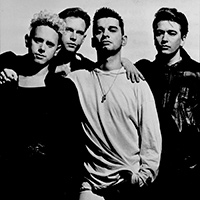
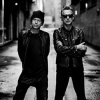
Depeche Mode are a British band formed in 1980 in Basildon, Essex. Beginning with concise synth-pop, the group gradually developed a distinctive sound in which electronic music merged with elements of alternative rock, industrial, blues and dance music. Depeche Mode became one of the most influential bands of their generation, demonstrating that music built around synthesizers, programming and samples could exist not only in club or pop environments, but also on the world’s largest concert stages.
The central figures in Depeche Mode’s history remain Dave Gahan and Martin Gore. At different stages, Vince Clarke, Andy Fletcher and Alan Wilder also played crucial roles in the group’s development. Worldwide sales of Depeche Mode recordings have exceeded 100 million copies, and in 2020 the band was inducted into the Rock & Roll Hall of Fame.
The formation of Depeche Mode
The group’s story began in Basildon around the turn of the 1970s and 1980s. Vince Clarke, Andy Fletcher and Martin Gore knew one another through the local music scene and had participated in several early projects. In 1980, they joined forces in a group called Composition of Sound, gradually making synthesizers the foundation of their music.
Dave Gahan soon joined as vocalist. After his arrival, the band adopted the name Depeche Mode, taken from the French magazine Dépêche Mode. This established the original line-up of Gahan, Gore, Fletcher and Clarke.
One of the first people in the music industry to take serious notice of the band was Mute Records founder Daniel Miller. Mute released the early singles Dreaming of Me, New Life and Just Can't Get Enough. The latter became Depeche Mode’s first UK Top 10 hit and remains one of the most recognisable songs from their early period.
Speak & Spell and the departure of Vince Clarke
The debut album Speak & Spell appeared in 1981. Most of the material was written by Vince Clarke, which is why the record differs noticeably from later Depeche Mode releases: light synthesizer melodies, clear rhythms and direct pop structures dominate the album.
At the end of 1981, Clarke left the group. He later formed the duo Yazoo with Alison Moyet and subsequently became a member of Erasure.
The departure of the group’s principal songwriter could have placed the young band in a difficult position, but the role of main composer and lyricist passed almost entirely to Martin Gore. By A Broken Frame (1982), Depeche Mode’s music had already become more melancholic, while the lyrics began moving away from the comparatively carefree aesthetic of the debut album.
Alan Wilder and a new stage in the sound
In 1982, Alan Wilder joined the touring line-up and soon became a full member of Depeche Mode. The line-up of Dave Gahan, Martin Gore, Andy Fletcher and Alan Wilder would later come to be regarded as the group’s classic formation.
Gore remained the main songwriter, Gahan gradually developed into a charismatic frontman, while Wilder made a major contribution to arrangements, programming, sampling and the studio construction of the material. It was during this period that Depeche Mode began rapidly moving away from the comparatively conventional synth-pop of their earliest recordings.
Construction Time Again and Some Great Reward
A major turning point came with Construction Time Again, released in 1983. The group began actively recording and processing real-world noises, transforming metallic impacts and industrial sounds into rhythmic elements. This gave their familiar synthesizers a harder and more physically tangible environment.
One of the album’s central songs was Everything Counts. Its theme of corporate greed also reflected a change in Martin Gore’s songwriting: social and psychological subjects increasingly appeared alongside more traditional songs about relationships.
On Some Great Reward (1984), this musical language became even more expressive. Master and Servant, Blasphemous Rumours and People Are People combined memorable melodies with metallic percussion, experimental electronics and lyrics dealing with power, violence, faith and human contradictions.
People Are People became one of Depeche Mode’s first major international hits and significantly expanded the band’s audience beyond the United Kingdom.
Black Celebration
In 1986, Depeche Mode released Black Celebration, the album on which the darker side of the group finally took full shape. While their earliest recordings were still closely tied to the aesthetic of early-1980s British synth-pop, the music had now become considerably more atmospheric and psychologically tense.
Martin Gore increasingly turned to themes of faith, guilt, desire, dependency, loneliness and power between people. Electronic processing was no longer used simply for futuristic effect, but as a fully developed tool for creating mood.
Stripped, A Question of Time, A Question of Lust and the title track Black Celebration established one of the most important principles of Depeche Mode’s music: dark and dramatic subject matter could exist within strong and accessible song structures.
Music for the Masses and 101
Music for the Masses, released in 1987, became the next major step. The album included Never Let Me Down Again, Strangelove, Behind the Wheel, Little 15 and other songs in which increasingly sophisticated electronic production was combined with larger-scale melodies.
The subsequent Music for the Masses Tour demonstrated how far Depeche Mode had travelled from the club scene of the beginning of the decade. The 101st and final show of the tour took place on June 18, 1988 at the Rose Bowl in Pasadena.
The American leg of the tour and the final concert became the basis for a film directed by D. A. Pennebaker and the live album 101, released in 1989. The project documented Depeche Mode’s transformation into one of the largest international touring bands of their era.
Violator: the defining career milestone
In 1990, Depeche Mode released Violator, an album that became one of the group’s greatest artistic and commercial achievements.
Working with producer Flood, the musicians moved away from the idea of making arrangements as dense as possible. Instead, Violator introduced more space: synthesizers, drums, guitars and vocals were carefully positioned within each composition, while the complexity of the studio work often remained almost invisible to the listener.
The first single, released in 1989, was Personal Jesus. Its guitar riff gave the track an almost blues-like character, although the rhythmic and sonic foundation remained electronic. The song quickly became one of Depeche Mode’s signature recordings.
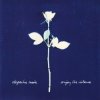
The next major success was Enjoy the Silence. Martin Gore’s original version was considerably slower, but in the studio the song was transformed into a rhythmic electronic track. The single reached number six in the UK and later received a BRIT Award.
The album also included Policy of Truth, World in My Eyes, Halo, Waiting for the Night and Clean. Violator firmly established Depeche Mode as a world-class band and became one of the best-known electronic albums of its era.
Anton Corbijn and the visual identity of Depeche Mode
The name of photographer and director Anton Corbijn is inseparable from the group’s history. Their regular collaboration began in the 1980s and gradually developed into one of the most recognisable creative partnerships between musicians and a visual artist.
Corbijn directed music videos and created photography, album artwork and stage concepts. His influence became especially visible during the Music for the Masses and Violator eras. The image of Dave Gahan wearing a crown in the Enjoy the Silence video, travelling through deserted landscapes with a deckchair, became one of the band’s defining visual symbols.
As a result, Depeche Mode’s visual language evolved in parallel with the music: restrained colour palettes, religious and symbolic imagery, minimalism and photographic austerity became part of the group’s overall identity.
Songs of Faith and Devotion
Following the success of Violator, Depeche Mode did not simply repeat the formula they had found. Songs of Faith and Devotion, released in 1993, moved the group significantly closer to rock, gospel and blues.
Flood once again served as producer, but this time live drums, guitars and choral vocals were used extensively alongside electronics. I Feel You opened the album with a heavy guitar riff, Walking in My Shoes combined an electronic atmosphere with rock dynamics, Condemnation drew on gospel, while In Your Room became one of the most intense compositions in the group’s catalogue.
Songs of Faith and Devotion reached number one on the UK Albums Chart, becoming the first Depeche Mode album to achieve that result in their home country.
Devotional Tour, the group’s crisis and the departure of Alan Wilder
The touring period that followed Songs of Faith and Devotion became one of the most difficult chapters in Depeche Mode’s history. Prolonged touring, internal tension and the personal problems of individual members seriously affected the condition of the group.
Particularly dangerous was Dave Gahan’s heroin addiction. During the first half of the 1990s, his condition deteriorated, and in 1996 the singer survived a near-fatal overdose. Following treatment and rehabilitation, he gradually recovered and returned to work.
In 1995, Alan Wilder left Depeche Mode after approximately thirteen years in the band. His departure ended the Gahan — Gore — Fletcher — Wilder quartet era, during which many of the group’s most important albums had been created.
Ultra: returning after the crisis
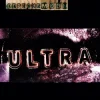
Despite Wilder’s departure and the difficult period in Gahan’s life, Depeche Mode did not cease to exist. In April 1997, they released Ultra, recorded as the trio of Dave Gahan, Martin Gore and Andy Fletcher.
Tim Simenon served as producer. Barrel of a Gun continued the band’s harsher industrial direction, It's No Good became one of the most recognisable electronic singles of this era, while Home, sung by Martin Gore, revealed a more intimate side of the album.
Ultra reached number one on the UK Albums Chart, repeating the achievement of Songs of Faith and Devotion.
The band did not immediately undertake a full-scale world tour following the album’s release. Depeche Mode returned to major touring in 1998 with The Singles Tour. During this period, keyboardist Peter Gordeno and drummer Christian Eigner became established members of the live line-up and remained the group’s principal touring partners for many years.
Exciter and Playing the Angel
Exciter was released in 2001. The producer was Mark Bell, a member of LFO also known for his work with Björk. Following the heavier Ultra, the new album sounded calmer and more minimalist. Dream On, Freelove, I Feel Loved and Goodnight Lovers were built around subtle electronic textures and less crowded arrangements.
In 2005, Depeche Mode released Playing the Angel, which began the band’s collaboration with producer Ben Hillier. The album brought back harder electronic processing, distorted synthesizers and dense rhythms.
The first single, Precious, reached number four on the UK Singles Chart, matching Depeche Mode’s highest position on the British singles chart. Other important tracks from the album included A Pain That I'm Used To, John the Revelator and Suffer Well.
Playing the Angel also marked an important internal milestone: for the first time on a Depeche Mode studio album, songs written by Dave Gahan with his collaborators were included. Until then, the overwhelming majority of the band’s original material had been written by Martin Gore. From this point onward, Gahan regularly contributed to the songwriting process on Depeche Mode albums.
Sounds of the Universe and Delta Machine
In 2009, Depeche Mode released Sounds of the Universe. The band once again worked with Ben Hillier and made extensive use of vintage analogue synthesizers and drum machines. The principal single of the period was Wrong.
The next album, Delta Machine, appeared in 2013. The band’s longstanding interest in blues became even more noticeable, especially when combined with their electronic foundation and Gahan’s distinctive vocals. Key songs from the period included Heaven, Soothe My Soul and Should Be Higher, written by Gahan with his collaborators.
Spirit
In 2017, Depeche Mode released Spirit, working for the first time with producer James Ford of Simian Mobile Disco.
The album was particularly notable for its pronounced social themes. Where's the Revolution, Going Backwards and The Worst Crime addressed political passivity, social division, responsibility and a broader sense of losing direction.
Spirit became the final Depeche Mode studio album to feature Andy Fletcher.
Andy Fletcher
Andy Fletcher was one of the founders of Depeche Mode and remained a member of the band for more than four decades. Unlike Martin Gore, he was not the principal songwriter, and his musical contribution was less frequently placed at the centre of attention. Nevertheless, Fletcher was a constant presence in the group’s internal life and one of the people who provided continuity throughout Depeche Mode’s history.
Andy Fletcher died on May 26, 2022 at the age of 60. His family and the band later announced that the cause of death was aortic dissection.
Following his death, Depeche Mode continued as the duo of Dave Gahan and Martin Gore.
Memento Mori
Depeche Mode’s fifteenth studio album, Memento Mori, was released on March 24, 2023.
Work on the material had already begun during the COVID-19 pandemic. Themes of death, the finite nature of human life and loss were present in the songs before Fletcher’s death, but the event inevitably gave the album an additional personal dimension.
Memento Mori became the first Depeche Mode album released by the Gahan — Gore line-up. James Ford once again served as producer, while Marta Salogni played an important role in the recording and mixing process.
My Cosmos Is Mine opened the album with dark experimental electronics, while Ghosts Again combined reflections on the transience of life with one of the clearest and most melodic song structures of late-period Depeche Mode. Wagging Tongue became a rare example of a song written jointly by Gahan and Gore.
The album also included Don't Say You Love Me, My Favourite Stranger, Soul With Me, Before We Drown, People Are Good, Never Let Me Go and Speak to Me.
Memento Mori Tour and Depeche Mode: M
The Memento Mori Tour began in March 2023 and continued into 2024. On stage, Gahan and Gore were once again accompanied by their longtime touring musicians Christian Eigner and Peter Gordeno.
Three concerts at Foro Sol in Mexico City held a special place in the tour. Footage from those performances became the basis for the film Depeche Mode: M, directed by Fernando Frías.
The film combines concert performances with reflections on the place of death and memory within Mexican culture. Following its festival premiere, the film received an international theatrical release in 2025.
A live project titled Memento Mori: Mexico City, based on the same performances, was later released. The edition also included four previously unreleased songs recorded during the Memento Mori studio sessions: Survive, Life 2.0, Give Yourself To Me and In The End.
In this way, the Memento Mori era received its own concert and cinematic continuation, while Depeche Mode once again connected the themes of their songs with visual art — a tradition that has accompanied the band through most of its history.
Depeche Mode’s musical style
Defining Depeche Mode exclusively as a synth-pop band is most appropriate when discussing the beginning of their career. Over the decades, the group consistently expanded its sonic palette.
On Speak & Spell, simple synthesizer melodies and Vince Clarke’s pop songwriting dominated. Construction Time Again and Some Great Reward introduced industrial samples and metallic percussion. Black Celebration made the music darker and more atmospheric, while Music for the Masses gave it a larger-scale character.
On Violator, electronic minimalism was combined with guitars and one of the strongest collections of songs in the group’s catalogue. Songs of Faith and Devotion added live drums, alternative rock, gospel and blues. In subsequent years, Depeche Mode freely combined electronics, rock, minimalism, industrial textures and blues elements without limiting themselves to a single genre.
At the same time, several characteristics remained constant: Dave Gahan’s expressive baritone, Martin Gore’s melodic sensibility, attention to unusual timbres and the desire to use electronics not as a substitute for traditional instruments, but as an independent musical environment.
Martin Gore’s lyrics
Most of Depeche Mode’s classic catalogue was written by Martin Gore. His lyrics are characterised by ambiguity and a deliberate absence of simple explanations.
Recurring themes include faith, guilt, desire, dependency, power, sexuality, betrayal, loneliness and emotional submission. Religious language is often transferred into the realm of human relationships, meaning that the same song can simultaneously be interpreted as a story of love, dependency or worship.
A characteristic example is Personal Jesus, where spiritual imagery is used to describe a person willing to become a source of comfort and faith for someone else. This combination of direct song structures and ambiguous lyrics became one of Depeche Mode’s defining characteristics.
Rock & Roll Hall of Fame
In 2020, Depeche Mode were inducted into the Rock & Roll Hall of Fame in the Performer category.
The official list of members honoured as part of Depeche Mode’s history included:
- Dave Gahan
- Martin Gore
- Andy Fletcher
- Vince Clarke
- Alan Wilder
This line-up covers all the major stages in the band’s development: Clarke defined the early pop sound, Gore became the principal songwriter, Gahan became the voice and stage centre, Wilder played a major role in the studio development of the classic period, while Fletcher remained a constant member of the group from its foundation until 2022.
Depeche Mode discography
Studio albums
- 1981 — Speak & Spell
- 1982 — A Broken Frame
- 1983 — Construction Time Again
- 1984 — Some Great Reward
- 1986 — Black Celebration
- 1987 — Music for the Masses
- 1990 — Violator
- 1993 — Songs of Faith and Devotion
- 1997 — Ultra
- 2001 — Exciter
- 2005 — Playing the Angel
- 2009 — Sounds of the Universe
- 2013 — Delta Machine
- 2017 — Spirit
- 2023 — Memento Mori
Key live releases
- 1989 — 101
- 1993 — Songs of Faith and Devotion Live
- 2014 — Live in Berlin Soundtrack
- 2025 — Memento Mori: Mexico City
Selected songs
- 1981 — Just Can't Get Enough
- 1983 — Everything Counts
- 1984 — People Are People
- 1984 — Master and Servant
- 1986 — Stripped
- 1987 — Strangelove
- 1987 — Never Let Me Down Again
- 1989 — Personal Jesus
- 1990 — Enjoy the Silence
- 1990 — Policy of Truth
- 1993 — I Feel You
- 1993 — Walking in My Shoes
- 1993 — In Your Room
- 1997 — Barrel of a Gun
- 1997 — It's No Good
- 1997 — Home
- 2001 — Dream On
- 2005 — Precious
- 2009 — Wrong
- 2013 — Heaven
- 2017 — Where's the Revolution
- 2023 — Ghosts Again
- 2023 — Wagging Tongue
The significance of Depeche Mode
Depeche Mode emerged during a period of rapid development in British synthesizer music, but quickly moved beyond the limits of that original scene. Their history demonstrated that an electronic band could maintain a strong songwriting foundation, experiment with studio technology and at the same time possess the live power traditionally associated with rock music.
The period from Construction Time Again to Violator was especially important in the development of their own musical language. The use of samples, unusual percussion, sophisticated programming and the gradual introduction of guitars allowed Depeche Mode to create a sound that is difficult to reduce to a single genre definition.
Equally important was the band’s ability to change. Speak & Spell, Black Celebration, Violator, Songs of Faith and Devotion, Ultra and Memento Mori belong to different musical eras and differ significantly from one another, yet each retains a recognisable creative and emotional foundation.
The departure of Vince Clarke, the departure of Alan Wilder and the death of Andy Fletcher repeatedly changed the internal structure of the group, but the creative partnership of Martin Gore and Dave Gahan allowed Depeche Mode to continue their story. Their music has not developed in a straight line from synth-pop to rock, but through a constant dialogue between electronic technology, songwriting, experimentation and the distinctive emotional tension that defines Depeche Mode.