
 Maroon 5

Blestyashchiye is a Russian female pop group formed in 1995 in Moscow by producers Andrey Grozny and Andrey Shlykov. The group became one of the most recognizable female projects on the Russian pop scene of the late 1990s and 2000s. Over the years, its different lineups included Olga Orlova, Zhanna Friske, Ksenia Novikova, Yulia Kovalchuk, Anna Semenovich, Nadezhda Ruchka and other performers, while the songs Tam, tolko tam, Oblaka, Cha-cha-cha, Chao, bambina!, Za chetyre morya, A ya vsyo letala, Apelsinovaya pesnya and Vostochnye skazki became some of the group’s best-known recordings.
The formation of Blestyashchiye
The history of the group began in 1995. Andrey Grozny and Andrey Shlykov assembled the first lineup consisting of Olga Orlova, Polina Iodis and Varvara Korolyova. This trio recorded the group’s early material and established its initial image. The official Blestyashchiye website names Grozny and Shlykov as the project’s producers and continues to list them as the group’s producers.
One of the first songs was Tam, tolko tam. It introduced the new group to a wider audience and gave its name to the debut album. The first full-length release, Tam, tolko tam, came out in 1997.
After Varvara Korolyova left, the lineup changed significantly: Irina Lukyanova and Zhanna Friske joined Olga Orlova and Polina Iodis. With this new lineup, the remix album Tam, tolko tam (Remixes) was prepared.
Zhanna Friske and the success of the late 1990s
The arrival of Zhanna Friske became one of the most important events in the early history of Blestyashchiye. She later became one of the group’s most recognizable members and built a successful solo career after leaving the project.
In 1998, Blestyashchiye released their second studio album, Prosto mechty. Songs from this period included Tsvety, Oblaka, Cha-cha-cha and Gde zhe ty, gde?. It was in the second half of the 1990s that the group’s characteristic format was fully established: melodic dance-pop, several female voices, bright choreography and a carefully constructed visual image.
After Polina Iodis left in 1999, Ksenia Novikova joined the group. She had already participated in the group’s studio work as a backing vocalist. The lineup of Olga Orlova, Zhanna Friske, Irina Lukyanova and Ksenia Novikova recorded material that became associated with one of the most notable periods in the history of Blestyashchiye.
Chao, bambina! and the album O lyubvi
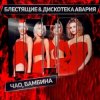
At the turn of the decade, the group released one of its best-known hits, Chao, bambina!. The music video directed by Filipp Yankovsky stood out for an image of the members that was deliberately provocative by the standards of Russian television at the time. A remix created with the participation of Aleksey Ryzhov from Diskoteka Avariya later also became widely known.
In 2000, the studio album O lyubvi was released, followed by the compilation Belym snegom. In addition to Chao, bambina!, songs from this period included Za osenyu pridyot zima and Belym snegom.
That same year, Olga Orlova left the group. She had not only been one of its original vocalists but had also participated in writing several of its songs. After her departure, Friske, Lukyanova and Novikova took the central positions in the lineup.
Yulia Kovalchuk and Za chetyre morya
In 2001, Yulia Kovalchuk became a new member. Together with Zhanna Friske, Irina Lukyanova and Ksenia Novikova, she formed the lineup that recorded one of the most important albums in the group’s history, Za chetyre morya.
The album was released in 2002. Its main songs included Au-au, Za chetyre morya and A ya vsyo letala.
A ya vsyo letala proved especially enduring. The music was written by Andrey Grozny, while the lyrics were written by group member Ksenia Novikova. The song was released in 2002 and eventually became one of Blestyashchiye’s defining signature tracks.
Za chetyre morya also strengthened the group’s success: the song received a Golden Gramophone award, while A ya vsyo letala won the same award the following season.
Anna Semenovich, Apelsinovy ray and Zhanna Friske’s departure
In 2003, Irina Lukyanova left the group because of pregnancy. She was replaced by former figure skater Anna Semenovich.
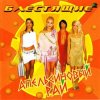
With the lineup of Zhanna Friske, Ksenia Novikova, Yulia Kovalchuk and Anna Semenovich, the group recorded Apelsinovaya pesnya and released the album Apelsinovy ray.
This lineup did not last long. After participating in the television project Posledniy geroy, Zhanna Friske decided to leave Blestyashchiye and focus on a solo career. Her departure brought an important chapter in the group’s history to an end, although the project itself continued.
Nadezhda Ruchka and Vostochnye skazki
In April 2004, Nadezhda Ruchka joined Ksenia Novikova, Yulia Kovalchuk and Anna Semenovich. This quartet recorded the group’s next studio album, Vostochnye skazki, which was released in 2005.
During this period, the group released Palmy parami, Brat moy desantnik and the title track Vostochnye skazki. The latter was recorded together with Arash; the music was written by Arash Labaf, while the Russian lyrics were written by Tatyana Ivanova.
Vostochnye skazki became one of the last major hits of the group’s classic period and remains one of its most recognizable recordings. The song continues to rank among Blestyashchiye’s most popular tracks on digital platforms.
Constant lineup changes
One of the defining features of Blestyashchiye was the regular rotation of members. After Zhanna Friske, several other well-known members of the group also went on to pursue solo careers.
In 2007, Anna Semenovich left the group and Anastasia Osipova joined. Later, Natalia Asmolova and Zhanna’s younger sister Natalia Friske were briefly part of the lineup. They were followed by Anna Dubovitskaya, Yulianna Lukasheva and Marina Berezhnaya.
Yulia Kovalchuk’s long period with the group also ended in 2007. Ksenia Novikova left as well, although she later returned: the official website notes her comeback in summer 2011. At that time, she performed alongside Nadezhda Ruchka, Anastasia Osipova and Marina Berezhnaya.
Because of the constant changes, the history of Blestyashchiye cannot be reduced to a single fixed “golden lineup.” Different generations of listeners associate the group with different quartets: with Orlova and Friske around the turn of the 1990s and 2000s, with Friske, Lukyanova, Novikova and Kovalchuk during the Za chetyre morya era, or with Novikova, Kovalchuk, Semenovich and Ruchka during the Vostochnye skazki period.
The group after its peak popularity
In the second half of the 2000s, Blestyashchiye released full-length studio albums less frequently, but the project did not cease to exist. In 2008, the compilation Odnoklassniki was released; later, the group focused mainly on individual songs and live performances. MusicBrainz classifies Odnoklassniki specifically as a compilation rather than part of the core studio discography.
During the 2010s, the group released songs including Shar, Brigada malyarov, Zelyonye glaza, Ryzhaya devochka, Solntse and Eto lyubov. The compilation Best 20 was released in 2016.
A notable event occurred in 2015, when A ya vsyo letala received another Golden Gramophone award more than a decade after its original release. The group’s official history specifically records this award.
Remembering Zhanna Friske
On June 15, 2015, Zhanna Friske died after a serious illness. In the history of Blestyashchiye, her name remains inseparably connected with the group’s period of greatest fame.
In 2023, the group released a new version of Friske’s solo hit A na more bely pesok, using her vocal recording. The release was presented as Blestyashchiye feat. Zhanna Friske.
In June 2024, the song was performed at the MUZ-TV Awards by current and former members of Blestyashchiye, including Yulia Kovalchuk, Anna Semenovich and Natalia Friske. At the same ceremony, Zhanna Friske was posthumously presented with a special award as a legend of Russian popular music.
New recordings and Blestyashchiye in the 2020s
The group continued to release both new and reworked music. In 2022, an updated version titled Chao Bambina 22 appeared; in 2023 came Opyat dozhdi and a new version of A na more bely pesok; and in 2024, a remix of Tam, tolko tam was released together with Mr.Pinky and Mafu. In October 2025, the catalog was expanded with the single Oy Lyu-li Lyu-li.
Interest in the group’s classic repertoire has also remained strong. In June 2026, Channel One devoted a special episode of the program DOstoyanie REspubliki to Blestyashchiye, featuring Vostochnye skazki, Mily rulevoy, A ya vsyo letala and other songs by the group.
Blestyashchiye lineup
A large number of performers have been part of the project throughout its history. Among the best-known members are:
- Olga Orlova — member of the original lineup;
- Polina Iodis — member of the original lineup;
- Varvara Korolyova — member of the original lineup;
- Zhanna Friske;
- Irina Lukyanova;
- Ksenia Novikova;
- Yulia Kovalchuk;
- Anna Semenovich;
- Nadezhda Ruchka;
- Anastasia Osipova;
- Natalia Asmolova;
- Natalia Friske;
- Anna Dubovitskaya;
- Yulianna Lukasheva;
- Marina Berezhnaya;
- Silvia Zolotova;
- Kristina Illarionova.
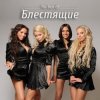
In 2026, the group’s official website lists the lineup as Ksenia Novikova, Nadezhda Ruchka, Kristina Illarionova and Silvia Zolotova.
Studio discography
- Tam, tolko tam — 1997;
- Prosto mechty — 1998;
- O lyubvi — 2000;
- Za chetyre morya — 2002;
- Apelsinovy ray — 2003;
- Vostochnye skazki — 2005.
The remix album Tam, tolko tam (Remixes) and the compilations Belym snegom, Odnoklassniki and Best 20 were released separately. Distinguishing studio albums from compilations helps avoid the common confusion surrounding the total number of albums in the group’s catalog.
Music and the group’s place in Russian pop culture
The core of Blestyashchiye’s repertoire is pop music with a strong dance component. The arrangements changed with musical trends over the years: from the characteristic Russian pop sound of the second half of the 1990s to more club-oriented electronic production and international pop influences in the mid-2000s.
At the same time, the group’s recognizability was built on more than songs alone. Music videos, choreography and a constantly renewed stage image were important parts of the project. Member rotation effectively became part of the Blestyashchiye model itself: individual singers left, but the name, repertoire and production team allowed the project to continue.
The most enduring part of the group’s legacy remains its recordings from the late 1990s and the first half of the 2000s. Chao, bambina!, Za chetyre morya, A ya vsyo letala, Apelsinovaya pesnya and Vostochnye skazki continue to appear in concert programs and retrospectives of Russian popular music; these were also among the key songs highlighted by Channel One in its special 2026 program devoted to the group.
Blestyashchiye evolved from an experimental female trio of the mid-1990s into one of the most recognizable and long-running projects on the Russian pop scene. Despite constant lineup changes, the group managed to preserve its catalog and several generations of songs that continue to be associated with the mass pop culture of the late 1990s and 2000s.