




 Тайпан

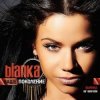
Bianca — is the stage name of singer, songwriter and composer Tatiana Lipnitskaya, born on September 17, 1985, in Minsk. She became one of the notable figures in Russian-language R&B in the mid-2000s, combining contemporary rhythm and blues and hip-hop aesthetics with Slavic melodic and folk elements. The artist described her early style as “Russian folk R’n’B” — the same title was used for her 2006 debut album.
Early years and musical education
Tatiana Lipnitskaya was involved in music from childhood. She studied cello at music school and began singing at around the age of ten. For four years, she performed with a children’s folk song and dance ensemble — an experience that later influenced her interest in Slavic melodies and folk vocal intonations.
By the age of sixteen, Lipnitskaya was already writing her own songs and taking part in music competitions. She won the Grand Prix at the international Malva and Belaya Rus festivals and placed third in cello at the Oginski competition. During her youth, she also toured outside Belarus.
An important stage in her professional training was her work with the State Orchestra of Symphonic and Popular Music of the Republic of Belarus under Mikhail Finberg, where she spent around four years. This meant that even before launching a solo pop career, Bianca had gained experience both as a classically trained instrumentalist and as part of a large pop-symphonic ensemble.
Seryoga, Eurovision and the beginning of her major career
According to the singer’s official biography, in 2005 she was offered the opportunity to represent Belarus at the Eurovision Song Contest. Lipnitskaya declined the offer, choosing instead to take part in a music project by rapper Seryoga, who had gained wide recognition at the time with the songs “Chyorny Bumer” and “Vozle doma tvoego”.
One of Bianca’s first notable recordings was “Lebedinaya”, recorded with Max Lawrence. The song appeared on the soundtrack to the film Shadowboxing and was released in 2005. It was this recording that first introduced Bianca’s voice to a broad audience before the release of her debut solo album.
Her collaboration with Seryoga played an important role in her transition from the Belarusian scene to the music markets of Russia and other CIS countries, although she later developed her career as an independent artist and writer of her own material.
“Russian Folk R’n’B”
Bianca’s debut album “Russian Folk R’n’B” was released on September 10, 2006. On the record, she combined contemporary R&B with pop music, hip-hop rhythms and Slavic melodic turns. The album included “Byli tantsy”, “Kosmopoliten”, “Lyublyu”, “Neschastlivaya lyubov”, “Oblaka” and other songs.
The album title also became a description of Bianca’s early musical concept. Rather than directly copying American R&B, she used melodic patterns and vocal intonations familiar to Russian-speaking audiences and placed them within contemporary dance-oriented arrangements.
The song “Byli tantsy” became particularly prominent. Its video, directed by Vladimir Yakimenko, emphasised the combination of contemporary urban R&B aesthetics with Slavic visual motifs.
In 2007, the debut album was reissued as “Russian Folk R’n’B (Pro leto)”, adding the new song “Pro leto” and extra video material. For this reason, Pro leto is more accurately regarded as an expanded reissue of the debut rather than a separate second full-length studio album.
MTV Russian Music Awards
In 2007, Bianca received an MTV Russian Music Award in the category Best Hip-Hop / R’n’B Project. The award became one of the first major industry recognitions of her success following the debut album.
By this point, Bianca already stood apart from many Russian-language pop artists both in the musical foundation of her songs and in her performance style: she combined elements of R&B singing, rap, folk-derived intonations and spoken delivery.
“38 zamkov”
The second full-length studio album, “38 zamkov”, was released on August 19, 2008. Its digital edition contains 12 tracks. During this period, Bianca’s sound remained connected with R&B and soul but became less dependent on the early concept of “folk R’n’B”.
One of the first notable singles from the album was “Spasi”. Unlike the predominantly romantic themes of her earlier hits, the song carried a more pronounced social subtext. “Pro lyubov” and “Moulin Rouge” also belong to this period.
Move to Moscow and “Nashe pokolenie”
In 2010, Bianca moved to Moscow and signed a contract with Gala Records, which represented EMI on the Russian market at the time. The collaboration resulted in the album “Nashe pokolenie”, released in 2011.
Hip-hop had a noticeably stronger influence on this record. Bianca worked more actively with rap artists and began using more direct rhythmic structures and recitative-style delivery.
Among the album’s best-known tracks are:
- “Ty moyo leto” with ST1M
- “Bely plyazh” with Irakli
- “Bez somneniya”
- “A cho cho”
The album became an important transition from her early folk-R&B approach toward a broader urban sound incorporating contemporary hip-hop, pop and electronic music.
“Bianca.Muzyka”
The next major stage in her career was associated with the album “Bianca.Muzyka”, released in 2014. In official digital catalogues, it is also presented simply as “Muzyka”.
During this period, Bianca consciously moved away from the original “Russian folk R’n’B” formula. The focus shifted toward a combination of contemporary R&B, pop music, electronic dance production and hip-hop.
The album included:
- “Muzyka”
- “Nogami Rukami”
- “Alle TanZen”
- “Dymom v oblaka” with Ptaha
- “Ya ne otstuplyu”
The song “Ya ne otstuplyu” became one of Bianca’s most successful solo recordings of this period and earned her first Golden Gramophone award.
In 2015, Bianca also received the RU.TV award in the Creative of the Year category for the composition “Zvuk G*”.
Bianca as a songwriter
Bianca writes a significant portion of her own material, working both as a composer and lyricist. In the mid-2010s, she also achieved notable success as a songwriter for another performer.
She wrote the song “Ty ne takoy” for Yulianna Karaulova. The composition became one of the most popular Russian-language pop singles of 2015 and reached high positions on radio charts.
This episode demonstrated that Bianca’s professional work extends beyond her own performing career.
“Absolyutno vsyo” with Mot
In 2015, Mot and Bianca released the joint composition “Absolyutno vsyo”. The song became one of the biggest duet hits of Bianca’s career and remains among her most popular recordings on digital platforms.
In 2016, Mot and Bianca received the RU.TV award for Best Duet for “Absolyutno vsyo”.
That same year, Bianca worked with Seryoga again, releasing the joint track “Krysha”. More than ten years after the beginning of her professional career, the artists therefore returned to working together in the studio.
“Mysli v notakh”
The album “Mysli v notakh” was released on September 16, 2016. The digital version contains 22 tracks.
The record includes collaborations with Seryoga, the group PIZZA, Legalize and other artists. The album continued to develop Bianca’s vocal approach while retaining elements of R&B and hip-hop.
This period also saw the appearance of the stage alter ego Bianca aka Kralya, which the singer used for more provocative rap material. She later described the project as a separate character with an intentionally rough, street-oriented aesthetic.
“Garmoniya”
The album “Garmoniya” was released in 2018. On this record, Bianca significantly strengthened the orchestral and lyrical side of her music. A symphony orchestra took part in the recording, allowing the singer to reconnect with the instrumental tradition in which her musical education had begun.
Instead of the club-oriented rhythms that dominated her earlier albums, greater attention was given to vocals, string arrangements and more restrained compositions.
At the same time, Bianca continued releasing more contemporary R&B material during this period, so “Garmoniya” should not be regarded as a complete departure from her previous direction.
“Volosy”
The studio album “Volosy” was released in 2019. It is the seventh main album in Bianca’s modern digital discography following “Russian Folk R’n’B”, “38 zamkov”, “Nashe pokolenie”, “Muzyka”, “Mysli v notakh” and “Garmoniya”.
After “Volosy”, the singer focused primarily on standalone singles and collaborative releases rather than regularly issuing full-length albums.
Music after 2019
During the 2020s, Bianca continued releasing R&B, pop and hip-hop material. One of the most notable solo tracks from this period was “Devochka tvoya”, released in 2022.
In 2023, she recorded “Kayf” with Mari Kraimbrery. In 2024, she reunited with Ptaha for the song “Tuk-Tuk” and also released “Sedaya noch” with Mult96. In 2025, the collaboration “Nokdaun” with Jambul followed.
In 2026, Bianca continued to release new material actively. Releases from this period include “Oy yoy yoy”, “Ya vsyo smogu”, a new version of “Lebedinaya” and the single “Patsany voobshche rebyata”, released on May 22, 2026.
Musical style
R&B remains the foundation of Bianca’s work, but her discography extends well beyond a single genre. At different stages, it has incorporated elements of:
- soul
- hip-hop
- pop
- house and club-oriented electronic music
- reggae
- Slavic folk music
- orchestral pop
Apple Music characterises her catalogue as a combination of R&B, soul ballads, female rap, dance-oriented electronic music, reggae and material featuring string arrangements.
During the early stage of her career, Bianca’s main distinguishing feature was the combination of R&B with folk-derived melodies. Over time, traditional elements were used less frequently, while her music moved closer to contemporary urban pop, hip-hop and electronic R&B.
Bianca also changes her vocal approach significantly depending on the material: full melodic singing appears alongside recitative, spoken phrases and a more aggressive rap delivery.
Main Bianca albums
2006 — “Russian Folk R’n’B”
The debut release and foundation of the singer’s early style. The album includes “Byli tantsy”, “Neschastlivaya lyubov”, “Lyublyu” and “Kosmopoliten”.
2007 — “Russian Folk R’n’B (Pro leto)”
An expanded reissue of the debut album featuring the new track “Pro leto”. It is not a separate full-length studio album.
2008 — “38 zamkov”
The second main studio album, released on August 19, 2008.
2011 — “Nashe pokolenie”
A record with a stronger hip-hop influence and numerous collaborations, including ST1M and Irakli.
2014 — “Bianca.Muzyka”
The album on which the singer expanded her sound toward electronic pop and contemporary urban R&B. It includes “Muzyka”, “Dymom v oblaka” and “Ya ne otstuplyu”.
2016 — “Mysli v notakh”
A 22-track album featuring R&B, pop and hip-hop material as well as several collaborative recordings.
2018 — “Garmoniya”
A record with a prominent symphony orchestra and a more pronounced lyrical component.
2019 — “Volosy”
The most recent main full-length album in the singer’s digital catalogue to date.
Selected songs
- “Lebedinaya” — with Max Lawrence
- “Byli tantsy”
- “Neschastlivaya lyubov”
- “Pro leto”
- “Spasi”
- “Ty moyo leto” — with ST1M
- “Bely plyazh” — with Irakli
- “A cho cho”
- “Muzyka”
- “Ya ne otstuplyu”
- “Kedy”
- “Absolyutno vsyo” — with Mot
- “Krysha” — with Seryoga
- “Devochka tvoya”
- “Kayf” — with Mari Kraimbrery
- “Tuk-Tuk” — with Ptaha
- “Nokdaun” — with Jambul
Awards and achievements
Bianca’s confirmed professional awards include:
- MTV Russian Music Awards 2007 — Best Hip-Hop / R’n’B Project
- Golden Gramophone — for the song “Ya ne otstuplyu”
- RU.TV 2015 — Creative of the Year for “Zvuk G*”
- RU.TV 2016 — Best Duet for “Absolyutno vsyo” with Mot
Bianca’s significance for Russian-language R&B
Bianca emerged on the mainstream music scene at a time when Russian-language R&B had not yet developed a stable commercial model. Her early recordings stood out not only for adopting stylistic techniques from American R&B but also for attempting to adapt them to Slavic melodic traditions and Russian-language lyrics.
For this reason, her role is more accurately described not as the sole “creator of Russian R&B”, but as one of the artists who helped make Russian-language R&B a visible part of mainstream pop culture in the mid-2000s.
Over the following two decades, her music evolved from “Russian folk R’n’B” and early club tracks to hip-hop collaborations, electronic pop, orchestral arrangements and contemporary urban production. Throughout this evolution, Bianca retained an active songwriting role within her own project and continues to release new music.