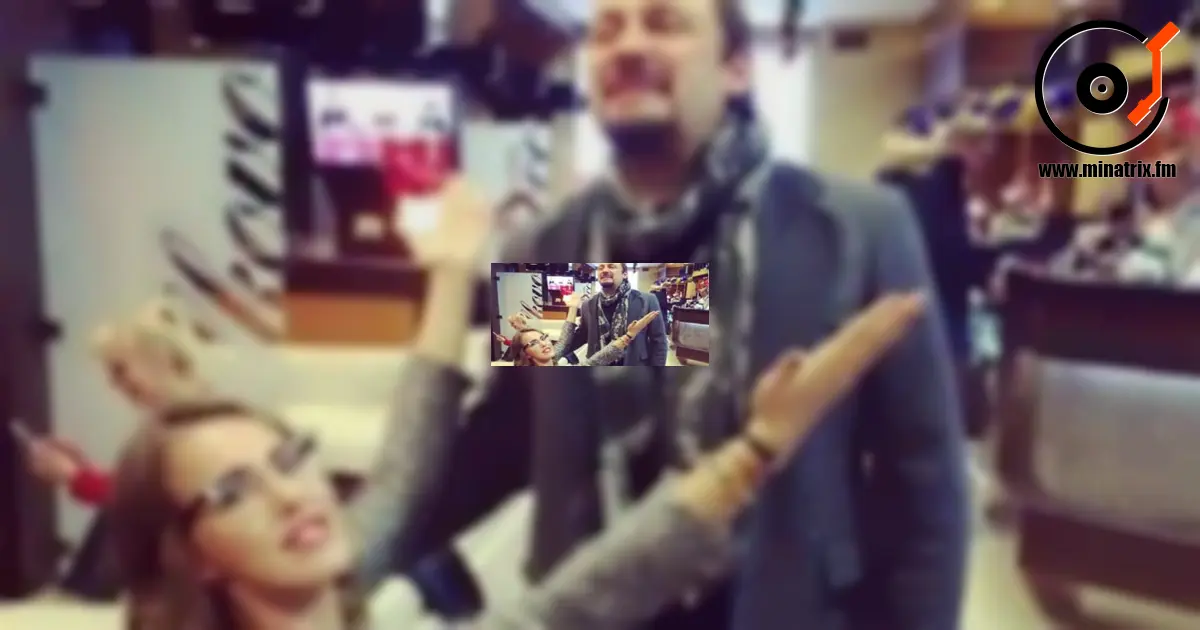
What isn’t Ksenia Sobchak willing to do for Stas Mikhaylov? Even go down on her knees — and say goodbye to Vitorgan.
The story of the “love confession” by Ksenia Sobchak to Stas Mikhaylov is a vivid example of how modern media culture blurs the line between a joke, performance, and a viral news hook.
A gesture impossible to ignore
The recent meeting between Sobchak and Mikhaylov at the airport instantly turned into a headline-worthy event: the TV host dramatically went down on one knee and publicly confessed her love to the singer. Later on social media, she went even further, announcing that she was “leaving” her husband, Maxim Vitorgan, and posting a phrase that immediately spread as a viral quote:
“Maxim, goodbye and forgive me.”
In almost any other context, such statements might have looked like the beginning of a loud celebrity scandal. In this case, however, they were part of a carefully constructed layer of irony.
A joke understood by those “in the know”
For those who follow Russian pop culture, the context is obvious. Sobchak has long used satire as a tool of media commentary, and the persona of Oksana Sever, created by her earlier, is directly linked to the parody music video Rodnya. In that project, she had already mocked the phenomenon of chanson-pop aesthetics and the cult surrounding Stas Mikhaylov.
Therefore, the “love confession” is not a romantic gesture, but a continuation of an ironic narrative in which Sobchak deliberately plays with the artist’s image, mass taste, and public expectations.
Viral effect and the power of a media gesture
The result was immediate: the romantic photo of Sobchak and Mikhaylov collected tens of thousands of likes in just a few hours, going viral without any advertising effort. This clearly demonstrates how today’s media space works: a single visual gesture, reinforced by a provocative caption, can trigger a large-scale wave of discussion.
It is also important to note that Stas Mikhaylov himself appears here not so much as an object of mockery, but as part of a cultural code — a symbol of a specific musical segment that has long lived its own independent life in the public consciousness.
Conclusion
The story of the “fall to one’s knees” is neither a social drama nor a love triangle, but a media performance in which Ksenia Sobchak once again demonstrated her ability to work with symbols, irony, and audience attention. In the age of social media, such gestures become a form of cultural commentary — loud, provocative, and carefully calculated.
That is why this episode should be viewed not as gossip, but as an example of how modern show business turns irony into a powerful instrument of influence.