



 Scooter
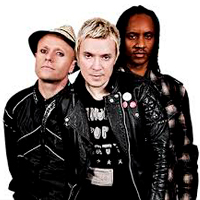
The Prodigy are a British electronic music group formed in 1990 in Braintree, Essex. The project was created by composer, producer and musician Liam Howlett, who remains the band’s principal songwriter and the architect of its sound.
The Prodigy became one of the most influential groups on the British electronic music scene, combining rave, breakbeat hardcore, techno, hip-hop, punk, industrial music and electronic rock. Their music helped bring club culture beyond the underground and proved that an electronic act could possess the energy, visual expressiveness and live power of a rock band.
The best-known lineup of The Prodigy consisted of Liam Howlett, vocalist and dancer Keith Flint, MC Maxim, whose real name is Keith Palmer, and dancer Leeroy Thornhill. Following Thornhill’s departure and Flint’s death, Howlett and Maxim remained the project’s principal members.
Formation of the group
Before forming The Prodigy, Liam Howlett was interested in hip-hop, DJing and sampling. He was a member of the hip-hop group Cut 2 Kill and, after returning to Braintree, began creating his own compositions inspired by the British rave movement of the late 1980s.
At one performance, Howlett met Keith Flint and Leeroy Thornhill, who at the time were dancers and regular rave attendees. Flint asked him to record a mixtape. Howlett placed a DJ mix on one side of the cassette and several of his own compositions on the other. After hearing the material, Flint and Thornhill suggested turning the studio project into a live group.
The name The Prodigy is connected with the Moog Prodigy analogue synthesizer, which Howlett used in his early work and whose name he wrote on that same demo recording.
The original lineup also included dancer Sharky, whose real name is Sheila Burke. Before the group’s first major performance, MC Maxim Reality joined the project. The combination of Howlett’s electronic music, Flint and Thornhill’s dancing, and Maxim’s vocal improvisation formed The Prodigy’s early live model.
Contract with XL Recordings and early releases
Contrary to a widespread version of events, the contract with the young independent label XL Recordings came before the success of “Charly”. XL co-founder Nick Halkes signed The Prodigy in 1990 after recognising the potential of Howlett’s home recordings.
The group’s first official release was the EP What Evil Lurks, issued in 1991. It was followed by the single Charly, built around a sample from a British children’s public information film from the 1970s.
“Charly” reached number three on the UK chart and made The Prodigy one of the most prominent acts on the emerging rave scene. At the same time, the track provoked controversy: part of the music press accused it of turning underground rave into commercial and almost childlike “toy” music. For Howlett, this reaction became an incentive to search for a heavier and more serious sound.
Experience
The debut studio album Experience was released in 1992. Its foundations included breakbeat hardcore, early jungle, techno and euphoric rave music. The record reached number twelve on the UK Albums Chart and later received platinum certification.
The album included “Charly”, Everybody in the Place, Out of Space, Fire, Jericho and Wind It Up (Rewound). Almost all of the singles reached the upper part of the UK chart, while “Out of Space” became one of the most recognisable rave anthems of the early 1990s.
At this stage, The Prodigy were not yet a big beat group in the later sense of the term. Their music belonged primarily to breakbeat hardcore and reflected the culture of British warehouse parties, illegal raves and early club-oriented electronic music.
Music for the Jilted Generation
The second album, Music for the Jilted Generation, was released in 1994 and became the first Prodigy release to top the UK chart. It marked a transition from the bright rave sound of the debut to darker, heavier and more compositionally diverse music.
On tracks such as Voodoo People, Poison, No Good (Start the Dance), Break & Enter and Their Law, electronic rhythms were combined with rock guitars, aggressive samples, industrial textures and Maxim’s hip-hop vocals.
The album is often associated with the confrontation between British rave culture and the authorities. The Criminal Justice and Public Order Act 1994, adopted in the United Kingdom, expanded police powers to stop illegal parties and contained the now-famous definition of music with “repetitive beats”. The composition “Their Law” expressed opposition to pressure on club and youth culture, although Howlett later warned against interpreting the entire album in an overly direct political way.
Music for the Jilted Generation transformed The Prodigy from rave-scene stars into a festival band capable of performing equally convincingly before electronic and rock audiences.
Firestarter and Keith Flint’s transformation into a frontman
Keith Flint originally performed primarily as a dancer. The turning point came with the recording of Firestarter. His vocal part, provocative performance style and new stage image transformed Flint into a recognisable frontman.
The song was released in 1996 and topped the UK Singles Chart. In the video, Flint appeared with his characteristic hairstyle, dark eye makeup and confrontational facial expressions. This image became one of the defining visual symbols of British music in the 1990s.
The following single, Breathe, featuring vocals by Flint and Maxim, also reached number one in the United Kingdom. Flint’s move into vocals allowed The Prodigy to bring their live performances closer to punk concerts without abandoning their electronic foundation.
The Fat of the Land
The third album, The Fat of the Land, was released in 1997 and became the group’s international breakthrough. The record debuted at number one not only in the United Kingdom but also on the US Billboard 200, an exceptional achievement for a British electronic act at the time.
The album included Firestarter, Breathe, Smack My Bitch Up, Serial Thrilla, Diesel Power, Funky Shit and Narayan. Kool Keith, Crispian Mills of Kula Shaker and other guest musicians took part in the recording.
The sound combined big beat, breakbeat, hip-hop, punk, electronic rock and industrial elements. However, the term “big beat” does not describe all of The Prodigy’s music: the group developed its own model in which Liam Howlett’s club production was combined with vocals, aggressive stage theatre and a rock-style live presentation.
“Smack My Bitch Up” provoked widespread controversy because of its title, sampled vocal phrase and explicit music video. Despite restrictions imposed by television channels and radio stations, the composition became one of the group’s best-known tracks.
The success of The Fat of the Land finally established The Prodigy as a global phenomenon and helped electronic music occupy a more prominent place in American and international popular culture.
Lineup changes
In 2000, Leeroy Thornhill left the group to focus on his own musical projects. After his departure, The Prodigy’s live foundation was built around Howlett, Flint and Maxim, supported by touring drummers and guitarists.
In 2002, the group released the single Baby’s Got a Temper, although Howlett later distanced himself from the work, regarding it as an attempt to mechanically repeat The Prodigy’s already familiar formula.
Always Outnumbered, Never Outgunned
The fourth studio album, Always Outnumbered, Never Outgunned, was released in 2004 after a seven-year gap between full-length records. It topped the UK chart but differed noticeably from its predecessor.
The album was essentially a predominantly solo studio project by Liam Howlett featuring guest vocalists. Juliette Lewis, Liam and Noel Gallagher, Twista, Kool Keith, Princess Superstar and other performers appeared on the recording. Howlett himself described it as “Liam Howlett’s Prodigy album”, emphasising its difference from the group’s collective live model.
The best-known tracks included Girls, Spitfire, Hotride and The Way It Is. Despite its commercial success, the album received a mixed reaction because it lacked the familiar interaction between Howlett, Flint and Maxim.
Invaders Must Die
A full creative reunion of the three principal members occurred during work on Invaders Must Die, released in 2009. Howlett invited Flint and Maxim into the studio in an effort to reconnect music production with the group’s live energy.
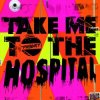
The record combined different periods of The Prodigy’s history: the euphoric synthesizers of early rave, heavy breakbeats, punk vocals and festival choruses. Omen, Warrior’s Dance, Take Me to the Hospital, Run with the Wolves and the title track became the foundation of a new live era.
Invaders Must Die reached number one in the United Kingdom and brought the group back to a broad audience, including listeners who had discovered electronic music after the era of The Fat of the Land.
The Day Is My Enemy
The sixth studio album, The Day Is My Enemy, was released in 2015. Its sound was built around hard breakbeats, distorted synthesizers, punk vocals and a dark nocturnal atmosphere.
The principal compositions included Nasty, Wild Frontier, Rok-Weiler, Roadblox and the title track. Sleaford Mods, Flux Pavilion and other guest artists took part in the recording.
The album once again topped the UK chart, confirming The Prodigy’s ability to retain a mass audience without softening their trademark aggressive sound.
No Tourists
The seventh studio album, No Tourists, was released in 2018. Its title reflected the idea of rejecting safe, pre-planned routes, both in creativity and in life.
The record included Need Some1, Light Up the Sky, We Live Forever, Timebomb Zone, Champions of London and Fight Fire with Fire, recorded with Ho99o9.
The album reached number one in the United Kingdom. As a result, every Prodigy studio album beginning with Music for the Jilted Generation topped the national albums chart.
No Tourists became the final studio album recorded during Keith Flint’s lifetime.
Death of Keith Flint
Keith Flint died on March 4, 2019, at the age of 49. His death was a major blow to the group’s members, its fans and the wider British music scene.
The investigation established that Flint died by hanging, but the coroner recorded an open conclusion: the available evidence was insufficient to officially determine whether the death was suicide or an accident.
Following Flint’s death, The Prodigy cancelled their scheduled performances and took an extended break. Liam Howlett and Maxim later decided to preserve the project, regarding the continuation of live activity as a way to maintain the musical legacy of their friend and colleague.
Return to the stage
The Prodigy returned to live performances in 2022. These were the group’s first concerts since Flint’s death. Maxim assumed the central vocal role onstage, while Keith’s memory became part of the show’s visual narrative, particularly during performances of “Firestarter”.
The return coincided with the 25th anniversary of The Fat of the Land, but the title Army of the Ants primarily refers to the subsequent series of concerts in 2023. It is therefore inaccurate to refer to the entire 2022 tour as “Army of the Ants”.
After returning, The Prodigy resumed international touring. One of the most notable events was their performance at Glastonbury Festival in 2025, the group’s first appearance at the festival without Flint. The concert included a tribute to the late frontman and received widespread attention in the British press.
New material
The claim that a new album was released in 2025 should be removed entirely. No album was issued, and the quotation describing a “dark and intensely live” release featuring guest vocalists is not supported by official publications.
Liam Howlett did confirm that he was working on new material, and in late 2025 he spoke about plans to present new music in 2026. However, this is not equivalent to an official album announcement: the group did not reveal a title, track listing or final release date. In an evergreen biography, it would be better to use the following wording:
After returning to live activity, Liam Howlett continued working on new material for The Prodigy.
Musical style
The Prodigy cannot be accurately described by a single genre. At different stages, the group incorporated breakbeat hardcore, rave, techno, jungle, big beat, hip-hop, punk, industrial music and electronic rock.
The foundation of most compositions remains Liam Howlett’s production method: working with samples, hard breakbeats, synthesizer riffs, distortion and contrasting sound editing. Howlett uses fragments of hip-hop, funk, rock, film dialogue and electronic music, radically transforming them within a new composition.
Maxim’s vocals brought elements of rap, reggae, dancehall and dark theatricality into the music. Keith Flint added punk aggression and intense physical stage energy. Their roles were not limited to performing studio parts: it was the live interaction between the members that turned The Prodigy into a fully developed group rather than merely the stage name of a single electronic producer.
Live performance style
The Prodigy became one of the first electronic acts whose concerts were regarded on the same level as performances by major rock groups. Instead of the traditional model of a DJ standing behind equipment, they offered active stage action featuring vocalists, dancers, live drums, guitar, powerful lighting and direct interaction with the audience.
Howlett controls the electronic foundation of the performance, Maxim acts as frontman and MC, while touring musicians strengthen the rock element of the show. This format allowed the group to perform equally naturally at raves, club events, rock festivals and stadium venues.
Awards and achievements
The Prodigy received the BRIT Award for Best British Dance Act twice, in 1997 and 1998. The group was also nominated for a Grammy Award and received several MTV honours, including multiple victories at the MTV Europe Music Awards.
The Fat of the Land topped the US Billboard 200, while six consecutive studio albums by the group reached number one in the United Kingdom. Official Prodigy materials also refer to seven number-one albums when the compilation Their Law: The Singles 1990–2005 is included.
The exact number of records sold varies depending on the source and counting method. Instead of claiming “more than 30 million albums”, it would be better to write:
The Prodigy are among the most commercially successful electronic groups of their generation, achieving multi-million record sales and number-one chart positions in numerous countries.
Influence and legacy
The Prodigy played a key role in bringing electronic and rock audiences closer together. During the first half of the 1990s, they helped bring breakbeat hardcore and rave to major concert venues, while in the second half of the decade they transformed electronic performance into an aggressive multimedia show.
The group is often mentioned alongside The Chemical Brothers, Fatboy Slim and other artists who helped British electronic music achieve international recognition. However, it is inaccurate to describe The Chemical Brothers as direct followers of The Prodigy: both projects developed in parallel and contributed to the formation of the 1990s electronic scene in different ways.
In later decades, the combination of breakbeats, heavy bass, punk imagery and live concert energy was reflected in the music of Pendulum, Chase & Status, Enter Shikari, Hadouken!, Knife Party and many representatives of bass music and electronic rock. The Prodigy’s influence can be heard not only in specific production techniques but also in the very idea of an electronic group as a powerful live act.
Main discography
- Experience — 1992
- Music for the Jilted Generation — 1994
- The Fat of the Land — 1997
- Always Outnumbered, Never Outgunned — 2004
- Invaders Must Die — 2009
- The Day Is My Enemy — 2015
- No Tourists — 2018
The compilation Their Law: The Singles 1990–2005 also occupies an important place in the catalogue. It brought together the group’s principal singles and became one of seven Prodigy albums to top the UK chart.
Significance of the group
The Prodigy are one of the most important electronic groups in British music history. The band progressed from underground raves in the early 1990s to number-one positions in international charts and performances at the world’s largest festivals.
Liam Howlett created a recognisable musical language in which electronic production is combined with punk, hip-hop and the heaviness of rock. Keith Flint became the project’s visual symbol, Maxim gave it a voice and theatrical stage presence, while Leeroy Thornhill helped shape the physical and dance-oriented character of the group’s early performances.
The Prodigy changed not only the sound of popular electronic music but also perceptions of how electronic music could look onstage. Their legacy remains present in club culture, the festival industry, rock music and contemporary forms of heavy bass-oriented electronic music.