

 Валерия

Ruki Vverh! is a Russian music project that achieved mass popularity in the second half of the 1990s through the partnership of Sergey Zhukov and Alexey Potekhin. Their songs combined Eurodance, dance-pop, simple synthesizer arrangements and deliberately direct lyrics about love, school, growing up and breakups.
At the turn of the 1990s and 2000s, Ruki Vverh! became one of the most popular Russian-language pop projects of its generation. Malysh, Student, Kroshka moya, Chuzhie guby, Pesenka, Alyoshka, 18 mne uzhe, On tebya tseluet and other songs received heavy radio and television rotation, while the group’s concerts attracted audiences of many thousands.
The classic Zhukov–Potekhin duo ceased to exist in 2006. Sergey Zhukov later resumed concert activity under the name Ruki Vverh! and transformed the project into a major nostalgia-driven pop brand while continuing to release new songs. By the mid-2020s, its concerts had reached stadium scale, and the group’s story had received its own feature-film adaptation.
Sergey Zhukov and Alexey Potekhin: Meeting at the Radio Station
The story of the future Ruki Vverh! began in 1993 in Samara. Sergey Zhukov worked at the radio station Europa Plus Samara, where he hosted the dance music programme Hit-Chas. There he met Alexey Potekhin, who was also involved in the broadcasts.
Their work together quickly developed into a musical partnership. Zhukov and Potekhin began recording their own tracks and organizing discos under the name Dyadyushka Rey i kompaniya — a reference to Ray Slijngaard of the popular Eurodance project 2 Unlimited.
In 1994, the musicians worked in Tolyatti and recorded their first English-language tracks. Their early material was strongly influenced by European dance music of the first half of the 1990s: programmed rhythms, synthesizer parts, rap sections and short pop melodies gradually became the foundation of their future style.
Moscow and the Origin of the Name Ruki Vverh!
On May 1, 1995, Zhukov and Potekhin moved to Moscow. Their musical career was difficult at first: they searched for studios, worked on arrangements and continued developing their own recordings.
The name under which the duo would soon become known across the country appeared thanks to the radio station Maximum. At the end of 1995, the musicians delivered a cassette containing several tracks and the phrase: “This music will make you put your hands up.” Presenters Olga Maksimova and Konstantin Mikhailov played the song Dobroe utro on air and introduced the performers as a young group called Ruki Vverh!. The name remained.
In 1996, Zhukov and Potekhin worked at the Moscow studio Pavian Records, where they met producer Andrey Malikov. Andrey Cherkasov’s company was also connected with the project. During this period, the name Ruki Vverh! received official status, and the group began professional work on its first substantial repertoire.
Female Vocals and the Stage Lineup
Although Sergey Zhukov and Alexey Potekhin formed the creative core of Ruki Vverh!, other performers also participated in the project’s early history.
Elizaveta Rodnyanskaya, who worked as a session vocalist, played a particularly important role. Her voice can be heard on several early tracks, including the female vocal parts in Pesenka and other recordings. Dancers also participated in the group’s concerts and visual presentation, among them Anastasia Kondrykinskaya.
This division between studio and stage roles was typical of 1990s Eurodance culture, where the principal creative lineup, guest vocalists and members of the live show did not necessarily coincide.
Malysh, Student and the First Album
The real mass breakthrough came with the songs Malysh and Student. Their success on radio made Ruki Vverh! one of the most prominent new acts on the Russian dance-pop scene.
In May 1997, the debut album Dyshite ravnomerno was released. It included the group’s early material, while Malysh and Student became the foundation of its rapidly growing popularity.
The musical formula was immediately accessible to the audience: Sergey Zhukov’s high male vocal, a memorable chorus, a fast dance rhythm and lyrics built around situations familiar to teenage and young listeners. This directness became one of the defining characteristics of Ruki Vverh!.
Sdelay pogromche! and the Rise of a Pop Phenomenon
1998 became a decisive year for the group. After the project Ruki Vverh, doktor Shlyager!, connected with songs by Vyacheslav Dobrynin, the album Sdelay pogromche! was released.
It produced several songs that permanently shaped the Ruki Vverh! canon: Kroshka moya, Chuzhie guby, Lish o tebe mechtaya and Pesenka.
Kroshka moya became one of the group’s biggest hits and received a Golden Gramophone award. During this period, Ruki Vverh! effectively moved beyond the boundaries of the ordinary dance scene: their music was heard equally often on radio, at discos, on television and at large public concerts.
Bez tormozov! and Independence from the First Producer
In 1999, the album Bez tormozov! followed. The period was marked by intensive touring and continued growth in popularity.
That same year, Zhukov and Potekhin ended their collaboration with producer Andrey Malikov and began developing their own structure, Plyashushchie chelovechki / B-Funky Productions. Through it, they worked not only on their own music but also with other young performers.
By that point, Ruki Vverh! was no longer a project completely dependent on an outside producer. Sergey Zhukov created a substantial part of the musical material, while Zhukov and Potekhin increasingly took control of the organizational side of their career.
How Pesenka Found an International Life
An unusual chapter in the group’s history is connected with Pesenka from the album Sdelay pogromche!. Its melodic foundation was later used by the German project ATC in the song Around the World (La La La La La).
ATC’s version became an international hit in 2000 and introduced a multimillion-strong foreign audience to a melody that had originally appeared in the repertoire of Ruki Vverh!.
The story remains one of the most notable examples of a Russian pop composition from the 1990s gaining an international continuation.
Alyoshka and 18 mne uzhe
In 2000, the group released the album Zdravstvuy, eto ya…. Songs from this period include Alyoshka and Ay-yay-yay, which continued the group’s combination of emotional songwriting and dance-pop.
The next stage was no less successful. In 2001, the album Ne boysya, ya s toboy! was released and included 18 mne uzhe. The song became one of the group’s most enduring hits and gradually evolved from a song about youth into a nostalgic symbol for an entire generation of listeners.
The release Malenkie devochki also appeared that year, combining some already familiar material with new recordings.
On tebya tseluet and the Early 2000s
In 2002, the album Konets popse, tantsuyut vse! was released. One of its central tracks was On tebya tseluet.
The song became known not only for its melody but also for its video featuring drag performer Anatoly Evdokimov. For mainstream Russian pop culture in the early 2000s, such a video was unusual and generated considerable public discussion.
From this period onward, the group worked regularly with the dance company Street Jazz, and choreography became a much more important element of its concert programmes.
The Final Albums of the Classic Duo
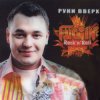
In 2003, the album Mne s toboyu khorosho appeared, followed by A devochkam tak kholodno… and Fuc*in' Rock'n'Roll. The sound gradually changed: alongside familiar dance-pop, the group experimented with denser arrangements and attempted to move away from the image of an exclusively teenage-oriented project.
At the same time, Sergey Zhukov was developing a solo career. This gradually made the boundary between his individual work and the activities of Ruki Vverh! less clear.
Why Ruki Vverh! Broke Up
In 2006, Alexey Potekhin left the group and the classic duo ceased to exist. Years of intensive touring had brought accumulated fatigue, disagreements over future development and changes within their professional relationship.
After the split, Sergey Zhukov continued his solo career. Alexey Potekhin focused on his own music projects and production work.
Although the former members occasionally appeared together on television and at anniversary events in later years, the permanent Zhukov–Potekhin duo was never fully restored.
How Sergey Zhukov Brought Back Ruki Vverh!
After several years devoted mainly to solo work, Zhukov once again began performing actively under the Ruki Vverh! brand. The project’s official history dates the return to regular concert activity under this name to 2009.
From that point onward, Ruki Vverh! effectively became Sergey Zhukov’s project. The classic duo’s catalogue remained the foundation of the concerts, but new songs continued to appear as well.
Large anniversary solo shows resumed in 2011. In 2012, the album Otkroy mne dver! was released — the first major Ruki Vverh! release after Zhukov and Potekhin stopped working as a permanent duo.
Kogda my byli molodymi and a New Wave of Popularity
2016 proved especially successful for the renewed project with the release of Kogda my byli molodymi. The song was built directly around nostalgia for Russian pop culture of the 1990s and 2000s.
The video featured well-known representatives of the music scene from that era. In effect, Zhukov turned the age of his own catalogue from a potential weakness into the foundation of a new stage in his career.
Later releases included Zaberi klyuchi, Plachesh v temnote, Tantsy, K chyortu etu gordost, Slemyatsya patsany with Little Big, Ona menya tseluet, Polechu za toboyu with Artik & Asti, Moskva ne verit slezam, Radi tantspola with Gayazovs Brothers, Posledniy potseluy with HammAli & Navai and other recordings.
From 1990s Discos to Stadiums
By the end of the 2010s, the concert scale of Ruki Vverh! had grown considerably. Anniversary programmes were staged at the largest venues, while the shows increasingly revolved around a combination of classic songs, mass sing-alongs and nostalgic visual presentation.
In 2018, the project played two major consecutive concerts at Moscow’s Olimpiyskiy. Later, its concert model moved firmly to stadium level.
During the 2020s, Ruki Vverh! repeatedly performed at the Grand Sports Arena of Luzhniki Stadium. The anniversary programme 30 nam uzhe! was presented there in July 2026, continuing the project’s series of major stadium shows.
Ruki Vverh! Bar and the Expansion of the Brand
Over time, the group’s name came to be used far beyond music itself. In 2010, the first Ruki Vverh! Bar opened in Moscow, after which the chain expanded to other cities.
The concept is built around the aesthetics of the 1990s and early 2000s — the period most directly associated with the group’s music. In this way, Ruki Vverh! developed not only into a concert project but also into a commercial nostalgia brand.
The Film Ruki Vverh!
A new chapter in the project’s history appeared in 2024 with the theatrical release of the feature film Ruki Vverh!, directed by Askar Uzabayev.
The film focuses primarily on the biography of Sergey Zhukov, his meeting with Alexey Potekhin and the formation of the group. Young Zhukov and Potekhin were played by Vlad Prokhorov and Ilya Rus, while the musicians themselves also appeared in the film.
The Russian premiere took place on October 10, 2024. The production drew on personal recollections, archival materials and objects connected with the history of the duo.
New Music and Vrubay na polnuyu!
Despite the enormous role of the old hits in the concert programme, Ruki Vverh! does not exist solely as a retro project. Sergey Zhukov continues to release new songs under this name and periodically revisits material from the classic period in updated versions.
Between 2024 and 2026, the catalogue was expanded with new singles and reworked versions of earlier songs, including Student 2024, Bez lyubvi 2.5 and other releases.
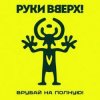
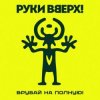
On July 24, 2026, the album Vrubay na polnuyu! was released, featuring 15 tracks. Its arrival continued the project’s studio history almost three decades after the debut Dyshite ravnomerno.
Musical Style
The classic sound of Ruki Vverh! grew out of 1990s Eurodance, but the group significantly simplified the international dance formula for a Russian-speaking pop audience. Their songs used straightforward electronic rhythms, simple synthesizer sequences and choruses designed to be remembered almost immediately.
Sergey Zhukov’s lyrics were no less important to the group’s success. Most of the early hits revolve around everyday emotional situations — first love, jealousy, separation, school, growing up and relationships between boys and girls. The language of the songs is deliberately close to everyday speech and largely avoids complex metaphors.
This simplicity, which music critics often regarded as primitiveness, ultimately became one of the reasons for the exceptional longevity of the catalogue. The songs were easy to sing along to and remained in the public memory even after musical fashions changed.
Selected Discography
Main Albums and Major Releases
- Dyshite ravnomerno — 1997
- Ruki Vverh, doktor Shlyager! — 1998
- Sdelay pogromche! — 1998
- Bez tormozov! — 1999
- Zdravstvuy, eto ya… — 2000
- Ne boysya, ya s toboy! — 2001
- Malenkie devochki — 2001
- Konets popse, tantsuyut vse! — 2002
- Mne s toboyu khorosho — 2003
- A devochkam tak kholodno… — 2004
- Fuc*in' Rock'n'Roll — 2005
- Otkroy mne dver! — 2012
- Vrubay na polnuyu! — 2026
Key Songs
- Malysh
- Student
- Kroshka moya
- Chuzhie guby
- Lish o tebe mechtaya
- Pesenka
- Nazovi ego kak menya
- Alyoshka
- Ay-yay-yay
- 18 mne uzhe
- On tebya tseluet
- Mne s toboyu khorosho
- Kogda my byli molodymi
- Zaberi klyuchi
- Plachesh v temnote
- Tantsy
- Slemyatsya patsany — with Little Big
- Polechu za toboyu — with Artik & Asti
- Radi tantspola — with Gayazovs Brothers
- Posledniy potseluy — with HammAli & Navai
Ruki Vverh! in Pop Culture
The history of Ruki Vverh! consists of two distinct stages. The first is the classic duo of Sergey Zhukov and Alexey Potekhin, which became one of the symbols of mainstream Russian-language pop music in the late 1990s and early 2000s. The second is the continuation of the project by Sergey Zhukov, who managed to turn the old catalogue into the foundation of a modern concert career while continuing to release new music.
The group’s most important legacy lies in songs that outlived their original era. Kroshka moya, Student, 18 mne uzhe, Alyoshka and On tebya tseluet continue to exist not only as recordings from the end of the 20th and beginning of the 21st century, but also as part of the collective musical memory of an audience that grew up with Russian pop culture of that period.
In this sense, the longevity of Ruki Vverh! is explained not by the complexity of their musical construction, but by the opposite quality — the ability to turn a simple melody, dance rhythm and ordinary life story into a song that audiences can remember and sing decades later.