![Ozzy Osbourne - Steal Away [The Night]](/images/covers/2026/05/100_74003.jpg "Cover Ozzy Osbourne - Steal Away [The Night]")
![Ozzy Osbourne - Revelation [Mother Earth]](/images/covers/2026/05/100_72467.jpg "Cover Ozzy Osbourne - Revelation [Mother Earth]")
 Тина Кароль
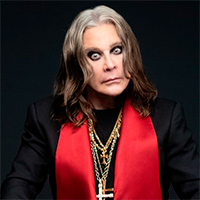
Ozzy Osbourne, real name John Michael Osbourne (born December 3, 1948, Birmingham, England — died July 22, 2025, Buckinghamshire, England), was a British singer and songwriter and one of the pioneers of heavy metal. He gained worldwide fame as the vocalist of Black Sabbath and, after leaving the group, built a solo career that lasted for more than four decades.
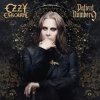
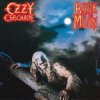
With Black Sabbath, Osbourne took part in the creation of the albums Black Sabbath, Paranoid, Master of Reality, Vol. 4, Sabbath Bloody Sabbath, Sabotage, Technical Ecstasy, Never Say Die! and the later 13. His most important solo albums include Blizzard of Ozz, Diary of a Madman, Bark at the Moon, No More Tears, Ozzmosis, Ordinary Man and Patient Number 9. His best-known songs include Crazy Train, Mr. Crowley, Flying High Again, Bark at the Moon, No More Tears, Mama, I’m Coming Home, Perry Mason, Dreamer and Patient Number 9.
Childhood in Birmingham
John Michael Osbourne grew up in the working-class district of Aston in Birmingham. His father worked in manufacturing, while his mother worked at a factory. The future musician grew up in a large family and later repeatedly linked his worldview to the industrial environment of post-war Birmingham.
At school, Osbourne experienced serious difficulties with reading and writing and later spoke about having dyslexia. He left school as a teenager and worked in several manual jobs: at factories, on construction sites and in a slaughterhouse, as well as serving as an apprentice toolmaker and car-horn tuner.
In his youth, Osbourne also spent several weeks in prison after being convicted of theft. He did not have the money to pay the fine, and the episode later became one of the most frequently mentioned parts of his early biography.
His most important musical discovery during his youth was The Beatles. Osbourne particularly singled out She Loves You and later said that the group’s success convinced him that a professional music career was possible.
Formation of Black Sabbath
In 1968, Osbourne joined guitarist Tony Iommi, bassist Geezer Butler and drummer Bill Ward. An early version of the group used the name Earth Blues Company, which was later shortened to Earth.
When the musicians discovered that another band already existed under that name, they chose a new one — Black Sabbath, after a song they had written under the influence of the 1963 horror film.
The song Black Sabbath helped define the group’s future direction. Tony Iommi’s slow riff, Geezer Butler’s dark lyrics and Osbourne’s unusual high-pitched voice sharply distinguished the band from much of the British blues-rock scene of the late 1960s.
Black Sabbath and the formation of heavy metal
The debut album Black Sabbath was released in February 1970. Later that same year came Paranoid, which included War Pigs, Paranoid and Iron Man.
The first two albums are regarded as some of the foundational recordings of heavy metal. The group made the guitar sound heavier, slowed down many blues structures and focused on themes of war, social anxiety, religion, fear and the supernatural.
The following albums further established this new musical language:
- Master of Reality — 1971;
- Vol. 4 — 1972;
- Sabbath Bloody Sabbath — 1973;
- Sabotage — 1975;
- Technical Ecstasy — 1976;
- Never Say Die! — 1978.
Geezer Butler was the main lyricist of early Black Sabbath, while Tony Iommi shaped much of the musical foundation. Osbourne’s voice became an important connecting element: his high, sustained delivery contrasted sharply with the heavy guitar parts and made the band’s songs immediately recognizable.
Black Sabbath’s dark image regularly led to accusations of Satanism, although the musicians themselves denied any affiliation with Satanic or occult organizations. In fact, many of the songs focused on fear of evil, war and the moral consequences of human actions.
Departure from Black Sabbath
By the end of the 1970s, problems related to drugs, alcohol and personal relationships within the group had intensified. After work on Never Say Die!, the collaboration with Osbourne came to an end.
In 1979, Black Sabbath continued without him, with Ronnie James Dio becoming the new vocalist.
For Ozzy himself, being fired initially looked like a possible end to his career. The situation changed after he began working with Sharon Arden, the daughter of manager Don Arden. Sharon took over his affairs and became the central figure in building Osbourne’s solo career.
Blizzard of Ozz and Randy Rhoads
The first solo album, Blizzard of Ozz, was released in the United Kingdom in 1980. Alongside Osbourne, guitarist Randy Rhoads, bassist and lyricist Bob Daisley and drummer Lee Kerslake played key roles in creating the record.
The album included I Don’t Know, Crazy Train, Goodbye to Romance, Suicide Solution and Mr. Crowley.
The collaboration with Randy Rhoads proved especially important. His playing combined heavy metal with elements of classical guitar technique, significantly distinguishing Osbourne’s new band from Black Sabbath.
Crazy Train eventually became Ozzy Osbourne’s most recognizable solo song, while Blizzard of Ozz became one of the central metal albums of the 1980s.
Diary of a Madman and the death of Randy Rhoads
The second album, Diary of a Madman, was released in 1981. Its key tracks included Over the Mountain, Flying High Again and the title song Diary of a Madman.
On March 19, 1982, Randy Rhoads died in a plane crash during a US tour. He was 25 years old.
The guitarist’s death was a devastating blow to Osbourne and his band. Nevertheless, touring and studio work continued, and live recordings from the Rhoads era were released in 1987 on the album Tribute.
Bark at the Moon and The Ultimate Sin
The next stage of Osbourne’s career was associated with guitarist Jake E. Lee. With him, Osbourne recorded Bark at the Moon (1983) and The Ultimate Sin (1986).
The title track Bark at the Moon became one of the musician’s signature concert songs, while The Ultimate Sin produced another major hit — Shot in the Dark.
During the second half of the 1980s, the lineup changed again. Zakk Wylde became the new permanent guitarist, first recording with Osbourne on No Rest for the Wicked in 1988.
No More Tears
One of the commercial and creative peaks of Osbourne’s solo career was the album No More Tears, released in 1991.
It included No More Tears, Mama, I’m Coming Home, Mr. Tinkertrain and Road to Nowhere. Lemmy Kilmister of Motörhead contributed to several songs, including as a lyric co-writer.
Mama, I’m Coming Home became Osbourne’s most successful solo single on the US Billboard Hot 100, while the album itself firmly established him as an independent rock star more than a decade after leaving Black Sabbath.
Ozzmosis and Ozzfest
In 1995, Osbourne released Ozzmosis, featuring Perry Mason, I Just Want You and See You on the Other Side.
In the mid-1990s, Ozzy and Sharon Osbourne created the Ozzfest festival. The first edition took place in 1996.
Ozzfest became one of the most important live platforms for heavy music in the late 1990s and 2000s. Over the years, its lineups featured both already established acts and bands that were in the middle of rapid rises to prominence.
The festival helped introduce a new generation of metal bands to large audiences while also maintaining interest in Osbourne himself during a period of major changes in the music industry.
Return of Black Sabbath
The original members of Black Sabbath began performing together again in the late 1990s. In December 1997, Osbourne, Tony Iommi, Geezer Butler and Bill Ward played in Birmingham, and recordings from those concerts formed the basis of the 1998 album Reunion.
In the following years, the classic lineup appeared together on stage several times, including at Ozzfest.
In 2013, Black Sabbath released 13 — the first studio album with Osbourne since Never Say Die!. The record topped the charts in both the United States and the United Kingdom. The song God Is Dead? won a Grammy for Best Metal Performance.
Bill Ward did not participate in the recording of 13; the drum parts were performed by Brad Wilk.
The final world tour, The End, began in 2016 and concluded on February 4, 2017 with a concert in Birmingham.
The Osbournes
In the early 2000s, Osbourne gained a new audience far beyond heavy metal thanks to the reality television series The Osbournes.
The show premiered on MTV in 2002 and followed the home life of Ozzy, Sharon and their children Kelly and Jack. Their eldest daughter Aimée declined to take part in filming.
The program became one of the most popular shows in MTV history and received a Primetime Emmy Award for Outstanding Reality Program in 2002.
Television significantly changed the public perception of Osbourne. Viewers unfamiliar with Black Sabbath saw not only the “Prince of Darkness,” but also a confused, self-deprecating family man with a distinctly British sense of humor.
Later solo career
After Ozzmosis, Osbourne continued recording regularly. His main studio discography expanded with:
- Down to Earth — 2001;
- Under Cover — 2005;
- Black Rain — 2007;
- Scream — 2010.
This was followed by a gap of almost a decade between solo studio albums.
Ordinary Man
In February 2020, Osbourne released Ordinary Man, recorded primarily with producer Andrew Watt, drummer Chad Smith and bassist Duff McKagan.
Guest musicians included Elton John, Slash, Tom Morello and Post Malone.
The album reached No. 3 on both the Billboard 200 and the UK chart. Its songs addressed aging, mortality and Osbourne’s own biography far more directly than much of his earlier material.
Patient Number 9
Osbourne’s final studio album released during his lifetime was Patient Number 9, issued on September 9, 2022.
The album featured Tony Iommi, Jeff Beck, Eric Clapton, Zakk Wylde, Mike McCready, Chad Smith, Robert Trujillo and other musicians.
The record won the Grammy for Best Rock Album. The song Degradation Rules, recorded with Tony Iommi, won in the category Best Metal Performance.
Health and retirement from touring
The final years of Osbourne’s career were severely limited by health problems.
After a fall in 2019, an old spinal injury originally sustained in a quad-bike accident in 2003 worsened. The musician required several operations and a lengthy rehabilitation period.
In 2020, Osbourne publicly revealed that he had been diagnosed with a form of Parkinson’s disease. Despite treatment, problems with his spine and mobility continued to worsen.
In February 2023, he canceled planned European concerts and said that he was no longer physically capable of enduring long tours. At the same time, Osbourne emphasized that his voice remained intact and did not rule out individual performances that would not require extended touring.
Rock and Roll Hall of Fame
Black Sabbath were inducted into the Rock and Roll Hall of Fame in 2006.
In 2024, Ozzy Osbourne was inducted into the Hall of Fame for a second time — this time as a solo artist. Jack Black presented him at the ceremony, while Osbourne’s songs were performed by musicians from several generations.
His contribution was therefore officially recognized separately both as the vocalist of Black Sabbath and as an independent artist.
Stage image and controversies
For decades, Osbourne’s public biography was accompanied by episodes that became part of rock folklore.
The most famous occurred on January 20, 1982, in Des Moines, when Osbourne bit the head off a bat that had been thrown onto the stage by a member of the audience. According to his own recollections, he believed the animal was a rubber toy.
Another famous incident took place during a meeting with representatives of CBS Records, when Osbourne bit the head off a dove.
During the 1980s, his song Suicide Solution became the subject of several lawsuits. Parents of young people who had died by suicide claimed that the recording may have contributed to their deaths. Osbourne and his representatives rejected the allegations.
The courts did not establish liability on the part of the musician; one of the best-known lawsuits was dismissed, and the decision was later upheld by an appeals court, which cited, among other things, First Amendment protection for the musical work.
Family
Osbourne was married twice and was the father of six children.
From his first marriage to Thelma Riley, he had children Jessica and Louis; he also adopted Thelma’s son Elliot.
In 1982, Osbourne married Sharon Arden. The couple had three children:
- Aimée Osbourne;
- Kelly Osbourne;
- Jack Osbourne.
Sharon also remained his longtime manager and played a central role in the development of his solo career, the creation of Ozzfest and the family’s television projects.
Main Ozzy Osbourne solo discography
- Blizzard of Ozz — 1980;
- Diary of a Madman — 1981;
- Bark at the Moon — 1983;
- The Ultimate Sin — 1986;
- No Rest for the Wicked — 1988;
- No More Tears — 1991;
- Ozzmosis — 1995;
- Down to Earth — 2001;
- Under Cover — 2005;
- Black Rain — 2007;
- Scream — 2010;
- Ordinary Man — 2020;
- Patient Number 9 — 2022.
Grammy Awards and major honors
According to his official Recording Academy profile, Ozzy Osbourne received five Grammy wins and twelve nominations, including work as a solo artist and recordings with Black Sabbath.
Among his major professional achievements:
- Rock and Roll Hall of Fame with Black Sabbath — 2006;
- Rock and Roll Hall of Fame as a solo artist — 2024;
- Grammy Awards for solo and group recordings;
- Grammy Lifetime Achievement Award with Black Sabbath — 2019;
- a star on the Hollywood Walk of Fame;
- a star on the Birmingham Walk of Stars;
- the creation of the Ozzfest festival.
Back to the Beginning — the final concert
On July 5, 2025, the charity concert Back to the Beginning took place at Villa Park in Birmingham and was announced as the final performance by Ozzy Osbourne and Black Sabbath.
Osbourne first performed a short solo set while seated on a specially installed stage throne, as his health problems no longer allowed him to move around freely.
Then, for the first time in twenty years, the original Black Sabbath lineup appeared together: Ozzy Osbourne, Tony Iommi, Geezer Butler and Bill Ward. The final set concluded with Paranoid.
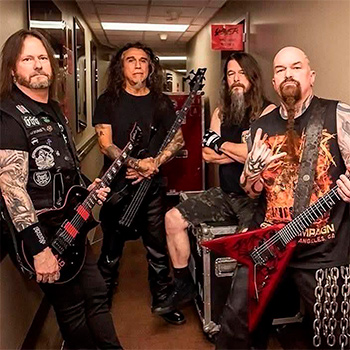
The multi-hour program also featured Metallica, Slayer, Pantera, Guns N’ Roses, Gojira, Tool, Alice in Chains, Anthrax, Lamb of God, Mastodon and other musicians. Tom Morello served as the event’s musical director.
Proceeds from the concert were directed to the charities Cure Parkinson’s, Birmingham Children’s Hospital and Acorns Children’s Hospice.
Back to the Beginning ultimately became Osbourne’s final appearance on a concert stage.
Death
On July 22, 2025, 17 days after his final concert, Ozzy Osbourne died at the age of 76 at his home in Buckinghamshire, surrounded by his family.
According to the death certificate, the causes were listed as out-of-hospital cardiac arrest and acute myocardial infarction. Contributing conditions included coronary artery disease and Parkinson’s disease with autonomic dysfunction.
Following the musician’s death, a public funeral procession was held in Birmingham. Thousands of fans gathered near Black Sabbath Bridge and other locations in the city associated with the band’s history.
The significance of Ozzy Osbourne
Ozzy Osbourne’s role in the history of heavy music is defined by two distinct stages. With Black Sabbath, he participated in creating one of the first fully developed languages of heavy metal: heavy guitar riffs, slowed-down blues, dark themes and vocals that sharply contrasted with the instrumental foundation.
His solo career revealed another side of that language. Albums such as Blizzard of Ozz, Diary of a Madman, Bark at the Moon and No More Tears helped carry heavy metal into the musical environment of the 1980s and 1990s, preserving the genre’s weight while making the songs more melodic and better suited to large concert stages.
Osbourne’s influence beyond his own recordings was equally important. Ozzfest became one of the central platforms of American metal culture, while The Osbournes introduced the musician to an audience that might never have listened to Black Sabbath.
The Rock and Roll Hall of Fame characterizes Osbourne as an artist who, together with Black Sabbath, helped create heavy metal and later repeatedly changed perceptions of what a solo metal artist could be. Among the musicians and groups influenced by his work and the legacy of Black Sabbath are Metallica, Guns N’ Roses, Megadeth, Soundgarden, Alice in Chains and many other acts from several generations.
Ozzy Osbourne entered history not only as the unmistakable voice of Black Sabbath and the creator of a successful solo discography. His career connected the birth of heavy metal in industrial Birmingham at the end of the 1960s with the global concert industry, music television, festival culture and several subsequent generations of heavy music.