
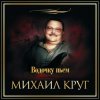
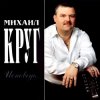
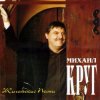
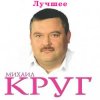



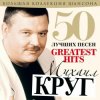
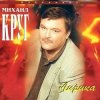


Mikhail Krug (real surname — Vorobyov) was a legendary Russian singer-songwriter, a key figure of Russian chanson and one of the most recognizable artists of the 1990s. His songs became the voice of an era, while the composition “Vladimir Central” turned into a cultural symbol that long ago transcended the boundaries of the genre.
Quick Facts
- Full name: Mikhail Vorobyov
- Date of birth: April 7, 1962
- Place of birth: Kalinin (now Tver), RSFSR
- Date of death: July 1, 2002
- Genre: Russian chanson
- Stage name: Mikhail Krug
Early Years and the Influence of Vladimir Vysotsky
Mikhail Vorobyov was born into a modest family of an engineer and an accountant. He did not excel academically at school, but showed an early interest in music. He attended a music school studying bayan (accordion), though he never graduated, preferring real-life practice over formal education.
A decisive influence on his artistic development was Vladimir Vysotsky. By the age of eleven, Mikhail had mastered the guitar, and by fourteen he had begun writing poetry. This was when his distinctive style took shape — conversational, direct, free of pathos, yet filled with lived experience and inner tension.
Life Before the Stage
After school, Mikhail graduated from a vocational college and became a automotive mechanic, later serving in the army. Upon returning, he married and enrolled in an institute, though he never completed his studies. In 1988, Mikhail divorced and took full responsibility for raising his son Dmitry, marking an important stage of personal maturity.
From 1986 to 1993, Krug worked as a driver and later as the head of a municipal vehicle fleet. During this time, music remained a parallel part of his life, gradually moving to the forefront.
The Beginning of His Creative Path
A turning point came in 1987, when Mikhail participated in a singer-songwriter competition and won first place. After that, he adopted the stage name Krug and began actively writing songs.
His first albums — “Tver Streets” and “Katya” — were never officially released, but circulated widely as underground copies. These recordings laid the foundation of his popularity: songs were passed “from hand to hand,” forming a truly grassroots audience.
Breakthrough and Nationwide Popularity
True success came with the album “Zhigan-Limon” (1994). It established Mikhail Krug as one of the central figures of Russian chanson and defined his artistic niche. Unlike many genre peers, Krug avoided criminal romanticism — his songs sounded like honest stories about fate, time, and people.
From the late 1990s onward, his touring activity intensified. Mikhail Krug performed in Germany, the United States (New York, Boston, Miami, Jacksonville), and Israel (Jerusalem, Tel Aviv, Haifa, and other cities). A special place in his career was occupied by charity concerts, including performances in correctional facilities.
“Vladimir Central” — A Song of an Era
The song “Vladimir Central” became the culmination of his career. It turned into one of the most recognizable musical symbols of the 1990s and secured Krug’s status as the defining voice of Russian chanson. For millions of listeners, the song was not a genre sketch, but a story about time and human destiny.
Mikhail Krug — Discography
Early and Unofficial Albums
These recordings were never officially released, but they shaped Krug’s style and spread widely through cassette circulation.
-
“Tver Streets” (1990, unofficial)
Debut album. Raw and brutally honest songs about his hometown and everyday life. Most tracks were later re-recorded. -
“Katya” (1991, unofficial)
A continuation of the early period. Lyrics became more narrative, and his signature storytelling intonation emerged.
Studio Albums (Main Discography)
-
“Zhigan-Limon” (1994)
A career-defining album. From this release onward, Krug was perceived as one of the leading authors of Russian chanson. It cemented his “street-narrative” style without overt romanticization. -
“Madam” (1995)
A more lyrical album focusing on love, disappointment, and loneliness. One of his softest-sounding releases. -
“Rose” (1996)
An album balancing criminal themes with urban lyricism. Melodicism increased, and songs became more concert-oriented. -
“Vladimir Central” (1998)
The key album in his discography. The title track became a cultural phenomenon and his signature song, bringing nationwide fame. -
“Golden Domes” (1998)
One of Krug’s most philosophical and well-known songs, released during the peak of his popularity. -
“Mousie” (1999)
An album rich in irony and everyday sketches, clearly reflecting Krug’s conversational style. -
“Legends of Russian Chanson” (1999)
A compilation often perceived as a programmatic release due to its selection of key songs. -
“Good Girl” (2000)
One of the most popular albums of the early 2000s, with a stronger lyrical focus and broader audience appeal. -
“Come to My Home” (2001)
A камерний, intimate album centered on themes of home, memory, and personal space. -
“Magadan” (2001)
A harsher, more intense release, returning to themes of destiny, the road, trials, and resilience.
Posthumous Releases and Compilations
-
“Best Songs” (2002)
The first major compilation released after the artist’s death, solidifying his classic status. -
“Dedication” (2003)
A memorial album featuring key songs and rare recordings. -
“Golden Collection” (2000s, compilation series)
A canonical set of songs, regularly reissued and still in demand. -
“The Best” / “Grand Collection” (various years)
International and anniversary compilations aimed at the diaspora and overseas touring markets.
Most Famous Songs
-
“Vladimir Central”
-
“The Tattooist”
-
“Zhigan-Limon”
-
“Magadan”
-
“Good Girl”
-
“The Guy”
-
“Come to My Home”
-
“Golden Domes”
-
“Mousie”
Mikhail Krug’s discography is more than a list of albums — it represents the evolution of Russian chanson, from semi-underground cassette culture to nationwide hits. His recordings remain relevant for decades because they are built not on trends, but on recognizable human stories and an honest tone.
Personal Life
Mikhail Krug avoided exposing his private life to the public and deliberately separated family from the stage. Unlike his on-stage image, he was a reserved person in everyday life, valuing domestic stability and spending as much time as possible with loved ones.
Mikhail was married twice. His first marriage was difficult and ended in divorce in 1988. After the separation, he made an uncommon decision for that time — to raise his son Dmitry on his own, which speaks volumes about his character and sense of responsibility. This period marked an important stage of maturity and influenced themes of fatherhood, duty, and personal choice in his songs.
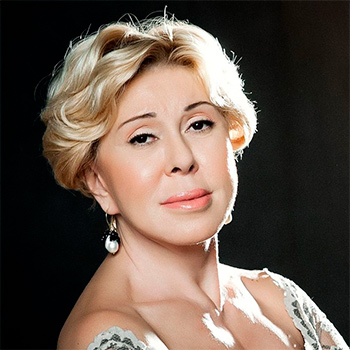
In his second marriage, Mikhail found family stability. His wife was Irina Krug, who was significantly younger than him. Their son Alexander was born in this union. The family lived in Tver, and despite growing fame, Krug chose not to move to the capital, preferring a familiar and calm environment. Home was not merely a place of rest for him, but a space of safety and silence after tours.
Those close to him remembered Mikhail as a caring husband and father, a man without star-like habits. He avoided noisy social circles outside the stage, preferred a small group of friends, and quiet evenings at home. Even at the height of his popularity, Krug remained a man “from the people,” without ostentatious luxury or public displays of status.
Mikhail Krug’s personal life was not part of his stage myth — it was a quiet background against which his songs were formed. This is why his lyrics sound so authentic: they were rooted in real experience rather than a fabricated image.
Tragic Death
On the night of July 1, 2002, Mikhail Krug was fatally wounded in his country house in the village of Mamulino. At the time of the attack, his wife, mother-in-law, and children were in the house. The artist died in hospital later that day. Years later, investigators established that the attack was carried out by members of the “Tver Wolves” gang, with robbery as the motive. The tragedy became one of the most high-profile events in the history of the Russian music scene of the early 2000s.
The Legacy of Mikhail Krug
Despite his early death, Mikhail Krug left behind a vast creative legacy. His songs continue to be heard decades later, and his name has become a synonym for Russian chanson based not on spectacle, but on sincerity and lived truth.