

 Deepside Deejays
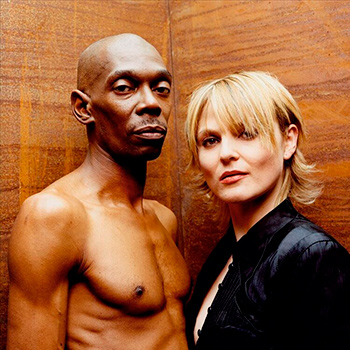
Faithless is a British electronic group founded in London in 1995 by producer Rollo Armstrong, musician and DJ Sister Bliss, vocalist and lyricist Maxi Jazz, and musician Jamie Catto. Over time, the trio of Rollo, Sister Bliss and Maxi Jazz came to be regarded as the group’s main creative core.
Faithless earned a distinctive place in British electronic music through a combination of house, trance, progressive house, trip-hop, hip-hop and downtempo. The group’s dance arrangements coexist with spoken word, socially and philosophically oriented lyrics, live instrumentation and vocal performances by guest artists.
Faithless’ signature songs include Salva Mea, Insomnia, God Is a DJ, We Come 1, Muhammad Ali, One Step Too Far, Mass Destruction, Music Matters and Not Going Home. A special place belongs to Insomnia — one of the most recognizable British electronic tracks of the 1990s, which reached number three on the UK Singles Chart.
Over the course of their career, Faithless have sold more than 15 million albums. Three of their releases topped the official UK Albums Chart: No Roots (2004), the compilation Forever Faithless (2005), and the remix project Faithless 2.0 (2015).
Formation of Faithless
The story of the group began with the collaboration between Rollo Armstrong and Sister Bliss.
Rollo, whose full name is Rowland Constantine O'Malley Armstrong, was already working as a producer and remixer by the early 1990s. He contributed to the creation of Felix’s club hit Don't You Want Me, released music through his own label Cheeky Records and worked with material by other artists.
Sister Bliss, whose real name is Ayalah Deborah Bentovim, received classical musical training and studied piano from childhood, later learning violin, saxophone and bass guitar. By the time Faithless were formed, she was already known on the British house scene as a DJ and electronic musician.
Rollo and Sister Bliss began writing and producing music together even before the group officially appeared.
In 1995, they were joined by Maxi Jazz — a London rapper, poet and member of Soul Food Cafe. His real name was Maxwell Fraser. His calm low voice, measured delivery and lyrics addressing spirituality, society, politics and human relationships became one of the most recognizable elements of Faithless.
The fourth member of the early lineup was Jamie Catto, a vocalist, songwriter and musician who directly contributed to the first two albums and to the writing of several key compositions.
Salva Mea
Faithless’ first single was Salva Mea, released in 1995.
The title is a Latin expression meaning “save me.” The track immediately revealed the unusual structure of the future Faithless sound: an atmospheric introduction, restrained vocal passages, Maxi Jazz’s spoken delivery and a gradually developing club section.
The original UK release reached number 30 on the UK Singles Chart. As the group’s popularity grew, the track was reissued, and by late 1996 Salva Mea had climbed to number nine.
The recording also featured Dido — Rollo’s younger sister, who regularly appeared in her brother’s projects before the start of her own global solo career.
Insomnia
The second single, Insomnia, became the defining early work of Faithless.
The track was created by Rollo, Sister Bliss and Maxi Jazz. The work took place in Rollo’s small studio, set up in a garden building.
The musical structure of Insomnia is unusual for a traditional pop single. The first section develops slowly: a bassline, restrained spoken delivery and gradually rising tension lead into the famous synthesizer riff, after which the track turns into a full-scale club composition.
Maxi Jazz’s lyrics are about sleeplessness. The central line I can't get no sleep became one of the most recognizable vocal fragments in European dance music of the 1990s.
The first UK release in 1995 achieved only moderate commercial results. After being reissued in 1996, Insomnia climbed to number three on the UK Singles Chart.
The track gained widespread popularity across Europe and the United States, was reissued many times and eventually became Faithless’ defining signature song.
Reverence
The debut studio album Reverence was released in 1996.
It included:
- Reverence;
- Don't Leave;
- Salva Mea;
- If Lovin' You Is Wrong;
- Angeline;
- Insomnia;
- and other tracks.
The album combined club electronic music with trip-hop, soul, hip-hop and more restrained downtempo material. From the beginning, Faithless did not limit themselves to dance singles: lengthy club compositions sat alongside songs intended primarily for home listening.
Reverence reached number 26 on the UK Albums Chart and gradually found a much larger audience after the international success of Insomnia.
The role of Maxi Jazz
Maxi Jazz was not a traditional vocalist for an electronic group. His style came from hip-hop and spoken word: instead of sustained singing, he more often used a calm, almost conversational delivery.
The sharp contrast between his vocal style and the large-scale club arrangements became one of Faithless’ defining characteristics.
Maxi Jazz’s lyrics included reflections on religion, personal responsibility, social injustice, war, relationships and human unity. His worldview was strongly influenced by Buddhism, which he practiced for many years.
On stage, his restrained vocal delivery was combined with a very different physical energy: live versions of Faithless songs often sounded significantly harder and more dynamic than the studio recordings.
Sunday 8PM
The second studio album Sunday 8PM was released in 1998.
It reached number ten on the UK chart and was nominated for the Mercury Prize.
The album included:
- The Garden;
- Bring My Family Back;
- Hour of Need;
- Take the Long Way Home;
- Why Go?;
- God Is a DJ;
- Hem of His Garment;
- Sunday 8PM.
The album preserved the contrast between Faithless’ club-oriented and meditative sides. Dance tracks appear alongside downtempo, soul and atmospheric electronic music.
God Is a DJ
The main single from Sunday 8PM was God Is a DJ, which reached number six on the UK Singles Chart.
The track is built around the idea of the club as a space for collective experience, where music temporarily replaces conventional forms of social or religious ritual.
The phrase God is a DJ became one of the best-known expressions associated with late-1990s club culture.
The song gained an especially powerful second life in concert: its extended instrumental structure allowed Faithless to turn it into a major climax of their live performances.
Jamie Catto and departure from the group
After the second album, Jamie Catto gradually stepped away from Faithless.
He continued his own creative work and later became one of the creators of the multimedia project 1 Giant Leap.
After his departure, Faithless became firmly established in the public mind as the trio of Maxi Jazz, Sister Bliss and Rollo, although a broad circle of musicians and vocalists continued to participate in the group’s studio and live work.
Outrospective
The third studio album Outrospective was released in 2001 and reached number four on the UK chart.
During this period, Faithless’ music became even more diverse. House and trance were combined with trip-hop, soul and more pronounced social themes.
The main tracks from the album included:
- We Come 1;
- One Step Too Far;
- Muhammad Ali;
- Tarantula;
- Crazy English Summer;
- Liontamer.
We Come 1
We Come 1 became one of Faithless’ biggest UK singles and climbed to number three on the UK Singles Chart.
The lyrics are based on the idea of human unity and interdependence. Maxi Jazz’s concise vocal structure is combined with a gradually building electronic arrangement and one of the most powerful live refrains in the group’s catalog.
Alongside Insomnia and God Is a DJ, the track became a permanent fixture in Faithless’ concert repertoire.
Muhammad Ali
The song Muhammad Ali is dedicated to the American boxer Muhammad Ali, whom Maxi Jazz described as one of the important figures of his childhood.
For the writer, Ali represented not only sporting greatness but also an example of a Black public figure who possessed confidence and openly defended his beliefs.
The track differs noticeably from Faithless’ best-known club hits and highlights the autobiographical side of Maxi Jazz’s lyrics.
One Step Too Far with Dido
One of Faithless’ best-known vocal collaborations was One Step Too Far with Dido.
The song appeared on Outrospective and was released as a standalone single in 2002.
It reached number six on the UK Singles Chart.
The contrast between Dido’s soft vocals and Maxi Jazz’s calm spoken delivery reveals another side of Faithless, far removed from the large trance-oriented climaxes of Insomnia or We Come 1.
No Roots
In 2004, Faithless released their fourth studio album No Roots.
It became the group’s first studio album to top the UK Albums Chart.
The album centers on themes of war, globalization, political violence and social responsibility.
It included:
- Mass Destruction;
- I Want More;
- Miss U Less, See U More;
- No Roots;
- Swingers;
- Pastoral.
Musically, No Roots was conceived as a continuous work: the tracks flow into one another, and the album’s structure is closer to an uninterrupted electronic cycle than to a conventional collection of separate singles.
Mass Destruction
Mass Destruction became one of Faithless’ most overtly political songs.
Maxi Jazz’s lyrics examine war, racism, poverty and social inequality not as separate problems, but as different forms of societal destruction.
The song appeared during the wars in Afghanistan and Iraq and differed noticeably from the more abstract spiritual themes of the group’s earlier work.
Even with its heavy subject matter, Faithless retained their characteristic dance foundation, combining political spoken word with electronic rhythm.
Forever Faithless
In 2005, the compilation Forever Faithless — The Greatest Hits was released.
It brought together the biggest songs from the group’s first decade and became one of the most commercially successful releases in their catalog.
The compilation topped the UK Albums Chart.
By this point, Faithless had moved far beyond the club scene: the group regularly performed in arenas and at major European festivals while retaining the format of a full live band.
To All New Arrivals
The fifth studio album To All New Arrivals was released in 2006.
The title was connected with the arrival of children in the families of the group members and people close to them. The album’s themes shifted noticeably toward birth, the future, family, human responsibility and the world one generation leaves to the next.
Its tracks included:
- Bombs;
- Music Matters;
- A Kind of Peace;
- Last This Day;
- Hope & Glory;
- Spiders, Crocodiles & Kryptonite.
Guest performers included Harry Collier, Cat Power and Robert Smith.
Music Matters
Music Matters became one of the key club tracks from the later part of Faithless’ first decade.
It once again reflects the group’s characteristic theme of music as a value in itself and as a space for human connection.
The track received numerous remixes and remained in club circulation far longer than its original album cycle.
The Dance
The sixth studio album The Dance was released in 2010.
After the calmer, more vocal-oriented To All New Arrivals, the group once again emphasized its club side.
The album included:
- Not Going Home;
- Feel Me;
- Crazy Bal'heads;
- Comin Around;
- Tweak Your Nipple;
- Feelin Good;
- North Star;
- Sun to Me.
The Dance reached number two on the UK Albums Chart and became the final studio album of Faithless’ classic era with Maxi Jazz before the announced end of the group’s activities.
Faithless split in 2011
In March 2011, Maxi Jazz announced that Faithless would end their activities after the current tour.
He explained that after fifteen years and six albums, the group had already expressed everything it wanted to say in that form.
The final concerts took place at London’s Brixton Academy in April 2011.
A recording of those performances was later released under the title Passing the Baton: Live from Brixton.
Reunion and Faithless 2.0
The break proved temporary.
In 2015, Faithless returned to live performance and marked their twentieth anniversary with the project Faithless 2.0.
It featured new versions of classic tracks created with contemporary electronic artists and remixers.
Faithless material was reworked by Avicii, Tiësto, Armin van Buuren, Above & Beyond, Eric Prydz, Rudimental and other representatives of several generations of the electronic scene.
Faithless 2.0 topped the UK Albums Chart, becoming the group’s third number-one release in the United Kingdom.
Departure of Maxi Jazz
After the live reunion, Maxi Jazz again stepped away from regular work with Faithless in 2016.
He focused on his own project Maxi Jazz & The E-Type Boys, where electronic music gave much more space to blues, rock, funk and reggae.
Faithless continued as a studio project led by Rollo and Sister Bliss.
All Blessed
On October 23, 2020, Faithless released their seventh studio album All Blessed — their first full-length release in ten years.
Maxi Jazz no longer participated in the recording. The project was built around Rollo and Sister Bliss with a wide range of guest vocalists and writers.
Among them were Nathan Ball, Suli Breaks, Caleb Femi and other performers.
The album included This Feeling, Synthesizer, I Need Someone, My Town, Walk in My Shoes and Innadadance.
The lyrics retained Faithless’ traditional social focus — questions of society, identity, technology, mutual understanding and responsibility.
All Blessed reached number five on the UK Albums Chart.
Death of Maxi Jazz
Maxi Jazz died on December 23, 2022, at the age of 65.
His death was announced by Sister Bliss and Rollo, who described their longtime colleague as someone who had changed their lives and highlighted his warmth, intelligence and ability to speak about complex subjects in simple language.
Maxi Jazz’s death became an important dividing line in the history of Faithless. His voice was associated with virtually all of the biggest songs from the classic era — Insomnia, God Is a DJ, We Come 1, Mass Destruction and many others.
At the same time, Faithless did not attempt to find a direct replacement for their former frontman.
Return to the stage without Maxi Jazz
In 2024, Faithless announced their first major live return after the death of Maxi Jazz and confirmed that they were working on new music.
Sister Bliss became the central figure of the live lineup. New concerts also featured vocalists Nathan Ball and Amelia Fox, while Maxi Jazz’s voice and image were integrated into the program through archival material.
The members emphasized that the concerts should both preserve a connection with the past and develop a new version of Faithless, rather than recreate the old show with someone else in Maxi’s place.
The first new single of this period was Find A Way with poet and spoken-word performer Suli Breaks.
Champion Sound
On September 5, 2025, Faithless released their eighth studio album Champion Sound.
The release was conceived in an unusual way: the material was gradually presented in separate parts before taking shape as a multi-part album lasting more than an hour in its final version.
The recording featured both new vocalists and writers and artists already familiar from Faithless’ history:
- Suli Breaks;
- LSK;
- Nathan Ball;
- Amelia Fox;
- MAX RAD;
- Bebe Rexha;
- Emmanuel Jal;
- Antony Szmierek.
Among the tracks are Forever Free, In Your Own Groove, Fugitive, Peace And Noise, Meeting, Driving, Thinking, Find A Way, Dollars And Dimes, Champion Sound, Emmanuel and Yes I Want It Too.
Champion Sound retained Faithless’ core characteristics — extended electronic forms, house rhythms, spoken word and lyrics addressing social and personal themes — without attempting to reproduce Maxi Jazz’s vocal model.
Faithless in 2026
After the release of Champion Sound, the group maintained a high level of live activity and continued releasing collaborative recordings.
On January 30, 2026, Faithless released the single Club Bizarre, recorded with Alok, Alex Christensen and Sam Harper.
On March 6, the collaboration New Religion with American singer Bebe Rexha was released.
The song reached number 41 on the UK Singles Chart and number five on the UK Dance Singles Chart, becoming one of Faithless’ most notable commercial singles of recent years.
In 2026, the group also continued a major European live cycle. Faithless’ schedule included festivals and standalone shows across the United Kingdom and continental Europe, including Sziget, Boomtown, Creamfields and other events.
Sister Bliss
Sister Bliss plays a central role in both the studio and live sound of Faithless.
Her musical background extends far beyond electronic production: she plays piano, violin, saxophone and bass guitar.
Within Faithless, Sister Bliss is responsible for keyboards, synthesizers, composition, arrangements and production. In concert, her parts often form the link between electronic programming and live performance.
After the death of Maxi Jazz, she became the main public representative of the group’s new live era.
Rollo Armstrong
Rollo Armstrong is Faithless’ primary studio architect, producer and co-writer of a significant part of the catalog.
Unlike Sister Bliss and Maxi Jazz, he was rarely involved in the group’s touring life and remained primarily a studio member.
Outside Faithless, Rollo is best known for his work with his sister Dido. He contributed to the creation and production of her albums No Angel and Life for Rent.
His work connects the Faithless catalog with the broader British electronic and pop production scene of the 1990s and 2000s.
Dido and Faithless
Dido was never a permanent live member of Faithless, but her connection with the group is much deeper than a one-off collaboration.
She contributed to early studio recordings, including material from Reverence, and later appeared as a guest vocalist on several tracks.
The best-known collaboration remains One Step Too Far, which reached number six on the UK chart.
Rollo, in turn, played an important role in the development of his sister’s solo career and in producing her most successful early albums.
Faithless’ musical style
Faithless have never existed within a single electronic genre.
The club-oriented side of their catalog is built around extended compositional forms. Many well-known Faithless songs are significantly longer than a standard radio single and gradually build in intensity.
A second defining characteristic is the contrast between dance rhythm and lyrical content. Their songs address insomnia, faith, war, racism, relationships, social responsibility and human unity.
Faithless as a live band
Unlike many electronic projects of the 1990s, Faithless developed a full live-band format early in their career.
Synthesizers and electronic programming were combined with live drums, bass, guitars, percussion and vocals.
The group performed at major festivals and concert venues including Glastonbury, Coachella, Creamfields and other international events.
Live versions of Insomnia, God Is a DJ and We Come 1 earned an especially strong reputation. Their extended structures allowed the group to reshape the tracks for large venues and turn individual instrumental passages into climactic moments within their sets.
Awards and achievements
Faithless received broad professional recognition, although some lists of awards found online incorrectly present nominations as wins.
- Sunday 8PM — Mercury Prize nomination;
- BRIT Awards 1999 — nomination for Best British Dance Act;
- BRIT Awards 2002 — nomination for Best British Dance Act;
- No Roots — No. 1 on the UK Albums Chart;
- Forever Faithless — No. 1 on the UK Albums Chart;
- Faithless 2.0 — No. 1 on the UK Albums Chart;
- Insomnia — No. 3 on the UK Singles Chart;
- We Come 1 — No. 3 on the UK Singles Chart;
- God Is a DJ — No. 6 on the UK Singles Chart;
- One Step Too Far — No. 6 on the UK Singles Chart;
- Salva Mea — No. 9 on the UK Singles Chart;
- more than 15 million albums sold, according to Official Charts.
Faithless studio discography
- Reverence — 1996;
- Sunday 8PM — 1998;
- Outrospective — 2001;
- No Roots — 2004;
- To All New Arrivals — 2006;
- The Dance — 2010;
- All Blessed — 2020;
- Champion Sound — 2025.
Other important releases
- Reverence / Irreverence — 1996;
- Sunday 8PM / Saturday 3AM — 1999;
- Forever Faithless — The Greatest Hits — 2005;
- Passing the Baton: Live from Brixton — 2012;
- Faithless 2.0 — 2015.
The legacy of Maxi Jazz
Maxi Jazz remains the central figure in the classic history of Faithless.
His contribution cannot be reduced to the role of frontman: it was his lyrics and vocal intonation that turned many instrumentally club-oriented tracks into recognizable songs with independent meaning.
In Insomnia, he spoke about a personal physical condition; in God Is a DJ, about the collective experience of music; in We Come 1, about unity; in Muhammad Ali, about a personal cultural role model; and in Mass Destruction, about political and social violence.
After his death, Faithless kept these songs in their live program without attempting to present another performer as a direct successor to Maxi Jazz.
Faithless’ place in electronic music
Faithless emerged during a period when British club music was rapidly moving from the underground into major concert venues and national charts.
The group existed between several scenes at once. Extended club versions allowed Faithless to operate within house and trance culture, downtempo tracks connected them with trip-hop and electronic album music, while Maxi Jazz’s lyrics brought the project closer to hip-hop and spoken-word traditions.
Insomnia became an international club standard, God Is a DJ articulated one of rave culture’s best-known ideas, We Come 1 developed into a large-scale live anthem, and Mass Destruction demonstrated that political themes could exist within commercially successful dance music.
The group’s history did not end with the classic lineup. All Blessed introduced Faithless without Maxi Jazz while he was still alive, while Champion Sound established a new stage after the vocalist’s death. The live return, new team of vocalists and recordings from 2025–2026 kept the project active within the British electronic scene.
Faithless belong to the generation of artists who transformed electronic dance music from a predominantly club-based format into a full-scale live art form. The combination of Rollo’s production, Sister Bliss’s musical language and Maxi Jazz’s lyrics created a catalog in which the scale of rave culture coexists with social, philosophical and personal writing.