


 David Guetta
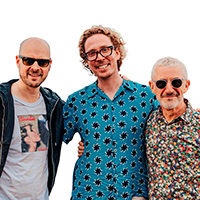
Above & Beyond are a London-based electronic music trio consisting of Jono Grant, Tony McGuinness and Paavo Siljamäki. Formed in 2000, the group became one of the most influential projects in the history of modern trance, combining progressive trance, vocal trance, progressive house, pop songwriting structures and, later, ambient and downtempo. Alongside their own music, the members built an entire ecosystem around Above & Beyond through the labels Anjunabeats, Anjunadeep and Anjunachill, while their weekly programme Group Therapy Radio became one of the central media projects within the Anjuna world.
What distinguishes Above & Beyond is not only their characteristic melodies and club arrangements. A significant part of the trio's catalogue is built as fully realised songs with independent lyrics and recurring vocal collaborators — most notably Zoë Johnston, Richard Bedford and Justine Suissa. This approach allowed the group to exist simultaneously in several formats: as a trance project, a festival act, writers of radio-friendly electronic songs and musicians capable of reimagining the same material for a live orchestra.
Jono Grant, Paavo Siljamäki and the birth of Anjunabeats
The story of Above & Beyond began before the group's name itself existed. Jono Grant and Paavo Siljamäki met while studying at the University of Westminster in London, where they discovered a shared interest in electronic music and studio production. In 1999, they released the track Volume One under the name Anjunabeats. The name was soon adopted for their own label, whose official history dates from the beginning of the 2000s.
The name Anjunabeats referred to Anjuna in the Indian state of Goa, a place closely associated with the history of electronic and trance culture. Initially, the company existed primarily as a platform for Grant and Siljamäki to release their own music, but it gradually grew from a small independent operation into one of the most recognisable brands in melodic electronic music.
The third member of the future trio was Tony McGuinness, who worked in the music industry and in marketing at Warner Music. After receiving a commission to remix Home by British project Chakra, he brought Grant and Siljamäki into the process. That remix became the first studio collaboration involving all three musicians and effectively marked the birth of Above & Beyond.
How the name Above & Beyond originated
Over time, the story behind the group's name became surrounded by simplified versions, but the musicians themselves explained it quite specifically. Jono Grant once came across a webpage belonging to an American motivational speaker who was also named Jono Grant and printed it out. The man's slogan was Above & Beyond. When the musicians needed a collective name after completing the Home remix, that phrase became the name of the new project.
The Chakra remix received significant support within the British club scene, and Above & Beyond soon began working regularly with other artists' material. Particularly important was the Above & Beyond 12" Club Mix of Madonna's What It Feels Like for a Girl in 2001. The trio's early catalogue also included remixes for Delerium, Three Drives, Ayumi Hamasaki and other artists from the electronic and pop scenes.
OceanLab and Justine Suissa
Almost simultaneously with the development of Above & Beyond came another crucial project — OceanLab, created by the trio together with British singer and songwriter Justine Suissa.
OceanLab allowed the musicians to explore a more vocal and atmospheric side of trance. Tracks such as Clear Blue Water, Sky Falls Down, Beautiful Together and especially Satellite became classics of 2000s vocal trance. Satellite reached the UK Top 20, while the collaboration between Above & Beyond and Suissa later continued far beyond the boundaries of the separate project.
In 2008, OceanLab released its only full-length studio album, Sirens of the Sea. It included Miracle, On a Good Day, Lonely Girl, Breaking Ties, Sirens of the Sea and other tracks. The project's catalogue retained its own significance many years later: in 2024, Above & Beyond and Justine Suissa brought together its history in the project OceanLab: The Anthology, including the original album, classic and new remixes, as well as acoustic versions.
Tri-State: Above & Beyond's first album
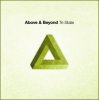
The first album released directly under the Above & Beyond name, Tri-State, came out on March 6, 2006. By that point, the trio had already built a strong reputation within the trance scene, but the album showed that the group intended to move beyond a collection of club singles.
On Tri-State, the electronic foundation was combined with vocal songs and calmer instrumental passages. The album featured Zoë Johnston, Richard Bedford, Ashley Tomberlin and Andy Moor. Its key tracks included Air for Life, Can't Sleep, Alone Tonight, Good for Me, Stealing Time and Home.
It was during this period that one of Above & Beyond's defining characteristics fully emerged: melody and lyrics were as important to them as a track's functionality on the dancefloor. This approach would later become the foundation of virtually all of the group's major albums.
Trance Around the World and the transition to Group Therapy
From 2004, Above & Beyond developed their own weekly radio programme, Trance Around the World, or TATW. It became not only a platform for the trio's own music but also one of the primary ways of introducing new Anjunabeats releases and artists with a related sound.
After 450 episodes, the TATW era ended in November 2012 with a special event in Bangalore. The final part of that event simultaneously became the beginning of a new programme — Above & Beyond Group Therapy Radio, abbreviated as ABGT. Group Therapy was therefore not simply a rebranding of TATW, but its direct successor.
Over time, milestone ABGT episodes developed into major international events in their own right. They were staged at Alexandra Palace in London, Madison Square Garden in New York, Sydney, Ziggo Dome in Amsterdam, The Gorge Amphitheatre, Hong Kong, Prague, Los Angeles and Mexico City. ABGT500 in Los Angeles attracted around 22,000 people, while ABGT600 took place in Mexico City.
Group Therapy and Sun & Moon
The title of the radio show came from Above & Beyond's second studio album, Group Therapy, released in 2011. The record became one of the central works in the group's discography and solidified a model in which club music was built around emotionally complete songs.
The defining track of the era was Sun & Moon featuring vocals by Richard Bedford. The same album also included Thing Called Love, You Got to Go, Love Is Not Enough, Sun in Your Eyes and other recordings.
Over time, Sun & Moon became one of Above & Beyond's signature live songs, while the phrase Group Therapy grew from an album title into a name for the entire concert and radio ecosystem surrounding the group.
We Are All We Need and the first Grammy nomination
In 2015, Above & Beyond released their third main studio album, We Are All We Need. The vocal parts were once again performed by the group's long-term collaborators, while the most notable tracks included We're All We Need, Blue Sky Action, Peace of Mind, Counting Down the Days and All Over the World.
The song We're All We Need, featuring Zoë Johnston, was nominated for a Grammy Award in the Best Dance/Electronic Recording category. It became Above & Beyond's first nomination from the Recording Academy.
The album also demonstrated the gradual expansion of the trio's musical language. Alongside its trance foundation, progressive house, pop structures and softer electronic music became increasingly prominent, making Above & Beyond's studio albums feel less and less like simple extensions of their DJ sets.
Acoustic: the same songs without the club framework
One of the most unusual periods in Above & Beyond's career is connected with the Acoustic series. Instead of merely attempting to perform electronic tracks with live instruments, the group effectively rearranged its catalogue from the ground up for piano, strings, brass, harp, guitar and other acoustic instrumentation.
The first album, Acoustic, was released in 2014, followed by Acoustic II in 2016. The live version of the project featured Zoë Johnston, Justine Suissa and other vocalists. The Acoustic II tour included performances at Royal Albert Hall in London and Hollywood Bowl in Los Angeles.
In this form, songs such as Sun & Moon, Thing Called Love, Satellite, Good for Me and On a Good Day revealed themselves as compositions capable of existing independently of trance tempos and club-oriented rhythm sections.
Above & Beyond later prepared Acoustic III and announced a major concert tour, but the COVID-19 pandemic disrupted those plans. The project was not fully released within the originally intended timeframe; Tony McGuinness later confirmed that a substantial amount of material had been recorded and that the possibility of returning to it had not been completely abandoned.
Common Ground and the group's highest Billboard 200 position
The fourth electronic studio album, Common Ground, was released in 2018. It included Northern Soul, My Own Hymn, Always, Tightrope, Happiness Amplified, Cold Feet and Naked.
The album brought the group its highest-ever result on the main US albums chart: Common Ground debuted at No. 3 on the Billboard 200. This should be distinguished from the claim that the album “topped Billboard” — it did not reach No. 1 on the Billboard 200.
The track Northern Soul, featuring Richard Bedford, earned Above & Beyond their second Grammy nomination in the Best Dance/Electronic Recording category. The group therefore has two Recording Academy nominations — for We're All We Need and Northern Soul.
Flow State: moving beyond the club format
After Common Ground, Above & Beyond made an unexpected turn. In 2019, they released Flow State, a 49-minute album of ambient and neoclassical electronic music that almost entirely abandoned the group's familiar festival structure.
The origins of the project can be traced to Burning Man, where the members began experimenting with calmer music intended for yoga and meditation. The result was a series of atmospheric compositions designed not for the climax of a DJ set, but for focused listening.
This direction later continued through Flow State Meditations, Flow State: Healing With Nature, the singles Morning in Deira / Time Heals and the development of a separate Anjuna branch dedicated to ambient and downtempo music.
The return of Tranquility Base
Despite their experiments with calmer music, Above & Beyond did not abandon club-oriented trance. In 2023, the group revived one of its early names — Tranquility Base — this time as a series of releases under the main Above & Beyond name.
The EP Tranquility Base Vol. 1 was released in 2023, followed by Tranquility Base Vol. 2 in 2024. These releases were built primarily around instrumental club tracks and deliberately referred back to the side of Above & Beyond that had existed before the group evolved into a major vocal project.
At the same time, the trio continued revisiting the OceanLab legacy, preparing new versions of Satellite, Sirens of the Sea and other tracks. This showed that the early catalogue remained active musical material for Above & Beyond rather than simply part of their history.
Bigger Than All Of Us
After a seven-year gap between their main electronic studio albums, Above & Beyond released Bigger Than All Of Us on July 18, 2025 — the fifth such record in their core discography and their first full-length dance album since Common Ground.
Long-time collaborators Zoë Johnston, Richard Bedford and Justine Suissa once again joined the recording process, alongside vocalists new to the group's albums. The track list included Quicksand (Don't Go), Start a Fire, Carry Me Home, Bigger Than All Of Us, Blood From a Stone, Letting Go, Ride at Dawn, Heartland and other songs.
The album followed a difficult period for the group. After the pandemic, the members worked on their own projects, while Paavo Siljamäki openly discussed burnout and doubts about continuing to work in music. The three musicians' return to a full collaborative album therefore represented not simply another entry in the discography, but the effective restoration of their ongoing creative partnership.
Musically, Bigger Than All Of Us does not attempt to reproduce any single period of Above & Beyond's history. Vocal trance, progressive, calmer electronic passages and even elements of drum & bass coexist on the record, continuing the principle established as early as Tri-State: the arrangement serves the song itself rather than a predetermined genre formula.
Anjunabeats, Anjunadeep and Anjunachill
Above & Beyond's contribution to electronic music cannot be separated from the history of Anjuna.
Anjunabeats grew from Grant and Siljamäki's early recordings into an international label that became home to progressive trance, vocal trance and other forms of melodic club music. Through the Anjunabeats Volume series, the musicians have documented the changing sound of their own label for decades.
In 2005, Above & Beyond founded Anjunadeep together with James Grant. Initially focused on the deeper side of progressive house, the label gradually developed its own scene and became one of the leading independent companies in melodic house, deep house and progressive electronic music.
The third major branch became Anjunachill. In 2025, the former Reflections label was renamed and integrated into the wider Anjuna system as a home for ambient, downtempo, neoclassical and more contemplative electronic music. The first release following the relaunch was the Above & Beyond track Shall We Begin.
Above & Beyond's musical style
Above & Beyond's early sound was closely linked with the uplifting and progressive trance of the early 2000s: long introductions, extended harmonic progressions, pronounced breakdowns and gradually constructed climaxes.
However, Tri-State already demonstrated that genre structure was never an end in itself for the group. Vocals and lyrics were given equal importance alongside electronic arrangement, while later albums expanded the range from progressive house and pop-oriented electronic music to acoustic orchestration, ambient and neoclassical music.
The group's recurring circle of songwriters and vocalists also plays a distinct role. Zoë Johnston is associated with the more airy and intimate side of Above & Beyond, Richard Bedford became the voice of major live tracks such as Sun & Moon, Thing Called Love and Alone Tonight, while Justine Suissa connects the group's main discography with the OceanLab legacy.
Above & Beyond discography
Main studio albums
- Tri-State — 2006
- Group Therapy — 2011
- We Are All We Need — 2015
- Common Ground — 2018
- Bigger Than All Of Us — 2025
Other major album projects
- Sirens of the Sea — 2008, as Above & Beyond presents OceanLab with Justine Suissa
- Acoustic — 2014
- Acoustic II — 2016
- Flow State — 2019
- Flow State Meditations — 2020
- Flow State: Healing With Nature — 2021
- The Last Glaciers — 2022, soundtrack to the documentary film
- Tranquility Base Vol. 1 — 2023
- Tranquility Base Vol. 2 — 2024
Major songs
Among Above & Beyond's most significant tracks are Home, No One on Earth, Air for Life, Alone Tonight, Can't Sleep, Good for Me, Sun & Moon, Thing Called Love, You Got to Go, We're All We Need, Blue Sky Action, Peace of Mind, Northern Soul, My Own Hymn, Always, Crazy Love, Heart of Stone, Quicksand (Don't Go) and Bigger Than All Of Us.
The OceanLab catalogue occupies a separate place in the group's history — above all Clear Blue Water, Sky Falls Down, Beautiful Together, Satellite, Sirens of the Sea, Miracle and On a Good Day.
Above & Beyond's place in electronic music
Above & Beyond progressed from a London studio project and the small independent release Volume One to becoming one of the longest-running groups on the international trance scene. Their influence, however, is not tied to one specific record or festival era.
Anjunabeats provided a platform for several generations of producers, Anjunadeep established an independent direction within melodic electronic music, Group Therapy transformed a radio show into an international concert series, while OceanLab, Acoustic and Flow State revealed different sides of the same songwriting philosophy.
The main connecting element throughout Above & Beyond's catalogue remains the song itself. Trance, progressive house, ambient or acoustic arrangement are simply different ways for the group to work with melody and the human voice. This is why Above & Beyond material from different decades continues to coexist in their sets and concert programmes, with early tracks not separated from later releases as music belonging to an entirely different era.