

 Наташа Королева

Giuseppe Ottaviani is an Italian DJ, music producer and live performer working primarily in trance. He was born on November 12, 1978, in Viterbo, near Rome. Ottaviani’s career began in the late 1990s with the project Nu NRG, after which he developed a solo discography, founded his own labels and created several performance formats based on the live production and performance of electronic music.
Early years
Giuseppe Ottaviani began studying music at the age of four, when he started learning to play the piano. His early training was rooted in classical music, but during his teenage years his main interests shifted towards synthesisers, computers and the possibilities of the electronic studio.
In the mid-1990s, Ottaviani began performing as a DJ in local clubs and on radio stations. At the same time, he was learning music software and creating his own compositions. His work with keyboards and sequencers later became the foundation not only of his studio method but also of his live performance format.
Formation of Nu NRG
In 1999, Ottaviani met Italian DJ and producer Andrea Ribeca. Giacomo Miccichè was also involved in the project’s initial work. Together, the musicians created Nu NRG, which later became established as a duo consisting of Giuseppe Ottaviani and Andrea Ribeca.
The project’s name reflected its musical direction: energetic European trance with a pronounced melodic component, fast tempos and extended instrumental climaxes.
In 2001, Nu NRG began releasing music through VANDIT Records, the label founded by Paul van Dyk. One of its first key releases was Dreamland, followed by Connective, Free Fall, Butterfly, The Mind and Casino. These compositions appeared regularly in trance sets during the early 2000s and established the project’s recognisable sound.
Nu NRG live format
Nu NRG developed not only as a studio project. Instead of performing conventional DJ sets, Ottaviani and Ribeca appeared on stage with keyboards, computers and synthesisers, performing their own material live.
This approach required the compositions to be adapted for the stage: individual parts, transitions and arrangement elements were performed or altered directly during the show. The experience gained with Nu NRG later became the foundation of Ottaviani’s solo live programmes.
In 2004, the duo released the studio album Freefall, which brought together the main areas of its work: uplifting trance, tech trance and melodic instrumental compositions. After Nu NRG ended its activities in 2005, Ottaviani focused on his solo career.
Beginning of his solo career
One of Ottaviani’s first solo works was the single Linking People, released through VANDIT Records. The title referred to the label’s slogan, No Art Without Artists, No Artists Without People, and to the idea of bringing audiences together through music.
VANDIT subsequently released Through Your Eyes, No More Alone, La Dolce Vita, Our Dimension and other compositions. In 2008, Ottaviani recorded Far Away with Paul van Dyk for van Dyk’s album In Between.
His solo releases retained the melodic foundation of Nu NRG but allowed the producer to work more freely with vocals, progressive trance and harder club rhythms.
Debut album GO!
Giuseppe Ottaviani’s first solo studio album, GO!, was released in 2009. Its title was formed from his initials and later became part of several of the musician’s own projects.
The album included both instrumental and vocal compositions, among them No More Alone, Angel, Our Dimension and Love Mission. The material represented Ottaviani’s main style at the time: uplifting trance with fast tempos, extended melodic themes and pronounced climaxes.
GO! completed his transition from a member of Nu NRG to an independent artist with his own studio and performance concept. Ottaviani’s official website later described it as his first solo album.
GO On Air
In 2009, Ottaviani also launched the radio show GO On Air. The programme focused on new trance and progressive trance releases and gradually developed into an independent brand under which compilations were issued and club events were organised.
In 2014, GO On Air Recordings was launched in partnership with Black Hole Recordings. Its catalogue featured music by Ottaviani as well as other trance producers. The project remained active until the musician later moved on to his new label, GO Music.
Magenta
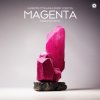
In 2013, Ottaviani released his second studio album, Magenta. Compared with GO!, it contained more vocal compositions and collaborations and demonstrated a broader range between uplifting and progressive trance.
The album featured Eric Lumiere, Amba Shepherd, Audrey Gallagher, Linnea Schössow, Shelley Harland and other vocalists. Its main compositions included Love Will Bring It All Around, Lost for Words, Heal This Empty Heart, Nothing Wrong and Waterpark.
In 2014, the material was developed into the concert programme Magenta Live. To prepare the show, Ottaviani transferred part of his studio setup to the stage and reworked the album tracks for live performance.
Giuseppe Ottaviani Live!
Ottaviani’s solo performances were different from conventional DJ sets from the beginning. In the Giuseppe Ottaviani Live! format, he used keyboards, sequencers, computers and controllers to perform his own compositions and alter their structures during the concert.
The main distinction of this approach was the division of each track into separate elements. The rhythmic foundation could be prepared in advance, while synthesiser parts, effects, melodies and transitions were performed or rearranged on stage.
The live format became a permanent part of his touring work and received several technical upgrades over time.
Live 2.0
In the mid-2010s, Ottaviani introduced Live 2.0. In this version of the show, he not only performed completed compositions but also created the foundations of new tracks directly in front of the audience.
For each performance, the musician prepared a collection of rhythms, melodic fragments and synthesiser parts, which he then assembled into new compositions. Ideas recorded during concerts were later completed in the studio and released as full singles.
One of the first works created through this method was Musica. Material produced through Live 2.0 later became the basis for Lumina, Till the Sunrise, Legacy, Slow Emotion and other compositions.
PureNRG
In 2015, Giuseppe Ottaviani and British producer Solarstone joined forces in the project PureNRG. It was conceived as a collaborative live duo rather than a conventional back-to-back performance.
Both musicians used keyboards, controllers and software, rearranging their own compositions and creating transitions directly on stage. PureNRG’s repertoire included the collaborative tracks Era, Prophecy and Scarlett, as well as live versions of solo works by both members.
The project performed at Dreamstate events and other major trance festivals during the second half of the 2010s.
ALMA
Ottaviani’s third studio album, ALMA, was released in 2016. Its title comes from the Spanish and Italian word meaning “soul.” The album continued his development of vocal and progressive trance while retaining the fast instrumental compositions associated with the producer’s earlier work.
The album included Brightheart with Christian Burns, Countdown, Aurora, Musica, Lost for Words, Slow Emotion and On the Way You Go.
ALMA also documented the transition from conventional studio production to material created with the possibilities of Live 2.0 in mind. Some compositions first emerged as concert improvisations and were later completed for release.
GO Music
In 2017, Ottaviani launched the new label GO Music. Its first release was Lumina, an idea that originated during a Live 2.0 performance in Melbourne.
The label continued the concept of GO On Air but was more closely connected with the musician’s live work. GO Music released compositions created during live sets as well as records by producers selected personally by Ottaviani.
The label’s catalogue featured works by Giuseppe Ottaviani, Hypaton, Factor B, Sneijder, Solarstone, Manuel Le Saux and other artists from the trance scene.
Evolver
In 2019, Ottaviani presented his fourth solo album, Evolver. Its material was recorded after several years of working with Live 2.0 and demonstrated a harder, more functional direction in his music.
The album included:
- Panama;
- 8K;
- Colours;
- Tranceland;
- Operator;
- Belasco;
- Another Day in L.A.;
- Ciudad de México;
- Soundbar.
Unlike the predominantly vocal ALMA, a significant part of Evolver was designed for club performance. The compositions used shorter melodic fragments, a dense bass foundation and elements of tech trance.
Live 3.0
The next stage was the Live 3.0 format. For this version, Ottaviani expanded his technical setup and began preparing exclusive musical material for individual performances.
Live 3.0 combined DJ mixing with live work on keyboards and MIDI controllers. The artist could select individual rhythmic, bass and melodic parts, change their sequence and create versions of compositions that differed from the studio releases.
This format was used at major festivals and during extended solo programmes, where Ottaviani could gradually move from progressive trance to uplifting trance and tech trance.
Horizons
In 2022, Ottaviani released his most extensive solo project, Horizons, divided into three parts. The first part appeared in May, the second during the summer, and the third completed the cycle in December.
On Horizons, Ottaviani significantly expanded his stylistic range. Alongside traditional trance, the material included progressive house, melodic house, vocal electronic music and compositions with lower tempos.
The project included:
- With You with Monika Santucci;
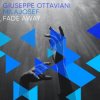
- Fade Away with Mila Josef;
- Something I Can Dream About with April Bender;
- Melody with Sarah de Warren;
- Won’t Matter Much with TreeTalk;
- Hero with Dan Soleil;
- Silhouettes & Outlines with Jess Ball;
- Bittersweet with Katrine Stenbekk;
- Keep You Safe with Richard Walters.
The three-part structure allowed the material to be divided by mood and purpose, ranging from vocal compositions to instrumental tracks designed for club sets.
OTTAGON
In November 2024, Ottaviani introduced the new live project OTTAGON for the first time at Dreamstate Southern California. Its name refers to an octagonal stage installation constructed from eight Novation MIDI keyboards. The musician stands at the centre of the structure and works with instruments positioned around him.
OTTAGON differs from his main solo programme in its musical direction. While releases under the Giuseppe Ottaviani name remain primarily connected with trance, the new project combines trance with melodic techno and more measured club rhythms.
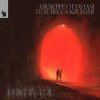
The first official OTTAGON single was Find You, released in January 2025 through Armada Music. It was followed by other compositions prepared for the new concert format.
Album Eight
On May 2, 2025, the album Eight was released under the OTTAGON name. Issued by Armada Music, the record contained twelve compositions that had first been presented as part of the live show at Dreamstate.
The album is built around the combination of trance melodies and elements of melodic techno. Most of its tracks have lower tempos than Ottaviani’s classic uplifting releases, while the arrangements are based on the gradual development of synthesiser themes and extended instrumental transitions.
Eight is a standalone album by the OTTAGON project and is not included in the main numbering of Giuseppe Ottaviani’s solo studio releases.
Musical style
Trance remains the foundation of Giuseppe Ottaviani’s work. His early productions with Nu NRG belong primarily to uplifting trance, characterised by fast tempos, bright synthesiser melodies and extended climaxes.
His sound gradually expanded throughout his solo discography. The albums GO! and Magenta combined uplifting, vocal and progressive trance. ALMA included compositions created through Live 2.0, while Evolver strengthened the club-oriented and tech trance aspects of his music.
The Horizons project demonstrated the producer’s interest in progressive house and more compact vocal compositions. With OTTAGON, he turned towards melodic techno while retaining the harmonic and synthesiser-based approach characteristic of his music.
In 2025, Ottaviani described his current style as melodic and energetic music influenced by techno. In the DJ Mag Top 100 DJs 2025 ranking, he placed at number 89, rising from number 98 the previous year. The ranking is determined through an open public vote.
Approach to studio work
Ottaviani creates music primarily with a digital audio workstation, software synthesisers and hardware controllers. His piano training is evident in the construction of melodies and chord progressions, although his compositions are designed primarily for the club environment.
The producer regularly tests new material during performances. In Live 2.0 and Live 3.0, this practice became part of the creative process itself: a composition could begin as a concert sketch and receive its final form after the audience’s response.
This method connects the studio and performance sides of his work. Live versions are not limited to playing a completed file but allow him to alter the arrangement, the duration of transitions and the combination of individual parts.
Main albums
Giuseppe Ottaviani
- GO! — 2009;
- Magenta — 2013;
- ALMA — 2016;
- Evolver — 2019;
- Horizons Part 1 — 2022;
- Horizons Part 2 — 2022;
- Horizons Part 3 — 2022.
Nu NRG
- Freefall — 2004.
OTTAGON
- Eight — 2025.
Main projects
Nu NRG
A trance project formed in 1999. Its main line-up consisted of Giuseppe Ottaviani and Andrea Ribeca. It released music through VANDIT Records and ended its activities in the mid-2000s.
PureNRG
A collaborative live project by Giuseppe Ottaviani and Solarstone, active primarily during the second half of the 2010s.
GO On Air
A radio show, club brand and label launched by Ottaviani at different stages beginning in 2009.
GO Music
Ottaviani’s own label, founded in 2017 and connected with material created through Live 2.0.
OTTAGON
A live and studio project introduced in 2024. It is built around a setup of eight keyboards and combines trance with melodic techno.
Giuseppe Ottaviani today
Giuseppe Ottaviani continues to release music under his own name while developing OTTAGON as a separate live project. His touring programmes include conventional DJ sets, extended Horizons club performances and keyboard-based live shows.
By 2026, his professional biography encompassed several stages in the development of trance: European uplifting from the early 2000s, the vocal and progressive sound of his solo albums, live music creation through Live 2.0 and Live 3.0, and the combination of trance and melodic techno in OTTAGON.
Live performance remains the central feature of his work. From Nu NRG to OTTAGON, Ottaviani has consistently used keyboards and controllers not as stage decoration but as working instruments that allow him to alter the music directly during a performance.