Music news and show business news — fresh events from the world of music | Page: 10
Music news and show business news on Minatrix.FM bring you fresh events from the world of music, artists, DJs, concerts, festivals, awards and modern pop culture.
Here you will find the latest show business news, major events from the global music scene, DJ news, release reviews, industry trends and articles about the development of electronic music.
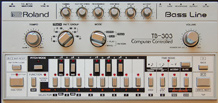
Roland TB-303 Bass Line — the iconic synthesizer that became the symbol of acid house. Learn its creation story, fun facts, influence on music, and modern clones.
Roland TB-303 Bass Line — the legendary synthesizer and sequencer released by the Japanese company Roland in 1981. Initially designed as a compact bass accompaniment for guitarists, it became the instrument that defined an entire movement in music — acid house and techno. History In the late 1970s, Roland was actively experimenting with portable electronic instruments. The TB-303 was conceived as an…

Nu Jazz — a modern style combining jazz improvisation, electronic music, and soul groove. History, key artists, and its influence on the lounge and downtempo scene.
Nu Jazz (also known as electro-jazz or future jazz) is a modern genre that blends jazz improvisation with electronic music, funk grooves, and a lounge atmosphere. The genre emerged in the late 1990s as both a response to the renewed interest in jazz and to the growing popularity of the electronic music scene. History and Formation Late 1990s: In Europe and Japan, DJs and producers began experimenting with…

Electronic Body Music — a powerful fusion of industrial sound and dance rhythm. A journey from Front 242 and Nitzer Ebb to today’s new body techno.
Electronic Body Music (EBM) is a genre of electronic music that emerged in the early 1980s, combining industrial harshness, mechanical rhythm, and the dance energy of synthesizers. It is a style where body and machine merge into one, and music becomes a ritual of movement. History and Origins EBM was born in Europe (mainly in Belgium and Germany) as a response to the cold, detached aesthetics of industrial…

Ambient House — a style that fuses ambient and house. Soft rhythms, atmospheric synths, and a philosophy of sound that balances stillness and motion. History, artists, and modern influence.
Ambient House is a genre of electronic music that blends the meditative atmosphere of ambient with the rhythmic structure of house. It emerged at the intersection of club culture and sound art in the late 1980s, becoming the soundtrack for chillout rooms, sunrise moments on the dancefloor, and relaxed after-hours gatherings. History and Origins Late 1980s – early 1990s: The term ambient house appeared in…

Beatboxing — vocal percussion and the art of creating music using breath, lips, and tongue. From Doug E. Fresh to Dr. Peacock — history, techniques, artists, and the modern scene.
Beatboxing is the art of creating music and rhythms using only the voice, lips, tongue, and breath. It’s a form of vocal percussion where the human body becomes a living drum machine — capable of imitating drums, basslines, samples, and even melodic instruments. History and Origins 1980s: The first elements of beatboxing appeared within the hip-hop culture in the United States. The term “beat…

Frenchcore — an aggressive subgenre of hardcore techno with tempos up to 240 BPM, born from the French rave scene. Discover its history, artists, culture, and modern influence.
Frenchcore is an aggressive and high-speed subgenre of hardcore techno, characterized by tempos around 200 BPM, sharp synths, distorted basslines, and powerful “industrial” energy. It’s music of rebellion and chaotic ecstasy, born from the French rave scene of the 1990s. History and Evolution Early 1990s: The first roots of the style emerged in France within free-party and tekno communities…

Lowercase — a minimalist form of sound art where silence and micro-noises become musical matter. A philosophy of listening, the legacy of Steve Roden, and its influence on sound art.
Lowercase is a radically minimalist branch of experimental electronic music, where the focus is not on rhythm or melody but on sounds that are usually overlooked. It is the art of attentive listening — an exploration of micro-sounds, rustles, friction, and the resonances of the surrounding world. Origins and Philosophy The genre was named and conceptually defined by American composer Steve Roden, who…
Drumfunk — a subgenre of drum’n’bass focused on complex breakbeats and minimalism. Learn about its history, key artists, and influence.
Drumfunk is a subgenre of drum’n’bass that places its main focus on broken, detailed rhythms, deep atmospheric sounds, and minimalism. The style evolved from jungle and intelligent drum’n’bass, becoming a kind of “chamber art” within the d’n’b scene. History and Origins Late 1990s – Early 2000s: Drumfunk emerged as a response to the increasing…

Easy Listening — a genre of soft background music with orchestral arrangements and a romantic atmosphere. History, artists, and modern revival.
Easy Listening is a musical style created for a pleasant and unobtrusive background atmosphere. It blends gentle melodies, orchestral arrangements, and soft rhythms to evoke a sense of comfort, relaxation, and harmony. This genre became a hallmark of the 1950s–1970s — an era when music was not only entertainment, but also a reflection of lifestyle and elegance. History and Origins 1950s: The genre…

DJ Mag has released the Top 100 DJs 2025 ranking! Discover the full list, biographies, styles, and achievements of the world’s best DJs. Vote in the independent Minatrix.FM ranking!
DJ Mag has unveiled the long-awaited Top 100 DJs 2025 — the annual list of the world’s most popular and influential DJs, determined by a global fan vote. For more than thirty years, this ranking has been regarded as the leading benchmark in the world of EDM, house, techno, trance and other branches of the club scene. Every year, tens of millions of listeners from all corners of the globe vote for their…

Nu Disco — a genre that combines 70s–80s disco with modern house. Discover its history, artists, and why it’s conquering dance floors again.
Nu Disco is a music genre that combines the energy of classic 70s–80s disco with elements of house, funk, and electronic music. It preserves the brightness, groove, and danceability of the original disco sound, while adding a touch of modern production and polish. History and Origins The term Nu Disco emerged in the late 1990s and became established in the 2000s, when DJs and producers began reviving the…

The results of DJ Mag Top 100 DJs 2025 have been announced. David Guetta once again tops the ranking of the world’s best DJs! Discover the top 10, the history of the poll, and new trends in the electronic scene.
The most anticipated ranking in the world of electronic music — DJ Mag Top 100 DJs 2025 — has officially revealed its results. Millions of fans across the globe cast their votes to choose their favorites, defining the hundred best DJs on the planet. The absolute winner once again is David Guetta, reaffirming his legendary status and role as a true symbol of the global dance scene. Top 10 DJs of 2025:…

Atmospheric Breaks — a style that combines broken breakbeat rhythms with atmospheric ambient and downtempo sounds. History, artists, and the genre’s influence.
Atmospheric Breaks is a subgenre of electronic music that combines breakbeat rhythms with spacious, ambient, and melodic textures. It creates a feeling of flight, lightness, and cinematic depth, where every beat is surrounded by a soft atmosphere. History and Origins The genre emerged in the mid-1990s at the intersection of breakbeat, ambient, downtempo, and drum’n’bass. Its roots are linked…

Chillout — a style for relaxation and inspiration: 90s origins (Café del Mar), subgenres from ambient to lounge, key artists, and why chill playlists are trending again.
Chillout (or Chill-out) is a style of electronic music created for relaxation and rest. It blends elements of downtempo, ambient, lounge, soul, and jazz, creating an atmosphere of tranquility and inner peace. History and Origins Early 1990s: the term chillout first appeared in British clubs, where “chillout rooms” were created — relaxation zones after raves, where DJs played calm, soothing…

Find out who founded International Music Day and when. Discover 6 fascinating scientific facts about how music affects the brain and the heart. A special greeting from Minatrix.FM!
Every October 1, the world fills with a special melody. It’s not just another date on the calendar — it’s the International Music Day, a celebration for everyone who can’t imagine life without sound, rhythm, emotion, and inspiration. Music is a universal language that needs no words. It unites continents, heals the soul, inspires courage, and helps us experience every emotion more deeply.…
Pages: «« 8 9 10 11 12 »»