



 Sak Noel
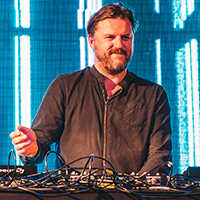
Solomun is the stage name of DJ, producer, and label owner Mladen Solomun, one of the artists who played a notable role in the development of European house music during the 2010s. He was born on December 27, 1975, in Travnik, then part of Yugoslavia, and grew up in Hamburg. Solomun’s international career developed in several directions at once: his own productions and remixes, the growth of the Diynamic Music label, extended DJ sets, and the Solomun +1 residency at Pacha Ibiza, which over time became one of the island’s most recognizable club formats.
Solomun’s music is generally associated with house, deep house, tech house, and melodic house & techno, although his approach has never been limited to any single one of those definitions. His sets and productions reveal influences from soul, funk, R&B, hip-hop, disco, synth-pop, and harder techno. Long-form musical storytelling, heavy bass, melodic climaxes, and close attention to the emotional response of the dancefloor are central to his style — qualities that allowed Solomun to move from Hamburg’s club scene to some of the world’s largest stages without becoming a conventional festival EDM artist.
Travnik, Hamburg, and his first musical impressions
Mladen Solomun was born in Travnik but spent his childhood and teenage years in Germany. His family lived in Hamburg while maintaining close ties to the Balkans. During the Bosnian War in the early 1990s, the Solomun family’s apartment in Hamburg temporarily became a home for relatives fleeing the conflict. The musician later emphasized that he grew up between two cultural environments and learned relatively early to rely on himself.
His first serious introduction to club music came before his teenage interest in DJing. According to Solomun, when he was around twelve years old, an older cousin gave him a cassette containing music from a club. Until then, Mladen had mostly heard whatever was played on the radio, and the recording revealed the existence of an entirely different musical world. He began exploring records, funk, soul, R&B, hip-hop, and dance music.
As a teenager, Solomun attended a youth center where small discos were held on Wednesdays. He was allowed to buy records for the evenings and gradually became trusted with handling the music. Those early performances gave him his first understanding of the relationship between track selection and the reaction of people on the dancefloor. At the time, however, he still did not see DJing as a future profession.
Construction, film, and the return to music
Before beginning a professional music career, Solomun experienced a completely different working environment. As a young man, he worked in his father’s construction company and later became interested in filmmaking. Together with friends, Mladen formed a small team that produced short-form projects, and for several years he was involved in video and film. That experience later proved useful in his music career as well: visual presentation and video remained important parts of Solomun’s projects for many years.
He returned to music gradually. After one party in Hamburg effectively turned into an improvised street event, Solomun began organizing his own parties and performing more frequently as a DJ. To learn how to produce music himself, he bought an inexpensive computer and asked a producer friend working in hip-hop for help. During the early part of this period, his financial resources were limited, and most of his performances took place in small Hamburg venues.
This shaped an important distinction in his later career: Solomun entered electronic music not as a teenage producer immediately focused on international festivals, but as an adult club DJ who already had experience in other jobs, event organization, and observing audiences. Production became an extension of DJing rather than the other way around.
Diynamic: building his own scene instead of trying to join someone else’s label
By the mid-2000s, a circle of musicians and promoters sharing similar ideas about house music had formed around Solomun. Together with Adriano Trolio, he founded Diynamic Music in Hamburg. The label officially launched in 2006; artists from its early circle included H.O.S.H. and Stimming. The name is connected to the idea of DIY — Do It Yourself, reflecting the principle of creating an independent platform rather than constantly seeking support from the existing industry.
Before the label was established, Solomun and his friends had already been organizing parties in Hamburg under the name DIY. According to the musician, the idea for Diynamic emerged directly from the desire to release their own music without having to ask other companies to accept it. Over time, that principle grew into a complete infrastructure: a label, touring events, festival stages, and a network of artists connected not only through contracts but through a shared club environment.
Solomun’s first releases on Diynamic appeared in 2006, including Solomun EP, Do It Yourself EP, Nachrichten EP, and Oelkersallee EP. Over the next several years, he also released music through Dessous, Sonar Kollektiv, Compost, Four:Twenty, and other European labels, gradually becoming a notable figure in Germany’s house scene.
A recognizable sound developed around Diynamic, sometimes described in the music press as part of the so-called Hamburg school of house: relatively slow tempos, deep bass, warm synthesizers, melancholic melodies, and a less mechanical approach to rhythm. Alongside Solomun, important figures in this period included Stimming, H.O.S.H., Kollektiv Turmstrasse, and later David August, Adriatique, and other artists.
Dance Baby — the first album
In October 2009, Solomun released his debut studio album Dance Baby on Diynamic. The record contained eleven tracks and summarized several years of his work within European deep house and tech house. Unlike Solomun’s later club reputation, which was built to a large extent around extended sets and remixes, Dance Baby presented him specifically as an album artist capable of developing long-form compositions and working with rhythmic nuance rather than relying only on obvious climaxes.
Soon afterward, the team expanded its musical space in another direction. At the end of 2010, Diynamic launched the sublabel 2DIY4, intended for riskier music that was less strictly tied to the standard 4/4 club format. The first release came from Solomun himself.
Around — the remix that changed the scale of his career
The major international turning point came in 2011, when Solomun created the Vox Mix of Around by Noir & Haze. His version retained only a minimal set of elements, a deep bassline, and the vocal, but Solomun transformed the original into a much more spacious and emotional club track. Resident Advisor ranked his version number one among the year’s remixes.
Around mattered not only as a standalone hit. It arrived at a moment when European deep house was beginning to move beyond specialist clubs and reach a much wider audience. Solomun’s sound was deep enough for the underground scene while remaining melodic and emotional enough for larger dancefloors. That balance became one of the keys to his later success.
Kackvogel, Watergate, and 2012
The following year firmly established Solomun as one of Europe’s most discussed DJs. For the Watergate series, he recorded the compilation Watergate 11, released in the summer of 2012. It included his own track Kackvogel, which later received a separate release and became one of the best-known club tracks from Solomun’s early period.
At the end of 2012, British magazine Mixmag named Solomun DJ of the Year. The publication linked his rise to the Around remix, Kackvogel, the development of Diynamic, and his growing activity in Ibiza. During the same period, Solomun also received a DJ Awards honor as Producer of the Year.
Notably, international recognition came only after many years of work. By the time Solomun became one of the central DJs of the season, he was not a new artist with a single viral track: he already had a label, an album, dozens of releases, and nearly a decade of club experience behind him.
Ibiza and Diynamic Neon Nights
Ibiza became particularly important to Solomun’s career. In 2012, Diynamic hosted the Neon Nights series at Sankeys. Solomun later described that season as one of the factors behind the rapid growth of his popularity. The Diynamic nights demonstrated that the label’s music could attract its own audience on an island where club programming traditionally revolves around powerful international brands and established residents.
Solomun +1: one night, one guest
In 2013, the Solomun +1 residency launched at Pacha Ibiza. Its idea was deliberately simple: instead of a long lineup featuring numerous well-known DJs, Solomun invited only one guest for the night. The guest artist opened the evening, followed by Solomun, while the final part of the night could develop into a shared set.
He also insisted on reducing the usual distance between the artist and the crowd by moving the DJ position closer to the center of the room. The format created the atmosphere of a smaller club night even inside one of Ibiza’s most famous venues and gave each performer enough time to develop a complete musical narrative.
Over the following seasons, Solomun +1 welcomed artists from different generations and areas of electronic music — from DJ Koze, Dixon, and Âme to newer artists. The project stopped being perceived as a temporary summer party and became one of Pacha’s longest-running residencies. More than a decade later, the format remained active: the 2026 season once again ran on Sundays from late May until early October.
Why long sets became part of his reputation
Solomun’s club reputation is built less around technique in a showy sense and more around musical dramaturgy. He prefers extended sets in which the transition from softer house to harder material unfolds gradually. Instead of an uninterrupted sequence of recognizable tracks, his performances are often structured as several hours of changing tension: calmer passages give way to more rhythmic sections, followed by melodic climaxes or unexpected selections from other genres.
His music selection also depends on the specific venue. Solomun has repeatedly said that he does not believe in playing the same group of records regardless of the audience. At Pacha, he may emphasize more sensual and melodic house, while a festival or special extended set allows for significantly harder material. This approach helps explain why his style is difficult to confine to a single narrow genre label.
Remixes for Foals, Lana Del Rey, and the bridge between club and alternative music
After the success of Around, remixes became one of the most prominent parts of Solomun’s discography. He worked not only with electronic producers but also with artists far beyond traditional club house. In 2013, he released a remix of Late Night by Foals, followed in 2014 by an extended club version of West Coast by Lana Del Rey.
These productions demonstrate a technique characteristic of his work: Solomun generally does not simply add a straight dance beat to an original song. Instead, he identifies its emotional center — a vocal phrase, chord, or melody — and builds a new, significantly longer club form around it. This is why many of his remixes feel almost like standalone compositions.
In later years, he created versions of tracks by Paul Kalkbrenner, Editors, Interpol, Depeche Mode, and other artists. The compilation Solomun – Selected Remixes 2009–2015, released by Diynamic, formally documented the importance of this side of his catalog.
Global Underground: Hamburg
In 2014, Solomun joined the celebrated Global Underground series with GU40: Hamburg. The choice of city was symbolic: despite his global touring schedule and strong connection with Ibiza, Hamburg remained the center of his professional history. The double mix was structured as two different sides of a single set — a more melodic and restrained first part followed by a more club-focused second half.
Diynamic as a school for artists
By this point, Diynamic had long since become more than a way for Solomun to release his own music. Artists including Stimming, H.O.S.H., Kollektiv Turmstrasse, David August, Adriatique, Karmon, and many other producers passed through the label and its associated events. For some of them, Diynamic releases became an important stage in their international development.
Solomun continued to participate directly in music selection. Even after becoming a globally touring DJ, he kept listening to demos and using his own sets as a space for testing new material. His influence on the scene is therefore connected not only to his own tracks, but also to the music by other artists that he chooses, releases, and plays.
Grand Theft Auto Online and Customer Is King
In 2018, Solomun became one of the DJs featured in the After Hours update for Grand Theft Auto Online. Players could book him as a resident DJ for their virtual nightclub; Tale Of Us, Dixon, and The Black Madonna also appeared in the project. Rockstar Games integrated real representatives of club culture directly into the game world rather than simply using their tracks on the soundtrack.
The collaboration continued with the video for Customer Is King, created inside the world of Grand Theft Auto V. Solomun appeared as his own virtual character, while the track itself was included on the EP of the same name. The project significantly expanded his presence beyond the traditional electronic music audience.
Nobody Is Not Loved — a return to the album format
Almost twelve years passed between Solomun’s first and second studio albums. Nobody Is Not Loved was released on May 28, 2021 through NINL in collaboration with BMG. The album contained twelve tracks and featured guests including Jamie Foxx, Planningtorock, ÄTNA, Isolation Berlin, Anne Clark, Zoot Woman, and Editors vocalist Tom Smith.
Musically, Nobody Is Not Loved is much broader than Dance Baby. Alongside house and techno, it incorporates synth-pop, new wave, and post-punk influences. Home centers on the idea of people returning to a shared musical space, Kreatur der Nacht with Isolation Berlin draws on 1980s aesthetics, Tuk Tuk was recorded with ÄTNA, and Ocean features Jamie Foxx.
The album title — “nobody is not loved” — became much more than a conventional release name for Solomun. He used it as a statement of his relationship with music: the dancefloor, in his view, should be a space where social differences temporarily lose their importance. At the same time, the album addressed digital isolation — a situation in which algorithms and the constant presence of phones gradually replace the direct experience of sharing music with other people.
The pandemic pause and a changing relationship with DJing
The period of club closures during the pandemic was unusual for Solomun after many years of almost uninterrupted touring. Unlike many of his colleagues, he did not begin regularly streaming DJ performances. The musician explained that DJing makes sense to him primarily as a direct exchange of energy with people sharing the same physical space.
After clubs reopened, he even considered ending his active DJ career, but the reaction of audiences following the long break changed his decision. Solomun subsequently returned to a dense international schedule and his long-running Ibiza residency.
New generations and an expanding sound
The later stage of his career shows that Solomun has no interest in preserving the sound of the early 2010s unchanged. His sets gradually began to include faster and harder material, while emotional dramaturgy remained central to his approach. At the same time, he continued working with producers significantly younger than himself and using Diynamic as a platform for new music.
In December 2025, Solomun and Scottish producer Denis Sulta released the collaborative single Say Nothing on Diynamic. In March of the following year, Kinesphere with Coco Nancy appeared, while Solomun also created an official remix of Nina Simone’s Take Care Of Business for Verve Records.
Rumpta with Skrillex
In July 2026, Solomun released his first studio collaboration with Skrillex — the track Rumpta on Diynamic. Before its official release, the track had already appeared in both artists’ sets, while their creative relationship developed further after joint performances in Ibiza.
Rumpta is notable not only because it brings together two famous names. Skrillex and Solomun represent very different trajectories within electronic music: the former became a global star through bass music and festival culture, while the latter rose through European house and club residencies. For their collaboration, they chose a relatively direct house structure with a heavy groove instead of mechanically combining the most obvious characteristics of their previous styles.
Solomun +1 more than a decade later
The continued existence of Solomun +1 is particularly important for understanding his position in electronic music. Most club formats are closely tied to a specific season or trend, while the Pacha residency has existed since 2013 and continues to refresh its guest list regularly. In 2026, the lineup included artists from different generations and scenes, among them Skrillex, Barry Can't Swim, DESIREE, KETTAMA, and Âme.
The basic principle of the night has barely changed: one guest artist, enough time for separate sets, and a shared musical section. Limiting the number of participants is precisely what allows the format to remain the opposite of the festival model, where a DJ is often given only an hour or ninety minutes.
Solomun’s style
The term deep house is strongly associated with the period of his international breakthrough, but using it as the sole description of Solomun’s entire career is insufficient. Early Diynamic recordings were indeed built around deep house, but later his sets incorporated elements of melodic techno, indie dance, electronica, disco, synth-pop, and more direct techno.
His identity is defined more by the way he handles material. Solomun prefers tracks in which rhythm works together with a strong emotional idea — a bassline, vocal, unusual synthesizer pattern, or melody. He may place a recognizable song next to an obscure club release if the transition between them serves the overall dramaturgy of the performance. That freedom allows him to remain connected simultaneously with a broad audience and the club scene.
Duration is important as well. Many of Solomun’s most characteristic performances are not built around a sequence of rapid climaxes but around a gradual accumulation of tension. In this sense, a DJ set for him is closer to a complete narrative in which an individual track gains meaning from what came before it and what follows afterward.
Solomun discography
Studio albums:
- Dance Baby — 2009, Diynamic Music;
- Nobody Is Not Loved — 2021, NINL / BMG.
Solomun has released only two main studio albums of original material, so a significant part of his discography exists in the form of EPs, singles, remixes, and DJ compilations.
Selected EPs and singles:
- Solomun EP — 2006;
- Do It Yourself EP — 2006;
- Nachrichten EP — 2006;
- Federgewicht EP — 2008;
- Love Recycled EP — 2011;
- Kackvogel — 2012;
- Friends — 2014;
- Zora — 2015;
- Customer Is King EP — 2018;
- Home — 2020;
- Say Nothing — with Denis Sulta, 2025;
- Kinesphere — with Coco Nancy, 2026;
- Rumpta — with Skrillex, 2026.
Solomun’s early catalog and major releases are documented in Diynamic’s official discography and on music streaming services.
Key DJ compilations:
- Watergate 11 — 2012;
- Global Underground #40: Hamburg — 2014;
- Solomun – Selected Remixes 2009–2015 — 2016.
These releases show another side of his work: Solomun is important not only as a producer of his own tracks, but also as a selector and curator of other artists’ music.
Selected remixes
- Noir & Haze — Around (Solomun Vox Mix) — 2011;
- Tiefschwarz — Corporate Butcher (Solomun Remix) — 2011;
- Foals — Late Night (Solomun Remix) — 2013;
- Tiga vs. Audion — Let's Go Dancing (Solomun Remix) — 2013;
- Lana Del Rey — West Coast (Solomun Remix) — 2014;
- Paul Kalkbrenner — Cloud Rider (Solomun Remix) — 2015;
- Editors — Our Love (Solomun Remix) — 2015;
- Interpol — Everything Is Wrong (Solomun Remix) — 2016;
- Depeche Mode — Going Backwards (Solomun Remix) — 2017;
- Nina Simone — Take Care Of Business (Solomun Mix) — 2026.
The remix catalog is particularly important when assessing his career as a producer: some of Solomun’s best-known recordings were created from other artists’ songs.
Solomun’s place in contemporary electronic music
Solomun’s story differs from the typical career path of a DJ from the social-media era. His international success developed comparatively late — after many years of small performances, running his own label, and working within a local scene. When Around and Kackvogel sharply expanded his audience, a fully developed Diynamic music ecosystem was already in place behind them. That is why growing popularity did not require Solomun to completely change the way he worked.
Equally important is Solomun’s contribution to reshaping the idea of a major club DJ. In an era of increasingly shorter festival sets, he made the extended performance one of the central elements of his own identity. Solomun +1 is built not around the number of famous names on the lineup, but around the amount of time two artists need to fully develop their music.
At the same time, Solomun has managed to maintain a rare balance between several levels of electronic culture. He can perform for festival crowds numbering in the thousands, remain resident at one of Ibiza’s most famous clubs, and at the same time regularly release music by lesser-known producers through Diynamic. Even his appearance in Grand Theft Auto Online or collaboration with Skrillex did not displace the central model of his career — that of a DJ for whom the dancefloor remains the core of everything.
It is this consistency that has made Solomun one of the most enduring figures in the house scene of his generation. From youth-center discos in Hamburg and the first DIY parties to Diynamic, his long-running nights at Pacha, and international performances, his career has developed around the same basic idea: music gains its real meaning not in isolation, but in the moment of direct connection between the DJ and the people in front of him.