
 Yaktak

Moby (real name — Richard Melville Hall; born September 11, 1965, in Harlem, Manhattan, New York City, USA) is an American electronic musician, composer, producer, DJ, singer and multi-instrumentalist. One of the most prominent figures on the American electronic scene of the 1990s and 2000s, he has worked at the intersection of techno, house, ambient, downtempo, trip-hop, punk rock and pop music. Moby achieved worldwide fame with the album Play (1999), which sold more than 12 million copies and became one of the most commercially successful electronic albums of its era. Over the course of his career, he has sold more than 20 million albums worldwide.
Moby's best-known tracks include «Go», «Feeling So Real», «Porcelain», «Natural Blues», «Why Does My Heart Feel So Bad?», «South Side», «We Are All Made of Stars», «Extreme Ways», «Lift Me Up» and «Slipping Away». A defining feature of his work is the combination of club-oriented electronic music with piano, guitar, orchestral textures and archival recordings of blues, gospel and American folk music. In his later career, ambient music, piano minimalism and orchestral reinterpretations of his own catalog became increasingly important.
Childhood, punk and the origin of the name Moby
Richard Hall was born in New York City but spent much of his childhood in Connecticut. His father, James Frederick Hall, a chemistry professor, died in a car accident when Richard was two years old. The future musician was raised by his mother, Elizabeth McBride Warner. The family lived in California for a time before returning to the East Coast of the United States.
He was given the nickname Moby while still an infant. It referred to Herman Melville's novel Moby-Dick and to a family story suggesting that the Halls were related to the writer. Moby himself has repeated this version many times, although the alleged connection should not be treated as a genealogically proven fact.
Hall became interested in music long before the rise of the electronic dance scene with which his name would later become associated. As a child, he studied classical guitar and piano and learned the basics of music theory; as a teenager, he became interested in punk and post-punk.
At 17, he played guitar in the hardcore punk band Vatican Commandos, part of Connecticut's small but active punk scene. After leaving the group, Hall joined AWOL. His hardcore background would repeatedly resurface in his later work, especially on Animal Rights and in the project Moby & The Void Pacific Choir.
New York club culture and the first electronic recordings
During the second half of the 1980s, Moby gradually shifted from guitar-based music toward electronic production. He became increasingly interested in house, early techno, hip-hop, industrial music and the culture of New York clubs. He worked as a DJ and began recording his own tracks using synthesizers, samplers and drum machines.
During this early period, Hall used several names and aliases. The most significant of his parallel projects was Voodoo Child, under which he released more experimental electronic material. A large part of Moby's earliest recordings was issued by the New York label Instinct Records.
His first major breakthrough came with «Go». An early version appeared in 1990, while the famous Woodtick Mix was released in 1991, built in part around a sample of Angelo Badalamenti's «Laura Palmer's Theme» from David Lynch's television series Twin Peaks. «Go» reached the UK Top 10 and transformed a little-known American producer into a notable figure on the international rave scene.
Even in these early recordings, an approach emerged that would remain central to Moby's work: he never treated electronic music as a strictly club-oriented genre and freely combined techno and house with punk, ambient, cinematic music and pop melody.
Everything Is Wrong and the collision of electronic music with rock
After the early releases Moby (1992) and Ambient (1993), the most important work of the first half of the decade was Everything Is Wrong, released in 1995. It demonstrated the musician's unusually wide range, from the high-speed rave of «Feeling So Real» to the slow atmospheric pieces «God Moving Over the Face of the Waters» and «When It's Cold I'd Like to Die».
Rather than consolidating his position as a successful techno producer, Moby almost completely reversed direction on his next album. Animal Rights (1996) was filled with punk, heavy guitars and aggressive alternative rock. For listeners expecting a continuation of his electronic work, the record came as a surprise and was commercially far less successful than its predecessor.
This period nearly brought his career as a major artist to an end. Yet it was after Animal Rights that Moby began working on the album that would completely transform his place in the music industry.
Play: the album that changed Moby's career
Play was released on May 17, 1999. During its first months, it did not look like a future international blockbuster. Moby himself did not expect major sales, but the songs gradually gained exposure through radio, television, films and especially commercial licensing. The album ultimately sold more than 12 million copies.
One of the foundations of its sound was archival recordings of traditional American music. Moby worked with vocal excerpts from collections assembled by folklorist Alan Lomax and other archival sources, placing the voices of performers from the first half of the 20th century into an entirely new electronic context.
«Honey» uses the voice of folk singer Bessie Jones, «Find My Baby» is built around a recording by blues singer Boy Blue, while «Natural Blues» is based on Vera Hall's «Trouble So Hard». The vocal sample in «Why Does My Heart Feel So Bad?» came from a gospel recording. Rather than imitating older music, Moby combined it with piano, synthesizers, electronic rhythms and his own vocals, creating a bridge between musical eras.
The principal songs from Play included:
- «Porcelain»;
- «Natural Blues»;
- «Why Does My Heart Feel So Bad?»;
- «Honey»;
- «Bodyrock»;
- «Run On»;
- «South Side».
Music licensing played a particularly important role in the album's history. All 18 tracks on Play were eventually used in advertising, film or television projects — an unprecedented case at the time. The strategy initially sparked debate about excessive commercialization, but it also helped the album reach audiences that electronic artists of the late 1990s rarely accessed through traditional American radio.
The commercial success of Play was significant in a broader context as well: electronic music, which in the United States had long remained primarily a club and subcultural phenomenon, gained one of its most recognizable mainstream artists.
18 and Extreme Ways
After the unexpected scale of Play, Moby faced the difficult task of creating a follow-up without simply repeating the previous album. 18 was released in 2002 and developed the more melodic and contemplative side of his music. Electronic production, gospel vocals, ambient textures, orchestral elements and pop songwriting coexisted throughout the record.
One of its principal singles was «We Are All Made of Stars», but «Extreme Ways» developed the most enduring connection with popular culture. The song was used over the end credits of The Bourne Identity and later became a musical signature of the entire Jason Bourne film series. It is therefore more accurate to speak of the repeated use of one of Moby's songs throughout the franchise rather than describing him as the composer of its soundtrack.
Hotel, Last Night and a return to more intimate music
Hotel (2005) was a considerably more song-oriented album. Unlike Play, Moby deliberately moved away from relying heavily on old vocal samples. His own voice, guitars and guest singers came to the foreground. The best-known songs from this period included «Lift Me Up», «Raining Again» and «Slipping Away».
On Last Night (2008), he returned to New York dance culture. The album was conceived as a musical model of a night in a club, moving from energetic house music toward quieter early-morning passages.
Just one year later, Wait for Me (2009) revealed the opposite side of Moby. Instead of aiming for major singles, he created a more intimate and melancholic record in which ambient textures, piano and restrained electronic arrangements played an important role.
Destroyed, Innocents and The Void Pacific Choir
Destroyed (2011) grew largely out of life on tour. The material was created in hotels and empty cities during the hours when insomnia left Moby alone after concerts. This nocturnal sense of detachment defined much of the album's atmosphere.
In 2013, he released Innocents, recorded with producer Mark «Spike» Stent and several guest vocalists. For Moby, who was accustomed to controlling almost every part of the studio process himself, working with an outside producer was an unusual decision.
In 2016–2017, his rock background once again came to the forefront through Moby & The Void Pacific Choir. The albums These Systems Are Failing and More Fast Songs About the Apocalypse combined post-punk, electronic music and politically charged lyrics. It was one of the most aggressive periods in his work since Animal Rights.
Ambient music and immersive listening
Alongside his song-based albums, Moby consistently developed an ambient direction. Long Ambients 1: Calm. Sleep. (2016) and Long Ambients Two (2019) consisted of extended compositions designed more for sleep, meditation and calm listening than for a traditional album format.
In 2023, he released Ambient 23, a work lasting more than two hours and built mainly around analog electronic textures. Moby explained that creating this kind of music was connected to his desire to cope with anxiety and to create a sonic space free from informational noise.
Reprise and Resound NYC: reinterpreting his own music
By the beginning of the 2020s, Moby was increasingly returning to his catalog not through conventional remasters or compilations, but by creating entirely new arrangements of older works.
Reprise (2021), released by Deutsche Grammophon, presented orchestral and acoustic versions of songs from different periods of his career. The recording featured an orchestra, string musicians and guest vocalists. Instead of club rhythms, the focus shifted toward composition, harmony and the melodic foundations of the songs.
The idea continued with Resound NYC (2023). For this project, Moby rearranged works that had been written or originally recorded in New York. The new versions featured Gregory Porter, Lady Blackbird, Ricky Wilson, Nicole Scherzinger, Amythyst Kiah and other performers. Electronic instruments were combined with chamber ensembles, strings and brass.
Always Centered at Night
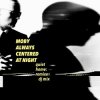
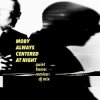
In 2024, Moby released Always Centered at Night, a collaborative project in which each of the 13 tracks featured a different guest vocalist. Participants included serpentwithfeet, Lady Blackbird, José James, Gaidaa and British poet Benjamin Zephaniah.
The album grew out of the label and creative platform of the same name, which Moby used to collaborate with vocalists who were not necessarily focused on a mainstream pop audience. Musically, the record returned him to a blend of soul, nocturnal electronic music, downtempo and melodic house.
That same year, Moby embarked on his first European tour in more than a decade. The concerts marked the 25th anniversary of Play, with a program featuring songs from the landmark album as well as material from other periods, ranging from «Go» and «Feeling So Real» to «Extreme Ways». Moby directed the tour's profits to animal protection organizations.
Future Quiet and a new phase in 2026
On February 20, 2026, Moby released Future Quiet through BMG, officially presented by the label as his 23rd studio album. Its fourteen compositions develop the quieter side of his work through piano minimalism, neoclassical arrangements and expansive ambient soundscapes.
The album opens with a new version of «When It's Cold I'd Like to Die» featuring vocals by Jacob Lusk of Gabriels. The original track had been recorded for Everything Is Wrong in 1995 with singer Mimi Goese, but decades later it found a new audience through its use in the television series Stranger Things. By the time Future Quiet was released, the song had become one of Moby's most in-demand recordings on streaming services.
In 2026, Moby also continued an active concert schedule, performing at festivals in the United States, Mexico and Europe. The long period in which he largely stepped away from regular touring, characteristic of much of the 2010s, had effectively come to an end.
Moby and cinema
Moby's connection with film extends far beyond traditional soundtrack composition. His music has regularly been licensed for feature films, television series, documentaries and advertising.
«God Moving Over the Face of the Waters» became widely known through the ending of Michael Mann's Heat, while «Extreme Ways» became inseparable from the Jason Bourne films. Music from the Play era was used so extensively that synchronization licensing became one of the key factors behind the album's international success.
Moby did not limit himself to commercial licensing. He also created mobygratis, a project through which he made part of his music available to independent and non-commercial filmmakers for use in their films. Moby was already discussing the service publicly in the early 2010s.
Moby's musical language
Moby's work cannot be accurately described through a single genre. At different stages, the foundations of his music have included:
- techno and early rave;
- house;
- ambient;
- downtempo;
- trip-hop;
- alternative rock and punk rock;
- soul and gospel;
- piano minimalism and orchestral music.
His most characteristic technique is the collision of sources that initially appear incompatible. An old blues voice may be placed over a modern drum machine, a simple piano progression beside a synthesizer, or the structure of a house track alongside the aesthetics of church gospel or chamber music.
At the same time, it would be inaccurate to define Moby solely through Play. The punk of Vatican Commandos, the heavy guitars of Animal Rights, the club-oriented Last Night, the politically charged work of The Void Pacific Choir and his hours-long ambient projects all demonstrate that stylistic change had been part of his approach long before international fame and remained central afterward.
Veganism and animal rights
Animal protection occupies a place in Moby's life no less significant than many of his musical projects. He has followed a vegan lifestyle since 1987 and for decades has supported organizations opposing animal exploitation, as well as environmental and humanitarian initiatives. In 2025, he marked 38 years since becoming vegan.
This position is regularly reflected in album artwork, interviews, documentary projects and his financial decisions. For example, Moby chose to donate the profits from his 2024 European tour to animal welfare organizations. His activism therefore cannot be viewed merely as a late addition to his music career; these views have accompanied his public life since the late 1980s.
Books
In 2016, Moby published the memoir Porcelain, focused primarily on the period from 1989 to 1999: life in New York, club culture, poverty during the early years of his professional career and his gradual rise as a well-known electronic musician.
His second autobiographical book, Then It Fell Apart, appeared in 2019. It begins roughly where the first book ends and describes the period after Play, sudden global fame and the destructive side of celebrity life.
Moby album discography
- Moby — 1992
- Ambient — 1993
- Everything Is Wrong — 1995
- Animal Rights — 1996
- Play — 1999
- 18 — 2002
- Hotel — 2005
- Last Night — 2008
- Wait for Me — 2009
- Destroyed — 2011
- Innocents — 2013
- Long Ambients 1: Calm. Sleep. — 2016
- These Systems Are Failing — 2016, as Moby & The Void Pacific Choir
- More Fast Songs About the Apocalypse — 2017, as Moby & The Void Pacific Choir
- Everything Was Beautiful, and Nothing Hurt — 2018
- Long Ambients Two — 2019
- All Visible Objects — 2020
- Live Ambients – Improvised Recordings Vol. 1 — 2020
- Reprise — 2021
- Ambient 23 — 2023
- Resound NYC — 2023
- Always Centered at Night — 2024
- Future Quiet — 2026
In addition to his main discography, Moby has released a large number of compilations, remixes, soundtracks, alternate album versions, ambient recordings and works under other names, most notably Voodoo Child. His complete catalog is therefore considerably broader than the list of his principal studio releases. Official BMG materials describe Future Quiet as Moby's 23rd studio album.
Moby's significance for electronic music
Moby has occupied an unusual position between several different musical worlds. He began in American hardcore punk, participated in the development of New York's early electronic scene, lived through the rave era, achieved global pop success and later returned to experimental, ambient and orchestral forms.
Play remains the central work of his career not only because of its multi-million sales. The album demonstrated that electronic music could exist outside a club context while retaining its connection to house, techno and sampling culture. At the same time, «Porcelain», «Natural Blues» and «Why Does My Heart Feel So Bad?» helped define the melancholic form of electronic pop with which Moby's name became associated around the world.
His legacy, however, extends far beyond a single album. For more than three decades, Moby has moved consistently from rave to punk, from gospel samples to orchestral arrangements, and from pop songs to hours-long ambient compositions. It is precisely this ability to work across different musical languages while preserving his own distinctive voice that has secured his place among the most recognizable and enduring artists in contemporary electronic music.