





 Alan Walker
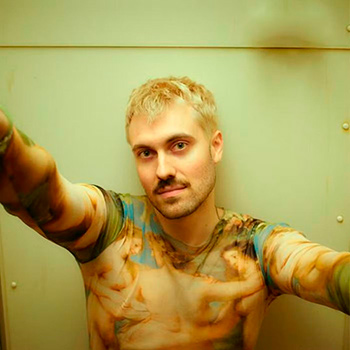
Marlon Hoffstadt, also known as DJ Daddy Trance, is a German DJ, music producer, electronic music artist, and founder of several Berlin-based record labels. His work combines trance, Eurodance, hard house, techno, rave, and dance-pop.
Hoffstadt is one of the most prominent representatives of a new wave within the European club scene that has revived interest in fast tempos, vivid synthesizer melodies, and the emotional aesthetics of 1990s and early-2000s dance music. His career, however, began long before he developed the DJ Daddy Trance persona: the musician achieved his first international success in the early 2010s through house releases and collaborations with other artists.
Childhood and Introduction to Club Culture
Marlon Hoffstadt was born in 1994 and grew up in Berlin, a city whose club environment had a defining influence on his musical development. As a teenager, he visited Berlin venues such as Kater Holzig, Maria, and Magdalena, while the film Berlin Calling, starring Paul Kalkbrenner, became one of his early sources of inspiration.
Hoffstadt attended his first rave at approximately 15 years old. At 17, he played his debut DJ set at the Suicide Circus club and began producing his own tracks around the same period. His early immersion in nightlife exposed him to various branches of Berlin electronic music, ranging from minimal house and techno to more melodic forms of club music.
Hoffstadt later completed a university degree in public relations and journalism. The knowledge he acquired proved useful when developing his labels, parties, and artistic brand, although production and DJing remained the foundation of his professional career.
Early Releases and WellDone Music
Marlon Hoffstadt’s professional discography began taking shape in the early 2010s. One of his first long-term creative partners was the singer and producer HRRSN, whose real name is Ulrich Harrison. The musicians met in 2012 and subsequently began creating vocal house music together.
Their early recordings were released through Hoffstadt’s own label, WellDone Music. In March 2013, Marlon Hoffstadt and HRRSN released a collaborative EP before continuing to work together both as independent artists and as the project Tender Games. The duo’s music was characterized by soft electronic production, soul vocals, and the influence of deep house.
During the same period, Hoffstadt’s music appeared on OFF Recordings, Play It Down, Stil vor Talent, and other European labels. The early stage of his career was primarily associated with deep house, tech house, and melodic club-oriented electronic music, which differed considerably from the faster and more direct sound he would later develop as DJ Daddy Trance.
Shake That and His First International Success
Marlon Hoffstadt’s first major success came with Shake That, a track created in collaboration with producer Dansson. The original version was released in 2013 and received considerable support in Ibiza and across the European house scene.
In 2014, the track was reissued by FFRR, the label associated with DJ and radio presenter Pete Tong. The release brought the young producer international attention and enabled him to begin performing regularly outside Germany. Hoffstadt later admitted that he did not feel a strong enough creative connection to the track’s commercial tech house sound and did not want to build the rest of his career around repeating its formula.
The success of Shake That remains important to the artist’s history, but it should not be regarded as the beginning of the DJ Daddy Trance style. It represented a separate phase associated with more restrained house music and the club aesthetics of the first half of the 2010s.
Tender Games and the Search for His Own Direction
Alongside his solo career, Hoffstadt continued working with HRRSN in the project Tender Games. The duo released a self-titled album that combined electronic production with soul, R&B, and vocal house.
During the mid-2010s, Marlon experimented with deep house, acid house, breakbeat, dub techno, and more atmospheric forms of electronic music. One of the significant releases from this period was Shattered, recorded with Chicago vocalist Paris Brightledge.
These recordings demonstrate that Hoffstadt’s transition toward trance was not an abrupt change of direction. Brighter synthesizers, faster rhythms, breakbeats, and melodic elements gradually began appearing throughout his catalog, eventually forming the foundation of his new sound.
Retrograde and Midnight Themes
Marlon Hoffstadt also developed his own infrastructure for releasing music. He became one of the founders of Retrograde, a label focused on contemporary house and experimental club-oriented electronic music. It released both Hoffstadt’s own recordings and music by other producers.
In 2017, Hoffstadt launched another imprint, Midnight Themes. Its first release was Midnight Themes 001, written, produced, and mixed entirely by Hoffstadt himself. The record combined house, electro, acid, dub techno, and early trance influences.
Midnight Themes became an important platform for his creative independence. It allowed Hoffstadt to release music without having to adapt to the expectations of a major label or confine himself to a single genre.
Ready for Take Hoff
In 2019, Marlon Hoffstadt released the EP Ready for Take Hoff. Its title was a play on his surname and the phrase ready for take-off. The release is often regarded as one of the transitional moments between the artist’s earlier house sound and his subsequent fascination with Eurodance and trance.
The music from this period featured faster drums, brighter synthesizer parts, arpeggios, and melodies inspired by European dance music of the 1990s.
The Album Planet Love
In March 2020, Hoffstadt released his debut full-length album, Planet Love, through Midnight Themes. It was the label’s ninth release and combined house, trance, breakbeat, electro, and retrofuturistic electronic music.
The album arrived immediately before the pandemic forced the club industry to shut down, complicating its live promotion. Nevertheless, Planet Love marked Hoffstadt’s definitive transition toward a faster, more melodic, and more emotional sound. The musician later described it as the link between the early stage of his career and his music as DJ Daddy Trance.
Unlike the commercial vocal trance of previous decades, Hoffstadt was primarily interested in the genre’s rhythmic structure, the relationship between bass and drums, and the ability of trance melodies to generate a shared sense of emotional tension.
The Emergence of DJ Daddy Trance
The DJ Daddy Trance persona began taking shape around 2020, when Hoffstadt decided to stop trying to conform to the Berlin scene’s ideas about what constituted “proper” underground music. The alias referred both to the fact that the musician had become a father and to his growing interest in trance.
The name partly emerged from humorous nicknames used by friends, including MALUGI. It allowed Hoffstadt to emphasize the playful nature of the persona without turning the music itself into parody. Behind the outward lightness was a serious creative idea: to play emotional and accessible music without dividing it into “respectable” genres and so-called guilty pleasures.
One of his guiding principles became the phrase “There is no guilty pleasure, only pleasure” — a rejection of the idea that listeners should feel ashamed of enjoying pop melodies, Eurodance, or direct and immediately accessible club anthems.
Club Heart Broken
Club Heart Broken played an important role in developing this new direction. Founded by MALUGI and Marlon Hoffstadt, it operates as a Berlin-based label, collective, and party series. The project presents itself as an emotionally open space for people who do not wish to accept the deliberately serious and austere conventions associated with parts of the techno scene.
Club Heart Broken brings together trance, hard house, Eurodance, techno, house, and pop-oriented electronic music. Its parties and affiliated performances have played a significant role in popularizing a new generation of artists working with fast and melodic club sounds.
In 2024, Boiler Room held a dedicated Club Heart Broken event in London, where Hoffstadt and MALUGI performed a joint set.
Day ’n’ Night and the Growth of His Audience
One of the first releases to bring DJ Daddy Trance to a wider audience was his version of Day ’n’ Night, released in 2022. It reinterpreted Kid Cudi’s well-known song and the Crookers club remix through the perspective of a faster trance sound.
The track spread through DJ sets and social platforms, becoming an important stepping stone between Hoffstadt’s underground career and his later festival success.
It’s That Time
The true breakthrough came in 2023 with the release of It’s That Time. The track combines a fast dance rhythm, trance synthesizers, and a sharp vocal hook designed to provoke a collective response from the audience.
The track generated tens of millions of streams, became one of the most frequently played club releases of its period, and firmly established the musician’s DJ Daddy Trance identity. In 2024, It’s That Time placed fifth in Tomorrowland One World Radio’s poll of the leading festival tracks of the summer.
Other notable releases from this period include I Got You, Call Me, Daddy’s Groove, Earthquake, and I Think I Need a DJ.
Daddycation
In 2024, Hoffstadt introduced Daddycation, a project combining an EP with a new live concept. The title merged the words Daddy and dedication, emphasizing the musician’s complete commitment to his artistic world.
The Daddycation show differs from a conventional DJ set: a significant part of the program consists of Hoffstadt’s own material, while selected tracks are performed with guest vocalists and musicians. The performances also feature specially designed visual elements and premieres of unreleased music.
International Performances
The growing popularity of DJ Daddy Trance was accompanied by a move from club venues to major festivals. Hoffstadt appeared in several Boiler Room projects, including sets in Berlin, at Glitch Festival, in Melbourne, and at the Club Heart Broken event in London.
In 2024, he made his debut on the CORE stage at Tomorrowland. The festival’s organizers described his set as a combination of heavy basslines and vivid melodies.
In May 2025, Hoffstadt performed in the United States for the first time, playing the main stage at Electric Daisy Carnival in Las Vegas before an audience of approximately 70,000 people. His set was scheduled between performances by Tiësto and Armin van Buuren.
In 2026, he made his debut on the main stage of Ultra Music Festival in Miami. The same festival also featured his collaborative set with Armin van Buuren on the A State of Trance stage.
Signing with Capitol Records
In May 2025, Marlon Hoffstadt signed a recording contract with the American label Capitol Records, part of Universal Music Group. The musician described the agreement as the greatest professional achievement of his career.
The first tracks released through the partnership were Supersonic and Hands Up in the Sky. The contract marked a new phase in which the club sound of DJ Daddy Trance began moving closer to the international dance-pop industry without abandoning its fast tempos and rave foundations.
The project All Yours was released later that year, continuing the development of his euphoric sound aimed at a broad audience.
DJ Mag Top 100 DJs
In 2025, Marlon Hoffstadt entered the DJ Mag Top 100 DJs ranking for the first time, placing at No. 100. The publication highlighted his combination of Eurodance, techno, rave, and dance-pop, naming It’s That Time, Call Me, and I Got You among his most recognizable tracks.
The ranking is determined through an open public vote and primarily reflects a DJ’s international popularity rather than an expert assessment of musical quality.
Musical Style
Marlon Hoffstadt’s music cannot be limited to the definition of Euro house. At different stages, his work has included:
- deep house and tech house;
- acid house and dub techno;
- breakbeat and electro;
- trance and hard trance;
- Eurodance;
- hard house;
- techno;
- dance-pop.
The foundations of his contemporary sound include fast tempos, a powerful four-on-the-floor kick, elastic basslines, bright arpeggios, short vocal hooks, and melodies designed to encourage collective singing or an emotional response from the dance floor.
Hoffstadt does not attempt to reproduce 1990s trance literally. He uses its rhythms and synthesizer language but combines them with modern loudness, shorter structures, pop-oriented melodies, and the immediate presentation of musical ideas associated with social platforms.
Describing his work as “analog production” is not entirely accurate. The artist may draw upon the sounds and aesthetics of classic synthesizers, but publicly available sources do not confirm that most of his catalog is created exclusively or primarily with analog equipment.
Approach to Genre Boundaries
A central principle of Hoffstadt’s work is his rejection of musical snobbery. His sets may combine trance, techno, Eurodance, pop remixes, and tracks that might be considered excessively commercial within a stricter club environment.
This approach has made him a polarizing figure. Some listeners regard DJ Daddy Trance as a symbol of club music being liberated from artificial restrictions, while others criticize him for simplifying trance and focusing on short emotional climaxes. Resident Advisor and Mixmag have identified this polarization as an important part of his position within the contemporary scene.
Hoffstadt himself emphasizes that his goal is not to follow genre rules precisely, but to create a space where listeners can surrender fully to emotion and the collective experience of music.
Labels and Event Organization
In addition to his artistic career, Marlon Hoffstadt has participated in the creation of several music platforms:
- WellDone Music — an early label that released his work with HRRSN;
- Retrograde — a house imprint created to release his own music and recordings by closely associated artists;
- Midnight Themes — Hoffstadt’s independent label, founded in 2017;
- Club Heart Broken — a label and party series created together with MALUGI.
It is therefore accurate to describe him not only as a DJ and producer, but also as a label founder and organizer of club projects. The term “entrepreneur” is acceptable, although it conveys the nature of his activities less precisely within the context of a music encyclopedia.
Selected Discography
Albums and Major Projects
- Planet Love — 2020
- Daddycation — 2024
- All Yours — 2025
Key EPs and Singles
- Shake That — with Dansson, 2013
- Shattered — with Paris Brightledge, 2016
- Ready for Take Hoff — 2019
- Day ’n’ Night — 2022
- It’s That Time — 2023
- I Got You — 2023
- Call Me
- Daddy’s Groove
- Earthquake — with Coach Harrison
- I Think I Need a DJ — with Crybaby
- Supersonic
- Hands Up in the Sky
Importance to the Contemporary Electronic Music Scene
Marlon Hoffstadt represents a generation of artists that has redefined club culture’s relationship with trance, Eurodance, and commercial dance music. Instead of adopting a distant and deliberately serious stage persona, he introduced a vivid, emotional, and self-ironic approach centered on direct interaction with the audience.
His success coincided with the return of fast tempos, hard house, trance synthesizers, and Y2K aesthetics to European clubs. Hoffstadt’s importance, however, extends beyond following a trend: his journey from deep house and small Berlin venues to DJ Daddy Trance demonstrates a prolonged process of searching for his own musical language.
Marlon Hoffstadt is a German DJ and producer who progressed from Berlin’s early-2010s house scene to the world’s largest music festivals. His DJ Daddy Trance project combines Eurodance, trance, hard house, techno, and pop melodies, while the Midnight Themes and Club Heart Broken labels expand his role from performer to curator of contemporary club culture.
Hoffstadt’s primary contribution was not the literal “return of trance,” but a transformation in how the genre is perceived. He demonstrated that emotional openness, vivid melodies, mass singalong choruses, and musical self-irony can exist within the contemporary club scene without requiring audiences to choose between pleasure and artistic seriousness.