








 Linkin Park

Linda is a Russian singer, songwriter and visual artist, and one of the most distinctive representatives of the post-Soviet alternative pop scene. Her real name is Svetlana Lvovna Geyman. She was born on April 29, 1977, in the city of Kentau in the Kazakh Soviet Socialist Republic.
Linda’s work combines electronic music, alternative rock, trip-hop, ethnic influences, industrial music, art pop and Gothic aesthetics. She gained widespread recognition through songs such as “Мало огня”, “Круг от руки”, “Северный ветер”, “Ворона”, “Марихуана”, “Никогда”, “Цепи и кольца”, “Агония” and “Беги”.
Childhood and first musical impressions
Svetlana Geyman was born in Kentau, an industrial city in southern Kazakhstan. According to the singer’s recollections, one of the first musical instruments she heard as a child was the dombra. The sound of traditional instruments, recitative singing and monotonous melodies later influenced her interest in ethnic music and unusual vocal intonations.
The future artist lived in Kentau until approximately the age of four. Her family then moved to Tolyatti and later to Moscow. As a teenager, Svetlana was interested in painting, engraving and literature. Among the artists and writers she felt close to, she named Mikhail Vrubel, Hieronymus Bosch and Nikolai Gogol. These interests influenced not only her music but also the visual language of the future Linda project.
Among the musical artists who influenced her, the singer named Nirvana, David Bowie, The Doors, Björk, Freddie Mercury and Janis Joplin. At the same time, her own work was never a direct imitation of any particular artist or single musical genre.
Education and the origin of her stage name
In 1993, Svetlana enrolled in the vocal department of the Gnessin State Musical College. Her teacher was Vladimir Khachaturov. Her studies helped the singer work with different performance styles and overcome her initial reservedness, which later became one of the defining features of her early stage image.
The stage name Linda appeared before she began working with Maxim Fadeev. Its origin is associated with names and affectionate forms of address used by Svetlana’s grandmother, including Leyna, Lina and similar variants.
In the same year, 1993, the aspiring singer participated in the television competition “Поколение” in Jūrmala. There she attracted the attention of producer Yuri Aizenshpis, who had previously worked with the groups Kino and Tekhnologiya.
Early recordings
During the early stage of her career, Linda collaborated with Yuri Aizenshpis and composers Vitaly Okorokov, Vladimir Matetsky and Andrei Misin. The compositions “Нон-стоп” and “Игра с огнём” were recorded during this period.
Fyodor Bondarchuk directed the music video for “Игра с огнём”. In it, the singer appeared in an image close to the commercial pop aesthetics of the early 1990s. This style differed considerably from the dark and ethnically influenced direction that later made Linda famous.
While working on a new arrangement of “Игра с огнём”, Linda met Maxim Fadeev. Their encounter marked the beginning of one of the most famous creative partnerships in Russian popular music of the 1990s.
Collaboration with Maxim Fadeev
A large team participated in the development of the project. Maxim Fadeev wrote the music and lyrics and shaped the compositional structure and overall direction. The group Convoy recorded the instrumental parts, Mikhail Kuvshinov handled sound engineering, and Natalia Fadeeva participated in developing the singer’s visual image.
Linda herself emphasised that the project was not exclusively the result of one producer’s work. According to her, she participated in developing visual concepts, scripts and the overall artistic direction, while the final result emerged through the interaction of the entire team.
“Песни тибетских лам”
The debut studio album “Песни тибетских лам” was released in 1994. Its first major hit was the composition “Мало огня”. The record combined electronic music, trip-hop, ethnic instruments, guitar elements and an unusual vocal delivery.
The title did not mean that the album consisted of Tibetan religious music. It reflected the team’s broader interest in Eastern timbres, ritual rhythms, polyphonic singing and mystical imagery.
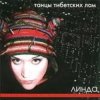
The album was not an immediate commercial triumph, but its popularity gradually increased. Music videos, live performances and the release of the remix album “Танцы тибетских лам” played an important role. By the middle of the 1990s, Linda had transformed from an experimental newcomer into one of the most widely discussed figures on the music scene.
“Ворона” and the height of her popularity
The second studio album, “Ворона”, was released in 1996. It included the compositions “Круг от руки”, “Северный ветер”, “Ворона”, “Марихуана”, “Никогда” and “Никому я тебя не отдам”.
The music became heavier, darker and more expansive. Electronic rhythms were combined with ethnic polyphony, guitar parts, art rock, trip-hop and elements of Gothic music. The comparatively gentle ethnic aesthetic of the debut gave way to a contrasting image featuring black hair, pale makeup, graphic costumes and deliberately detached emotional expression.
The title song and music video “Ворона” became the singer’s signature work. The album was among the best-selling music releases in Russia in 1997. Different sources estimate its official circulation at between one and a half and two million copies.
“Ворона” received recognition from the music press and was subsequently included repeatedly in lists of significant Russian albums. The record became not only a commercial success but also an important example of how experimental electronic music could exist within mainstream pop culture.
Live image
The success was accompanied by intensive touring. Linda said that during the busiest periods, the team could perform as many as forty concerts per month, appearing in sports arenas and at major outdoor venues.
The concerts were built around more than vocal performance alone. Movement, costumes, lighting, stage design and an almost ritualistic interaction with the musicians all played important roles. As a result, Linda was perceived not as a traditional pop singer but as the central figure of an independent musical and visual project.
“Плацента” and the end of the Fadeev period
The third studio album, “Плацента”, was released in 1999. Contrary to a common misconception, it was not a post-Fadeev work: Maxim Fadeev served as producer and wrote the majority of the album’s material.
The sound became more electronic and harder-edged. The arrangements incorporated elements of downtempo, jungle, dub and experimental dance music. The album’s principal compositions included “Взгляд изнутри”, “Отпусти меня”, “Дыханье”, “Дождь” and “Золотая вода”.
Creative and organisational disagreements between Fadeev and the singer’s team had been accumulating since the success of “Ворона”. The producer left the project in the late 1990s. Their final song together was “Белое на белом”, on which Linda appeared as a lyricist for the first time.
“Зрение” and independent work
The album “Зрение” was presented in 2001 and marked the beginning of a new stage. Linda became more actively involved in songwriting, collaborating with guitarist and composer Yevgeny Pozdnyakov. The main compositions of this period included “Две улитки”, “Шоколад и слеза”, “Небо льёт” and “Лихорадка в темноте”.
The record retained its electronic and alternative foundation but was less focused on major radio hits. During this period, Linda gradually established herself not only as a performer but also as an independent songwriter.
“Цепи и кольца” and the album “АтакА”
In the early 2000s, Linda signed a contract with Universal Music. One of the most notable new releases was the song “Цепи и кольца”, for which Russian- and English-language versions were prepared.
The composition was included on the album “АтакА”, released in 2004. The record combined alternative rock, electronic music and a more direct guitar-oriented sound. It also included the songs “Агония”, “Беги”, “Боль” and “Толкай на любовь”.
“АтакА” marked Linda’s important return to a wider audience. At the same time, the musical material was no longer created by one permanent songwriter: the singer herself, Yevgeny Pozdnyakov, Mara, Lyubasha and other musicians worked on the songs.
Collaboration with Stefanos Korkolis
The next extended period of Linda’s career was her collaboration with Greek composer, pianist and producer Stefanos Korkolis.
In 2006, the album “АлеАда” was released, combining electronic and rock elements with string arrangements, Greek intonations and Korkolis’s academic approach.
The album “Sкор-Пионы” followed in 2008. Its sound became more guitar-driven and heavier, while retaining piano, symphonic and ethnic elements. Musicians and studios in several countries participated in the recording.
As part of the joint project Bloody Faeries, Linda and Korkolis also released the acoustic album Acoustics by Bloody Faeries. Songs from different periods were rearranged for voice, piano and acoustic instruments.
The final major studio album created with Korkolis’s active participation was “Лай, @!”, released in 2013. The record included the songs “Повесь меня”, “Паранойя”, “Прямо в рай!”, “Мозговые помехи” and the title composition.
“Карандаши и спички”
In 2015, Linda released the album “Карандаши и спички”. On this work, she served as one of the principal writers of both the music and lyrics. The record combined indie rock, electronica, alternative pop and the singer’s characteristic poetic imagery.
The album included “Болеют все”, “Кошкин дом”, “Мне хорошо”, “Шрамы”, “Лабиринтами” and “Идеальная погода, чтобы идти к чёрту”. The title reflected the idea of combining destruction and creation: matches can ignite a fire, while pencils can create a new image of the world.
This period also included her collaboration with Gleb Samoilov and the group The Matrixx on “Добрая песня”.
“ДНК Мира”
Linda’s tenth studio album, “ДНК Мира”, was released in 2020. The record consists of 14 compositions and once again brings electronic music, ethnic influences, mystical imagery and extended atmospheric arrangements to the foreground.
Mikhail Kuvshinov, Olga Dzusova, guitarist Vitaly Krymsky and other musicians participated in the album’s creation. The composition “Антахкарана” featured performer Olena Uutai, who uses traditional instruments and folk singing techniques.
Other notable songs from the album include “Недолюбили”, “Положи меня рядом”, “Трещины”, “Киты-Кошки”, “Хватит!” and “Ты нравишься мне”.
Musical style
Linda’s work cannot be confined to a single genre. During different periods, her music has primarily featured:
- electronic and alternative pop music;
- trip-hop and downtempo;
- ethnic and folk elements;
- Gothic rock and art rock;
- industrial music;
- pop rock;
- acoustic and neoclassical music.
The term “trip rock”, which is often applied to Linda, describes a combination of trip-hop rhythms, rock instrumentation, atmospheric electronic music and theatrical vocal delivery. However, throughout her career, the artist has repeatedly changed the form and character of her music without tying the project to a single stylistic category.
Visual aesthetics
The visual image became one of the project’s most important components. Linda’s music videos, album covers and stage costumes drew on Gothic art, ethnic art, surrealism, symbolism and avant-garde fashion.
The image associated with the “Ворона” period became especially recognisable: contrasting makeup, dark hair, graphic silhouettes and detached movement. However, Linda’s appearance never remained unchanged. At different times, she appeared with red, blonde, black and brightly coloured hair and used elements of androgynous, futuristic and ethnic aesthetics.
The singer herself explained that her reserved early image reflected her internal state and her interest in engraving and mystical art rather than being an artificially constructed marketing concept.
Influence and significance
Linda became one of the first performers on the Russian mainstream scene to make complex electronic and ethnic sounds part of popular culture. Her songs differed significantly from traditional 1990s pop music, both musically and visually.
“Ворона” demonstrated that dark aesthetics, experimental arrangements and an unconventional vocal manner could exist within a commercially successful project. The album retained its cultural significance after the end of the 1990s and continued to appear in retrospective rankings of influential Russian recordings.
At the same time, Linda’s importance is not limited to her collaboration with Maxim Fadeev. After their partnership ended, she released eight studio albums and collaborative projects, gradually expanding her own participation in writing lyrics and music, visual design and production.
Main discography
Studio albums:
- 1994 — “Песни тибетских лам”
- 1996 — “Ворона”
- 1999 — “Плацента”
- 2001 — “Зрение”
- 2004 — “АтакА”
- 2006 — “АлеАда”
- 2008 — “Sкор-Пионы”
- 2013 — “Лай, @!”
- 2015 — “Карандаши и спички”
- 2020 — “ДНК Мира”
Other significant releases:
- “Танцы тибетских лам” — remix album;
- “Ворона. Remake & Remix” — remix album;
- “Эмбрион Right” and “Эмбрион Wrong” — experimental remix projects;
- Acoustics by Bloody Faeries — a collaborative acoustic album by Linda and Stefanos Korkolis;
- Life @ — live album.
Conclusion
Linda is one of the most recognisable and independent figures in Russian alternative pop music. Her career began with television competitions and commercial pop compositions, but her collaboration with Maxim Fadeev, Mikhail Kuvshinov and the group Convoy helped create a musical language that was fundamentally new for the mainstream scene.
The albums “Песни тибетских лам” and “Ворона” made the singer a symbol of the 1990s, but her creative career did not end with that period. “Зрение”, “АтакА”, “Sкор-Пионы”, “Лай, @!”, “Карандаши и спички” and “ДНК Мира” demonstrated Linda’s development as a songwriter, experimenter and visual artist who consistently combines music with visual art.
Her legacy is defined not only by individual hits but also by her overall creative approach: a rejection of genre restrictions, close attention to visual imagery, a commitment to musical experimentation and an ability to transform inner experiences into an independent artistic world.