




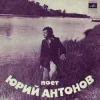
 Justin Bieber
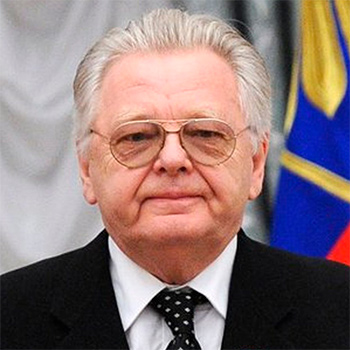
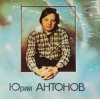
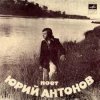
Yuri Mikhailovich Antonov (born February 19, 1945, Tashkent, Uzbek SSR) is a Soviet and Russian composer, singer, musician, arranger and one of the most influential writers of popular music from the late Soviet period. His name is associated with the songs «Нет тебя прекрасней», «Анастасия», «Зеркало», «Не забывай», «Я вспоминаю», «Двадцать лет спустя», «Море», «Белый теплоход», «Крыша дома твоего», «На улице Каштановой», «Поверь в мечту», «Снегири», «От печали до радости», «Лунная дорожка» and dozens of other works, many of which have remained part of concert and radio repertoires decades after their original release.
Antonov developed his own form of Soviet popular music, in which the melodic character of traditional estrada was combined with the instrumental language of beat groups, pop rock and soft rock. At different times, he worked with «Поющие гитары», «Добры молодцы», «Магистраль», «Аракс», «Синяя птица», and later created his own group «Аэробус». Particularly important were the recordings of the late 1970s and first half of the 1980s, where electric guitars, expressive bass, keyboards and a contemporary rhythm section were combined with exceptionally memorable song melodies.
Yuri Antonov’s creative career spans more than six decades. According to RIA Novosti, his discography includes around 30 records and CDs with total sales exceeding 48 million copies. In 1997, he received the title of People’s Artist of Russia, and in 2025 he was awarded the Order “For Merit to the Fatherland”, First Class. His later career has not been limited to reissues of his classic catalog: in 2025 Antonov presented the new song «Доченька», which reached number one on the Dorozhnoye Radio chart in 2026.
Childhood in Belarus and musical education
Yuri Antonov was born into the family of serviceman Mikhail Vasilyevich Antonov. After the end of World War II, his father continued serving in the Soviet military administration in Berlin and was later transferred to Belarus.
The family eventually settled in Molodechno in the Minsk Region, where the future composer spent a significant part of his childhood.
It was there that his systematic musical education began. Antonov studied at a music school and then entered the Molodechno Music College, specializing in accordion. He graduated in 1963.
After graduation, the young musician was assigned to work as a teacher at a children’s music school in Minsk. He was later invited to the Belarusian State Philharmonic as a solo instrumentalist.
In 1964, Antonov was drafted for compulsory military service. After returning, he resumed his professional musical career, and from 1967 became music director of the ensemble «Тоника», which accompanied singer Viktor Vuyachich.
This period gave Antonov important experience not only as a performer, but also as the person responsible for the structure of an ensemble, arrangements and interaction between musicians. Later, his ability to hear a song as a whole — from the main melody to the bass line, keyboards, guitar and vocal parts — would become one of the defining characteristics of his recordings.
«Поющие гитары» and «Нет тебя прекрасней»
In 1969, Yuri Antonov was invited to Leningrad to join one of the best-known Soviet vocal-instrumental ensembles — «Поющие гитары».
It was there that he began to perform actively not only as a musician and composer, but also as a singer. His works «Стой, не стреляй, солдат» and «Песня о добрых молодцах и красных девицах» entered the ensemble’s repertoire.
The most important event of this period was the song «Нет тебя прекрасней», which brought Antonov nationwide recognition and became one of the first works with which the mass audience firmly associated his name.
By this stage, the principle that would define a large part of his later work had already taken shape: a modern ensemble sound should not conflict with a strong song melody. Electric guitar, organ, bass and drums could be used just as naturally as a large estrada orchestra had been used only a few years earlier.
Moscow, «Добры молодцы» and «Магистраль»
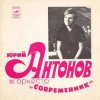
In 1971, Yuri Antonov moved to Moscow. He became a soloist with the vocal-instrumental ensemble «Добры молодцы», and later worked in the «Современник» orchestra under Anatoly Kroll.
With «Добры молодцы», he recorded «Ещё вчера», «Несёт меня течение» and «Отчего».
In the middle of the decade, Antonov led the ensemble «Магистраль» at the Moscow Regional Philharmonic, and from 1977 to 1983 he was associated with the All-Union record label Melodiya.
In Antonov’s early Soviet discography, EP-style vinyl releases played a major role — small records containing several compositions. As a result, many songs that later became major hits already existed and were familiar to listeners long before they appeared on full-length author albums.
David Tukhmanov’s «Как прекрасен этот мир»
An important chapter in Antonov’s early vocal career was his work with composer David Tukhmanov.
On Tukhmanov’s author album «Как прекрасен мир», released in 1972, Yuri Antonov performed the title composition «Как прекрасен этот мир», based on lyrics by Vladimir Kharitonov.
The music was not written by Antonov, but the recording is important to his biography as one of the early works that demonstrated the independent value of his voice. By this time, he was increasingly being perceived as more than simply an instrumentalist and composer for other performers.
«Аракс» and Yuri Antonov’s classic sound
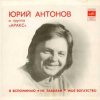
The true flowering of Antonov’s classic style is associated with his collaboration with the group «Аракс» in the late 1970s and early 1980s.
It was with the musicians of «Аракс» that he recorded «Анастасия», «Зеркало», «Я вспоминаю», «Не забывай», «Двадцать лет спустя», «Море» and other works.
This stage is fundamentally important not only because of the number of hits. «Аракс» was a full-fledged rock band with a powerful rhythm section, electric guitars and a modern ensemble approach.
Antonov gained the opportunity to record melodic estrada songs not as traditional orchestral material, but almost as a Soviet form of adult pop rock.
The result was a recognizable sound. The bass line does not merely support the harmony, but often becomes a second melody in its own right. The drums create forward motion without excessive heaviness. Guitars are used selectively but noticeably. Keyboards fill the space without competing with the main theme.
The melody itself, however, remains central — something Antonov almost always placed above studio effects.
«Анастасия», «Море» and Leonid Fadeev
One of Antonov’s most productive creative partnerships was with poet Leonid Fadeev.
Antonov wrote «Анастасия», «Море», «Я вспоминаю», «Двадцать лет спустя», «Дорога к морю», «Уходит молодость моя» and other songs to Fadeev’s lyrics.
«Анастасия» demonstrates one of the composer’s greatest strengths particularly well: the melody is clear enough to remain in the memory after the first listen, yet it develops far more intricately than a basic repeating pop chorus.
A similar quality can be heard in «Море». A simple song theme creates an almost visual sense of space: the listener can easily imagine movement, air and an open horizon even before beginning to analyze the lyrics.
Mikhail Tanich: «Зеркало» and «Не забывай»
Another extremely important co-writer was Mikhail Tanich. Together with him, Antonov created «Зеркало» and «Не забывай».
His work with Tanich clearly illustrates Antonov’s approach to lyrics. The composer did not demand literary complexity for its own sake. He needed words that naturally fit the melody, were easy to pronounce and allowed the listener to immediately understand the emotional situation.
That is why many of his best songs are based on very simple human states — love, waiting, memory, separation, hope and return.
«Я вспоминаю» and music about time
In «Я вспоминаю», the contrast between the lyrical mood and the musical movement is especially characteristic.
The song is connected with memory and passing time, yet the arrangement remains energetic and bright. Antonov generally avoids any direct correspondence between “sad lyrics” and slow music.
He can speak about the past, separation or fading youth within a composition that continues moving forward.
The same theme is expressed especially strongly in «Двадцать лет спустя». Over time, the title itself acquired an additional meaning: Antonov’s songs really did continue to be heard twenty, thirty and forty years after their original success.
Music for the film «Берегите женщин»
Cinema contributed a separate layer to Antonov’s popularity in the early 1980s.
Yuri Antonov’s music became one of the most memorable elements of the 1981 film «Берегите женщин». The song «Море» is especially closely associated with this film.
Antonov later wrote music for other films, including «Прежде, чем расстаться», «Салон красоты», «Приказ», «Дураки умирают по пятницам», «Хищники», as well as for animated projects.
The cinematic quality of his songs can be explained by their ability to quickly create a sense of place and movement. The sea, a street, an airplane, a ship or a house rarely remain just physical objects in Antonov’s songs — they become emotional centers.
«Белый теплоход»
The lyrics to «Белый теплоход» were written by poet Viktor Dyunin.
The composition is associated with Antonov’s collaboration with the vocal-instrumental ensemble «Синяя птица», and also appeared in the short film «Незнакомая песня».
The ship functions in two ways at once: as a real object of travel and as an image of distance, expectation and meeting.
This kind of concrete imagery is characteristic of many of Antonov’s famous songs: a specific object or place becomes an emotional symbol understandable to almost any listener.
«Аэробус»
In the early 1980s, Yuri Antonov and guitarist Igor Shablovsky formed their own group «Аэробус».
The group was associated with recordings such as «На улице Каштановой», «Я иду тебе навстречу», «Белый теплоход» and others.
Having his own band gave the composer additional freedom. He could now select and structure the lineup specifically around his musical requirements instead of adapting his material to the already established aesthetics of another ensemble.
During the recording of the album «Поверь в мечту», the musicians included guitarists Igor Shablovsky and Alik Mikoyan, while Evgeny Margulis played bass guitar.
«Крыша дома твоего»
The story of one of Antonov’s most famous songs did not begin with an ordinary estrada album.
In 1982, together with poet Mikhail Plyatskovsky, the composer worked on the children’s musical project «Приключения кузнечика Кузи». It was for this project that «Крыша дома твоего» was created.
However, in Antonov’s own performance, the song quickly moved far beyond the boundaries of children’s music.
The house became a universal image of loved ones, memory, safety and a place to which a person wants to return. In 1983, «Крыша дома твоего» brought Antonov to the final of the television festival «Песня года» for the first time.
The album «Крыша дома твоего»
In 1983, the Melodiya label released the full-length album «Крыша дома твоего».
The album brought together recordings from 1979–1983, many of which had already been issued on smaller vinyl releases.
It included:
- Жизнь
- Вот как бывает
- Море
- Зеркало
- Я вспоминаю
- Двадцать лет спустя
- Не забывай
- Анастасия
- Золотая лестница
- Дорога к морю
- Крыша дома твоего
By modern standards, such a release would partly be viewed as a collection of previously known singles, but the Soviet recording system worked differently. A new song could exist for several years on a small-format record before appearing on a full LP.
As a result, «Крыша дома твоего» became both a major author album and a summation of Antonov’s first classic period.
«Поверь в мечту»
The next major album, «Поверь в мечту», was released by Melodiya in 1985.
Most of the material was recorded with «Аэробус» and feels much more like the work of a single studio team.
The album included:
- Поверь в мечту
- Уходит молодость моя
- Я не жалею ни о чём
- Мой путь прост
- На улице Каштановой
- Не до смеха
- Если пойдём вдвоём
- Снегири
- Дай мне руку
On «Снегири» and «Если пойдём вдвоём», the string section of the Estrada-Symphony Orchestra of Central Television and All-Union Radio was also used.
«Снегири»
«Снегири», based on poetry by Mikhail Dudin, occupies a special place in Antonov’s catalog.
It is a much more intimate song than many of his large-scale estrada hits. Here, the composer works not with lyrics written specifically for a song, but with poetic material, preserving its imagery within an accessible melody.
The string arrangement further separates «Снегири» from the more direct pop-rock sound of «Аэробус».
International recordings
Antonov’s music was also released outside the USSR.
In the early 1980s, his songs were issued by the Yugoslav company Jugoton, while in 1985 the Finnish company Polarvox Music invited the musician to work on material in Russian and English.
The album My Favorite Songs was released in Finland and became a separate part of Antonov’s international discography.
«Долгожданный самолёт»
In 1986, Melodiya released the album «Долгожданный самолёт», recorded with the group «Аэробус».
It included:
- Долгожданный самолёт
- Стеклянная ночь
- На высоком берегу
- Милая моя
- О тебе и обо мне
- Каникулы
- А жизнь идёт своим чередом
- А где-то...
- Понимаешь лишь с годами
The image of the airplane continued one of Antonov’s recurring themes — the road and expectation. In his songs, movement is almost never an end in itself: behind it usually lies a meeting, a memory or the hope of seeing someone close again.
«От печали до радости»
In 1987, the LP «От печали до радости» was released, combining recordings from different periods.
The first side featured newer material, while part of the second side consisted of recordings made with «Аракс» back in 1980.
The album included «От печали до радости», «Я тебя не забуду», «Завтра», «Гадкий утёнок», «Всё как прежде», «Колокол тревоги», «С чего бы?», «Снова весна», «Земляничная поляна» and «Радуга».
The title itself accurately reflects the emotional nature of many of Antonov’s songs. His music rarely exists entirely within a single state: a bright melody can speak about the past, hope can arise within sadness, and a memory can be pleasant and painful at the same time.
«Лунная дорожка»
In 1990, «Лунная дорожка» was released.
The release included «Лунная дорожка», «Не говорите мне „Прощай“», «Поправляйся, выздоравливай скорей», «Страну чудес», «Завтра» and «Переулочки Арбата».
By this point, the Soviet music industry was changing rapidly. The era of the state-owned Melodiya label as the near-monopoly producer of records was coming to an end, while commercial companies and compact discs were beginning to appear.
Antonov entered the new decade with an enormous catalog already behind him, so he had much less need than newer artists to constantly adapt himself to changing musical fashion.
Why Antonov’s recordings sounded modern
To understand Yuri Antonov’s role in Soviet music, it is important to consider the context of the early 1980s.
Official estrada had long been closely associated with large orchestras and traditional song performance, while youth-oriented beat and rock groups existed within a somewhat different aesthetic.
Antonov managed to connect these two worlds.
The foundation of his arrangements became bass guitar, drums, electric guitars and keyboards, while above the contemporary ensemble sound remained a melody accessible to listeners accustomed to traditional estrada.
That is why his music appealed to different generations at the same time. Younger listeners heard a rock band and a modern rhythm section, while older audiences heard a strong song melody.
The concert phenomenon of the 1980s
Yuri Antonov’s popularity in the 1980s was much greater than can be understood from the official discography alone.
One of the most famous examples was a run of 28 concerts in 15 days at the Leningrad Sports and Concert Complex, a venue with a capacity of around 14,000.
Such an intense concert schedule demonstrated that Antonov was not merely a composer whose works were famous in the performances of other artists.
He himself became the principal performer and public face of his own catalog.
Working with poets
Yuri Antonov is first and foremost a composer, which is why lyricists played an enormous role in his work.
Leonid Fadeev is associated with «Анастасия», «Море», «Я вспоминаю», «Двадцать лет спустя», «Дорога к морю», «Уходит молодость моя» and other works.
Mikhail Tanich wrote the lyrics to «Зеркало» and «Не забывай».
Mikhail Plyatskovsky — «Крыша дома твоего».
Igor Shaferan — «На улице Каштановой».
Igor Kokhanovsky — «Поверь в мечту» and «Дай мне руку».
Mikhail Dudin wrote the poem that became the basis for «Снегири».
At the same time, Antonov’s musical signature is so distinctive that works created with different lyricists are still perceived as parts of one unified catalog.
Children’s musical projects
Antonov’s collaboration with Mikhail Plyatskovsky was not limited to «Крыша дома твоего».
In 1983, Melodiya released «Приключения кузнечика Кузи» and «Новые приключения кузнечика Кузи».
Other parts of this musical cycle appeared later.
Some of the songs eventually moved far beyond their original children’s context. This illustrates an important feature of Antonov’s work: when writing for children, he did not simplify the melodic foundation into a primitive form.
The 1990s and an established catalog
Russian popular music changed radically in the 1990s. New production centers, private radio stations, music television, electronic dance-pop and an entirely different record market emerged.
Antonov did not try to completely reshape himself around every new trend.
During this period, new editions and reissues of his material appeared, including Mirror, «Несёт меня течение», «Зеркало» and other releases.
His already established song catalog increasingly became the center of his concert life.
In 1993, Antonov received the title of Honored Art Worker of the Russian Federation, and in 1997 — People’s Artist of Russia.
«Дорога к морю» — the 2018 release
In 2018, Yuri Antonov’s discography was expanded with the CD «Дорога к морю».
The release appeared after a long period in which the musician had issued large album projects much less frequently. It included material from different years as well as the previously unreleased composition «Девочка школьных лет».
For this reason, «Дорога к морю» is more accurately understood as a late-career author release combining work with his own archive and new material, rather than the beginning of another regular album cycle.
State awards
Yuri Antonov has received a number of state and professional honors.
- 1993 — Honored Art Worker of the Russian Federation;
- 1997 — People’s Artist of the Russian Federation;
- 2005 — Order “For Merit to the Fatherland”, Fourth Class;
- 2010 — Order of Honour;
- 2010 — Order of Francysk Skaryna in Belarus;
- 2015 — Order of Friendship;
- 2020 — Order “For Merit to the Fatherland”, Third Class;
- 2025 — Order “For Merit to the Fatherland”, First Class.
Antonov was awarded the First Class order by decree dated April 23, 2025, for his contribution to the development of culture and art and for many years of creative work. The award ceremony took place at the Kremlin in May 2026.
Antonov has also been a laureate of the national Ovation award and other professional honors.
«Любимая» with Grigory Leps
One of Antonov’s notable later works was the song «Любимая», presented in 2021 together with Grigory Leps.
The joint recording is interesting because of the contrast between their vocal styles. Leps builds his performance around a powerful dramatic delivery, while Antonov traditionally prefers a more even, authorial manner of singing.
Yet once again, the melody remains the central element — the foundation around which nearly the composer’s entire catalog is built, regardless of era or performer.
80th birthday and «Доченька»
In February 2025, Yuri Antonov turned 80.
In November of the same year, after a long break, he presented the new composition «Доченька».
The lyrics were written by Vladimir Ilyichyov, while Antonov served as composer, arranger and musician. According to the author, the song itself had been created around two years earlier but waited a long time for the right moment to be released.
The composition proved successful on radio and in 2026 reached number one on the Dorozhnoye Radio Top 10.
This result is especially remarkable given the length of his career: a new work by the composer was able to compete in a current radio chart more than half a century after his first nationwide hits.
Concert activity after his 80th birthday
As Antonov grew older, the number of major performances decreased, but he never officially announced the end of his concert career.
In January 2026, the artist’s representative denied reports claiming that Antonov was allegedly stopping live performances completely.
His later period is more accurately understood as a transition toward less frequent concerts and special events rather than a formal retirement.
Yuri Antonov as a composer
One of the main differences between Yuri Antonov and many estrada performers is that his singing career grew out of his work as a composer.
He was not a vocalist to whom a production team simply brought a completely finished song. His work usually began with his own melody and his own idea of the musical structure, after which came the lyrics, arrangement and specific ensemble sound.
Even on the later «Доченька», Antonov once again acted not only as performer, but also as composer, arranger and musician.
For this reason, Yuri Antonov the singer is almost inseparable from the author who controls the structure of the recording itself.
Melody as the foundation of his style
Antonov’s best themes can exist independently of their original studio arrangements. They can be performed on piano, acoustic guitar or simply with the voice, and the central musical idea remains intact.
This is one of the reasons for the longevity of his catalog.
Antonov rarely built a song around a fashionable production effect. An arrangement may clearly reveal the 1970s or 1980s, but the melody itself does not disappear together with the technology on which it was recorded.
His melodic lines are also often relatively long. A chorus is not reduced to the constant repetition of one short slogan: the music continues developing and moves through several harmonic stages.
This creates a characteristic sense of movement even in slow and lyrical works.
The road, time, city and home
A large part of Antonov’s song world is built around a few simple but universal images.
The road and travel: «Дорога к морю», «Белый теплоход», «Долгожданный самолёт».
Home: «Крыша дома твоего».
The city: «На улице Каштановой», «Переулочки Арбата».
Time: «Двадцать лет спустя», «Уходит молодость моя», «Я вспоминаю».
Love and memory: «Анастасия», «Не забывай», «Зеркало».
These themes are almost impossible to permanently tie to a single historical era. That is why the songs continue to work long after the environment in which they were originally recorded has disappeared.
Yuri Antonov’s place in popular music
Yuri Antonov’s historical significance is connected above all with the fact that he helped change the very idea of what a mass-audience Soviet song could be.
Rock and beat aesthetics were long perceived primarily as youth territory, while mainstream official estrada operated according to its own rules. Antonov demonstrated that there was no need to choose between these systems.
It was possible to take a strong song melody, record it with a full rock band, use dense bass, electric guitars and modern keyboards — while still preserving the accessibility of a mainstream estrada song.
His collaboration with «Аракс» was especially important in this respect. Recordings of «Анастасия», «Зеркало», «Не забывай», «Море» or «Я вспоминаю» cannot be completely separated from the ensemble environment in which they were created.
But Antonov’s greatest asset has always remained the melody. His biggest songs survived new arrangements, versions by other performers and changes in music technology precisely because the original musical theme did not depend on one fashionable sound.
More than sixty years after the beginning of his professional career, Yuri Antonov remains above all a composer and the creator of his own distinctive song world. From «Нет тебя прекрасней» and the recordings with «Аракс» to «Крыша дома твоего», «Поверь в мечту» and the later «Доченька», his music has become one of the most recognizable melodic threads running through Soviet and post-Soviet popular culture.