






 Олег Винник

Angelika Varum (real name — Maria Yuryevna Varum; born May 26, 1969, in Lviv) is a Soviet and Russian singer, songwriter and actress. She gained widespread recognition in the early 1990s with the songs «Гуд бай, мой мальчик», «Ля-ля-фа», «Городок», «Художник, что рисует дождь», «Осенний джаз» and «Зимняя вишня». At different stages of her career, her music has incorporated pop, jazz inflections, lounge, bossa nova and more intimate singer-songwriter material.
An important role in Varum’s early career was played by her father, composer and arranger Yuri Varum, who wrote the music for many songs on her first albums. Since the late 1990s, a significant part of the singer’s creative biography has also been connected with Leonid Agutin: the artists recorded duets, a joint album and concert programs while continuing to maintain independent solo careers.
Childhood in Lviv
Maria Varum was born in Lviv into a musical and theatrical family. Her father, Yuri Varum, was a composer and arranger, while her mother, Galina Shapovalova, worked in the theater.
Because of her parents’ touring schedules, Maria spent a significant part of her childhood with her grandmother. She studied music at home: she played piano, later learned guitar and began singing.
Her father did not insist on a traditional music-school education and preferred to teach his daughter himself. As a result, Varum gained practical experience with songs and arrangements from an early age, although she did not receive a systematic conservatory education.
Move to Moscow
After finishing school, Varum moved to Moscow and attempted to enter the Shchukin Theatre School, but did not pass the entrance examinations.
She then began working in her father’s studio. She recorded backing vocals, participated in studio sessions and gradually learned the professional recording process.
It was during this period that she decided to begin a solo career.
«Полуночный ковбой» and the beginning of her solo career
One of the first songs with which Varum appeared on television was «Полуночный ковбой». In 1989, the song was featured on the program «Утренняя почта».
At the beginning of her professional career, the singer adopted the stage name Angelika Varum, under which she became known to the public.
Her earliest songs were largely created in collaboration with Yuri Varum and lyricists who worked with his music. Even then, the vocal style that would become characteristic of the singer was already taking shape — restrained singing without exaggerated pop dramatics, with particular attention to melody and lyrics.
«Good Bye, мой мальчик»
In 1991, her debut album «Good Bye, мой мальчик» was released. It included Varum’s early songs, among them «Полуночный ковбой» and the title track.
The material reflected the pop sound of the late 1980s and early 1990s, but already differed from the more dramatic vocal manner of many popular female singers of that period.
The album marked the beginning of Varum’s regular solo discography.
«Ля-ля-фа» and «Городок»
Her second studio album, «Ля-ля-фа», was released in 1993 and became one of the key records of the singer’s early career.
It included «Ля-ля-фа», «Городок», «Художник, что рисует дождь» and other songs.
«Городок» later became the closing musical theme of the television program of the same name starring Ilya Oleynikov and Yuri Stoyanov, which kept the song on television for many years.
The song «Ля-ля-фа» also helped establish Varum’s recognizable mid-1990s stage image.
«Осенний джаз»
In 1995, the album «Осенний джаз» was released. The title song was written by Yuri Varum to lyrics by Kirill Krastoshevsky.
Compared with her earlier recordings, the arrangements showed a stronger influence of jazz and more intimate pop music. Alongside «Осенний джаз», the album included «Нарисуй любовь», «Небо», «Скажи, что любишь» and other songs.
This period coincided with professional recognition for Varum at Russian music awards. In the mid-1990s, she was among the recipients of the national «Овация» award.
«В двух минутах от любви»
In 1996, the album «В двух минутах от любви» was released. Its title is sometimes incorrectly given as «В двух шагах от рая», but the official title of the release is «В двух минутах от любви».
The album contained twelve tracks, including «Не сегодня», «Ни ответа, ни привета», «Поэт», «В домике у океана» and the title track.
The record continued Angelika Varum’s collaboration with her father and the songwriters who had worked on her early repertoire.
«Зимняя вишня»
In the same year, 1996, a separate studio album titled «Зимняя вишня» was released.
The title track became one of Varum’s most recognizable songs of the 1990s. The album also included «Розовый зайчик», «Очаровашка», «Я и ты», «Белая песня», «Другая женщина» and other recordings.
Thus, «Зимняя вишня» was not part of the album «В двух минутах от любви» — they were two separate releases from the same period.
Theater and the «Чайка» award
In 1997, Varum made her first serious move into dramatic theater. Director Leonid Trushkin invited her to appear in the production «Поза эмигранта», based on a play by Hanna Slutsky.
The production also featured Lyudmila Gurchenko, Armen Dzhigarkhanyan, Yevgenia Simonova and Olga Volkova.
For her performance, Varum received the theatrical award «Чайка» in the category «Диагноз: актёр», intended for a performer who was not a professional dramatic actor.
Leonid Agutin and the first duets
In the late 1990s, Angelika Varum began a creative collaboration with Leonid Agutin.
Among their first joint songs were «Королева» and «Февраль». They appeared during the work on Varum’s album «Только она…».
Their joint performances gradually developed into a permanent concert and studio partnership. At the same time, both artists continued releasing their own material.
«Только она…»
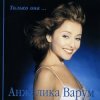
The album «Только она…» was released in 1999, not 1998 as is sometimes stated in later reprints of her discography.
It became a transitional record between the early period, closely associated with Yuri Varum’s music, and the singer’s later work with a broader range of songwriters and arrangers.
The album also included the first notable duet recordings with Leonid Agutin.
«Небо в алмазах»
In 1999, Varum played one of the leading roles in Vasily Pichul’s film «Небо в алмазах».
Her character was named Vika. The film also featured Nikolai Fomenko, Alla Sigalova, Valentin Gaft, Garik Sukachyov, Alexander Semchev and Anna Mikhalkova.
Despite her experience in theater and film, acting did not become a separate long-term direction of the singer’s career.
«Служебный роман»
In 1999, Angelika Varum and Leonid Agutin released the joint album «Служебный роман».
Varum and Agutin continued working on joint projects in the following decades, although each maintained a separate discography.
«Стоп, любопытство!»
In 2002, the solo album «Стоп, любопытство!» was released.
It differed noticeably from the pop sound of the early 1990s: the arrangements contained more jazz, lounge and electronic elements, while Varum’s vocal delivery became more restrained.
The album included «Стоп, любопытство!», «Не уходи далеко» and other songs.
«Музыка»
After several years of work on new material, the double album «Музыка» was released in 2007.
The recordings were created over several years in Russian and American studios. The project included both new compositions and material connected with the joint work of Varum and Agutin.
During the same period, the duet «Две дороги, два пути» received the «Золотой граммофон» award.
«Если он уйдёт»
In 2009, Varum released the album «Если он уйдёт».
On this record, she began to show herself more prominently not only as a performer but also as a lyricist. Composers and arrangers new to her discography also participated in the project.
Music videos were made for the songs «Если он уйдёт» and «Давай забудем всё».
«Сумасшедшая»
In 2013, the album «Сумасшедшая» was released.
The record contained thirteen tracks. Alongside new material, it included updated versions of «Пожара», «Лао», «Стоп, любопытство!» and «Зимней вишни».
The title track «Сумасшедшая» had a more pronounced dance-oriented sound than many of the singer’s previous works.
«Женщина шла» and Igor Krutoy
In 2016, Varum released the album «Женщина шла», created in collaboration with composer Igor Krutoy.
Krutoy wrote the music for the project, while Angelika Varum wrote the Russian-language lyrics. The work grew out of their collaboration on songs that Krutoy had originally composed for other repertoire.
The album included «Женщина шла», «Моя любовь», «Голос», «Твой свет», «Когда я закрываю глаза», «Мадемуазель Хайд» and other songs.
«На паузу»
In November 2018, the album «На паузу», consisting of ten tracks, was released.
Varum recorded the title track together with Leonid Agutin. The album continued her movement away from traditional pop toward a more intimate contemporary sound.
The release showed that after «Сумасшедшая», the singer had not stopped making full-length studio projects.
«Грустная bossa»
On October 30, 2020, the album «Грустная bossa» was released.
All ten songs on the project were written by an author working under the name Садо — Nadezhda Novosadovich. The musical foundation of the album was bossa nova combined with soft pop and intimate arrangements.
The record differs noticeably from Varum’s early discography: the large choruses and dance-oriented arrangements typical of mainstream pop are almost entirely absent, while the focus is placed on voice, lyrics and the rhythmic foundation of bossa nova.
Later songs
After «Грустная bossa», Varum continued to release individual songs.
In 2023, the single «Эта девочка» was released.
In 2025, Angelika Varum and Leonid Agutin recorded a new duet, «Я не тот, ты не та». The song was included on Agutin’s album «Н.В.Л.», and a music video was made for it.
Angelika Varum and Leonid Agutin
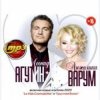
Varum and Agutin’s creative collaboration began in the late 1990s and eventually developed into a family partnership.
On February 9, 1999, their daughter Elizaveta was born. In 2000, Angelika Varum and Leonid Agutin officially registered their marriage.
Elizaveta later also became involved in music, writing songs and performing as an independent artist.
Over the years of working together, Varum and Agutin recorded «Королева», «Февраль», «Если ты когда-нибудь меня простишь», «Две дороги, два пути», «Как не думать о тебе», «На паузу», «Я не тот, ты не та» and other songs.
Songwriting
During the early stage of her career, a significant part of the music for Angelika Varum was written by her father Yuri Varum. He was responsible for «Городок», «Осенний джаз», «Художник, что рисует дождь» and other songs from the 1990s.
Over time, the singer’s own role in creating material increased. She began writing lyrics, participating in production and shaping the concepts of her albums.
This side of her work was most consistently expressed on the project «Женщина шла», for which Varum wrote Russian-language lyrics to music by Igor Krutoy.
Musical style
The foundation of Angelika Varum’s work remains pop music, although her catalog covers several different directions.
Her early albums are dominated by melodic Russian-language pop. In the mid-1990s, more pronounced jazz inflections appeared in her music. During the 2000s and 2010s, she incorporated elements of lounge, electronic pop and more complex studio arrangements.
«Грустная bossa» specifically turns toward bossa nova, while «Женщина шла» is built primarily around Igor Krutoy’s more intimate pop melodies.
Despite changes in arrangement style, the most consistent feature of Varum’s performance remains her restrained vocal delivery: she rarely uses forced singing and usually builds a song around intonation and lyrics.
Studio discography
- 1991 — «Good Bye, мой мальчик»;
- 1993 — «Ля-ля-фа»;
- 1995 — «Осенний джаз»;
- 1996 — «В двух минутах от любви»;
- 1996 — «Зимняя вишня»;
- 1999 — «Только она…»;
- 2000 — «Служебный роман» with Leonid Agutin;
- 2002 — «Стоп, любопытство!»;
- 2007 — «Музыка»;
- 2009 — «Если он уйдёт»;
- 2013 — «Сумасшедшая»;
- 2016 — «Женщина шла»;
- 2018 — «На паузу»;
- 2020 — «Грустная bossa».
Angelika Varum’s creative career spans several distinct periods — from the pop sound of the early 1990s and the songs of Yuri Varum to collaborations with Leonid Agutin, Igor Krutoy and writers of more intimate material. Her discography did not end with the album «Сумасшедшая»: the later records «Женщина шла», «На паузу» and «Грустная bossa» became an independent part of the later stage of her career.