


 Jennifer Lopez
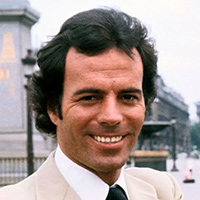
Julio Iglesias, whose full name is Julio José Iglesias de la Cueva, is a Spanish singer, songwriter, and producer born on September 23, 1943, in Madrid. His career began in the second half of the 1960s and developed into one of the greatest international success stories in the history of Spanish-language popular music.
Julio Iglesias recorded romantic ballads, boleros, Latin pop, tango, Mexican songs, French chanson, and English-language adult contemporary music. He released music in Spanish, English, French, Italian, Portuguese, German, and other languages. According to the Latin Recording Academy, the artist has sold more than 300 million records, while his catalog includes recordings in 14 languages. Guinness World Records officially recognizes Iglesias as the best-selling male Latin music artist.
His international success was not limited to Spanish-speaking audiences. Iglesias reached number one on the UK Singles Chart, entered the US Billboard Hot 100, collaborated with Willie Nelson, Diana Ross, Stevie Wonder, and other major artists, won a Grammy, and received a special Recording Academy award for his contribution to music.
Childhood and Family
Julio José Iglesias de la Cueva was born in Madrid to physician Julio Iglesias Puga and María del Rosario de la Cueva y Perignat. He grew up in a prosperous Madrid family and initially had no plans to pursue music professionally.
In his youth, Iglesias studied law in Madrid while also taking football seriously. He played as a goalkeeper for one of the teams within the Real Madrid system. This part of his biography is sometimes inaccurately presented as if he had played for the club’s first team, but confirmed sources associate him with one of the teams in the club structure rather than Real Madrid’s senior squad.
Sport was regarded as a possible profession. Iglesias trained, played in matches, and prepared to continue his football career while pursuing a legal education. At that time, music had not yet become a central part of his life.
The Car Accident and the Beginning of His Musical Journey
On the night of September 22, 1963, one day before Iglesias’s twentieth birthday, the car he was driving was involved in a serious accident. The spinal injury he sustained ended his football career. The singer later explained that the damage caused compression of the spinal cord and severe mobility problems. His recovery took several years.
During his long rehabilitation, a hospital employee gave him a guitar. The instrument was used in part to help exercise his fingers and restore coordination. Iglesias began teaching himself chords and later started writing his first songs.
This story is often retold as an instant transformation from footballer to singer, but his professional career developed gradually. After recovering, Iglesias continued to take an interest in legal studies, learned English, and worked on his own compositions. Music became his main profession only after his first successful performances and the signing of a record contract.
“La vida sigue igual” and Victory in Benidorm
The turning point came in 1968, when Julio Iglesias took part in the 10th International Spanish Song Festival in Benidorm. He performed his own composition La vida sigue igual and won the festival’s top prize, the “Golden Mermaid.”
The song title translates as “Life Goes On as Before.” In the lyrics, Iglesias reflected on time, success, defeat, friendship, and the inevitable movement of life. The composition was connected to his personal experience of recovering from the accident, but it was written broadly enough to be understood as a song about growing up and accepting change.
His victory in Benidorm earned Iglesias a recording contract, while La vida sigue igual became a hit in Spain. Berklee notes that the song won first prize in the 1968 competition, led its author to a professional contract, and reached number one on the Spanish chart.
The single was followed by his debut album Yo canto, which established the singer’s early repertoire. His first recordings already introduced the themes that would remain central throughout his career: romantic attachment, separation, loneliness, the passage of time, and the effort to preserve dignity after personal disappointment.
Eurovision 1970 and Reaching a European Audience
In 1970, Julio Iglesias represented Spain at the Eurovision Song Contest in Amsterdam with the self-written song Gwendolyne. He finished in fourth place with eight points.
His Eurovision appearance significantly expanded his recognition outside Spain. RTVE notes that Gwendolyne helped Iglesias’s music cross national borders and became one of the first stages of his European career. The composition was released in several language versions, anticipating the international strategy he would later pursue.
Unlike artists who recorded only one international translation of a successful single, Iglesias began working systematically in different languages. He did not limit himself to literal translations, but adapted pronunciation, phrasing, and vocal delivery for each particular audience.
Career Development in the 1970s
During the first half of the 1970s, Julio Iglesias consolidated his success with the albums and songs Un canto a Galicia, Soy, A flor de piel, El amor, and Manuela. His music spread throughout Spain, Latin America, France, Italy, Germany, Portugal, and other countries.
The composition Un canto a Galicia was especially significant. It was dedicated to the region connected to his father’s family. The song became one of his early works to demonstrate Iglesias’s ability to combine personal heritage with an internationally accessible melody.
During the 1970s, he gradually moved away from the typical image of a young song-festival participant. His stage manner became more restrained: dark suits, minimal movement, calm gestures, and direct communication with the audience. Iglesias built his performances not around dance routines or vocal display, but around the feeling of a personal conversation with the listener.
By the middle of the decade, his repertoire included both his own songs and works by other composers. Iglesias proved equally effective as a songwriter and interpreter. He could write an autobiographical composition and then transform someone else’s song or a traditional standard into part of his own stage identity.
Key recordings from the second half of the 1970s included A mis 33 años, Soy un truhán, soy un señor, Me olvidé de vivir, Por el amor de una mujer, and Quiereme mucho. These songs established Iglesias’s principal lyrical character: an adult man who admits his own mistakes, remembers relationships that have ended, and speaks about emotions without tragic theatricality.
The Image of the Romantic Hero
Julio Iglesias’s stage persona was formed at the intersection of his songs, appearance, and public manner. He did not portray himself as an unattainable idol or build his repertoire around heroic superiority. His character more often admitted defeat, regretted lost time, or thanked a woman for a relationship that had ended.
The composition Soy un truhán, soy un señor presents this duality in its title: the narrator describes himself simultaneously as a rogue and a gentleman. In Me olvidé de vivir, popularity and the constant pursuit of success are portrayed as reasons for losing touch with real life.
Lyrics of this kind allowed Iglesias to combine the image of a confident romantic performer with vulnerability. He did not conceal the character’s contradictions, but turned them into the foundation of an emotional connection with the audience.
Hey!, De niña a mujer, and International Scale
In 1980, Iglesias released the album Hey!, which became one of the most important Spanish-language releases of his career. The album received a Grammy nomination in the Best Latin Recording category.
It was followed by De niña a mujer, which included the title track and Begin the Beguine (Volver a empezar), an adaptation of the Cole Porter composition. This period definitively established Iglesias as a performer capable of working across several continents at the same time.
In 1981, Begin the Beguine reached number one on the UK Singles Chart. The song remained on the chart for 14 weeks, including one week at the top. It is the only Julio Iglesias single to reach number one on the main UK chart.
The British album of the same name reached number five and remained on the chart for 28 weeks. The following single, Quiereme mucho (Yours), climbed to number three. These results showed that Iglesias had become part of the mainstream British market without fully switching to English.
The Record for Multilingual Recordings
In 1983, Julio Iglesias received recognition from Guinness World Records for record sales in the greatest number of languages. Thirty years later, in 2013, Guinness presented him with a certificate recognizing him as the best-selling male Latin music artist. At the time, the organization cited more than 250 million albums sold, over 80 albums released, and recordings in 14 languages.
A later official estimate from the Latin Recording Academy exceeds 300 million records. The difference is explained by the date of calculation and the methods used by the organizations: Guinness cited figures documented for a particular period, while the Latin Recording Academy uses an updated cumulative estimate.
The multilingual strategy was one of the main reasons for this scale. Iglesias did not regard Spanish as a limitation, but neither did he assume that the same recording would work equally well in every country. He created separate versions of songs and entire localized albums, building a direct connection with national audiences.
Julio and the Preparation for an English-Language Breakthrough
In 1983, the international album Julio was released, bringing together material intended for different markets. In the United Kingdom, the record reached number five and remained on the chart for 16 weeks.
The album served as a transition between Iglesias’s European career and his full entry into the American English-language market. By this time, he was already a global star, but his US audience remained predominantly Spanish-speaking and adult.
Expanding his presence required more than translations of Spanish hits. He needed material suited to American adult contemporary and pop radio in the mid-1980s.
1100 Bel Air Place and Success in the United States
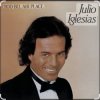
In 1984, Julio Iglesias released his first entirely English-language studio album, 1100 Bel Air Place. The title referred to a studio address and home in Los Angeles, while the production was designed for the American pop market.
The lead single was the Willie Nelson duet To All the Girls I’ve Loved Before. The song had been written by Albert Hammond and Hal David long before Iglesias’s version, but it was the 1984 collaboration that became an international hit.
The composition entered the top five of the Billboard Hot 100 and topped the US country chart. In the United Kingdom, it reached number 17 and remained on the chart for 12 weeks.
The same album also featured the duet with Diana Ross, All of You, which reached number 43 on the UK chart. The collaboration showed that Iglesias could engage with American pop and soul traditions without changing his recognizable vocal style.
1100 Bel Air Place did not represent a rejection of his Spanish-language career. The album became a separate direction within his multilingual catalog. Iglesias continued recording Spanish, French, Italian, and Portuguese music while strengthening his position in American adult contemporary.
Work with Willie Nelson
The collaboration between Iglesias and Willie Nelson was not limited to To All the Girls I’ve Loved Before. The musicians also recorded As Time Goes By and later Spanish Eyes.
As Time Goes By received a Grammy nomination in the country performance by a duo or group category. This episode demonstrates that Iglesias’s presence in country music was not merely a marketing device for a single release: his style naturally interacted with the genre’s narrative and vocal traditions.
The performers’ voices differed considerably. Nelson used dry, rhythmically flexible phrasing, while Iglesias favored a soft and flowing line. It was the contrast, rather than an attempt to make one singer resemble the other, that made their recordings distinctive.
Un hombre solo and the Grammy Award
In 1987, Julio Iglesias released the Spanish-language album Un hombre solo. At the 30th Grammy Awards, the record won in the Best Latin Pop Album category. It remains Iglesias’s only competitive Grammy victory from seven nominations.
The title translates as “A Lonely Man” and precisely reflects the central theme of the singer’s mature period. In songs from this stage, the romantic hero no longer tries to prove his attractiveness, but analyzes the consequences of past relationships and his own choices.
The Grammy confirmed not only the artist’s commercial importance, but also his status within the American professional music industry. The award was given for a Spanish-language work after the success of the English-language 1100 Bel Air Place, emphasizing Iglesias’s ability to develop two markets in parallel.
Non Stop and “My Love” with Stevie Wonder
In 1988, Iglesias released the album Non Stop. One of its central compositions was My Love, recorded with Stevie Wonder.
The song reached number five on the UK chart and remained in the ranking for 17 weeks, becoming one of Iglesias’s most successful singles in Britain.
The collaboration with Stevie Wonder was based on complementary qualities. Wonder brought his characteristic soul expression and high vocal register, while Iglesias retained his calm, almost conversational performance style.
Starry Night and the Interpretation of International Standards
The album Starry Night, released in 1990, continued his English-language direction. It included versions of well-known songs, including Don McLean’s Vincent. In the United Kingdom, the album reached number 27 and remained on the chart for 19 weeks.
By this time, interpreting other artists’ material had become an important part of Iglesias’s method. He did not attempt to reproduce the original performance. The tempo often became slower, the arrangement softer, and the meaning shifted toward a more personal tone.
His versions of standards functioned as an extension of his own repertoire. Even when a song was written by another composer, Iglesias placed it within his recognizable world of calm, adult romance.
Crazy
In 1994, Iglesias released the album Crazy, featuring interpretations of English-language songs and international collaborations. The material included Crazy, written by Willie Nelson and made famous by Patsy Cline, as well as Fragile, recorded with the song’s author, Sting.
Crazy reached number six on the UK Albums Chart and remained there for 38 weeks. It is one of the longest-running British chart results in Iglesias’s discography.
The album showed that in the 1990s the artist was not attempting to compete with youth-oriented pop music on its own territory. He focused on an adult audience, recognizable songs, high-quality studio production, and guest musicians.
La carretera
In 1995, Julio Iglesias released the Spanish-language album La carretera. The title track used the road as a metaphor for an artist’s life, constant travel, concerts, and the inability to remain in one place for long.
The album reached number six in the United Kingdom and received a Grammy nomination in the Best Latin Pop Album category.
La carretera became one of Iglesias’s key mature works. It combined an autobiographical tone, the traditional romantic ballad, and the experience of a man whose personal life had been shaped by international touring for decades.
Tango
In 1996, Iglesias released the album Tango, built around the classic Argentine repertoire. The project included his interpretations of tango standards and was devoted not to creating contemporary pop songs, but to interpreting historic musical material.
Tango received a Grammy nomination for Best Latin Pop Album. In the United Kingdom, the record reached number 56.
Turning to tango was a natural development of his performance style. The genre requires precise use of pauses, dramatic phrasing, and close attention to lyrics, but does not necessarily demand a powerful voice. These qualities matched Iglesias’s strengths.
Career in the 2000s
In 2000, Iglesias released the album Noche de cuatro lunas, in which he continued combining Spanish-language romantic music with international pop production. The record entered the UK Top 40.
It was followed by Divorcio, compilations, and reinterpretations of classic repertoire. In 2006, Iglesias released Romantic Classics, dedicated to popular English-language songs. The album reached number 42 in the United Kingdom.
In these projects, the artist was no longer trying to open up an entirely new genre direction. His main objective was to preserve his own interpretive model: a recognizable voice, slow tempo, clear melody, and repertoire intended for an adult international audience.
The Album “1”
In 2011–2012, Iglesias presented the project 1, for which he re-recorded a number of the most important songs of his career. He did not simply compile old master recordings, but returned to the works with the voice and studio capabilities of his mature period.
The British edition of the album reached number 18 on the Official Albums Chart.
The project brought songs from different decades into a more unified sound. At the same time, it functioned as an artist-curated review of his catalog: Iglesias personally selected the works he considered fundamental to his musical history.
México
In September 2015, Julio Iglesias released the album México, dedicated to classic Mexican song. It was his first new Spanish-language studio project in a considerable period. Depending on the edition, the album contained 13 or 14 compositions.
His turn toward Mexican music had a historical basis. Mexico had been one of Iglesias’s most important markets since the early decades of his career, while bolero, ranchera, and romantic song had long been present in his concert repertoire.
Iglesias did not attempt to imitate the manner of a traditional ranchera performer. The material was adapted to his voice: tempos became more restrained, arrangements more orchestral, and dramatic expression was conveyed through lyrics and phrasing.
México & Amigos
In May 2017, México & Amigos was released, the first Julio Iglesias album built entirely as a duet project. It continued the Mexican concept of the previous record and included 12 compositions.
Performers from different generations and musical directions took part in the project. The format allowed Iglesias to present traditional material in a new way while integrating it into the contemporary Latin American music industry.
Within his main official discography, México & Amigos remains Iglesias’s most recent new studio album. Later catalog releases were primarily connected with reissues, regional versions, compilations, and the digital return of previously recorded material.
Songwriter
Julio Iglesias is known not only as an interpreter. He is the writer or co-writer of several key works, including La vida sigue igual, Gwendolyne, Un canto a Galicia, Hey!, De niña a mujer, and other songs.
His songwriting method is based on clear, conversational language. Iglesias rarely uses complex metaphorical constructions. The lyrics are usually addressed to a specific person or take the form of an internal monologue.
The main themes recur at different stages of his career:
- love after the end of a relationship;
- regret over lost time;
- the conflict between freedom and attachment;
- the loneliness of a public figure;
- the road and constant travel;
- admitting personal flaws;
- gratitude toward people who remained in the past.
The repetition of these motifs does not mean uniformity. The age of the character changes along with the artist. In the early songs, he experiences first love; in mature works, he evaluates the consequences of his lifestyle; and in later recordings, he turns toward memory and cultural heritage.
Vocal Style
Julio Iglesias is not a performer whose career is built on an extreme vocal range, powerful high notes, or complex melisma. The foundations of his recognizability are his timbre, diction, pauses, and individual manner of delivering lyrics.
His voice can be described as a soft baritone with a light, airy delivery. Iglesias often begins a phrase in an almost conversational manner and then gradually increases the sound without moving into an open vocal attack.
Consonants and word endings are especially important. The singer uses pronunciation as a rhythmic element, slightly delaying individual syllables or placing them ahead of the main beat. This freedom brings his style closer to that of crooners and classic bolero performers.
His quiet delivery allowed him to remain recognizable in different languages. Iglesias did not try to conceal his Spanish accent completely. On the contrary, he turned it into part of his musical identity.
Arrangements and Production
A typical Julio Iglesias arrangement is built around acoustic guitar, piano, strings, a soft rhythm section, and restrained percussion. The instruments create space for the voice and lyrics rather than competing with them.
His recordings from the 1970s show the influence of European orchestral popular music. The 1980s introduced American adult contemporary, country, and soul. In the 1990s, the sound became cleaner and more spacious, while later albums turned toward traditional song cultures, including tango and Mexican repertoire.
Production flexibility allowed Iglesias to change his musical surroundings without losing his individuality. Regardless of language or genre, the central element remained a voice positioned as closely as possible to the listener.
Multilingual Approach
Julio Iglesias recorded music in 14 languages. This figure is confirmed by the Latin Recording Academy and Guinness World Records.
Working in different languages was not a secondary part of his catalog, but the foundation of his international model. He recorded separate versions for Spanish, French, Italian, Portuguese, German, and English-speaking markets.
This approach required attention to phonetics and the musical rhythm of each language. Even when the melody remained unchanged, word length, stress placement, and natural pauses altered the structure of the vocal part.
Iglesias created a sense of local presence. For a listener in France or Brazil, he was not merely a foreign star whose songs had been translated by distributors, but an artist addressing the audience in its own language.
Stage Manner
Iglesias’s concert presentation is distinguished by restraint. He rarely used complex choreography, large-scale sets, or dramatic vocal climaxes.
On stage, the singer relied on eye contact, small gestures, pauses between songs, and direct communication with the audience. His performances were built as a sequence of personal addresses rather than a theatrical show.
Restraint became an important part of his image. Even in large arenas, Iglesias maintained the atmosphere of an intimate concert, as though the song were intended not for the entire hall, but for one particular listener.
Major Collaborations
Julio Iglesias’s international career includes duets and recordings with performers from different genres. Among the best known are:
- To All the Girls I’ve Loved Before — with Willie Nelson;
- All of You — with Diana Ross;
- My Love — with Stevie Wonder;
- As Time Goes By — with Willie Nelson;
- Spanish Eyes — with Willie Nelson;
- Fragile — with Sting.
These collaborations were not concentrated within one period or genre. They accompanied the development of the English-language part of his catalog and helped Iglesias engage with country, soul, pop music, and singer-songwriter traditions.
Selected Discography
Julio Iglesias’s principal studio and concept albums include:
- Yo canto — 1969;
- Gwendolyne — 1970;
- Un canto a Galicia — 1972;
- Soy — 1973;
- A flor de piel — 1974;
- El amor — 1975;
- A México — 1976;
- A mis 33 años — 1977;
- Emociones — 1978;
- Hey! — 1980;
- De niña a mujer — 1981;
- Momentos — 1982;
- Julio — 1983;
- 1100 Bel Air Place — 1984;
- Libra — 1985;
- Un hombre solo — 1987;
- Non Stop — 1988;
- Starry Night — 1990;
- Calor — 1992;
- Crazy — 1994;
- La carretera — 1995;
- Tango — 1996;
- Noche de cuatro lunas — 2000;
- Divorcio — 2003;
- Romantic Classics — 2006;
- 1 — 2011–2012;
- México — 2015;
- México & Amigos — 2017.
Awards and Records
Julio Iglesias has won one competitive Grammy from seven nominations. The album Un hombre solo brought him the award in 1988. Other nominated works included Hey!, Momentos, As Time Goes By, Calor, La carretera, and Tango.
In 2001, the Latin Recording Academy named Iglesias Person of the Year, recognizing his creative achievements and influence on the international spread of Latin music.
In 2013, Guinness World Records officially confirmed his status as the best-selling male Latin music artist.
In 2015, Berklee College of Music awarded Iglesias an honorary Doctor of Music degree for his achievements, influence on contemporary music, and contribution to international culture.
In 2019, the Recording Academy presented him with the Lifetime Achievement Award, a special Grammy recognizing his contribution to music throughout his career.
His name also appears on the Hollywood Walk of Fame.
Personal Life
In 1971, Julio Iglesias married Isabel Preysler. They had three children: María Isabel, known as Chábeli Iglesias, Julio José Iglesias Jr., and Enrique Iglesias. The marriage ended in 1979.
In 2010, Iglesias married Miranda Rijnsburger, with whom he had been in a relationship for approximately twenty years. The couple have five children. Julio Iglesias is the father of eight children in total.
His son Enrique Iglesias built an independent international career and became one of the most commercially successful Latin pop performers of his generation. The musical careers of father and son developed separately: Julio established a model of multilingual romantic popular music, while Enrique worked with contemporary pop, dance-pop, and Latin rhythms.
Julio Iglesias’s Importance to Popular Music
Julio Iglesias’s principal achievement lies not only in the number of records sold. He created one of the first sustainable models of a global career for a Spanish-language pop artist.
Before the era of digital platforms, an artist had to be physically present in each market: recording localized versions, appearing on national television programs, giving interviews in different languages, and touring constantly. Iglesias turned this work into the foundation of his profession.
His career proved that a Spanish-language performer could become a global star without completely abandoning his language or cultural background. The English-language albums expanded his audience, but did not replace his Spanish repertoire.
Iglesias also changed perceptions of the romantic singer. His character did not possess an operatic voice and did not strive for vocal display. The emotional effect was created through intimate intonation, clear lyrics, and the feeling of a personal confession.
His multilingual catalog became a cultural bridge connecting Spanish and Latin American song, European popular music, American adult contemporary, country, bolero, tango, and Mexican traditions. Berklee described Iglesias as a global musical ambassador who made his music accessible to audiences from different cultures.
Conclusion
Julio Iglesias is a Spanish singer and songwriter who transformed the romantic ballad into an international musical language. His journey began not on the professional stage, but with football, legal studies, and a serious car accident, after which he began learning guitar and writing songs.
His victory with La vida sigue igual at the Benidorm Festival opened the way into the music industry. Gwendolyne and Eurovision brought Iglesias to a European audience, while multilingual recordings made him a star in Latin America, Europe, and Asia.
Begin the Beguine brought him a UK number one, 1100 Bel Air Place and the duet with Willie Nelson secured his breakthrough in the United States, and Un hombre solo won a Grammy. Later albums such as La carretera, Tango, México, and México & Amigos demonstrated his ability to work with the cultural heritage of different countries.
According to confirmed data from the Latin Recording Academy, his recordings have sold more than 300 million copies in 14 languages. This scale makes Julio Iglesias not simply one of the best-known Spanish singers, but one of the key figures in global popular music during the second half of the twentieth century.