


 Артём Пивоваров

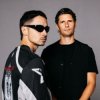
Bassjackers is a Dutch electronic music duo from Tilburg, founded in 2007 by friends Marlon Flohr and Ralph van Hilst. From the beginning, the roles within the project have been clearly divided: Flohr is primarily responsible for DJ performances and the stage side of Bassjackers, while van Hilst focuses on studio production. Bassjackers started with house and electro house, became a prominent part of the global big room scene during the first half of the 2010s, and later expanded their sound with hardstyle, trance, bass music, rave, techno, and hard dance. The duo’s international breakthrough is closely associated with Mush Mush, released on Musical Freedom in 2011.
The main distinguishing feature of Bassjackers is not only their characteristically heavy festival sound, but also the way the project itself is organized. While Marlon works directly with audiences and tests music in his sets, Ralph can continue producing in the studio. The two constantly exchange impressions about which ideas work best on the dancefloor and which elements should be changed in subsequent versions of tracks. This structure has allowed Bassjackers to maintain a high release rate for decades without tying studio production directly to their touring schedule.
The beginning of Bassjackers and the first recordings
Marlon Flohr was already DJing before Bassjackers was created and mainly played house, while Ralph van Hilst was experimenting with electronic music production. In early 2007, the friends decided to steer Ralph’s studio work toward material that Marlon could use in his own sets. The first track both were satisfied with was Beat Cut. Bassjackers began with this simple idea — one person makes the music, while the other immediately tests it on the dancefloor.
The early recordings differ noticeably from the duo’s better-known festival material. In the late 2000s, Bassjackers worked within the Dutch house and electro house scene, released their own tracks and remixes, and gradually developed a harder production style. The Sujo Soja EP appeared in 2009, while 16 and several other recordings from the same period preceded their international breakthrough.
Mush Mush and the international breakthrough
The key turning point came in 2011. Mush Mush attracted the attention of Tiësto and was released on his label Musical Freedom. The track remained in Beatport’s Top 10 for more than two months and received extensive support from festival DJs. For Bassjackers, it marked the transition from a gradually developing Dutch project into an international touring name.
Mush Mush appeared at a moment when European electro house was rapidly becoming heavier and increasingly geared toward enormous festival stages. The track already contained the main features of the future Bassjackers language: a short and easily recognizable synthesizer idea, very little unnecessary detail before the climax, and an abrupt drop designed primarily to provoke a physical reaction from the crowd.
After Mush Mush, the duo’s touring activity expanded considerably, while their catalog began appearing on an increasing number of major dance labels. In 2012, RIA with Angger Dimas was released on DOORN Records, followed by Bronx with Yves V on Smash The House. This was no longer a case of one accidentally successful single, but a consistent consolidation of Bassjackers within the international EDM scene.
2013–2014: the formation of the classic big room sound
The 2013–2014 period coincided with the global peak of festival EDM and became one of the most important phases in the Bassjackers career. In 2013, they released Grid, Collision, Raise Those Hands, Zing, Flag, and Gamer. These records appeared through Spinnin’ Records, Fly Eye Records, Protocol Recordings, and other influential labels of the era. Grid, for example, was released by Spinnin’ Records as an electro house track and clearly reflected the broader shift toward more massive festival production.
The most notable recording from this phase became Crackin. In January 2014, Billboard premiered the Martin Garrix edit, while the official Spinnin’ Records release followed in early February. In the new version, the original Bassjackers idea received an even more pronounced big room drop and became one of the most recognizable tracks from the duo’s early catalog.
Throughout 2014, Bassjackers continued developing the same heavy festival style with Derp, Rampage, Like That, Savior, and X. Savior proved especially durable: even years later, it remains among the most in-demand Bassjackers tracks on digital music services.
Bassjackers’ music from this period differed from more melodic progressive house because its main emotional effect did not come from a long harmonic build, but from rhythmic pressure. A large kick, a short synthesizer motif, and a sharply contrasting drop became the foundation of their classic big room sound.
Wave Your Hands, Memories, and the expansion of their genre range
2015 firmly established Bassjackers among major festival artists. During the year, they released Wave Your Hands, What We Live For, Alamo, Memories, Bring That Beat, Sound Barrier, and Rough. DJ Mag included the duo in the Top 100 DJs for the first time, with Bassjackers debuting at number 39. The publication separately highlighted their international touring activity and several strong Beatport chart positions.
Among the recordings from this period, Memories stands out in particular. Created with KSHMR, featuring Sirah, and released through Spinnin’ Records, the track differs from many of Bassjackers’ instrumental festival bangers because vocals and emotional melody play a major role. It demonstrated that the duo could work with a song-oriented structure without abandoning their characteristically powerful rhythmic foundation.
Sound Barrier revealed another side of their music by connecting Bassjackers with hardstyle. In the mid-2010s, such experiments were still perceived as a departure from the core big room model, but harder styles would later occupy an increasingly prominent place in the duo’s work.
Destiny: a step beyond standard big room
On October 4, 2016, the four-track EP Destiny was released through Spinnin’ Premium. It included Destiny, To Be The One, Tomorrow, and One Fifty. The label presented the release as an attempt by Bassjackers to explore new directions: the title track used more exotic harmonic and vocal elements, while the other tracks incorporated R&B, trap, and arrangements less typical of classic big room.
During the same period, Fireflies with Luciana and Extreme were also released. Bassjackers increasingly combined a hard festival foundation with complete vocal performances and more developed melodies. This gradually helped them move away from a situation in which the duo’s name was associated exclusively with one type of large drop.
Les Pays Bass and freedom from a single genre
In August 2017, Bassjackers released the EP Les Pays Bass. It included Wobble & Jiggle, Get Loud, Nasty, and a remix of Fireflies. Even this selection demonstrated a much freer attitude toward style: big room sat alongside bass house, trap, and heavier bass music.
In October 2018, Les Pays Bass, Vol. 2 followed with Poppin, Sureshot, Are You Ready, Get Down, and Let It Bang. The series became a useful format for music Bassjackers created directly from the perspective of a DJ set: individual tracks could differ in genre, but all had to maintain high density and live functionality.
During those same years, the catalog also expanded with The Riddle, Switch, The Jungle, Bounce, and other collaborations. Bassjackers increasingly turned to easily recognizable vocal or melodic elements and placed them inside considerably heavier festival arrangements. This technique would later become particularly noticeable in their versions of classic dance and pop motifs.
The Biggest — the first full-length album
Despite a large number of singles and EPs, the first Bassjackers studio album did not appear until 2019. The Biggest was released on November 22 through Spinnin’ Records and contained 14 tracks. The album brought together big room, psytrance, hardstyle, and other forms of festival electronic music that the duo had gradually explored over the previous years.
For Bassjackers, the album was not an attempt to move toward intimate or conceptual electronic music. On the contrary, The Biggest emphasized their core strength — working with large-scale sound. Even tracks that differed noticeably from classic big room in rhythm or genre foundation retained structures designed for major festival stages.
That same year, the duo returned to their major early hit with Mush, Mush (2019 Reboot). The new version showed how much the density of their production had changed over eight years: the original minimalist idea remained intact, but the arrangement became heavier and closer to later festival EDM.
After the EDM boom: why Bassjackers did not remain stuck in 2014
When classic big room stopped dominating electronic music, Bassjackers did not completely abandon the style that had made them famous. Instead, they gradually replaced individual elements inside the familiar structure. Some releases incorporated psytrance and hardstyle, while others introduced trap, bass house, or more commercial vocal approaches.
This approach proved sustainable. In 2022, Bassjackers themselves still described their style to DJ Mag as big room, while the publication characterized them through powerful drops and high-energy sets. At the same time, their eighth consecutive appearance in the Top 100 DJs showed that the project’s audience had survived well beyond the original EDM boom; that year, the duo ranked number 27.
It is also important that Bassjackers never treated big room as a set of strictly fixed sounds. For them, the architecture itself was more important: build-up, accumulation of tension, and the moment of sudden energy release. This made the format relatively easy to combine with faster and heavier styles.
The return of Les Pays Bass and renewed interest in heavier sound
In February 2023, the Les Pays Bass series returned with a new six-track EP on Smash The House. It included How We Do, Bass Hammer, Oldschool Vibe, Arabian Nights Part 2, Burnout, and That Bass. Once again, the release gathered several variations of heavy festival music within a single project.
That same year, Bassjackers released Traffic, in which familiar classic material was rebuilt around a heavier techno kick, as well as Eternity. DJ Mag described this period as a return to the duo’s signature “phat kick” big room sound while also noting the clear techno influence on their newer recordings. In 2023, Bassjackers entered the Top 100 DJs for the ninth consecutive year.
Energy and the transition toward faster festival rave
The middle of the 2020s coincided with the return of higher tempos across the major electronic music scene. Hard techno, hard trance, neo rave, and hard dance increasingly appeared alongside festival EDM, and this environment proved natural for Bassjackers.
In February 2024, Energy was released on Revealed Recordings. The track reinforced the project’s move toward a harder and faster sound while preserving its familiar festival structure. During the same period, Wake The F Up, Bla Bla Bla, All Around The World (La La La La La), Axel F, Mask Off, and other tracks appeared.
By 2025, DJ Mag had moved away from a narrow genre definition and described Bassjackers’ style as high energy EDM, while identifying hard, powerful sets as their main live characteristic. Among the notable releases from this period, the publication highlighted Wake The F Up, Bla Bla Bla, All Around The World (La La La La La), and Beethoven’s Aria Für Elise.
Hardstyle, hard dance, and techno in later Bassjackers music
In 2025, the move toward faster music became even more obvious. Bassjackers released My Way, Samba De Janeiro, Beethoven’s Aria Für Elise, Hardcore MOFO, Rewind, I Fink U Freeky, Wiggle Wiggle, Fuego, Party People, and Bass Down Low (Go Version). The tempo of many club versions sat around 145–160 BPM, significantly above the 128 BPM associated with mid-2010s big room.
This change was not simply a matter of mechanically speeding up older arrangements. Bassjackers began using hardstyle drums, trance sequences, and rave synthesizers much more actively. At the same time, large build-ups and festival climaxes remained intact, which means the duo’s later music sits somewhere between hard dance culture and traditional mainstage EDM rather than belonging entirely to either one.
Rave Baby, Bang On The Drums, and New Bass New Kick
In 2026, this direction continued through a series of releases: Rave Baby with WUKONG and Evil Twiin, GO MF GO, Baguette with DYEN, Blow Your Whistle, Jump Around with Charlie Sparks, Bang On The Drums, and New Bass New Kick with Hannah Laing. Beatport classifies a significant portion of this material within fast hard dance, techno, and neo-rave categories, while individual tracks reach tempos of 152–158 BPM.
Bang On The Drums was released on July 10, 2026, through Revealed Recordings, while New Bass New Kick followed on July 24 through doof. The latter release demonstrates particularly well the connection between Bassjackers and the new wave of European hard dance: the duo’s characteristic festival production is combined here with a contemporary fast trance/rave approach.
On August 14, 2026, Bassjackers and French techno producer Space 92 released I’m On Acid on TAKEOFF. Beatport describes the track as a combination of peak-time techno and festival rave energy. The collaboration logically continues the project’s long evolution: from house and electro house through big room toward much heavier contemporary club music.
The Bassjackers live model
The unusual division of roles between Marlon Flohr and Ralph van Hilst remains an important part of the project even many years after its creation. On stage, Bassjackers is represented primarily by Marlon, while Ralph spends most of his time working on material in the studio. Flohr has explained that this arrangement allows both of them to focus on the part of the profession that suits them best: he handles constant travel easily, while Ralph works much more effectively in a studio environment.
This also influences the tracks themselves. Bassjackers receive continuous feedback from festival sets: they can understand where a track loses tension, how effectively a drop works, which sounds feel fresh, and what requires further revision. For electronic music designed for enormous venues, this “studio — dancefloor — studio” cycle has direct practical importance.
Over the course of their career, Bassjackers have performed at major international festivals including Tomorrowland, Ultra, and Electric Daisy Carnival. DJ Mag associates their live reputation primarily with high-energy and heavy sets, which closely matches the duo’s studio catalog.
Bassjackers’ musical style
The historical foundation of Bassjackers remains electro house and big room. Their classic period is characterized by a powerful four-on-the-floor kick, short synthesizer hooks, relatively minimalist build-ups, and drops sharply separated from them. This type of music is designed for large acoustic spaces: the most important elements need to register immediately even in front of an audience of many thousands.
The later style is more complex. From hardstyle, Bassjackers adopted harder and more distorted kicks; from trance, fast melodic sequences and euphoric tension; from techno, continuous rhythmic pressure; and from hard dance and neo rave, higher tempos. At the same time, the fundamental principle of constructing a track has remained festival-oriented.
For this reason, Bassjackers are better understood not as a project that has repeatedly “changed genre,” but as a duo that has gradually expanded the same stage-oriented language. Mush Mush, Savior, Traffic, and New Bass New Kick sound like music from different eras, yet all are built around the same objective — creating the strongest possible moment directly inside a DJ set.
Working with familiar melodies and reinterpreting classics
Another distinctive feature of the Bassjackers catalog is their regular use of already familiar musical material. Over the years, the duo has released or participated in new versions of The Riddle, Traffic, Axel F, All Around The World (La La La La La), Samba De Janeiro, and Beethoven’s Aria Für Elise.
Rather than literally reconstructing the originals, Bassjackers usually preserve the most recognizable motif and build a modern festival arrangement around it. For a DJ set, this is an effective technique: the audience instantly recognizes the source material but receives it in a form compatible with the current tempo and character of the performance.
Bassjackers discography
The core Bassjackers discography is built around singles and EPs. Over their long career, the duo has released only one full-length studio album, which means the most important stages of their development are better traced through individual club releases.
Studio album
- The Biggest — 2019, Spinnin’ Records.
The Biggest was released on November 22, 2019, and consists of 14 tracks.
Main EPs
- Sujo Soja — 2009;
- Destiny — 2016;
- Les Pays Bass — 2017;
- Les Pays Bass, Vol. 2 — 2018;
- Les Pays Bass — 2023.
Destiny contains four tracks, the first Les Pays Bass four, Les Pays Bass, Vol. 2 five, and the 2023 edition six.
Selected key releases
- Beat Cut — 2007;
- 16 — 2009;
- Clifton — 2010;
- Mush Mush — 2011;
- RIA — 2012;
- Bronx — 2012;
- Grid — 2013;
- Raise Those Hands — 2013;
- Gamer — 2013;
- Crackin — 2014;
- Derp — 2014;
- Savior — 2014;
- Wave Your Hands — 2015;
- Memories — 2015;
- Sound Barrier — 2015;
- Fireflies — 2016;
- Extreme — 2016;
- Wobble & Jiggle — 2017;
- The Riddle — 2018;
- Switch — 2018;
- The Jungle — 2018;
- I Wanna Rave — 2019;
- Mush, Mush (2019 Reboot) — 2019;
- Happy Together — 2020;
- Written In The Stars — 2021;
- Psycho — 2022;
- Traffic — 2023;
- Wrong or Right (The Riddle) — 2023;
- Eternity — 2023;
- Energy — 2024;
- Wake The F Up — 2024;
- Bla Bla Bla — 2024;
- All Around The World (La La La La La) — 2024;
- Beethoven’s Aria Für Elise — 2025;
- I Fink U Freeky — 2025;
- Party People — 2025;
- Rave Baby — 2026;
- GO MF GO — 2026;
- Baguette — 2026;
- Blow Your Whistle — 2026;
- Jump Around — 2026;
- Bang On The Drums — 2026;
- New Bass New Kick — 2026;
- I’m On Acid — 2026.
The later part of the catalog confirms the noticeable acceleration of Bassjackers’ music: many releases from the middle of the 2020s fall within the 145–158 BPM range and appear in catalogs alongside hard dance, hard techno, trance, and neo rave.
Bassjackers’ place in electronic music
Bassjackers belong to a generation of Dutch producers who moved from the club-focused electro house of the late 2000s into the global festival EDM boom of the following decade. Their career, however, did not end with the decline of classic big room. The duo preserved its core identity while gradually incorporating the sounds of several subsequent waves of electronic music.
Mush Mush appeared before big room reached its full peak, Crackin and Savior arrived during its most mainstream period, The Biggest summarized the first decade of their international career, while later releases connected Bassjackers with the resurgence of trance, hard dance, techno, and rave aesthetics. The duo has remained present in the DJ Mag Top 100 DJs since 2015; in 2025, Bassjackers ranked number 45.
Despite all these changes, Bassjackers are best defined not by one particular genre but by their approach to electronic music as a tool for live performance. Their most characteristic records are always constructed with consideration for how a kick, pause, vocal phrase, or melody will be perceived in front of a large audience. It is precisely this connection between Ralph van Hilst’s studio work and Marlon Flohr’s stage experience that has allowed the project to retain its identity while continuously changing tempo, sonic palette, and genre surroundings.