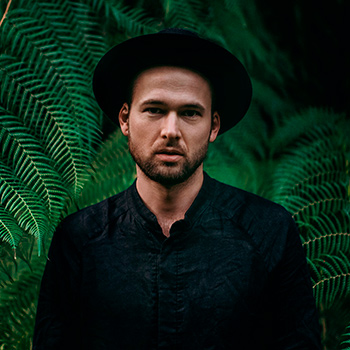
Armin van Buuren

Adam Beyer (full name Adam Thomas Beyer; born May 15, 1976, in Stockholm, Sweden) is a Swedish DJ, electronic musician and producer, and the founder of the labels Drumcode, Truesoul and Mad Eye. Since the mid-1990s, his name has been closely associated with the development of the Swedish techno scene alongside Cari Lekebusch, Jesper Dahlbäck and Joel Mull. Over three decades, Beyer has evolved from the hard, percussion-driven techno and vinyl releases of the 1990s to major international festivals, his own global Drumcode brand and the modern peak-time techno scene. In 2025, he released «Explorer Vol. 1», his first solo studio album since «Ignition Key» in 2002.
Childhood and early interest in music
Adam Beyer grew up in Stockholm. His father was an amateur musician who played drums, and Adam himself played drums from roughly the ages of nine to twelve. As a child, he listened to rock, but after his family moved closer to central Stockholm, he became interested in Beastie Boys, Run-D.M.C., LL Cool J and other hip-hop music.
He was particularly impressed by radio shows and recordings of DMC performances, where DJs used scratching, rapid transitions and vinyl manipulation. By around the age of eleven, Beyer had already decided that he wanted to become a DJ. After his father died when Adam was thirteen, his mother helped him buy his own turntables.
Initially, he practised with hip-hop records and learned turntablism. A turning point came when he discovered rave culture and techno. One of his early formative experiences was seeing Laurent Garnier perform at an illegal rave in the outskirts of Stockholm. Later, American artists Jeff Mills, Underground Resistance, Robert Hood and Kevin Saunderson became major influences on Beyer. A trip to Berlin and a visit to the Hard Wax record shop in 1993 cemented his interest in Detroit techno.
The Swedish techno scene of the 1990s
At the beginning of his professional career, Beyer worked at the Stockholm record store Planet Rhythm, where he met Cari Lekebusch and Glenn Wilson. Around Planet Rhythm, studios and small independent labels, a generation of Swedish producers was taking shape that also included Jesper Dahlbäck and Joel Mull.
Beyer released his first record at around the age of eighteen. In his early work, he experimented with fast techno, acid and harder forms of electronic music, gradually moving toward a rhythmically dense and minimalist sound built primarily around percussion.
By the mid-1990s, people outside Sweden were already speaking about a distinct «Swedish techno sound». Beyer, Lekebusch, Dahlbäck and Mull released large quantities of vinyl, performed across Europe and quickly became part of the international techno scene.
Drum Codes and the creation of Drumcode
In 1995, Planet Rhythm released «Drum Codes 1», a record that already contained the main characteristics of Beyer’s early sound: fast tempo, hard percussion and a minimum of unnecessary elements. The title later became the basis for the name of his own label.
In 1996, Adam Beyer founded Drumcode Records. Initially, the label was created primarily as a way to release his own music more quickly: the producer had accumulated a large amount of finished material, while working with external companies took too much time.
Drumcode soon ceased to be merely Beyer’s personal platform. The label began releasing music by Cari Lekebusch, Joel Mull, Marco Carola, Henrik B and other representatives of the European techno scene. Catalogue number DC01 became the starting point for a separate discography that would eventually grow to hundreds of releases.
«Decoded»
In 1996, Adam Beyer released his first studio album, «Decoded». It belongs to the early period of his career, when his music was particularly closely associated with hard, fast and percussion-driven techno.
The following year saw the release of «Recoded», a reworked release connected with material from the debut album. It is more accurate to classify it separately rather than treat it as a completely independent studio album.
Remainings and classic Drumcode
In the second half of the 1990s, Beyer released the «Remainings» series of EPs, which became one of the central parts of his early catalogue. During the same period, he also released «Compressed», «Tasty Bits», «Stocktown City», «Crispy Bits», «Nutcrusch» with Thomas Krome and numerous Drumcode releases.
The music was designed primarily for DJ use: long instrumental tracks, powerful drums and structures suited to mixing on several turntables. In the 1990s, Beyer also became known for his three-deck DJ technique, an approach strongly influenced by Jeff Mills.
«Protechtion»
In 1999, Beyer released his second main studio album, «Protechtion». It continued the development of early Swedish techno while already showing Beyer’s growing interest in deeper and less straightforward sounds.
By the end of the decade, the producer had begun moving away from the constantly increasing speed and aggression of hard techno. Some of his newer material no longer fit the original Drumcode aesthetic, which eventually led to the creation of other labels and projects.
Conceiled Project and experimentation
For material that did not fit the main Drumcode catalogue, Beyer used several aliases. The best known was Conceiled Project, under which he released more experimental electronic music on the Swedish label Svek.
At different times, he also used the names Mr. Sliff, Mould Impression, 2 Bonk and others. These releases allowed him to separate alternative studio experiments from the more recognisable club material released under the Adam Beyer name.
Ibiza, minimal and a change in sound
In the early 2000s, Beyer increasingly performed in Ibiza and became closely connected with the scene surrounding Cocoon, Richie Hawtin and Ricardo Villalobos. For several years, he spent a significant part of each summer on the island and became deeply immersed in minimal techno and house.
This period noticeably changed his music. After the extremely hard material of the 1990s came slower rhythms, deeper grooves, more space in the arrangements and the influence of minimal techno. Drumcode’s activity even slowed down for a time because Beyer was uncertain about the direction in which the label should develop.
Truesoul and «Ignition Key»
In 2002, Beyer founded Truesoul for music that fell outside Drumcode’s harder aesthetic. That same year, Truesoul released his third studio album, «Ignition Key».
The record shows a stronger influence from Detroit techno, electro, ambient and more melodic electronic music. «Ignition Key» remained Beyer’s last solo full-length studio album for the next 23 years.
Mad Eye
In 2004, Adam Beyer launched another label, Mad Eye. Its first release was recorded with Henrik B and titled «The Eye That Sees Itself». Mad Eye was intended for experimental techno that did not fit the musical policy of either Drumcode or Truesoul.
The Mad Eye catalogue later included «China Girl», «California Gold» with Agaric, «Turn Loose» with Alexi Delano, «Eye Contact» and other Beyer productions.
Fabric 22
In 2005, Beyer prepared «Fabric 22» for the renowned mix series of London club Fabric. The release demonstrated his already transformed approach to techno: deeper, more hypnotic and more minimalist than the early Drumcode aesthetic.
His discography also includes several other major DJ mixes: «Time Warp Compilation 3», «Stockholm Mix Sessions», «Essential Underground Vol. 9: Stockholm», «Fuse Presents Adam Beyer» and the collaborative «Cocoon Heroes» with Dorian Paic.
The return of Drumcode
By 2007, Drumcode had returned to releasing techno on a regular basis. Dustin Zahn, Joey Beltram, Alan Fitzpatrick, Joseph Capriati and other producers appeared on the label. The music became slower than the material of the 1990s but retained dense percussion and functionality for large club sound systems.
It was during this period that the Drumcode sound of the 2010s gradually took shape: powerful basslines, a pronounced groove, large breakdown sections and arrangements designed for both clubs and festival stages.
Drumcode Radio
In 2010, Adam Beyer launched the weekly Drumcode Radio, later known as Drumcode Radio Live. The first episode appeared in the summer of 2010. The programme features studio mixes, recordings of Beyer’s performances and guest sets from Drumcode artists and the international techno scene.
The project grew into one of the longest-running specialised techno podcasts. By 2026, Drumcode Radio had surpassed 800 episodes, with new editions continuing to appear weekly.
«Teach Me»
One of Adam Beyer’s best-known releases of the 2010s was «Teach Me», released in 2014. The track combines a hard rhythmic foundation with a repeating vocal sample and Detroit influence.
In 2019, for Drumcode’s 200th release, Amelie Lens created two new versions of «Teach Me» — a Main Mix and an Acid Mix.
«Your Mind» with Bart Skils
In 2018, Adam Beyer and Dutch producer Bart Skils released «Your Mind». The track was initially used in DJ sets as a special tool, but the audience response led to the creation of a full official version.
The composition features a characteristic acid line, powerful percussion and a vocal fragment and was widely played at Time Warp, Awakenings, Ultra Music Festival and other events. «Your Mind» became one of Drumcode’s most recognisable releases of the late 2010s.
Awakenings
The Dutch brand Awakenings occupies a special place in Beyer’s live career. He became the first artist to reach 100 performances at Awakenings events.
The relationship between Drumcode and Awakenings also grew into large-scale joint events. In 2018, Amsterdam hosted the first Drumcode Festival in collaboration with Awakenings, featuring Beyer, Pan-Pot, Joel Mull, Amelie Lens, Dense & Pika and other artists.
Drumcode as an international brand
Over the years, Drumcode has expanded far beyond the role of a conventional record label. The name is now used for its own festivals, club events and stages at major international events, while the catalogue brings together several generations of techno producers.
Artists who have worked with the label at different times include Cari Lekebusch, Joel Mull, Marco Carola, Joseph Capriati, Alan Fitzpatrick, Bart Skils, Nicole Moudaber, Sam Paganini, Enrico Sangiuliano, Amelie Lens, Layton Giordani, ANNA, Wehbba, Mha Iri, HI-LO and many others.
For Beyer, his work with Drumcode has become inseparable from his own activity as a producer: he simultaneously releases music, shapes the catalogue, hosts the radio show and curates the brand’s international events.
A new period: 2023–2024
2023 became one of the most productive periods of Adam Beyer’s studio career. His releases included «Legend», «Simulator» with Green Velvet, «Robotic Arms» and «Desert Queen».
«Desert Queen» combined a powerful bass foundation with melodic chords and a vocal theme, while «Simulator» continued Beyer’s collaboration with American producer Green Velvet.
In 2024, he released the three-track EP «Let's Begin», on which Beyer deliberately revisited certain elements of 1990s Drumcode while using modern production and a higher tempo. The release included «Let's Begin», «Computerized» and «Red Room».
The same period also brought «Ghost Kiss», «Don't Go» and the collaborative version of «Party All The Time» with Layton Giordani.
«Explorer Vol. 1»
In 2025, Adam Beyer released «Explorer Vol. 1», his first solo studio album since «Ignition Key» in 2002. The album consists of 16 tracks and was released on Drumcode.
The album features contributions from Coco Francavilla, Layton Giordani, Chris Avantgarde, Julian Jeweil, HNTR and vocalist Kyozo. Among the tracks are «Silent Mapping», «Taking Back Control», «Alto», «Explorer», «Circus Freaks», «Waypoint», «Desolate Lands», «Tanit», «Loca», «Boundless», «Do It for the Bass», «Hypnotic» and «The Long Way Home».
The title and visual concept are connected with Beyer’s long-standing interest in science fiction. While creating the album, he drew not only on his familiar peak-time techno but also on melodic techno, breakbeat, house, vocal electronic music and more cinematic compositions. Beyer viewed the album as an opportunity to record material that did not necessarily have to function exclusively as a tool for his DJ sets.
«Techno Trance» with Armin van Buuren
In 2025, Adam Beyer recorded his first collaborative track with Armin van Buuren. Their composition «Techno Trance» is a modern reinterpretation of D-Shake’s «Techno Trance (Paradise Is Now)», combining Armin’s characteristic melodic trance aesthetic with Beyer’s percussion-driven techno approach.
The collaboration continued a recent trend in which Beyer has worked more freely outside a strictly defined techno sound and collaborated with artists from neighbouring areas of electronic music.
Musical style
Adam Beyer’s sound has changed significantly throughout his career. In the mid-1990s, it was based on fast, hard and minimalist techno built around percussion. This approach formed the original musical identity of Drumcode.
In the early 2000s, Beyer began using more minimal, Detroit techno, electro and deeper grooves, particularly evident on «Ignition Key» and Truesoul releases. After Drumcode returned to active operation in the second half of the decade, a slower, heavier and more festival-oriented form of techno took shape.
In the 2020s, his range expanded again. His music began incorporating elements of melodic techno, progressive house, trance and more extensive use of vocals, while techno remains the core of his DJ sets.
Personal life
Adam Beyer was in a long-term relationship with Swedish DJ and producer Ida Engberg. The couple had three daughters. Beyer and Engberg also regularly performed together in B2B sets at major festivals and club events. In 2016, they officially married and held their wedding celebration at Berlin’s Berghain.
The marriage later ended. Ida Engberg publicly stated in 2023 that the divorce had taken place around two years earlier; Beyer himself also confirmed in 2026 that they had divorced about five years before.
Studio discography
- Decoded — 1996
- Protechtion — 1999
- Ignition Key — 2002
- Explorer Vol. 1 — 2025
Other full-length and major releases
- Recoded — 1997, reworked material from «Decoded»
- Time Warp Compilation 3 — 2001, DJ mix
- Stockholm Mix Sessions — 2002, DJ mix
- Essential Underground Vol. 9: Stockholm — 2004, DJ mix
- Fabric 22 — 2005, DJ mix
- Fuse Presents Adam Beyer — 2008, DJ mix
- Cocoon Heroes — with Dorian Paic, 2011
- Selected Drumcode Works 1996–2000 — 2014, compilation
Therefore, «Recoded» and the numerous DJ compilations should not be grouped together with the main studio discography: Beyer has four independent solo studio albums.
Selected tracks
- «Drum Codes 1»
- «Remainings»
- «Swedish Silver»
- «China Girl»
- «Teach Me»
- «What You Need»
- «Your Mind» — with Bart Skils
- «Space Date» — with Layton Giordani and Green Velvet
- «Legend»
- «Simulator» — with Green Velvet
- «Robotic Arms»
- «Desert Queen»
- «Let's Begin»
- «Party All The Time» — with Layton Giordani
- «Explorer»
- «Alto» — with Layton Giordani
- «Desolate Lands» — with Chris Avantgarde
- «Loca» — with Julian Jeweil
- «Techno Trance» — with Armin van Buuren
Adam Beyer and modern techno
Adam Beyer’s career spans several distinct periods of electronic music. He began during the rise of Swedish techno in the 1990s, lived through the scene’s shift toward minimal in the early 2000s, brought Drumcode back to active operation in the second half of that decade and transformed the label into an international platform with its own events and radio show during the 2010s.
At the same time, Beyer continues to work regularly as a studio artist. «Explorer Vol. 1», his numerous releases from 2023–2025 and collaborations with musicians from different generations show that his catalogue is not limited to the classic Drumcode period. It simultaneously encompasses the hard, percussion-driven techno of the 1990s, the deeper electronic music of Truesoul, the festival-oriented sound of the 2010s and the broader genre approach of recent years.