 Линда
Линда

Zemfira Talgatovna Ramazanova (born August 26, 1976, Ufa, Bashkir ASSR), performing under the name Zemfira, is a Russian singer, songwriter, composer and musician. She is one of the key figures in Russian-language rock music of the late 1990s and 2000s. She gained widespread recognition after the release of her debut album «Земфира» in 1999. Her next record, «Прости меня моя любовь», consolidated that success and became the most commercially successful release of her career.
At different stages of her career, Zemfira has worked at the intersection of alternative rock, pop rock, electronic music, jazz and chamber music. Her songs are recognizable for their distinctive vocal phrasing, conversational intonation and concise lyrics, in which everyday details coexist with themes of loneliness, intimacy, anxiety, addiction and broken relationships. Among her best-known songs are «Ариведерчи», «Ромашки», «СПИД», «Хочешь?», «Искала», «П.М.М.Л.», «Не отпускай», «Бесконечность», «Трафик», «Прогулка», «Небомореоблака», «Мы разбиваемся», «Жить в твоей голове», «Остин» and «Крым».
Childhood and musical education
Zemfira was born in Ufa into the family of history teacher Talgat Ramazanov and physician Florida Ramazanova. She began studying music at an early age: she learned piano, sang in a choir and wrote her first original song while still a child. She graduated from music school with honors.
Basketball was another serious passion. As a teenager, Ramazanova played point guard and captained a junior team. Over time, combining sport with music became difficult, and she ultimately chose music.
After school, Zemfira enrolled in the pop vocal department of the Ufa College of Arts. She was admitted directly into the second year. She completed her studies in 1997 with honors.
While studying, Zemfira performed in restaurants, singing jazz standards and popular songs. In 1996, she began working as a sound engineer at the radio station «Европа Плюс Уфа»: she recorded commercials and jingles and used free studio time to work on her own songs.
After learning the Cakewalk software, she began assembling her first demos independently. Early versions of «Снега», «Почему», «Синоптика», «Ракет» and other future songs appeared at that time. Sound engineer Arkady Mukhtarov assisted her with the recordings.
The first musicians and the move to Moscow
Around Zemfira, the first lineup of her band gradually took shape. It included bassist Rinat Akhmadiyev, drummer Sergey Sozinov, keyboardist Sergey Mirolyubov and guitarist Vadim Solovyov.
In 1998, the singer arrived in Moscow with demo recordings. Through mutual acquaintances, a cassette containing her songs reached Leonid Burlakov, producer of the band «Мумий Тролль». He became interested in the material and contacted its author. Soon afterward, Ilya Lagutenko joined the project and became producer of the debut album.
Even before the album was released, the song «СПИД» began receiving radio airplay. By the spring of 1999, Zemfira’s name was already being widely discussed in the music press, and on May 10 her first album was officially released.
Debut album «Земфира»
The album included «Почему», «Снег», «Синоптик», «Ромашки», «Маечки», «СПИД», «Румба», «Скандал», «Непошлое», «Припевочка», «-140», «Ариведерчи», «Ракеты» and the title track «Земфира».
The album appeared at a time when the boundary between Russian rock and mainstream pop music was becoming increasingly fluid. Zemfira had a live band and a guitar-driven sound, but the songs themselves were built around concise melodies and memorable choruses.
The language of the lyrics was also unusual for the late 1990s. Instead of rock-style grandiosity, there were metro trains, airplanes, telephones, cigarettes, illnesses, accidental conversations and strained relationships. The lyrics sounded contemporary and did not require the listener to decipher complex symbolic constructions.
«Ариведерчи», «Ромашки», «Почему» and «СПИД» became radio hits, and within a matter of months Zemfira went from being a new name to one of the most visible performers in Russian music.
«Прости меня моя любовь»
The second album, «Прости меня моя любовь», was released in 2000. It included «Шкалят датчики», «Созрела», «Хочешь?», «Рассветы», «Город», «Сигареты», «Доказано», «П.М.М.Л.», «Искала» and «Не отпускай».
The record became the most commercially successful release in the singer’s discography. Its circulation exceeded one million copies, while several songs became firmly embedded in the popular culture of the early 2000s.
«Искала» gained additional recognition after being used in Alexei Balabanov’s film «Брат 2». By then, Zemfira was already performing at the largest venues in Russia and was perceived simultaneously as a rock and pop artist.
«Четырнадцать недель тишины»
After releasing two albums in quick succession, Zemfira took a break. Her third album, «Четырнадцать недель тишины», appeared on April 1, 2002.
The recording featured a more carefully constructed studio sound. The arrangements contained more space and detail, while the vocals were no longer constantly surrounded by dense guitars.
The key songs of this period included «Бесконечность», «Трафик», «Мачо», «Главное», «Webgirl» and «Паранойя». The album marked the first noticeable departure from the sound of the first two records.
«Вендетта»
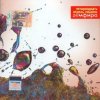
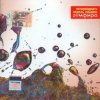
The fourth album, «Вендетта», was released in March 2005. It included «Небомореоблака», «Дыши», «Итоги», «Самолёт», «Дай мне руку», «Блюз», «Прогулка», «Друг», «Малыш», «Повесица» and other tracks.
The album was stylistically diverse. Guitar-driven songs coexisted with electronic music, blues and more intimate compositions. Igor Vdovin participated in the production of part of the material.
«Прогулка», «Блюз» and «Небомореоблака» became particularly prominent. The video for «Блюз» won Best Video at the 2005 MTV Russia Music Awards.
«Спасибо»
Zemfira’s fifth studio album, «Спасибо», was released on October 1, 2007. This time, she abandoned the familiar model of working with a major record company and released the material independently with the participation of the publishing house «Коммерсантъ».
The recording relied more heavily on live instruments. The album included «Мальчик», «Мы разбиваемся», «В метро», «Господа», «Бери меня», «Спасибо» and other songs.
The tour in support of the album concluded in the spring of 2008 with a concert at Moscow’s Olimpiyskiy sports complex.
«Зелёный театр в Земфире»
In February 2008, the film «Зелёный театр в Земфире», directed by Renata Litvinova, premiered.
The film is built around Zemfira’s concert at Moscow’s Green Theatre and differs from conventional music documentaries. There is almost no biographical narration — the focus remains on the stage, rehearsals, backstage footage and the editing of concert material.
Litvinova served as director and editor, while Zemfira was composer and one of the producers.
Z-Sides and film music
In 2010, Z-Sides was officially released — a collection of songs that had not appeared on the main numbered studio albums. It is more accurately regarded as separate from the core studio discography.
By this point, Zemfira had already been collaborating with Renata Litvinova for several years. Her music appeared in the film «Богиня: как я полюбила», and in 2012 the singer composed the soundtrack to «Последняя сказка Риты».
The music was released as a separate album and revealed another side of her work: a significant portion of the material consists of instrumental compositions designed not for concert performance, but to interact with the visual narrative.
«Жить в твоей голове»
The sixth studio album, «Жить в твоей голове», was released on February 14, 2013 — six years after «Спасибо».
The record included ten compositions, among them «Без шансов», «Деньги», «Кофевино», «Чайку» and the title track.
Compared with her previous work, the music became calmer and more restrained. Guitar pressure gave way to keyboards, pauses and more intimate arrangements. The voice stands at the center of almost every composition, while the instruments serve the atmosphere rather than developing an independent dramatic role.
The Uchpochmack
In 2013, Zemfira launched the project The Uchpochmack together with her nephews Artyom and Artur Ramazanov.
The group released the three-track EP First & Last, consisting of «Someday», «Mistress» and «Lightbulbs». The project’s name refers to the Tatar dish echpochmak.
At first, the participants did not disclose the lineup, although Zemfira’s voice was easily recognizable. Her collaboration with Artur Ramazanov later continued in a different format.
The «Маленький человек» tour
In February 2016, the large-scale «Маленький человек» tour began. During a concert in Nizhny Novgorod, Zemfira announced that this touring cycle would be her last in the format of an extended tour.
This did not mean a complete retirement from the stage. In the years that followed, the singer continued to perform at individual concerts and festivals.
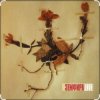
A recording of the program was released in 2016 as the live album «Маленький человек. Live».
«Джозеф»
In September 2018, the single «Джозеф» was released, created by Zemfira together with electronic musician Mujuice.
The lyrics are based on fragments of Joseph Brodsky’s poems «Новые стансы к Августе» and «Румянцевой победам». Dmitry Emelyanov, one of the singer’s regular musical collaborators, also participated in the recording.
«Бордерлайн»
The seventh studio album, «Бордерлайн», was released on February 26, 2021, eight years after the previous numbered studio record.
The album included «Таблетки», «ОК», «Этим летом», «Пальто», «Камон», «Том», «Жди меня», «Абьюз», «Остин», «Мама», «Крым» and «Снег идёт».
The sound became noticeably darker. Low synthesizer parts, electronic bass and slow tempos play an important role in the arrangements. Guitars no longer define the character of the entire record.
One of the central tracks was «Остин», for which an animated music video was produced.
«Северный ветер» and «Ах»
Also in 2021, Zemfira released music for Renata Litvinova’s film «Северный ветер». The soundtrack includes «Арию Дивы», «Сундуки Лотты», «Злого человека», «Бенедикта», «Фло» and instrumental compositions.
On July 28, the four-track EP «Ах» appeared, consisting of «Ах», «Почта», «Мелодрама» and «Гудбай».
It is a standalone EP and therefore should not be included among the main studio albums.
2022 and «Земфира от Луки»
After the beginning of Russia’s full-scale invasion of Ukraine, Zemfira publicly spoke out against the war.
In March 2022, she released a video for the song «Не стреляйте», written much earlier, using footage of the war. In May, the new single «Мясо» was released.
In the autumn, the project «Земфира от Луки» appeared, created together with Artur Ramazanov-Ostapenko, who performs under the name Luka.
The EP included «II», «Время не щадит», «Апероль» and «Мой друг». Zemfira was responsible for a significant portion of the lyrics and music, while Artur handled music, arrangements and production.
The 2023–2025 period
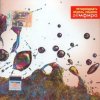
On March 10, 2023, Zemfira released the single PODNHA. Its title visually represents the Russian word «РОДИНА» using Latin characters.
On February 10 of the same year, the Russian Ministry of Justice added Zemfira Ramazanova to the register of «foreign agents». The singer attempted to challenge the decision in Russian courts. Zemfira herself publicly denied reports claiming that she had obtained French citizenship.
In April 2024, the single Colette was released. In December, the «Земфира от Луки» project continued with the song DRAMATIQUE, with music by Artur Ramazanov and lyrics by Zemfira.
During these years, the singer’s main concert activity took place outside Russia. She performed in Europe, the United States, Georgia, Serbia and other countries.
CACTUS
For Renata Litvinova’s theatrical production CACTUS, Zemfira and Dmitry Emelyanov composed a separate musical score.
The material was created specifically for the stage and consists predominantly of instrumental pieces. The complete digital version of the soundtrack was released in 2025. It included «Превращение», «Пустая рамка», «Голубь I», «Голубь II», «Любовь», «Замки», «Кактус» and other pieces.
«Jim Beam»
In October 2025, Zemfira presented a new version of the song «Jim Beam».
The composition itself had been written much earlier: a version titled «Jim Beam (Уфа 97)» appeared on the album «Вендетта». Twenty years later, the singer re-recorded it and released it as a standalone single.
Creative partnership with Renata Litvinova
Renata Litvinova and Zemfira have collaborated for more than two decades.
Litvinova directed the singer’s music videos and the film «Зелёный театр в Земфире». Zemfira composed music for «Богиня: как я полюбила», «Последняя сказка Риты», «Северный ветер», and later for the theatrical project CACTUS.
Their joint work combines music, cinema and theatre, with Zemfira often appearing not as a performer of songs, but as a composer of instrumental material.
Musical style
Zemfira is commonly associated with Russian rock, alternative rock and pop rock, although her albums differ noticeably from one another.
The early recordings are based on guitar-driven pop rock and indie aesthetics. «Четырнадцать недель тишины» introduced more detailed studio production. «Вендетта» combines rock, electronic music and blues. «Спасибо» is oriented toward live performance, «Жить в твоей голове» sounds more intimate, while «Бордерлайн» relies heavily on electronic textures and low-frequency synthesizer sound.
What remains constant is her melodic writing and approach to lyrics. Zemfira rarely tells complete, linear stories: her songs are constructed from fragments of conversations, brief observations, details of urban life and emotional states.
Vocal rhythm is equally important. She freely shifts words against the musical meter, stretches individual syllables, leaves pauses and moves from singing into an almost conversational delivery. Because of this, her songs remain immediately recognizable even when the arrangements change substantially.
Main discography
- «Земфира» — 1999
- «Прости меня моя любовь» — 2000
- «Четырнадцать недель тишины» — 2002
- «Вендетта» — 2005
- «Спасибо» — 2007
- «Жить в твоей голове» — 2013
- «Бордерлайн» — 2021
In addition to seven numbered studio albums, Zemfira’s catalog includes live releases, the Z-Sides compilation, the soundtracks «Последняя сказка Риты», «Северный ветер» and CACTUS, the EP «Ах», The Uchpochmack project and recordings released as «Земфира от Луки».
Importance to Russian-language music
Zemfira’s emergence in 1999 significantly changed perceptions of how female-authored rock music could sound in the mainstream Russian-language music space. Her songs simultaneously entered rock radio rotation and pop charts while retaining a distinctive authorial voice.
Decades later, early songs such as «Ариведерчи» and «Хочешь?», and later works including «Бесконечность», «Прогулка», «Мы разбиваемся», «Жить в твоей голове» and «Остин», belong to different musical eras. What unites them is not genre, but a way of writing: concise and precise phrases, strong melodies and a vocal intonation that is almost impossible to confuse with any other performer.