


 Taylor Swift
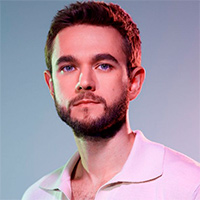
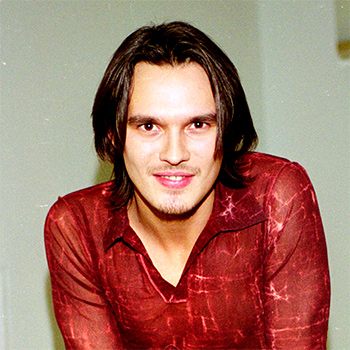
Zedd is the stage name of German DJ, composer and music producer Anton Zaslavski, born on 2 September 1989 in Saratov, then part of the Soviet Union. Raised in Germany, he became one of the central figures of electronic pop music in the 2010s, combining classical harmony with progressive house, electro house and modern pop music.
Zedd achieved international recognition with Spectrum, Clarity, Stay the Night, I Want You to Know, Beautiful Now, Stay and The Middle. He has also written and produced music for other artists, from Lady Gaga and Justin Bieber to Ariana Grande. His collaboration with Foxes on Clarity earned him a Grammy, while Stay, The Middle and the album Telos later brought additional Recording Academy nominations.
From Saratov to Germany
Anton Zaslavski was born into a musical family. When he was around three years old, the family moved to Germany, and he spent his childhood in the Kaiserslautern area. His father, Igor Zaslavski, played guitar and taught music, while his mother taught piano. This environment shaped Anton’s musical education long before he developed an interest in electronic music.
He began playing the piano at around the age of four and took up drums at twelve. Classical music remained an important part of his training: even Zedd’s most electronic productions often begin with chords and a piano melody. He later told the Recording Academy that, even after many years, he still frequently begins composing music at the piano.
Dioramic: The Metal Band Before His Electronic Career
Before Zedd emerged as an independent electronic project, Zaslavski spent many years as the drummer of the German band Dioramic. He joined the group at around the age of twelve and remained with it until he was twenty. Dioramic’s music sat at the intersection of heavy rock, metalcore and progressive styles, and the band worked with Lifeforce Records.
This period is important for understanding Zedd’s later music. His interest in complex rhythms, abrupt dynamic transitions and carefully constructed arrangements did not come from club electronics alone. Even many years later, while creating the album Telos, he directly revisited techniques from his earlier musical life: for example, Sona uses a 7/4 time signature, which Zaslavski connected with his early years in Dioramic.
Justice and the Move into Electronic Music
A turning point came when he discovered † (Cross), the album by French duo Justice. Hearing how aggressive and musically rich an electronic record could sound made Zaslavski increasingly interested in producing on his own, and from around 2009 he began working seriously with electronic music.
In 2010, Zedd won two Beatport remix competitions and quickly began attracting attention among electronic music producers. His reworking of Skrillex’s Scary Monsters and Nice Sprites was especially important. This period took him from the world of emerging online producers into the international professional scene.
Complextro played a significant role in Zedd’s early catalogue — a technically dense form of electro house built around rapidly changing synthesiser timbres, short sound fragments and complex programming. These early recordings differ noticeably from the more melodic pop music with which his name would become associated several years later.
Spectrum and the Interscope Deal
By the beginning of the 2010s, Zedd was already releasing his own tracks and remixes, including Shave It, but an important transitional production was Spectrum featuring Matthew Koma. Released in 2012, the track pointed towards the direction that would soon become central to his work: technically sophisticated electronic production combined with a fully developed emotional pop song.
During the same period, Zedd signed with Interscope Records and completed work on his first full-length album.
Clarity — The Album That Defined His Career
Zedd’s debut studio album Clarity was released on 5 October 2012. It included Shave It Up, Spectrum, Lost at Sea, Codec, Stache and the title track Clarity. The album combined electro house and progressive house with carefully structured vocal performances and became the foundation of Zedd’s international career.
The story behind Clarity itself was particularly unusual. Zaslavski has explained that, shortly before completing the album, he was still dissatisfied with the vocal version of the track and even questioned whether it should be included. After discovering the voice of British singer Foxes, he realised he had found the right vocalist.
Zedd co-wrote the track with several songwriters, including Matthew Koma, Skylar Grey and Porter Robinson. In the United States, Clarity reached number 8 on the Billboard Hot 100, transforming Zedd from a recognised electronic producer into an artist on the international pop stage.
At the 2014 Grammy Awards, Clarity won Best Dance Recording. The award remains the first Grammy victory for both Zedd and Foxes.
Stay the Night and Work Beyond His Own Project
The expanded edition of Clarity produced another major hit, Stay the Night, featuring Hayley Williams of Paramore. By this point, Zedd’s characteristic style had already shifted noticeably away from overloaded complextro towards a more open structure in which the song itself and its melodic climax became the central elements.
At the same time, he was actively working as a songwriter and producer for other artists. Together with Max Martin, Zedd contributed to Beauty and a Beat by Justin Bieber and Nicki Minaj from the album Believe. Zaslavski is credited as both a songwriter and producer on the track.
Lady Gaga and ARTPOP
His collaboration with Lady Gaga forms a separate chapter in his production career. Before ARTPOP, Zedd had already remixed her music, and he later became directly involved in studio work on the 2013 album. Gaga brought several electronic producers into the project, including Zedd, Madeon and DJ White Shadow.
Working with Gaga revealed another side of Zaslavski: he was not simply a producer of club tracks, but someone capable of adapting electronic production to a major pop album. Zedd described the ARTPOP sessions as experimental and noted Gaga’s willingness to embrace unusual musical ideas.
Break Free with Ariana Grande
In 2014, Zedd appeared on another major international pop hit: Break Free by Ariana Grande. The song was written by Zaslavski, Max Martin and Savan Kotecha, while Zedd and Martin served as producers.
Break Free reached number four on the Billboard Hot 100. For Zedd, the track definitively confirmed that he could operate simultaneously within the electronic scene and at the highest level of the American pop industry.
True Colors: The Second Album
Zedd’s second studio album, True Colors, was released on 18 May 2015. Compared with his debut, Zedd aimed for greater variety in mood and musical palette. The album included Addicted to a Memory, I Want You to Know, Beautiful Now, Papercut, Transmission, Done with Love and other tracks.
One of its biggest singles was I Want You to Know featuring Selena Gomez. Another important release was Beautiful Now with Jon Bellion. These tracks continued Zedd’s gradual move from predominantly festival-focused EDM towards a broader form of electronic pop music.
The album reached number 4 on the Billboard 200 and number one on the US Dance/Electronic Albums chart, making it Zedd’s most successful studio album in terms of its position on the main American albums chart.
Starving and Stay
After True Colors, Zedd stepped away from the traditional album cycle for many years and focused primarily on individual collaborative singles.
In 2016, he worked with the duo Grey on Starving for Hailee Steinfeld. Zedd and Grey were among the producers of the recording.
The following year brought Stay with Canadian singer Alessia Cara (Alessia Cara). The song reached number 7 on the Billboard Hot 100 and earned the artists a Grammy nomination for Best Pop Duo/Group Performance.
Stay clearly demonstrated Zedd’s new approach. The massive festival-house drop gave way to a more compact arrangement in which vocals, rhythm and processed melodic fragments formed a unified pop structure.
The Middle — His Biggest Pop Hit of the Late 2010s
In January 2018, Zedd, American production duo Grey and singer Maren Morris released The Middle. The song became one of the biggest commercial successes of Zaslavski’s entire career and reached number 5 on the Billboard Hot 100.
At the 2019 Grammy Awards, The Middle received three nominations: Record of the Year, Song of the Year and Best Pop Duo/Group Performance.
The track became a clear example of how dramatically Zedd’s musical language had changed since the early Shave It. Instead of deliberately complex electronic programming, the song uses a minimalist pop arrangement in which almost every sound is built around supporting the vocal hook.
Happy Now, 365 and Good Thing
The commercial success of Stay and The Middle shaped the next stage of Zedd’s career. In 2018, he released Happy Now with Elley Duhé, while in 2019 he recorded 365 with Katy Perry and Good Thing with Kehlani.
During this period, his music increasingly moved away from the classic idea of early-2010s EDM. Electronic production remained the foundation, but the songs were more and more often structured according to the conventions of contemporary pop.
Inside Out and the Long Gap Between Albums
In 2020, Zedd released Inside Out with British singer Griff. Despite a steady flow of standalone releases and continued touring, a follow-up album to True Colors took considerably longer to arrive than originally expected.
Zaslavski later explained that work on his third album repeatedly changed direction. During the pandemic, he put the project aside because he did not feel sufficiently inspired, and later effectively restarted a substantial portion of the material. According to him, around 90% of one early version of the future album was discarded.
Gaming and the Valorant Collaboration
Gaming has long been one of Zedd’s interests, and one of his biggest projects at the intersection of music and the gaming industry was his collaboration with Riot Games.
In 2021, the SPECTRUM collection was created for Valorant. Zedd contributed to its musical identity and sound design. This was an official collaboration with Valorant and Riot Games, rather than a contract with Zedd as an artist for the esports organisation Sentinels.
Telos: Returning to the Album Format
The major turning point of the next phase was Telos, Zedd’s third studio album, released on 30 August 2024 through Interscope Records. More than nine years had passed since True Colors.
Unlike the radio-oriented singles of the previous years, Telos was created as a unified musical work. Zedd deliberately avoided building the album around streaming algorithms or the expectations of the pop market. In an interview with the Recording Academy, he described the record as the most personal reflection of his own musical thinking and stressed that the main criterion behind its creation was not commercial convenience, but composition itself.
A live orchestra is used throughout the album, while electronic music interacts with classical harmony, jazz, rock and complex rhythmic structures. According to Zedd, the true foundation of his musical language lies not in specific synthesisers or festival-EDM drums, but in chord progressions and melodies.
Out of Time, Lucky and the Unusual Guests on Telos
The album opens with Out of Time featuring Bea Miller. Zedd began developing the initial idea for the track shortly after True Colors, meaning that parts of what would eventually become Telos existed for almost a decade before the album was released.
The second advance single was Lucky with Remi Wolf. Other contributors to the album include John Mayer, Muse, Dora Jar, the olllam, Bava and Grey. On Dream Brother, Zedd reworked a Jeff Buckley composition, while the closing track 1685 with Muse references the music of Johann Sebastian Bach.
The title 1685 refers to the year of Bach’s birth. The track draws on The Well-Tempered Clavier, the work through which the young Zaslavski was first introduced to the classical piano repertoire. In this way, the ending of Telos directly connects the adult electronic producer with his earliest musical education.
Grammy Recognition for Telos
Telos was nominated for a 2025 Grammy in the category Best Dance/Electronic Album. The award that year went to Brat by Charli xcx, but for Zedd the nomination marked his first appearance in this album category.
According to the Recording Academy, Zedd has one Grammy win and six nominations: the victory for Clarity, the nomination for Stay, three nominations for The Middle and the album nomination for Telos.
Zedd and Dragon Ball DAIMA
Another unusual project from the later stage of his career was his involvement in the music for the anime Dragon Ball DAIMA. Zedd wrote music for the opening theme Jaka Jaan, performed together with the Japanese duo C&K. The lyrics were written by Yukinojo Mori, while KEEN of C&K is also credited as a co-composer.
He also contributed to the ending theme NAKAMA with Japanese-American singer AI. The Dragon Ball project therefore expanded Zedd’s work far beyond the traditional American and European electronic pop scenes.
How Zedd’s Music Is Built
One of the main qualities that distinguishes Zedd from many producers of the EDM era is the strong role of harmony. His best-known compositions rarely depend on rhythm and a drop alone. Even in his early festival tracks, the climax usually develops directly from the song’s chord progression and melodic idea.
His classical education is particularly noticeable in voice leading and harmonic transitions. The piano remains a working instrument for Zaslavski even when producing contemporary electronic music: the Recording Academy confirms that he still begins composing many of his works at the keyboard.
At the same time, Zedd’s style cannot be reduced to progressive house alone. His early recordings are connected with electro house and complextro, Clarity combines EDM with pop songwriting, Stay and The Middle belong almost entirely to the world of electronic pop, while Telos incorporates orchestral, rock, jazz and classical elements.
Zedd’s Three Studio Albums
- Clarity — 2012
- True Colors — 2015
- Telos — 2024
Telos was Zedd’s first full-length album in nine years and, at the same time, his clearest departure from being viewed exclusively as an EDM producer.
Key Tracks
- Shave It — 2011
- Spectrum — 2012
- Clarity — 2012
- Stay the Night — 2013
- Find You — 2014
- Break Free — 2014, with Ariana Grande
- I Want You to Know — 2015, with Selena Gomez
- Beautiful Now — 2015
- Starving — 2016, Hailee Steinfeld and Grey featuring Zedd
- Stay — 2017, with Alessia Cara
- The Middle — 2018, with Maren Morris and Grey
- Happy Now — 2018
- 365 — 2019, with Katy Perry
- Good Thing — 2019, with Kehlani
- Inside Out — 2020, with Griff
- Out of Time — 2024, with Bea Miller
- Lucky — 2024, with Remi Wolf
- Jaka Jaan — 2024/2025, with C&K
- NAKAMA — 2025, with AI
From EDM to Personal Electronic Music
Zedd’s career reflects the evolution of electronic pop music in the 21st century particularly well. He began with technically complex electro house, became one of the prominent producers of the global EDM boom, then helped bring electronic production techniques into mainstream pop before eventually returning to a more compositional and experimental approach.
Clarity remains the central point of his mainstream breakthrough, but evaluating his entire career through that hit alone is no longer sufficient. True Colors expanded his album language, Stay and The Middle reinforced his influence on radio pop in the second half of the 2010s, while Telos connected Zaslavski’s electronic present with his classical education and his past as a rock drummer.
It is precisely this ability to connect different stages of his own musical experience — piano, a heavy band, complex electronic programming, pop songwriting and orchestral composition — that remains one of the main reasons Zedd holds a distinctive place among producers of his generation.