 Наталья Могилевская
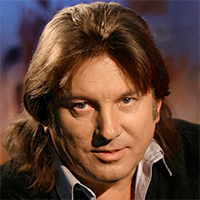
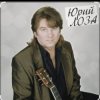
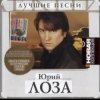
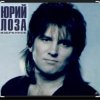
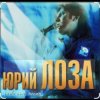
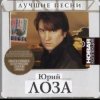
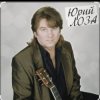
Yuri Eduardovich Loza (born February 1, 1954, in Sverdlovsk, now Yekaterinburg) is a Soviet and Russian singer, composer, poet, songwriter and guitarist. He is best known for the songs «Плот», «Сто часов», «Я умею мечтать», «Зима» and «Заповедные места». His work combines singer-songwriter traditions, pop, rock and elements of urban romance.
Loza’s musical career began long before his solo fame: in the second half of the 1970s he worked with Bari Alibasov’s ensemble «Интеграл», and after moving to Moscow he collaborated with the group «Зодчие». In the 1980s, his songs circulated on tape recordings, and later began to be officially released on records by the «Мелодия» label.
Childhood and youth
Yuri Loza was born in Sverdlovsk. He spent his early childhood in Verkhny Tagil, and in 1961 the family moved to Alma-Ata.
He became interested in music while still at school. At around the age of thirteen, he taught himself to play the guitar, took part in amateur performances and experimented with performing foreign songs using his own Russian-language lyrics.
After school, Loza enrolled in the Faculty of Geography at Kazakh State University but did not complete his studies. He later served in the Soviet Army, where he also played in a musical group.
After demobilization, he studied percussion at the Alma-Ata Music College but did not graduate there either. During this period, he earned money through music, including performing in restaurants, where he played a broad repertoire.
The group «Интеграл»
In 1977, Yuri Loza joined the ensemble «Интеграл», led by Bari Alibasov. The group initially worked in Ust-Kamenogorsk and later became associated with the Saratov Philharmonic.
Loza performed as a vocalist and musician. With «Интеграл», he toured extensively and in 1980 took part in the festival «Весенние ритмы. Тбилиси-80» — one of the best-known events in the history of Soviet rock music.
At the same time, he continued writing his own songs, although most of his original material was not included in the concert repertoire of «Интеграл». It was during this period that his future best-known composition appeared.
The story of «Плот»
Yuri Loza began writing «Плот» in 1982, while he was still working with «Интеграл». According to the musician’s recollections, the idea came to him while vacationing by the sea, and the final work on the song took about a year.
Loza offered the song for the repertoire of «Интеграл», but it was not accepted. As a result, «Плот» remained his independent work.
The composition did not become widely known immediately. It was officially released on the record «Что сказано, то сказано» in 1988 and became Yuri Loza’s most recognizable song.
«Путешествие в рок-н-ролл»
In 1983, Loza left «Интеграл» and moved to Moscow. There, with the participation of musicians from the group «Примус», he recorded the tape album «Путешествие в рок-н-ролл».
The recording was widely distributed unofficially on cassettes and reel-to-reel tapes. It included songs with harsher, satirical and everyday-life lyrics that differed significantly from the lyrical material with which mass audiences would later associate Loza.
Among the songs from this period are «Сто часов», «Баба Люба», «Мать пишет», «Девочка сегодня в баре», «Утро с похмелья» and others.
The name «Примус» was for a long time associated with the performer of the album, although Loza himself was not a member of the group: its musicians assisted him during the recording.
«Зодчие»
At the end of 1983, Yuri Loza joined the group «Зодчие». At different times, Valery Syutkin and Yuri Davydov also worked in the group alongside him.
By the mid-1980s, Loza’s songs made up a significant part of the repertoire of «Зодчие». The compositions «Я умею мечтать» and «Зима» are associated with this period.
In 1986, both songs were officially released by «Мелодия» on the compilation «Панорама-86. Фестиваль молодёжной популярной музыки». These recordings became some of Yuri Loza’s first officially released works.
At the same time, his self-produced tape albums continued to circulate: «Концерт для друзей» (1984), «Тоска» (1985) and «Любовь, любовь…» (1986).
Solo career
In the second half of the 1980s, Loza fully moved into solo work.
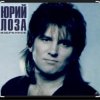
In 1988, the «Мелодия» label released the record «Что сказано, то сказано». It included works previously known from tape recordings, as well as «Плот».
During this period, «Плот», «Сто часов», «Я умею мечтать», «Зима» and other songs became widely known. Unlike the satirical and rock-and-roll material of the early 1980s, his later repertoire increasingly focused on lyricism, reflections on time, loneliness, travel and human relationships.
In 1990, the record «Вся жизнь — дорога» was released.
The 1990s and his own studio
In 1993, Yuri Loza established his own recording studio. This allowed him to work independently of major production structures and personally control the recording of his material.
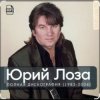
During the 1990s, compilations and new recordings were released, while earlier songs were repeatedly reissued on compact disc.
In 2000, the studio album «Заповедные места» appeared. The title track had been written much earlier: Yuri Loza composed the music, while poet Alexander Zhigarev wrote the lyrics. The song had already gained recognition in 1987 in a version performed by the ensemble «Ариэль».
In 2004, the live album «Я умею мечтать…» was released, based on an anniversary concert program.
«Крик души»
After a long break in his numbered discography, the album «Крик души» appeared. The material was initially released on vinyl, and its digital version followed in February 2025.
The album contains ten tracks: «Крик души», «Городские дворы», «Давай зайдём», «Это лето», «Облака», «Мадам», «Шторм», «Уренгой», «Открой» and «Вот и прошёл год».
Main albums and recordings
- «Путешествие в рок-н-ролл» — 1983, tape album;
- «Концерт для друзей» — 1984, tape album;
- «Тоска» — 1985;
- «Любовь, любовь…» — 1986;
- «Что сказано, то сказано» — 1988, official record;
- «Вся жизнь — дорога» — 1990;
- «Заповедные места» — 2000;
- «Я умею мечтать…» — 2004, live album;
- «Крик души» — vinyl edition in 2023, digital release in 2025.
Style and themes
Yuri Loza’s work is difficult to reduce to a single genre. His early recordings feature elements of rock and roll, rock, blues and satirical singer-songwriter material; later, melodic pop and guitar-based lyricism came to the foreground.
Loza writes the music and lyrics for most of his songs himself. His songwriting style is characterized by conversational Russian, familiar everyday imagery and narrative lyrics. Recurring themes include the road, the passage of time, dreams, relationships, loneliness and everyday life.
In 2012, the «Эксмо» publishing house released Loza’s book «Научу писать хиты», devoted to his views on songwriting, lyric writing, melody and song structure.
Personal life
Yuri Loza is married to Svetlana Merezhkovskaya. She performed as a singer, including under the stage name Suzanne, and later became involved in literature and poetry. Svetlana also worked on her husband’s lyrics as an editor.
Their son Oleg Loza, born in 1986, chose professional classical music. He graduated from the conducting and choral department of the Gnessin Music College and the Moscow Conservatory and became an opera baritone.
Public activity
In addition to his musical work, Yuri Loza regularly appears in the media with comments on music, culture, show business and public events. His assessments of famous performers and phenomena of popular culture have repeatedly become subjects of public discussion.
At the same time, the foundation of his professional biography remains songwriting. Loza’s best-known composition, «Плот», was created back in the early 1980s, while its widespread popularity came much later, making it one of the most characteristic examples of a song enjoying a long life beyond the era in which it was written.