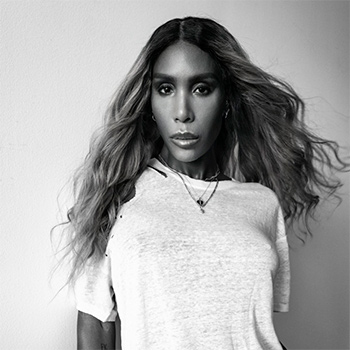
Honey Dijon is an American DJ, music producer, songwriter, remixer, designer, and cultural figure. The artist’s real name is Honey Redmond. She was born and raised on the South Side of Chicago, the city where house music emerged in the late 1970s and early 1980s.
Honey Dijon’s work combines Chicago house, disco, techno, acid house, soul, funk, and various forms of contemporary club music. She is known as an artist who preserves a connection with the history of house while representing that culture at major festivals, fashion shows, and international pop releases.
An important part of her public work has been the preservation of house music’s historical memory as a culture created primarily by Black, Latino, and queer communities. Honey Dijon also speaks openly about her experience as a Black transgender woman and advocates for equality and greater visibility for trans and queer people in the music industry.
Childhood and Chicago’s Musical Environment
Honey Redmond grew up in a musical African American family. Her parents listened to soul, R&B, funk, and disco, while house parties introduced her to the role of the DJ as someone capable of directing the mood and movement of an audience. She began collecting records and visiting the renowned Chicago stores Imports Etc. and Gramaphone Records.
Honey Dijon’s teenage years coincided with a crucial period in the development of Chicago house. She witnessed the club culture shaped by Frankie Knuckles, Ron Hardy, and other pioneers of the genre, and later became acquainted with Derrick Carter, Mark Farina, and musicians from their wider circle. Derrick Carter became one of the most important mentors in her professional development.
The Chicago scene taught her to view house as more than a particular rhythm or collection of studio techniques. For Honey Dijon, the club was a space where people of different races, sexual orientations, gender identities, and social backgrounds could temporarily free themselves from the restrictions of the outside world.
Moving to New York
In the late 1990s, Honey Dijon moved to New York. The city’s club culture differed significantly from Chicago’s and included its own traditions of garage, disco, ballroom, tribal house, soulful house, and extended DJ sets lasting many hours.
In New York, Honey met producers, DJs, and music industry figures, including Danny Tenaglia and the Maxi Records team. She gradually began performing at local parties, building sets at the intersection of Chicago’s rhythmic toughness and New York’s more orchestrated, vocal-oriented sound.
It was in New York that Honey Dijon’s approach to DJing fully took shape. She did not seek to confine her sets to a single subgenre and could combine disco, house, techno, acid, soul, tribal rhythms, and vocal recordings within a unified musical narrative.
International Club Career
Throughout the 2000s and 2010s, Honey Dijon gradually developed from a participant in the Chicago and New York club scenes into an international artist. She performed regularly across Europe, where her sets gained particular recognition in Berlin, London, Paris, and Ibiza.
Berlin’s Panorama Bar, connected with the Berghain club, became an important venue in her career. Performances there helped Honey demonstrate that her musical range extended beyond classic house and disco: in harder sets, she also turned to rhythmic techno, acid, and industrially influenced club music.
Honey Dijon has performed at Coachella, Glastonbury, Dekmantel, Sónar, Defected Croatia, and other international festivals and club events. Her programs can vary considerably: a festival set is usually built around vivid vocal tracks and powerful climaxes, while in a smaller club she may devote more attention to rare records, long transitions, and the history of house music.
Early Recordings and Production Work
Although Honey Dijon began her DJ career in the 1990s, she spent many years releasing primarily individual singles, remixes, and club versions as a producer.
One of her important early projects was the compilation Classic Through the Eyes Of: Honey Dijon, released in 2013. It presented a selection of music from the Classic Music Company label and marked the beginning of a long-running collaboration with Luke Solomon and his wider creative team.
In the following years, Honey Dijon released original tracks and remixes, gradually developing her own creative method: a tough rhythmic foundation, expressive vocal parts, disco influences, and club arrangements designed for sustained physical movement.
The Best of Both Worlds
Her debut studio album, The Best of Both Worlds, was released in 2017 through Classic Music Company.
The title reflected several layers of Honey Dijon’s creative identity: the connection between Chicago and New York, the underground and the fashion industry, house and techno, and masculine and feminine cultural codes. The artist also associated it with her personal experience as a transgender woman.
The album included Thunda, recorded with Shaun J. Wright, as well as Houze, Burn, Look Ahead, Catch the Beat, and other tracks. Luke Solomon played a major role in creating the record as a co-writer and producer.
The Best of Both Worlds presented Honey Dijon not only as a DJ and selector, but also as a creator of her own club music. The material combined Chicago house, jackin’ house, disco, techno, and spoken word while preserving the atmosphere of a living club environment.
The album was nominated for a GLAAD Media Award in the Outstanding Music Artist category.
Remixes
Honey Dijon has received widespread recognition as a remixer. She has created official versions of songs by Madonna, Lady Gaga, Jessie Ware, Christine and the Queens, Neneh Cherry, Dua Lipa, Beyoncé, David Bowie, and other artists.
Among her most notable works are:
- I Don’t Search I Find — Honey Dijon Remix for Madonna;
- Free Woman — Honey Dijon Realness Remix for Lady Gaga;
- Ooh La La — Honey Dijon Remix for Jessie Ware;
- Break My Soul — Honey Dijon Remix for Beyoncé;
- Let’s Dance — Honey Dijon Moonlight Remix for David Bowie;
- Illusion — Honey Dijon Remix for Dua Lipa.
Her remixes usually go far beyond simply adding a new beat. Honey Dijon restructures the track according to the logic of a club set: she extends intros and instrumental passages, changes the balance between vocals and rhythm, strengthens the percussion, and creates new climaxes.
Black Girl Magic
Her second studio album, Black Girl Magic, was released on November 18, 2022. It was a considerably larger and more collaborative project than her debut record.
The title celebrates Black feminine energy, queer creativity, collective care, and the ability to preserve joy despite discrimination and social pressure. At the same time, the album is not exclusively a political manifesto: its foundation is dance music created for clubs, parties, and shared experience.
The album featured:
- Eve;
- Pabllo Vittar;
- Channel Tres;
- Mike Dunn;
- Hadiya George;
- Dope Earth Alien;
- Josh Caffe;
- Cor.Ece;
- LATASHÁ;
- Urias;
- Dave Giles II;
- Annette Bowen;
- Nikki-O;
- Rimarkable.
Key tracks from the album include Not About You, It’s Quiet Now, Downtown, In the Club, Everybody, Show Me Some Love, Work, La Femme Fantastique, and Love Is a State of Mind.
Luke Solomon once again served as Honey’s production partner. Chris Penny, Jimmy Edgar, Harry Romero, and other musicians also contributed to the project.
Black Girl Magic was nominated for a GLAAD Media Award in the Outstanding Music Artist category and appeared on numerous lists of the year’s notable electronic albums.
Work with Beyoncé
One of the most important events in Honey Dijon’s international career was her participation in the creation of Beyoncé’s 2022 album Renaissance.
Honey Dijon and Luke Solomon worked on the tracks Cozy and Alien Superstar. Honey is officially credited as a producer and writer, while her real name, Honey Redmond, appears among the album’s songwriting credits. She also created the official remix of the single Break My Soul.
Renaissance was conceived as an acknowledgment of the historical contribution made by Black and queer communities to house, disco, and club music. Honey Dijon’s involvement helped connect Beyoncé’s global pop project with the real culture of Chicago and New York dance floors.
The album won the Grammy Award for Best Dance/Electronic Music Album. Honey Dijon herself was officially nominated as one of the producers of Renaissance in the Album of the Year category, but the Recording Academy does not credit her with an individual win: her official profile lists one nomination and no wins.
DJ-Kicks
In October 2024, Honey Dijon released her own installment in the celebrated DJ-Kicks series through !K7 Records.
For the mix, she selected music from different periods in house history, ranging from rare recordings from the 1990s to more contemporary tracks. The selection included Chestnut, Johnny Dangerous, Waajeed, D:Ream, Black Joy, Art of Tones, Buika, Kiko Navarro, and other artists. Honey also recorded an original track for the project, Finding My Way, featuring Ben Westbeech.
DJ-Kicks: Honey Dijon demonstrates an important side of her artistry: the ability to work not only with well-known anthems, but also with forgotten or little-known records, connecting the history of dance music with the modern club.
The Nightlife
Honey Dijon’s third studio album, The Nightlife, was released on April 17, 2026. The record consists of 14 tracks and continues the collaborative approach of Black Girl Magic.
The album features Chlöe, Bree Runway, Greentea Peng, Mahalia, METTE, Rochelle Jordan, Madison McFerrin, Jacob Lusk, Adi Oasis, Danielle Ponder, and other performers.
Tracks on the album include:
- The Nightlife with Chlöe;
- Slight Werk with Bree Runway;
- Just Friends with Adi Oasis, Danielle Ponder, and Suni MF;
- International with METTE;
- I Like It Hot with Greentea Peng.
The album approaches nightlife not only as entertainment, but also as a cultural institution. Its music combines house, disco, R&B, pop, funk, and vocal club electronics, while its central theme remains the dance floor as a space for encounters, freedom, and the formation of communities.
Musical Style
House forms the foundation of Honey Dijon’s work, but her musical language extends far beyond a single genre definition.
Her production is characterized by elastic basslines, expressive percussion, funk-driven parts, spoken word, vocal hooks, and structures designed for extended development within a DJ set.
The term fashion-electronica is not an established genre and is not suitable for describing her music. Her connection with fashion is important to Honey Dijon’s image, but her club style was shaped primarily by Chicago house, New York disco, and European techno.
Her Approach to DJing
Honey Dijon does not view a DJ as simply someone who plays popular tracks one after another. For her, a set is a form of communication between the performer and the dance floor.
She may change the direction of a performance in response to the audience, moving from vocal house to techno, acid, disco, or harder rhythms. This is why a predetermined genre description rarely captures the full character of her sets.
Knowledge of music history remains one of the foundations of her work. Honey draws on little-known releases, regional forms of house, classic vocal recordings, and tracks that shaped club culture before the era of streaming services.
Fashion and Honey Fucking Dijon
Honey Dijon’s interest in fashion began in childhood. Her uncle made clothes, while she started collecting magazines and studying the work of designers and photographers at an early age.
She later created music for Louis Vuitton and Dior fashion shows, working particularly closely with designer Kim Jones. Her DJ sets and specially prepared soundtracks helped connect runway presentations with club aesthetics.
In 2019, Honey Dijon launched her own brand, Honey Fucking Dijon, under the umbrella of Comme des Garçons and Dover Street Market. The first collections included T-shirts, DJ accessories, record bags, and items inspired by club culture.
The brand later explored the legacy of New York’s 1980s scene and collaborated with the archives of artists Keith Haring and Steven Arnold.
For Honey Dijon, music and clothing are parts of the same language of self-expression. Her stage image does not exist separately from her set: style, movement, lighting, and music combine to shape the character of a performance.
Public Position
Honey Dijon speaks openly about her experience as a transgender woman and about the challenges faced by Black and queer artists.
However, her work cannot be reduced to the formal role of an “activist.” Much of her position is expressed through the structure of her art itself: the artists she chooses to collaborate with, her acknowledgment of house music’s historical roots, the creation of inclusive parties, and her reminders that club culture originated within marginalized communities.
Honey Dijon emphasizes that the contemporary electronic music industry often uses house as a commercial product while forgetting the people and social conditions from which the genre emerged. For this reason, preserving the history of dance music is no less important to her than creating new tracks.
Awards and Recognition
In 2019, Honey Dijon was named Best North American DJ at the DJ Mag Best of North America Awards.
She has also appeared in the Alternative Top 100 DJs, received GLAAD Media Award nominations for The Best of Both Worlds and Black Girl Magic, and ranked No. 97 in the main DJ Mag Top 100 DJs ranking in 2025.
Such rankings reflect international recognition, but Honey Dijon’s cultural significance cannot be measured solely by a position in a public vote. Her influence extends simultaneously across club music, the pop industry, fashion, and public discussion of house music’s history.
Main Discography
Studio Albums
- The Best of Both Worlds — 2017
- Black Girl Magic — 2022
- The Nightlife — 2026
Other Significant Releases
- Classic Through the Eyes Of: Honey Dijon — 2013
- Xtra — 2018
- Slap! — 2023
- DJ-Kicks: Honey Dijon — 2024
Selected Tracks
- Thunda — featuring Shaun J. Wright;
- Houze;
- Downtown — featuring Annette Bowen and Nikki-O;
- Not About You — featuring Hadiya George;
- It’s Quiet Now — featuring Dope Earth Alien;
- In the Club — with Eve;
- Everybody — featuring Pabllo Vittar and Urias;
- Show Me Some Love — with Channel Tres;
- Work — featuring Dave Giles II, Cor.Ece, and Mike Dunn;
- La Femme Fantastique — featuring Josh Caffe;
- Finding My Way — featuring Ben Westbeech;
- The Nightlife — featuring Chlöe;
- Slight Werk — featuring Bree Runway.
Significance
Honey Dijon occupies a distinctive position between the underground club scene and mainstream culture. She can play extended sets at Panorama Bar, create music for Beyoncé, soundtrack Dior shows, and release albums dedicated to the Black queer history of house.
Her contribution does not lie in “reviving” a genre that never disappeared, but in preserving the connection between its past and present. Honey Dijon demonstrates that house is not merely a collection of drum patterns, basslines, and vocal samples, but a culture shaped around bodily freedom, collective experience, sexuality, fashion, and the search for community.
Honey Dijon is an American DJ, producer, and interdisciplinary artist who has connected the Chicago roots of house with contemporary international club, pop, and fashion culture. Her work combines historical awareness, technical mastery, expressive aesthetics, and a commitment to creating spaces in which people can freely express themselves.