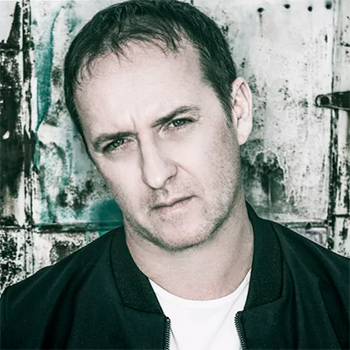




Stas Vladimirovich Mikhaylov is a Russian singer, songwriter, and composer, Honored Artist of the Russian Federation (2010) and People’s Artist of the Russian Federation (2022). His story is a rare example in pop music of a long, uneven, and deeply human journey to success—one without instant fame, television shortcuts, or fashionable formulas.
Childhood and early dreams
Stas Mikhaylov was born on April 27, 1969, in Sochi, into a family where discipline and responsibility were highly valued. From an early age, he was drawn to the stage: he willingly recited poetry, sang, took part in school competitions, and was always the first to volunteer to perform. Creativity came naturally to him—without affectation or pressure.
Yet after finishing school, he made an unexpected choice. Instead of music, Stas decided to follow in the footsteps of his father and older brother and become a pilot. It was not a whim, but an attempt to choose a “serious” and reliable profession, as it seemed at the time.
The army, aviation, and a conscious отказ
After completing his military service, Mikhaylov enrolled in the Minsk Civil Aviation College. However, it soon became clear that aviation was not his calling. His studies brought no inner fulfillment, and for the first time Stas faced the need to honestly admit a mistake to himself.
He left the aviation school and later entered the Tambov State Institute of Culture, where he began to study music professionally. He did not complete his studies there either, but it was during this period that his decision became final: the stage would not be a hobby, but his destiny.
Moscow and the school of variety performance
1992 became a turning point. Stas Mikhaylov moved to Moscow—with no guarantees, connections, or famous name. Almost immediately, he found work at the Moscow Theater of Variety, where he spent about five years.
A key role in his artistic formation was played by Boris Brunov, the legendary master of ceremonies and artistic director of the theater. For Mikhaylov, this became a true school of the profession: the stage, discipline, respect for the audience, and the understanding that an artist is, above all, a responsibility.
First albums and a long road to recognition
Widespread recognition did not come immediately. In 1997, his debut album “Candle” was released. Its songs unexpectedly became among the most frequently requested on “Radio Petrograd — Russian Chanson”, but this was only the first step.
The second album, “Dedication”, appeared only in 2002, while real concert activity began after the release of the third album, “Call Signs for Love” (2004). From that point on, Mikhaylov started touring actively and gradually building his own audience.
In 2005, his songs entered rotation on major Moscow radio stations, and in 2006, his first large solo concert took place at the Cosmos Hotel concert hall—an important psychological milestone for an artist who had been moving toward it for more than ten years.
The peak of popularity and songs that became the voice of an era
The late 2000s and early 2010s marked a true breakthrough. Stas Mikhaylov’s songs were heard across the country, and his concerts began to sell out.
It was during this time that the compositions emerged which became his musical hallmarks:
-
“Everything for You”
-
“Without You”
-
“Well, That’s It”
-
“Shores of Dreams”
These songs made Mikhaylov not just popular, but emotionally essential to his audience. He spoke about love, separation, loyalty, and responsibility in simple words—without irony or distance.
By 2010, he had become the country’s most popular pop artist in terms of concert attendance.
Musical language and staying true to himself
Stas Mikhaylov’s music exists at the intersection of:
-
the pop ballad
-
lyrical pop
-
“urban chanson” in a broad, non-criminal sense
He writes or co-writes most of his songs himself, which is why they are perceived as a personal statement rather than a product of a producer’s factory. His vocals are not academic, but they are instantly recognizable and emotionally direct—and that is their strength.
Image evolution and the mature period (2020–2025)
In recent years, Stas Mikhaylov has noticeably updated his visual image—his clothing style, presentation, and stage aesthetics. He has become more contemporary in appearance, without changing his musical essence.
This period demonstrated a rare balance: the artist managed to evolve without losing the trust of his core audience and without chasing trends.
Criticism and a cultural phenomenon
Mikhaylov has often been criticized for the simplicity of his lyrics and the conservative nature of his sound. However, over time even critics acknowledge that his success cannot be explained by marketing alone.
He occupied a niche long ignored by the industry—the honest, adult song addressed to people with life experience. His popularity is built not on fashion, but on long-term trust.
The person beyond the stage
Stas Mikhaylov has consciously shaped his public image: a family man, an artist without shock value, and a performer without scandals.
He rarely took part in conflict-driven media stories and distanced himself from tabloid culture, which only strengthened his bond with listeners.
Stas Mikhaylov — discography (key albums)
| Album | Year | Key songs | Career significance |
|---|---|---|---|
| Candle | 1997 | “Candle”, “Letter” | Debut. First radio rotations, formation of an authorial style, start of a professional path |
| Dedication | 2002 | “Dedication”, “Night” | Establishment as a singer-songwriter, but still without mass popularity |
| Call Signs for Love | 2004 | “Call Signs for Love”, “You” | Turning-point album, beginning of active touring |
| Heavens | 2007 | “There”, “Heavens” | Entry into nationwide radio airplay, growth of recognition |
| Between Heaven and Earth | 2008 | “Everything for You”, “Without You” | Breakthrough. Formation of the core audience, stadium-scale success |
| Alive | 2009 | “Well, That’s It”, “From Heart to Heart” | Peak of popularity in the late 2000s, iconic status |
| I Will Open My Heart | 2010 | “I Will Open My Heart”, “Shores of Dreams” | Consolidation of leadership, most commercially successful period |
| Only You | 2011 | “Only You”, “You Are Mine” | Maintaining maximum audience interest |
| 1,000 Steps | 2013 | “1,000 Steps”, “Dream” | Mature period, more refined production |
| Labyrinth | 2014 | “Labyrinth”, “If You Leave” | Introspective phase, philosophical lyrics |
| You Are Everything | 2016 | “You Are Everything”, “Forbidden Love” | Concert-oriented album, work with a loyal audience |
| You Can Do Anything | 2017 | “You Can Do Anything”, “Live” | Motivational direction, positive tone |
| Sixth Sense | 2019 | “Sixth Sense”, “Tenderness” | Adaptation to a new decade, gentle renewal of sound |
| Holy Rus’ | 2021 | “Holy Rus’”, “Prayer” | Worldview-oriented, spiritual phase |
| 55 | 2023 | “55”, “I Am Happy” | Anniversary album, summing up a career |
Significance and conclusion
Stas Mikhaylov is not a story of sudden fame. It is a story of patience, mistakes, refusals, and fidelity to one’s own language. He traveled the road from an aviation college and theater stages to stadiums and state honors, without betraying the most important thing—his ability to speak directly to the listener.
Editorial conclusion
Stas Mikhaylov is not a product of fashion or the result of a short-term media surge, but a stable representative of the modern Russian song tradition, located at the intersection of pop music and chanson. His career shows that this layer of music lives by its own laws: what matters here are not trends, but audience trust, life experience, and a recognizable emotional language. The longevity of Mikhaylov’s popularity confirms a simple but often overlooked truth—an honestly told story, even without formal innovations, can remain in demand for decades.